A carbon fiber sandwich panel supplier decides whether your panel hits its stiffness target at the target weight — or ships a stack of skins and foam that flexes like a door on the first day of service. Sandwich construction multiplies bending stiffness with a light core, but only if the supplier co
Introduction
A carbon fiber sandwich panel supplier decides whether your panel hits its stiffness target at the target weight — or ships a stack of skins and foam that flexes like a door on the first day of service. Sandwich construction multiplies bending stiffness with a light core, but only if the supplier controls the bond line, the core grade and the finishing that protects the edges in transit and in use.
This guide walks through core families, skin and thickness selection, the inspection documents a carbon fiber sandwich panel manufacturer must put in front of you, and the commercial terms to fix before the first purchase order.
Carbon Fiber Sandwich Panel Supplier: What You Are Actually Buying
A sandwich panel is a system, not a sheet: two carbon fiber skins carry bending, a core resists shear and keeps the skins apart, and an adhesive or co-cured interface transfers load between them. The supplier controls four decisions at once — core family, core thickness, skin schedule and cure method — and every one of them changes stiffness, weight, cost and moisture behavior.
| Core family | Density | Flatwise compression | Moisture behavior | Cost level | Best fit |
|---|---|---|---|---|---|
| PVC closed-cell foam | 40-200 kg/m3 | 0.4-2.0 MPa | Low if edges sealed | Medium | Marine, wind, general structures |
| PET foam | 60-200 kg/m3 | 0.7-2.5 MPa | Very low, recyclable | Medium-low | Roofs, transport, cost-driven builds |
| PMI rigid foam | 32-200 kg/m3 | 0.4-4.0 MPa | Low, high temperature | High | Aerospace prepreg, autoclave |
| Nomex honeycomb | 24-128 kg/m3 | 1.0-8.0 MPa | Wicks if edges open | High | Floors, doors, satellite panels |
| End-grain balsa | 100-160 kg/m3 | 2.0-5.0 MPa | Rises fast if unsealed | Low-medium | Marine decks, high shear |
Numbers are typical public ranges, not a replacement for the lot certificate. A carbon fiber sandwich panel supplier who cannot map your load case and service environment to one row of this table is quoting a catalog, not a panel program.
Matching Core and Skin to the Load Case
Sandwich theory is simple and unforgiving: bending stiffness scales with the cube of the distance between skins, so thickness buys stiffness cheaply — until core shear or flatwise crush sets the limit. Design shear first; extra skin does not save a core that fails in shear.
- Uniform pressure panels (roofs, decks, bulkheads): PET or PVC foam in the 80-120 kg/m3 band gives smooth skin support and forgiving bonding.
- Point loads and fitting zones: raise core density locally or insert a honeycomb patch rather than thickening the whole panel.
- Service above 120 degrees Celsius: PMI or high-temperature PVC grades; standard PET will creep under sustained heat.
- Wet service without perfect edge seal: prefer closed-cell foam over honeycomb, or pay for edge sealing at the supplier.
- Skin schedule: 0.5-1.0 mm carbon (two to four plies) for light panels; 1.5-2.0 mm for walking surfaces, bolted fittings or impact faces.
Ask your carbon fiber sandwich panel supplier for core shear and flatwise data at the exact density you will receive, plus the adhesive system used at the bond line. Two percent density drift moves shear modulus enough to change the panel calculation.
Buy Carbon Fiber Sandwich Panel: MOQ, Price Drivers and Lead Time
When you buy carbon fiber sandwich panel, price is driven by core family and thickness, skin ply count, panel size, edge finishing and the inspection level you demand. A stock foam-core sheet in standard size ships fast; a shaped panel with sealed edges, tapped inserts and a full test report is a different product line. The commercial frame usually looks like this:
| Order type | MOQ | Lead time | What changes the price |
|---|---|---|---|
| Stock flat panels | 20-50 sheets | 10-14 days | Core grade, skin finish, packaging |
| Custom core / thickness | 100-300 sheets | 3-4 weeks | Cure tooling, first-article inspection |
| Sealed edges with inserts | 200-500 sheets | 4-6 weeks | Sealing process, hole tolerances, masking |
| Prototype set | 5-10 sheets | 2-3 weeks | Engineering time, no tooling amortized |
Payment terms are typically 30 percent deposit against 70 percent before shipment for first orders. Panels ship flat in crates with desiccant and corner protection — crushed edges scrap the whole sheet, and rework after arrival costs more than careful packing at the factory.
Carbon Fiber Sandwich Panel Supplier China: Factory vs Trading Company
A carbon fiber sandwich panel supplier China listing mixes integrated laminate factories with trading desks that sub-contract skins, cores and bonding to three different workshops. The factory runs its own layup room, presses and ovens, and can hold a cure cycle against a documented recipe with lot traceability. The trading desk aggregates catalogs — workable for one-off sourcing, weak when a bond line void appears and nobody owns the process.
Three questions separate them on a first call: where is the press, who laminates the skins, and can you audit the cure log of the last five batches? Factories answer with equipment lists and process sheets; traders answer with photographs of finished panels. Both can ship on time — only one can re-cure a batch without finding a new subcontractor.
Carbon Fiber Sandwich Panel Supplier Factory: Capability and QC
Inside a capable carbon fiber sandwich panel supplier factory, the sequence is deliberate: core cutting and edge prep, skin layup, adhesive placement, vacuum bag or press cure, then trimming, edge sealing and inspection. What matters for your order is which steps stay in-house and which records you receive with the shipment.
- In-house skin layup controls ply orientation and fiber volume; ask for the laminate schedule on the certificate.
- Instrumented cure: thermocouples on the bond line, not just in the oven air, with a signed ramp and hold record.
- Witness coupons cured with every production batch — core shear and flatwise results beat a forwarded mill certificate with no lot number.
- Edge sealing inspection: every panel checked for sealed edges and closed cells before crating; open cells or unsealed foam are rejects.
- Batch traceability: lot number on the crate matched to the skin roll, core lot and adhesive lot used.
A factory that shows all five without being asked is the supplier you can build a program on. One that offers a lower price and a photograph of a warehouse is offering inventory risk, not capability.
Frequently Asked Questions
What MOQ should I expect for a custom sandwich panel?
Stock flat panels ship from 20 to 50 sheets. A custom core, thickness or skin schedule typically starts at 100 to 300 sheets because the cure tooling and first-article inspection must be re-validated. Sealed-edge panels with inserts start nearer 200 sheets. Prototype sets of 5 to 10 sheets are available for qualification before you commit to a production lot.
How do I verify the core and bond line before shipment?
Request three documents with every lot: a core certificate showing density and cell or pore structure, core shear and flatwise results from coupons cured with your panels, and a cross-section of one trimmed edge showing bond line thickness and sealed cells. Visually reject any panel with open honeycomb cells or unsealed foam at the edge — moisture will find them in service.
Can a supplier match an existing panel's build and drill pattern?
Yes, if you send measured samples or controlled drawings: overall size, thickness, core type and density, skin schedule, edge treatment and hole pattern. Reverse engineering from three sample panels takes one to two weeks and produces a dimensional report you approve before tooling. Confirm who owns that report so a second factory cannot quietly shift tolerances later.
Conclusion
The right carbon fiber sandwich panel supplier sells a signed laminate schedule and a cure log, not a weight figure: core grade, thickness, bond line and edge seal are the four numbers that decide whether the panel holds its stiffness after a year of service. Fix those first, then compare quotes.
YongXian supplies carbon fiber sandwich panels in foam, honeycomb and balsa builds with lot certificates and export documentation. Browse our composite panel range or send your panel drawing and annual volume for a quotation.
Part of topic
Related Articles
- Carbon Fiber Foam Core Supplier: Specs, MOQ and Lead Time
- Carbon Fiber Honeycomb Panel Supplier: Specs, MOQ and Lead Time
- Carbon Fiber Telescopic Tube Supplier: Specs, MOQ and Lead Time
- Carbon Fiber Tapered Tube Supplier: Specs, MOQ and Lead Time
- Carbon Fiber Oval Tube Supplier: Specs, MOQ and Lead Time
- Carbon Fiber Square Tube Supplier: Specs, MOQ and Lead Time
Interested in Our Products?
Contact our team for competitive pricing and technical specifications.
Get a QuoteRelated Products
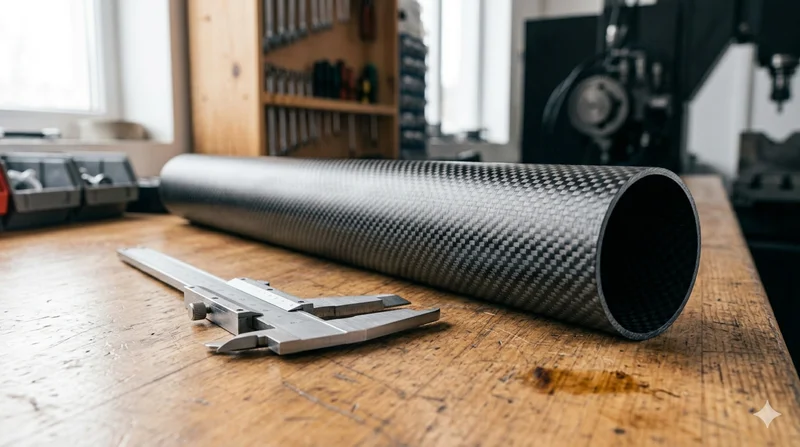
Round Carbon Fiber Tube — 3K Plain Weave T700
Standard round carbon fiber tube manufactured from Toray T700 grade fiber with 3K plain weave. Offers balanced strength and stiffness for general industrial applications including robotics, automation, sports equipment, and aerospace structures.
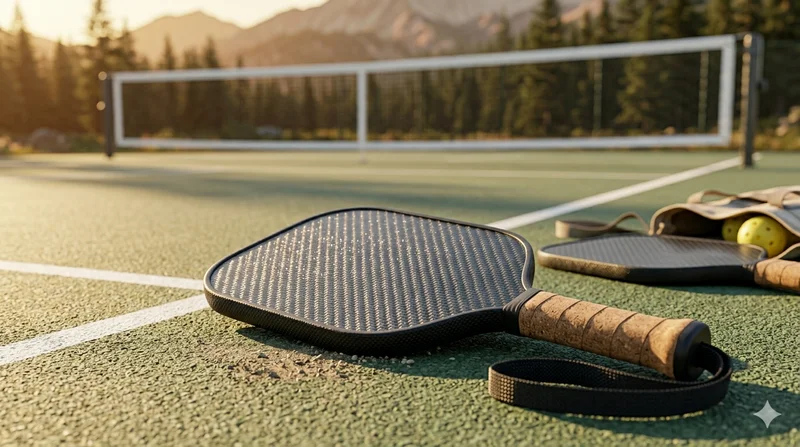
Carbon Fiber Pickleball Paddle
High-performance pickleball paddle with Toray T700 carbon fiber face and polypropylene honeycomb core. Delivers excellent power-to-weight ratio, spin generation, and vibration dampening for competitive play.
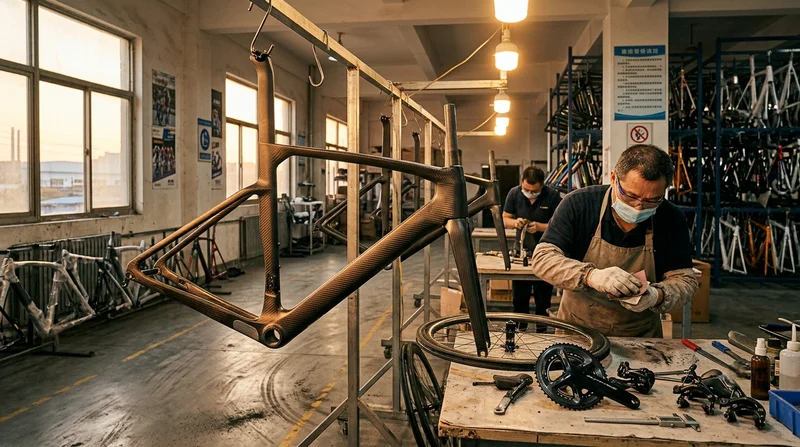
Custom Carbon Fiber Bicycle Frame
Full-custom carbon fiber bicycle frame manufactured to your geometry specifications. We produce road, gravel, mountain, and track frames using high-modulus carbon fiber layups optimized for each riding discipline. Monocoque construction with internal cable routing, available with disc or rim brake mounts.
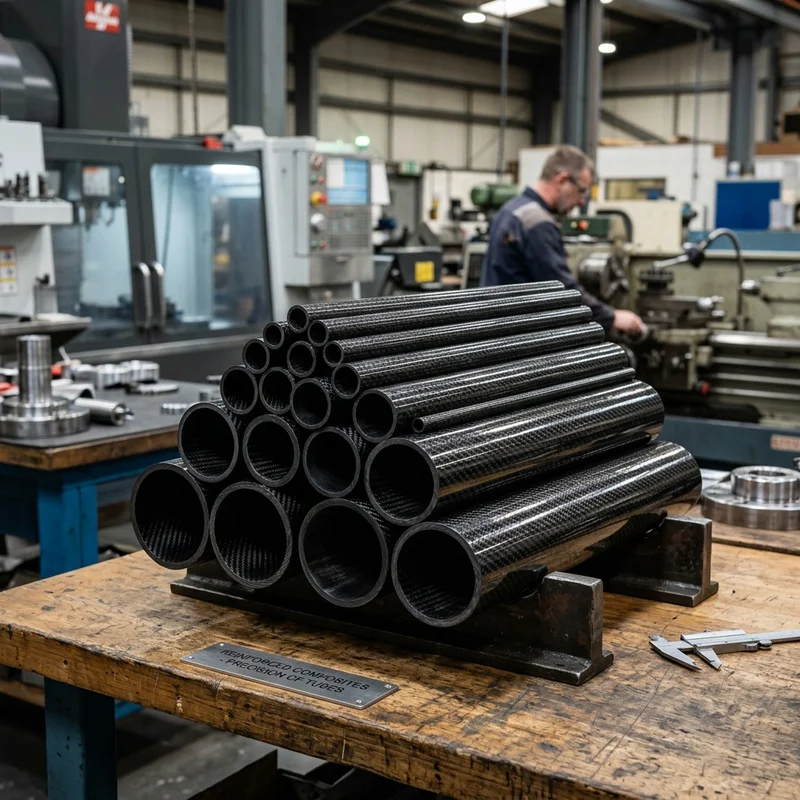
Round Carbon Fiber Tube — 3K Twill
Lightweight and ultra-stiff round tubes ideal for drone frames, robotics, and structural applications.
Round Carbon Fiber Tube — UD Unidirectional T700
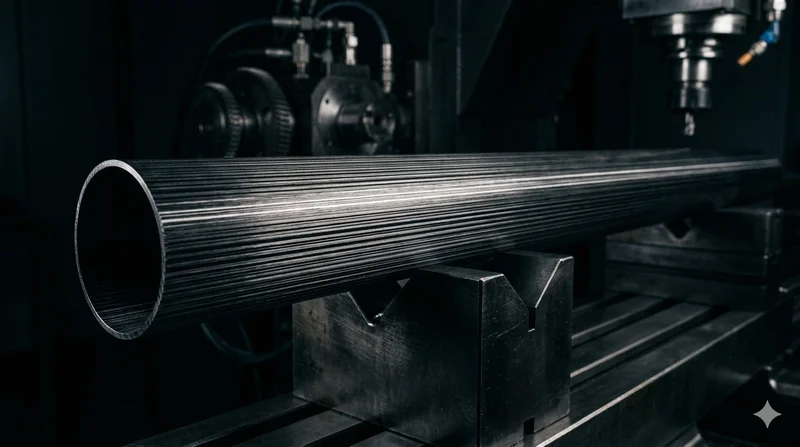
Unidirectional (UD) round tube with all fibers aligned axially for maximum longitudinal stiffness. Ideal for applications requiring high bending rigidity with minimal weight, such as shafts, struts, and structural reinforcements.