Finding the right carbon fiber square tube supplier is a critical step for OEMs, fabricators, and engineering teams that need lightweight structural profiles with predictable performance. Square carbon fiber tubes are widely used in automation frames, robotic structures, drone arms, camera rigs, med
Introduction
Finding the right carbon fiber square tube supplier is a critical step for OEMs, fabricators, and engineering teams that need lightweight structural profiles with predictable performance. Square carbon fiber tubes are widely used in automation frames, robotic structures, drone arms, camera rigs, medical equipment, display systems, and custom machinery because they combine high stiffness, low weight, corrosion resistance, and clean aesthetics. However, not every supplier can consistently deliver the dimensions, surface finish, and mechanical behavior required for a production program. This guide explains what to evaluate when you work with a carbon fiber square tube supplier, including specifications, tolerances, minimum order quantity (MOQ), lead time, and the information you should include in a request for quotation.
Key Specifications From a Carbon Fiber Square Tube Supplier
A reliable carbon fiber square tube supplier should clearly define material and dimensional options before quoting. Square tubes may look similar, but performance changes significantly with fiber grade, layup orientation, wall thickness, and manufacturing method. Buyers comparing options from a carbon fiber square tube supplier china factory or a regional distributor should request written specifications rather than relying on catalog photos.
| Specification | Typical range | Why it matters |
|---|---|---|
| Outer size (width × height) | 10 × 10 mm to 100 × 100 mm | Determines fit in frames, brackets, and modular assemblies |
| Wall thickness | 1.0 mm to 5.0 mm | Affects stiffness, weight, and resistance to crushing or torsion |
| Length | 100 mm to 3000 mm | Impacts yield, straightness control, and shipping efficiency |
| Fiber type | 3K woven, UD, hybrid layup | Balances appearance, directional strength, and cost |
| Resin system | Epoxy standard, UV-resistant options | Influences durability, temperature resistance, and finish stability |
| Surface finish | Matte, glossy, sanded for bonding | Important for visible parts, coating, or adhesive assembly |
| Tolerance | ±0.1 to ±0.3 mm by size/process | Critical for alignment, mating parts, and repeatable production |
For structural applications, ask whether the tube is roll-wrapped, pultruded, or molded. Roll-wrapped tubes often provide excellent cosmetic surfaces and balanced properties, while pultruded tubes can be efficient for straight, constant profiles in higher volumes. The right choice depends on load direction, appearance requirements, and budget.
MOQ and Lead Time From a Carbon Fiber Square Tube Supplier
MOQ and lead time vary widely among suppliers. A carbon fiber square tube supplier with in-stock mandrels and standard sizes can usually ship faster, while custom dimensions or special layups require tooling setup and curing cycles. Understanding these drivers helps buyers plan projects and compare quotations fairly when they want to buy carbon fiber square tube profiles for prototypes or production runs.
- Standard sizes: Often available with lower MOQ (for example 5–20 pieces) and shorter lead times of 5–10 working days.
- Custom outer dimensions: May require new mandrels or process adjustments, increasing MOQ to 50–100 pieces and lead time to 15–25 days.
- Special layup or fiber grade: High-modulus fibers, thicker walls, or hybrid constructions can extend production time and raise material cost.
- Secondary processing: CNC cutting, drilling, slotting, chamfering, or bonding preparation adds labor but can reduce downstream assembly time.
- Quality documentation: Dimensional reports, material certificates, and inspection photos improve traceability and may be required for OEM programs.
When evaluating total cost, look beyond unit price. A supplier that delivers consistent tolerances, protective packaging, and ready-to-assemble parts can reduce scrap, rework, and project delays. For international buyers, clarify Incoterms, export packing, and transit time to avoid hidden logistics costs.
How to Evaluate Quality and Reliability
Selecting a carbon fiber square tube supplier factory should involve more than a price comparison. Consistency across batches is essential, especially when tubes are integrated into precision frames or load-bearing assemblies. Ask for sample parts or a pilot run before committing to volume orders.
Key quality checks include straightness, outer dimension accuracy, wall thickness uniformity, corner radius consistency, and surface condition. Visual inspection can reveal dry spots, wrinkles, or resin-rich areas, while basic measurements confirm whether parts meet drawing requirements. For demanding applications, suppliers may offer additional tests or process controls to verify performance.
- Request photos or videos of production and packing processes.
- Confirm how tubes are protected against impact and abrasion during shipping.
- Ask about batch traceability and how nonconforming parts are handled.
- Review communication speed and technical support during sampling.
- Verify whether the supplier can support repeat orders with stable specifications.
A responsive supplier that understands drawings, tolerances, and end-use conditions is often more valuable than the lowest quote. Strong technical communication reduces the risk of mismatched expectations and helps projects move from prototype to production smoothly.
RFQ Checklist for Faster and More Accurate Quotes
To get a precise response from a carbon fiber square tube supplier, provide complete and structured information in your RFQ. Clear inputs reduce back-and-forth and help the supplier recommend the most suitable material and process.
- Outer dimensions (W × H), inner dimensions if required, and wall thickness
- Length, quantity per size, and annual forecast if available
- Fiber type and weave preference (3K plain/twill, UD, or hybrid)
- Surface finish and cosmetic requirements
- Tolerance targets for key dimensions and straightness
- Cutting, drilling, or other machining needs
- Application environment (load, temperature, UV exposure, bonding)
- Destination country, preferred shipping term, and required delivery date
Including drawings or 3D files can significantly improve quoting accuracy. If you are still exploring options, ask the supplier to propose two or three alternatives balancing cost, weight, and stiffness.
Frequently Asked Questions
What is the typical MOQ when ordering from a carbon fiber square tube supplier?
MOQ depends on whether the size is standard or custom. Standard square tubes may be available from 5 to 20 pieces, while custom dimensions, special layups, or new tooling often require 50 to 100 pieces or more. A capable supplier can advise the most economical quantity based on your specification.
How long is the lead time for custom square carbon fiber tubes?
Lead time is usually 5–10 working days for in-stock or standard sizes and 15–25 working days for custom orders. Complex machining, tight tolerances, or special surface finishes can extend the schedule. Confirm production and shipping timelines early to align with your project plan.
Can a carbon fiber square tube supplier china factory provide cut-to-length parts?
Yes, many factories offer CNC cut-to-length services, drilling, and basic machining to match your drawings. Providing clear tolerances and end-use details helps ensure parts arrive ready for assembly and reduces additional processing at your facility.
Conclusion
Choosing the right carbon fiber square tube supplier comes down to more than finding a low price. The best partner provides clear specifications, stable quality, realistic MOQ and lead time commitments, and responsive technical support. By defining your dimensions, tolerances, finish, and application needs upfront, you can compare suppliers accurately and reduce sourcing risk. Whether you need prototypes or ongoing production, a well-prepared RFQ and careful supplier evaluation will help you secure square carbon fiber tubes that perform as expected.
Ready to source precision profiles for your next project? Explore our carbon fiber tube products or contact YongXian for a quotation with your drawings and quantity requirements.
Part of topic
Related Articles
- Carbon Fiber Foam Core Supplier: Specs, MOQ and Lead Time
- Carbon Fiber Sandwich Panel Supplier: Specs, MOQ and Lead Time
- Carbon Fiber Honeycomb Panel Supplier: Specs, MOQ and Lead Time
- Carbon Fiber Telescopic Tube Supplier: Specs, MOQ and Lead Time
- Carbon Fiber Tapered Tube Supplier: Specs, MOQ and Lead Time
- Carbon Fiber Oval Tube Supplier: Specs, MOQ and Lead Time
Interested in Our Products?
Contact our team for competitive pricing and technical specifications.
Get a QuoteRelated Products
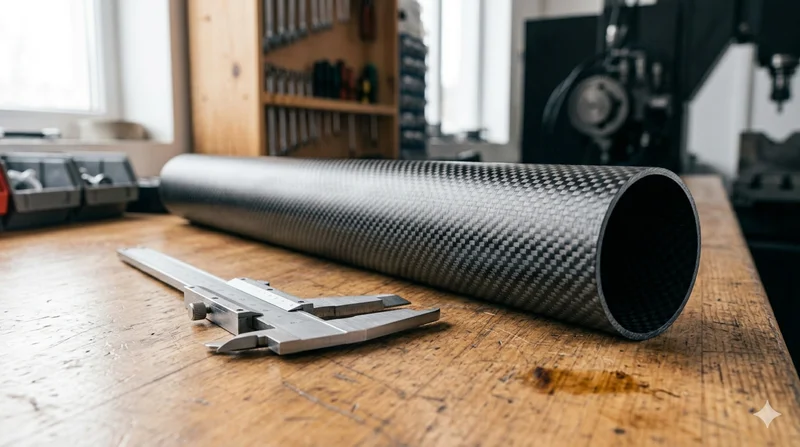
Round Carbon Fiber Tube — 3K Plain Weave T700
Standard round carbon fiber tube manufactured from Toray T700 grade fiber with 3K plain weave. Offers balanced strength and stiffness for general industrial applications including robotics, automation, sports equipment, and aerospace structures.
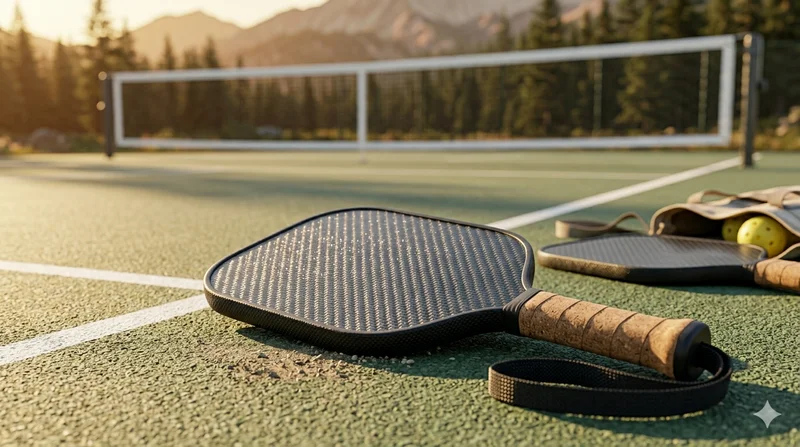
Carbon Fiber Pickleball Paddle
High-performance pickleball paddle with Toray T700 carbon fiber face and polypropylene honeycomb core. Delivers excellent power-to-weight ratio, spin generation, and vibration dampening for competitive play.
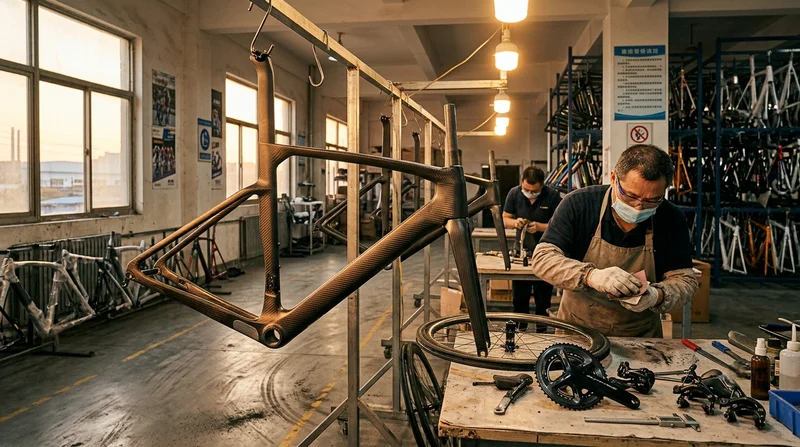
Custom Carbon Fiber Bicycle Frame
Full-custom carbon fiber bicycle frame manufactured to your geometry specifications. We produce road, gravel, mountain, and track frames using high-modulus carbon fiber layups optimized for each riding discipline. Monocoque construction with internal cable routing, available with disc or rim brake mounts.
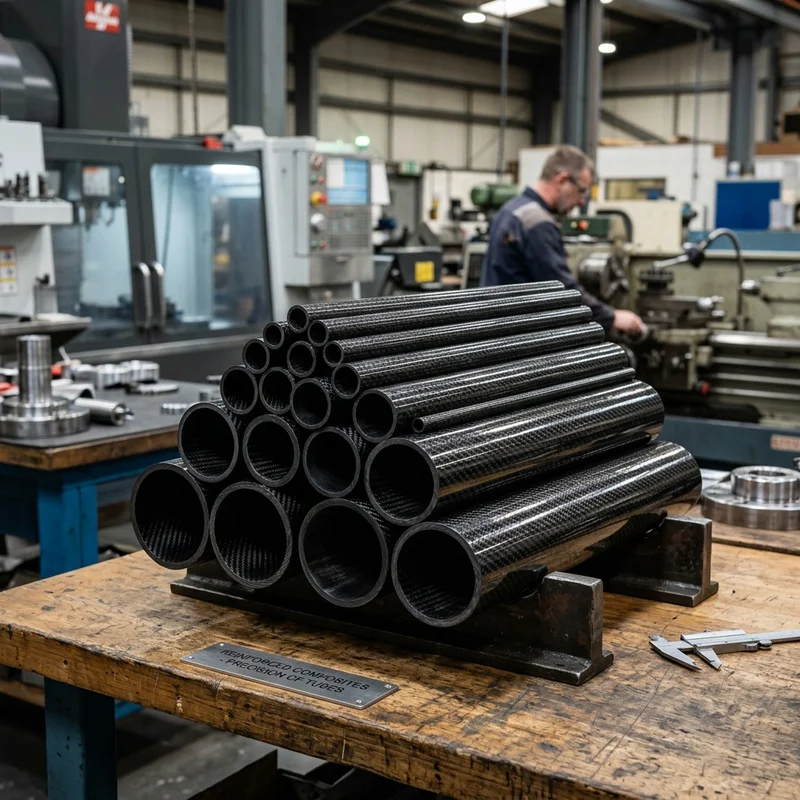
Round Carbon Fiber Tube — 3K Twill
Lightweight and ultra-stiff round tubes ideal for drone frames, robotics, and structural applications.
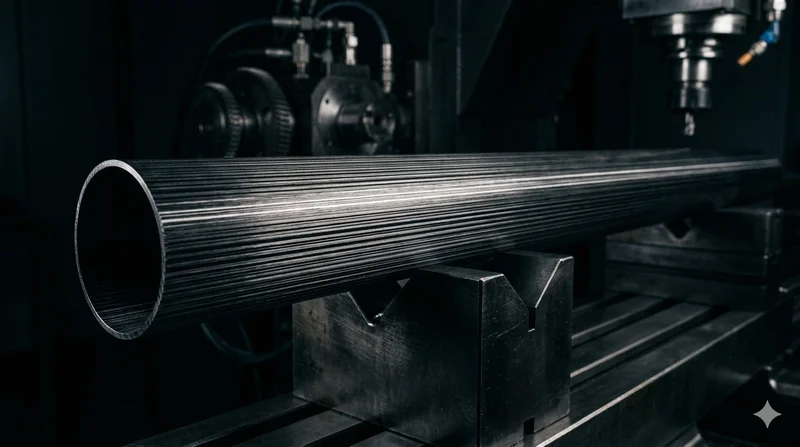
Round Carbon Fiber Tube — UD Unidirectional T700
Unidirectional (UD) round tube with all fibers aligned axially for maximum longitudinal stiffness. Ideal for applications requiring high bending rigidity with minimal weight, such as shafts, struts, and structural reinforcements.