
Wind blade cost models are built on one uncomfortable fact: the material that makes blades light is also the material that makes them expensive. Early 2026 market data put high-performance carbon fiber sheet prices at $160-320 per square meter — a range that has held through the year as
Introduction
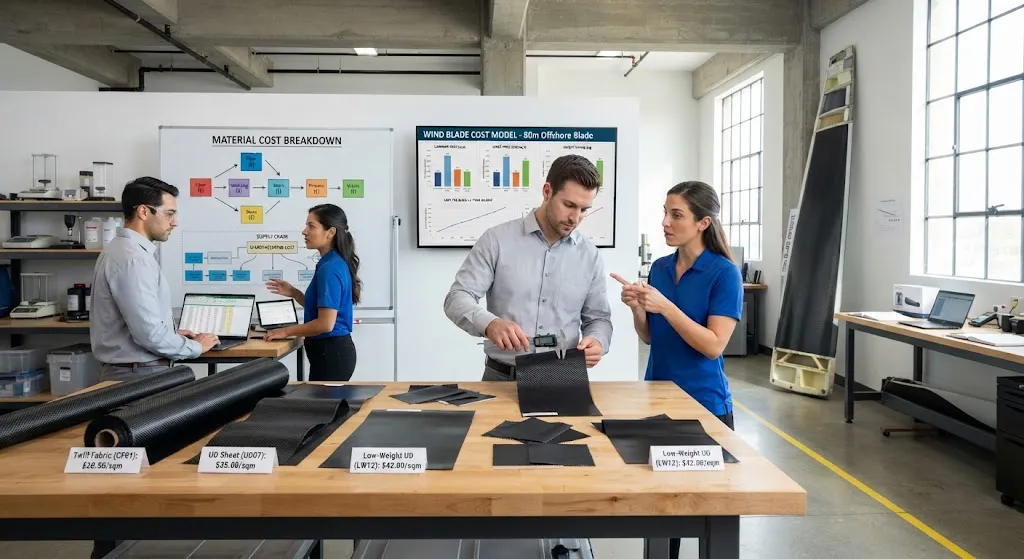
Wind blade cost models are built on one uncomfortable fact: the material that makes blades light is also the material that makes them expensive. Early 2026 market data put high-performance carbon fiber sheet prices at $160-320 per square meter — a range that has held through the year as aerospace demand, automotive adoption and wind's own appetite for carbon converge on the same upstream capacity. For blade engineers the consequence is precise: a CFRP laminate can reduce blade weight by up to 25 percent, but on an 80-meter-plus offshore blade, that weight saving carries a "significant cost penalty" that must be justified against turbine output, tower and drivetrain savings, and logistics. This article walks through where the $160-320 number comes from, how material cost scales against weight saving as blades grow, and how OEMs structure the cost models that settle the all-glass versus hybrid versus full-carbon decision.
Where the $160-320 per Square Meter Comes From
The headline price is not a single product. It is the output of a conversion chain that starts with carbon fiber tow and ends with a dry or prepreg sheet ready for infusion. Each step adds cost: the fiber itself carries the base price per kilogram and the modulus grade; weaving or unidirectional spreading converts tow into fabric with waste; resin adds matrix cost in prepreg or infusion form; and cutting, handling and trimming add fabrication loss that rarely drops below 10-15 percent at blade scale. The table below breaks the range down by fiber grade and format:
| Sheet Product | Typical Fiber Grade | Area Weight | Approx. Price per m2 | Typical Use |
|---|---|---|---|---|
| Standard modulus fabric | T300-class 48K tow | 200-400 g/m2 | $160-210 | Industrial and blade secondary structure |
| Intermediate modulus fabric | T700-class 24K tow | 300-600 g/m2 | $220-270 | Spar caps and main load paths |
| High modulus prepreg sheet | T800-class 12K tow | 150-300 g/m2 | $280-320 | Aerospace-grade and specialized aeroelastic tuning |
| Unidirectional dry sheet | T700-class, spread tow | 300-800 g/m2 | $190-250 | Pultrusion-fed spar cap parallel trends |
The spread between the low and high end is real money at blade scale. The same square meter of laminate that costs $160 in T300 fabric costs twice as much in T800 prepreg, and a 100-meter blade carries thousands of square meters of structural laminate — the sheet price becomes a top-line number in any cost conversation.
Material Cost Versus Weight Saving in Blade Design
Weight is not the goal in blade design; it is the means. A lighter blade reduces the gravitational bending moment at the root, which lets the manufacturer downsize the pitch bearings, the hub casting and the main shaft, and in turn lighten the tower and reduce the foundation loads. The industry standard shorthand credits CFRP with up to 25 percent blade weight reduction versus an equivalent all-glass design, with stiffness retention — carbon's modulus is roughly three times glass fiber's — doing much of the work: the blade keeps its shape under load while weighing less.
The problem is that the weight saving is leveraged, not linear. The structural mass saved in the blade is a fraction of the total system saving, but the material cost is paid in full at the blade factory, in square meters of $160-320 sheet. On blade lengths where the fatigue-driven laminate is thin enough for glass to remain viable, carbon loses the value argument; as blades cross roughly 80 meters and the laminate thickens under gravity and flapwise loading, carbon's stiffness advantage begins to pay for itself through cycle count, section reduction and transport savings. This crossover is exactly the region where cost modeling decides the architecture, which is why OEMs build the trade study rather than trust a rule of thumb.
Blade Cost Modeling in Practice
A credible blade cost model treats carbon as an investment, not an expense line. The model typically works in four stages:
- Material bill: compute laminate area per blade section from the structural layup, multiply by sheet price per square meter and conversion yield, and add resin, core and adhesive to reach a blade material cost.
- Weight leverage: convert blade mass reduction into system savings — bearing, hub, tower and foundation cost deltas — using the OEM's own component cost curves.
- Energy return: attribute the weight benefit to turbine annual energy production where aeroelastic tuning or longer blades at the same rating convert stiffness into output.
- Logistics and installation: include transport, crane and weather-window costs, which rise steeply with blade length and are partially offset by lighter, stiffer carbon blades.
The output is usually expressed as an incremental cost per kilogram of system weight saved, or as a levelized cost of energy delta per turbine. OEMs run the model across the full wind farm, because a carbon blade that costs more at the factory can lower the balance-of-plant cost per megawatt through lighter foundations and faster installation weather windows. The sensitivity analysis around sheet price is where the $160-320 range bites: a 20-percent move in sheet price can flip the hybrid versus full-carbon decision on a specific rotor size.
Sensitivity and Supply Position
Two further factors shape the model before it leaves engineering. First, the sheet price itself is negotiable in volume: long-term agreements for blade-grade fabric and pultruded carbon plate are struck at quantities that move the effective price toward the lower end of the range, and the last decade's capacity additions in China have introduced a price tier below the western fiber brands. Second, waste and yield dominate the effective cost more than the listed price: a dry fabric with 15 percent trim loss costs 15 percent more per delivered laminate than the catalog number suggests, which is why near-net shapes and automated cutting matter as much as the fiber price.
The practical conclusion for blade programs is that carbon sheet pricing must be modeled as a distribution with a supply strategy, not as a fixed input. OEMs that lock in blade-grade capacity early, specify waste-tolerant layups and hold hybrid options in the design keep the $160-320 headline from becoming a fatal constraint.
Frequently Asked Questions
Why is carbon fiber sheet priced per square meter instead of per kilogram?
Because the blade cost driver is the covered area of laminate, not the weight of material. A blade structural shell is designed in square meters of reinforced laminate at a given fiber areal weight, so quoting per square meter aligns the price with the engineering bill of materials. The range reflects both fiber grade and format: lower-cost T300-class fabrics run $160-210 per square meter while high-modulus T800 prepreg sheets reach $280-320, and the same area can carry very different fiber contents.
At what blade length does carbon fiber become economically justified?
Roughly 80 meters, with strong dependence on rotor design and site conditions. Below that length, glass laminates are thick enough to carry loads fatigue-wise and carbon's premium is hard to justify. Above it, carbon's three-times-higher modulus and 25 percent weight saving start paying for themselves through reduced root loads, lighter tower and foundations, and transport savings. The crossover is not a single number — it is computed per program with a full system cost model, which is why table-level cost modeling is now standard practice at wind OEMs.
Is the $160-320 per square meter price expected to fall?
Downward pressure exists from Chinese capacity expansion, larger tow formats, and pultruded continuous sheet that bypasses weaving conversion cost. Upward pressure comes from aerospace and automotive demand competing for the same upsteam fiber, plus resin and energy costs. The practical expectation is a wide band that persists for several quarters, with negotiated long-term agreements landing closer to the low end. OEMs should model sensitivity across the full range rather than pick a single point forecast.
Conclusion
Carbon fiber sheet pricing at $160-320 per square meter has turned blade material selection into a financial modeling problem as much as an engineering one. The 25 percent weight saving is real, but so is the cost penalty on 80-meter-plus offshore blades, and the gap between the two is where wind OEMs either create competitive advantage or give it away. A disciplined cost model — material bill, system weight leverage, energy return and logistics — is the tool that separates turbine programs that use carbon profitably from those that simply pay the premium.
For blade designers and procurement teams evaluating carbon sheet suppliers, the price range is only half the story; the other half is conversion quality, yield and a supply agreement that holds the effective cost down. Review our carbon fiber sheet and fabric products for blade-grade formats, or contact our engineering team to discuss material pricing models for your rotor program.
Part of topic
Related Articles
- Bio-Based Carbon Fiber Precursors: Lignin and Polyethylene for Low-Cost Production
- Large-Tow Carbon Fiber Cost Analysis: 48K vs 60K Price-Performance Comparison
- Carbon Fiber-Resin Interface Bonding: Surface Treatment and Coupling Agent Optimization
- Digital Twin for Carbon Fiber Manufacturing: Real-Time Process Monitoring and Defect Prevention
- Thermoplastic Carbon Fiber Welding for Automotive: Ultrasonic and Induction Welding Process Windows
- Large-Tow Carbon Fiber Wet Spinning: Process Optimization for 48K/60K Production Efficiency
Interested in Our Products?
Contact our team for competitive pricing and technical specifications.
Get a QuoteRelated Products
Carbon Fiber Fishing Rod Blank
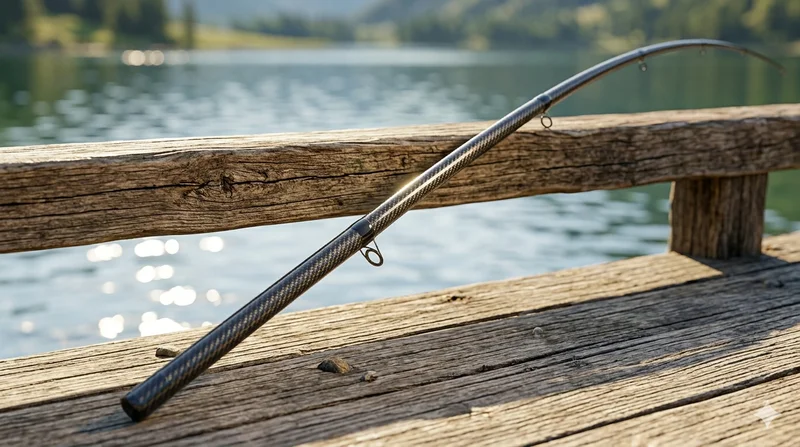
High-quality carbon fiber fishing rod blank manufactured from multiple grades of Toray carbon fiber cloth. Available in a wide range of lengths, powers, and actions for freshwater and saltwater applications. Suitable for OEM rod building.

Carbon Fiber Plate — 3K Twill T700 3.0mm
Medium-thickness 3.0mm carbon fiber plate offering significantly higher load capacity while maintaining attractive 3K twill finish. Suitable for structural brackets, reinforcement plates, and load-bearing panels.

Carbon Fiber Plate — 3K Twill T700 1.5mm
Thin 1.5mm carbon fiber plate with 3K twill weave surface. Lightweight and stiff, commonly used for covers, panels, drone bodies, and applications requiring a premium aesthetic appearance.

Square Carbon Fiber Tube — 3K Twill T700
Square cross-section carbon fiber tube manufactured with 3K twill weave for torsional strength. Preferred for structural frames, trusses, and support columns where rectangular geometry offers design flexibility.
Carbon Fiber Pickleball Paddle
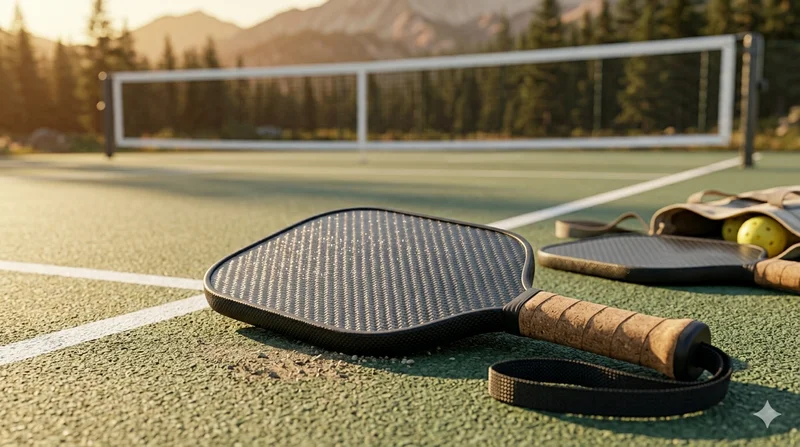
High-performance pickleball paddle with Toray T700 carbon fiber face and polypropylene honeycomb core. Delivers excellent power-to-weight ratio, spin generation, and vibration dampening for competitive play.