Finding the right carbon fiber rod factory is essential when your project depends on lightweight stiffness, straightness, and repeatable dimensions. Whether you need rods for drones, RC models, robotics, sporting equipment, automation fixtures, or industrial supports, a capable carbon fiber rod fact
Introduction
Finding the right carbon fiber rod factory is essential when your project depends on lightweight stiffness, straightness, and repeatable dimensions. Whether you need rods for drones, RC models, robotics, sporting equipment, automation fixtures, or industrial supports, a capable carbon fiber rod factory should help you define diameter, length, fiber orientation, resin system, and inspection standards before production begins. This guide explains the specifications that matter most, how MOQ and lead time are usually set, and which questions to ask when you plan to buy carbon fiber rod products from a carbon fiber rod factory china supplier or compare options from a carbon fiber rod factory factory with export experience.
What a Carbon Fiber Rod Factory Should Offer
Rod sourcing is more than choosing a diameter from a catalog. Even standard solid rods can vary in surface quality, straightness, and consistency between batches. A reliable factory should combine material knowledge, process control, and clear communication so that prototypes and production parts perform the same way in real assemblies.
- Material guidance: recommendations on standard modulus, intermediate modulus, or hybrid constructions based on stiffness and weight targets.
- Process options: pultruded rods for consistent profiles and efficient volume, or roll-wrapped constructions when specific layup behavior is required.
- Secondary processing: cut-to-length service, chamfering, drilling, sanding, bonding preparation, and protective packaging for long rods.
- Documentation: dimensional reports, visual inspection records, and sample approval to confirm fit before mass production.
- Export support: clear labeling, stable schedules, and packaging that reduces transit damage and end-face chipping.
Carbon Fiber Rod Factory Specifications: Diameter, Strength and Finish
To compare suppliers accurately, ask every candidate to quote against the same specification sheet. A professional carbon fiber rod factory should be able to explain how diameter tolerance, straightness, and surface finish affect assembly and downstream machining. The table below summarizes common parameters buyers review during RFQs.
| Specification | Typical Range | Why It Matters | What to Confirm |
|---|---|---|---|
| Diameter | 1 mm to 50+ mm | Controls stiffness, weight, and fit in bushings or joints | Diameter tolerance across the full length and between batches |
| Length | 100 mm to 3000 mm+ | Affects shipping, cutting yield, and assembly planning | Standard stock lengths and cut-to-length capability |
| Fiber orientation | Unidirectional, 0°/90° wrap, hybrid | Influences bending strength, torsion response, and durability | Whether layup can be tuned for the actual load case |
| Straightness | Process dependent | Critical for linkages, guide rods, and rotating applications | Inspection method and acceptance criteria |
| Surface finish | Gloss, matte, sanded, natural pultruded | Impacts appearance, bonding, and wear in fixtures | Cosmetic level and whether bonding prep is included |
| End treatment | Square cut, chamfered, sealed | Reduces splintering and improves assembly safety | Cut quality, deburring, and edge protection in packing |
For precision builds, provide drawings with critical dimensions, allowable runout, and any areas that must remain free of sanding marks. Small differences in finish or straightness can create large differences in assembly time.
MOQ and Lead Time from a Carbon Fiber Rod Factory
MOQ and lead time depend on whether you choose stock rods, simple cut lengths, or a custom construction. Stock sizes are usually the fastest route, while special diameters, tight tolerances, or unique fiber layouts require more setup and curing time. Planning both sampling and production milestones helps prevent delays.
- Samples and prototypes: often 7-15 days when existing tooling or standard profiles are available; 15-25 days for custom setups.
- Small batch orders: commonly 15-30 days after drawing, quantity, and material confirmation.
- Repeat orders: typically faster because process parameters, inspection points, and packaging are already approved.
- MOQ drivers: raw material batch size, curing efficiency, cutting labor, and minimum run requirements for stable quality.
If your design is still evolving, start with a pilot batch before committing to volume. A transparent factory will explain which changes affect price and schedule, such as moving from a stock pultruded rod to a custom layup or adding tight end-face machining.
Quality Checks When You Buy Carbon Fiber Rod Products
Price alone does not reveal factory capability. Quality issues in rods often appear as diameter variation, poor straightness, surface defects, fiber breakout at cut ends, or inconsistent stiffness from batch to batch. Before placing a large order, define acceptance criteria and test samples in your actual use condition.
- Request first-article measurements for diameter, length, and straightness.
- Ask whether inspection is 100% or based on sampling, and how records are kept.
- Review photos of cutting, packing, and end protection for long shipments.
- Confirm how nonconforming parts are handled: rework, replacement, or credit.
- Validate bonding, drilling, or load performance with sample rods from the intended production process.
When comparing a local distributor with an overseas supplier, include freight, customs, incoming inspection time, and the cost of reordering in the total landed cost calculation.
How to Evaluate a Carbon Fiber Rod Factory in China
Many global buyers work with a carbon fiber rod factory in China to balance customization, capacity, and cost. The best results come from a structured RFQ: send the same drawing, annual forecast, tolerance targets, and packaging requirements to each candidate, then compare the clarity of their answers. Strong suppliers respond with manufacturable suggestions, flag risks early, and explain trade-offs instead of quoting only a price. For long-term programs, communication quality, consistency, and documentation discipline matter as much as the first sample.
Frequently Asked Questions
What information should I send to a carbon fiber rod factory for an accurate quote?
Provide diameter, length, quantity, fiber or modulus preference, tolerance and straightness requirements, surface finish, end treatment, and application details. A drawing or simple sketch helps the factory quote faster and avoid misunderstandings.
Can one carbon fiber rod factory support both prototypes and mass production?
Yes, many factories can, but you should confirm that the same materials, process controls, and inspection standards used for samples will carry into production. This reduces the risk of performance changes when volumes increase.
How can I reduce lead time when ordering custom carbon fiber rods?
Use standard diameters when possible, finalize drawings early, approve samples quickly, and align on packaging and inspection before production starts. Clear specifications usually save more time than pushing for an unrealistic delivery date.
Conclusion
A dependable carbon fiber rod factory combines technical guidance, predictable lead times, and disciplined quality control. By comparing specifications, MOQ terms, and inspection practices before ordering, buyers can reduce sourcing risk and secure rods that fit from prototype to production. To review available options, visit our carbon fiber products page or contact YongXian for a quote with your drawings and quantity requirements.
Part of topic
Related Articles
- Carbon Fiber Foam Core Supplier: Specs, MOQ and Lead Time
- Carbon Fiber Sandwich Panel Supplier: Specs, MOQ and Lead Time
- Carbon Fiber Honeycomb Panel Supplier: Specs, MOQ and Lead Time
- Carbon Fiber Telescopic Tube Supplier: Specs, MOQ and Lead Time
- Carbon Fiber Tapered Tube Supplier: Specs, MOQ and Lead Time
- Carbon Fiber Oval Tube Supplier: Specs, MOQ and Lead Time
Interested in Our Products?
Contact our team for competitive pricing and technical specifications.
Get a QuoteRelated Products

Round Carbon Fiber Tube — 3K Plain Weave T700
Standard round carbon fiber tube manufactured from Toray T700 grade fiber with 3K plain weave. Offers balanced strength and stiffness for general industrial applications including robotics, automation, sports equipment, and aerospace structures.

Carbon Fiber Pickleball Paddle
High-performance pickleball paddle with Toray T700 carbon fiber face and polypropylene honeycomb core. Delivers excellent power-to-weight ratio, spin generation, and vibration dampening for competitive play.

Custom Carbon Fiber Bicycle Frame
Full-custom carbon fiber bicycle frame manufactured to your geometry specifications. We produce road, gravel, mountain, and track frames using high-modulus carbon fiber layups optimized for each riding discipline. Monocoque construction with internal cable routing, available with disc or rim brake mounts.

Round Carbon Fiber Tube — 3K Twill
Lightweight and ultra-stiff round tubes ideal for drone frames, robotics, and structural applications.
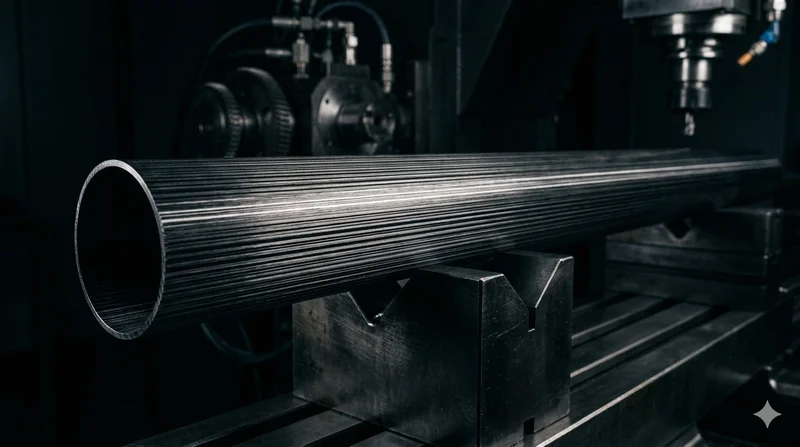
Round Carbon Fiber Tube — UD Unidirectional T700
Unidirectional (UD) round tube with all fibers aligned axially for maximum longitudinal stiffness. Ideal for applications requiring high bending rigidity with minimal weight, such as shafts, struts, and structural reinforcements.