
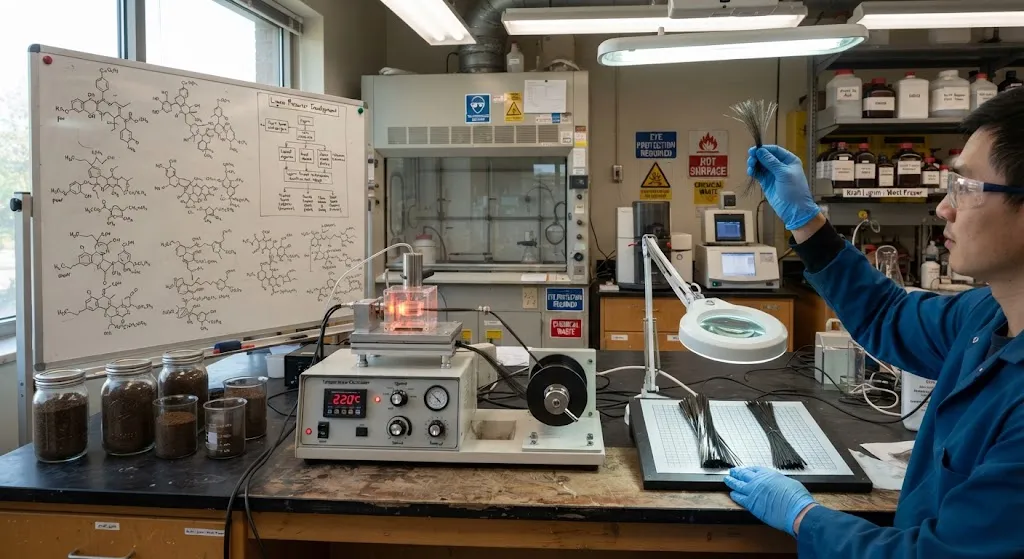
The carbon fiber industry faces a fundamental paradox: the material offers unmatched specific strength and stiffness, yet its adoption in automotive, construction, and industrial applications remains limited by production costs that typically range from $15-25 per kilogram for standard modulus fiber
Introduction
The carbon fiber industry faces a fundamental paradox: the material offers unmatched specific strength and stiffness, yet its adoption in automotive, construction, and industrial applications remains limited by production costs that typically range from $15-25 per kilogram for standard modulus fibers. Approximately 60% of this cost originates in the precursor material — predominantly polyacrylonitrile (PAN) — which requires energy-intensive polymerization, spinning, and stabilization processes. Bio-based carbon fiber precursors, derived from renewable feedstocks such as lignin and polyethylene, offer a pathway to disrupt this cost structure by leveraging abundant, low-cost raw materials and simplified processing routes.
The motivation extends beyond cost reduction. PAN precursor production relies on acrylonitrile, a petrochemical monomer subject to price volatility and environmental scrutiny. Lignin, by contrast, is the second most abundant natural polymer on Earth — approximately 50 million tons produced annually as a byproduct of the paper and bioethanol industries — yet less than 2% is currently utilized for high-value applications. This article evaluates the current state of bio-based precursor technologies, compares their mechanical performance to PAN-based carbon fibers, and assesses the commercial viability of each pathway for high-volume carbon fiber production.
Lignin-Based Precursor Technology
Lignin is a complex aromatic polymer derived from plant cell walls, consisting of phenylpropane units linked by ether and carbon-carbon bonds. Its high aromatic carbon content (approximately 60-65% by weight) makes it inherently suitable as a carbon fiber precursor, since aromatic structures serve as excellent building blocks for the graphitic carbon microstructure that develops during carbonization. The key challenge lies in converting lignin from a heterogeneous, brittle material into spinnable fibers with consistent properties.
| Lignin Source | Aromatic Content | Spinning Method | Carbon Fiber Strength | Typical Yield |
|---|---|---|---|---|
| Kraft lignin (paper industry) | 60-65% | Melt spinning (200-250°C) | 400-800 MPa | 40-50% |
| Lignosulfonate (sulfite process) | 55-60% | Wet spinning (aqueous) | 300-600 MPa | 35-45% |
| Organosolv lignin (biorefinery) | 65-70% | Melt spinning (180-230°C) | 500-1000 MPa | 45-55% |
| Lignin/polyethylene blend | 40-50% | Melt spinning (190-240°C) | 600-1200 MPa | 45-55% |
Three primary processing approaches have emerged for lignin-based precursors. Direct melt spinning of thermally softened lignin produces fibers with diameters of 10-15 micrometers, but requires careful control of temperature and shear rate to prevent thermal degradation. Wet spinning through aqueous coagulation baths enables processing of water-soluble lignosulfonates, producing fibers with more uniform cross-sections but lower mechanical properties due to residual sulfur contamination. The most promising approach involves blending lignin (40-60% by weight) with thermoplastic polymers such as polyethylene oxide or polyvinyl alcohol, which improves spinnability while maintaining high carbon content in the final fiber.
Polyethylene-Based Carbon Fiber Precursors
Polyethylene (PE) represents an alternative bio-derived precursor pathway, particularly when sourced from bioethanol or recycled polyethylene waste streams. The appeal of polyethylene lies in its exceptionally low cost — approximately $1-2 per kilogram for commodity grades — and its simple molecular structure, which enables high carbonization yields (60-70%) when processed under optimized conditions. The challenge is that polyethylene lacks the cyclization chemistry of PAN, requiring specialized stabilization approaches to prevent melting during the oxidation and carbonization stages.
- Thermal stabilization: PE fibers undergo controlled oxidation at 100-120 degrees Celsius in air, forming a cross-linked network that prevents melting during subsequent carbonization at 1,000-1,500 degrees Celsius. The stabilization time is typically 2-4 hours, shorter than PAN stabilization (1-2 hours at 200-300 degrees Celsius) but requires precise oxygen concentration control.
- Catalytic carbonization: Transition metal catalysts (iron, cobalt, nickel compounds) at 1-5% loading lower the carbonization temperature by 200-400 degrees Celsius and promote graphitic ordering, improving electrical conductivity from 10-100 S/cm (uncatalyzed) to 1,000-10,000 S/cm (catalyzed). The catalyst residue, however, limits mechanical property development.
- Orientation-assisted carbonization: Drawing PE fibers to 5-10x draw ratio before carbonization creates molecular alignment that templates graphitic structure development, producing carbon fibers with tensile modulus of 200-400 GPa and strength of 1,000-2,000 MPa — approaching low-to-intermediate modulus PAN-based carbon fiber performance.
Performance Comparison with PAN-Based Carbon Fibers
The critical question for bio-based precursors is whether they can achieve the mechanical properties required for structural applications. The following comparison illustrates the current performance gap and the trajectory of improvement:
| Property | PAN-Based (Standard Modulus) | Lignin-Based (Best Results) | PE-Based (Best Results) | Target for Automotive |
|---|---|---|---|---|
| Tensile strength | 3,500-5,000 MPa | 800-1,500 MPa | 1,000-2,500 MPa | 1,500-2,500 MPa |
| Tensile modulus | 230-240 GPa | 80-150 GPa | 150-350 GPa | 100-200 GPa |
| Elongation at break | 1.5-2.0% | 0.8-1.5% | 0.5-1.2% | 1.0-1.5% |
| Carbonization yield | 50-55% | 40-55% | 60-70% | >50% |
| Precursor cost | $10-15/kg | $2-5/kg | $1-3/kg | <$5/kg |
While bio-based precursors currently cannot match PAN-based carbon fiber performance for aerospace applications requiring tensile strengths above 3,000 MPa, they are increasingly competitive for automotive, construction, and industrial applications where moderate strength (1,500-2,500 MPa) combined with significant weight savings provides clear value. The cost advantage — potentially 50-70% lower precursor cost — makes carbon fiber economically viable for applications previously limited to glass fiber or aluminum.
Commercialization Pathway and Scale-Up Challenges
Scaling bio-based carbon fiber precursors from laboratory to commercial production presents several interrelated challenges that must be addressed simultaneously:
- Feedstock consistency: Lignin composition varies significantly by source and extraction process. Establishing supply agreements with standardized specifications requires investment in characterization infrastructure and quality control systems at both the lignin supplier and fiber manufacturer.
- Fiber spinning line design: Existing PAN spinning lines cannot be directly converted for lignin or PE processing. New lines must accommodate different temperature ranges, solvent systems, and coagulation chemistry. Capital investment for a 1,000-ton-per-year lignin spinning line is estimated at $5-10 million.
- Downstream processing integration: Carbon fiber converters accustomed to PAN-based materials must develop new processing windows for oxidation, carbonization, and surface treatment of bio-based fibers. The different thermal behavior and surface chemistry require modified process parameters.
- Market development: Creating demand for lower-cost, moderate-performance carbon fibers requires educating end-users about application-specific design approaches that leverage the unique properties of bio-based fibers rather than simply substituting for PAN-based materials.
Current commercialization timelines suggest that lignin-based carbon fibers will reach automotive-grade volume production (5,000-10,000 tons per year) by 2028-2030, while polyethylene-based carbon fibers may achieve similar scale by 2030-2032. Both pathways require strategic partnerships between precursor suppliers, fiber manufacturers, and automotive OEMs to share development risk and accelerate market adoption.
Frequently Asked Questions
Can lignin-based carbon fibers replace PAN-based fibers in automotive structural components?
For applications requiring tensile strengths above 2,000 MPa and modulus above 200 GPa — such as crash structures and primary load-bearing components — PAN-based carbon fibers remain necessary. However, for semi-structural applications including interior panels, underbody shields, spare wheel wells, and non-load-bearing trim, lignin-based carbon fibers with 800-1,500 MPa strength and 80-150 GPa modulus provide adequate performance at 30-50% lower material cost. The key is application-specific design that optimizes for the actual stress state rather than over-specifying for worst-case conditions.
What is the environmental benefit of using lignin as a carbon fiber precursor?
Lignin utilization for carbon fiber production addresses three environmental objectives simultaneously. First, it diverts approximately 48 million tons of annually generated lignin waste from low-value combustion or landfill disposal. Second, it reduces dependence on petrochemical acrylonitrile, eliminating approximately 3-5 kg of CO2 emissions per kilogram of precursor produced. Third, lignin-based carbon fibers can be recycled back to lignin through hydrothermal processing, creating a potential circular economy pathway. The net carbon footprint reduction compared to PAN-based carbon fiber is estimated at 40-60% when sourced from sustainably managed forestry operations.
How do bio-based carbon fiber costs compare to glass fiber for equivalent structural performance?
For equivalent bending stiffness (not strength), a lignin-based carbon fiber component can be 20-30% lighter than a glass fiber component while achieving similar structural performance. At current pricing, lignin-based carbon fiber at $8-12/kg delivers a stiffness-to-cost ratio that approaches glass fiber at $2-3/kg when weight savings are factored into the total system cost calculation. For automotive applications where every kilogram of weight reduction saves approximately $1-2 in fuel costs over vehicle lifetime, the total cost of ownership becomes competitive when carbon fiber content exceeds 15-20% by weight of the component.
Conclusion
Bio-based carbon fiber precursors derived from lignin and polyethylene are transitioning from laboratory curiosities to viable commercial technologies, driven by the dual imperatives of cost reduction and sustainability. While current performance levels target industrial and automotive applications rather than aerospace, the trajectory of improvement — combined with the inherent cost advantage of abundant renewable feedstocks — positions bio-based precursors as a transformative force in the carbon fiber industry. The path to commercial scale requires coordinated investment in feedstock standardization, spinning line technology, and market development, with automotive-grade production volumes expected by the end of this decade.
For engineers evaluating carbon fiber materials for cost-sensitive applications, explore our complete carbon fiber product range, or contact our technical team to discuss how emerging precursor technologies may benefit your specific application requirements.
Part of topic
Related Articles
- Large-Tow Carbon Fiber Cost Analysis: 48K vs 60K Price-Performance Comparison
- Carbon Fiber-Resin Interface Bonding: Surface Treatment and Coupling Agent Optimization
- Digital Twin for Carbon Fiber Manufacturing: Real-Time Process Monitoring and Defect Prevention
- Thermoplastic Carbon Fiber Welding for Automotive: Ultrasonic and Induction Welding Process Windows
- Large-Tow Carbon Fiber Wet Spinning: Process Optimization for 48K/60K Production Efficiency
- 3D Printing with Continuous Carbon Fiber: FDM/FFF Process Parameters and Mechanical Properties
Interested in Our Products?
Contact our team for competitive pricing and technical specifications.
Get a QuoteRelated Products
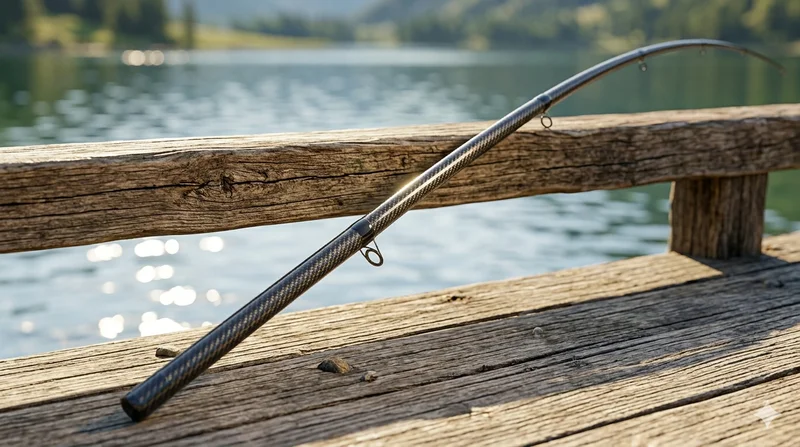
Carbon Fiber Fishing Rod Blank
High-quality carbon fiber fishing rod blank manufactured from multiple grades of Toray carbon fiber cloth. Available in a wide range of lengths, powers, and actions for freshwater and saltwater applications. Suitable for OEM rod building.

Carbon Fiber Plate — 3K Twill T700 1.5mm
Thin 1.5mm carbon fiber plate with 3K twill weave surface. Lightweight and stiff, commonly used for covers, panels, drone bodies, and applications requiring a premium aesthetic appearance.

Carbon Fiber Plate — 3K Twill T700 3.0mm
Medium-thickness 3.0mm carbon fiber plate offering significantly higher load capacity while maintaining attractive 3K twill finish. Suitable for structural brackets, reinforcement plates, and load-bearing panels.
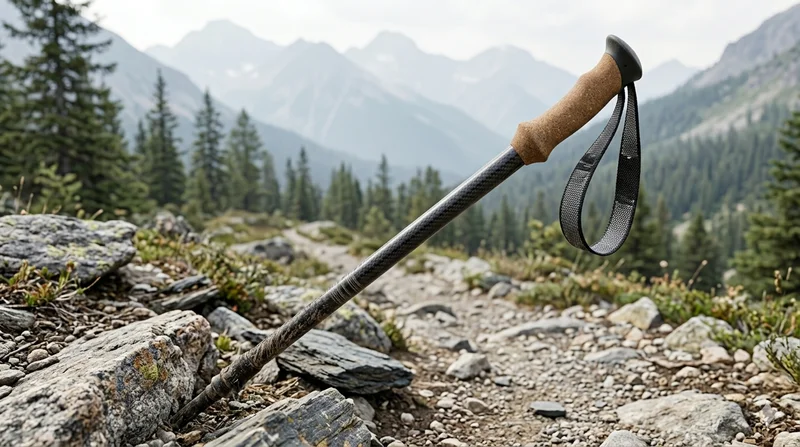
Carbon Fiber Trekking Pole
Lightweight carbon fiber trekking pole manufactured from high-grade carbon fiber tube. Weighs only 160g per pole while providing superior shock absorption and durability for hiking, trail running, and backpacking.

Square Carbon Fiber Tube — 3K Twill T700
Square cross-section carbon fiber tube manufactured with 3K twill weave for torsional strength. Preferred for structural frames, trusses, and support columns where rectangular geometry offers design flexibility.