

A step-by-step guide to establishing a successful B2B contract manufacturing partnership for carbon fiber parts, covering RFQ preparation, supplier qualification, prototype development, production ramp-up, quality assurance, and long-term supply chain optimization.
Building a B2B Contract Manufacturing Partnership for Carbon Fiber Parts: From RFQ to Production Ramp-Up
The global carbon fiber composites market is projected to reach $32.1 billion by 2028, driven by demand across aerospace, automotive, renewable energy, and industrial sectors. For original equipment manufacturers (OEMs) and engineering firms looking to integrate carbon fiber components into their products, the decision to build in-house versus partner with a contract manufacturer is one of the most consequential strategic choices. While in-house production offers maximum control, it requires capital investments of $5–15 million for a modest prepreg-autoclave operation and demands specialized process engineering talent that remains scarce globally. A well-structured B2B contract manufacturing partnership, conversely, can deliver production-ready parts at 30–50% lower total cost while providing access to advanced manufacturing capabilities, established quality systems, and scalable capacity.
However, the path from initial inquiry to stable production is fraught with pitfalls. Industry surveys indicate that 30–40% of first-time carbon fiber buyers experience significant delays, quality failures, or cost overruns during their initial contract manufacturing engagement. This article provides a comprehensive framework for building a successful B2B contract manufacturing partnership for carbon fiber components, structured around five critical phases: RFQ preparation, supplier qualification, prototype development, production ramp-up, and ongoing partnership management.
Phase 1: Strategic RFQ Preparation
The Request for Quotation (RFQ) is the foundation of any successful manufacturing partnership. A well-prepared RFQ enables suppliers to provide accurate pricing and timeline commitments, while a poorly prepared one guarantees ambiguity, change orders, and cost escalation. For carbon fiber components specifically, the RFQ must go far beyond traditional metal-part specifications.
- Define the exact material specification: Specify fiber type (T300, T700, M40J, etc.), tow size (3K, 6K, 12K, 50K), weave architecture (plain, twill, satin, unidirectional), areal weight (g/m²), and resin system (epoxy, BMI, phenolic, PEEK). Include the manufacturer's data sheet references.
- Provide dimensional and ply schedule details: Include full CAD models with defined ply boundaries, drop-off sequences, core material specifications (Nomex, aluminum honeycomb, Rohacell foam), and insert locations. Ambiguity in ply schedules is the single largest source of RFQ-related cost overruns.
- Specify inspection and testing requirements: Define NDT methods (ultrasonic C-scan, thermography, tap testing), acceptance criteria (void content percentage, porosity limits, thickness tolerances), and mechanical test requirements (interlaminar shear strength, flexural modulus, glass transition temperature).
- Clarify surface finish expectations: Specify cosmetic grade (Class A, Class B, structural), tool surface finish, primer/paint specifications, and allowable surface defects per industry standards such as ASTM D2565 or internal cosmetic acceptance criteria.
Phase 2: Supplier Qualification and Selection
Qualifying a carbon fiber contract manufacturer requires a structured evaluation framework that goes beyond price comparison. The industry standard approach uses a weighted scoring matrix across five dimensions:
| Evaluation Criteria | Weight | Gold Standard | Assessment Method |
|---|---|---|---|
| Technical Capability | 30% | Autoclave up to 4m × 2m, AFP/ATP capability, OOA processing, compression molding up to 600 tons | Facility audit, equipment list review, past project portfolio |
| Quality Systems | 25% | AS9100D or ISO 9001:2015 certified, NADCAP NDT accreditation, full material traceability system | Certificate verification, QMS documentation review, non-conformance trend analysis |
| Commercial Terms | 20% | Transparent cost breakdown (materials/labor/overhead), MOQ ≤ 50 units/year for complex parts, payment terms net 60 | Pricing proposal comparison, T&C review, reference client interviews |
| Production Capacity | 15% | Minimum 5,000 kg/year prepreg throughput, dedicated engineering support, at least two shifts capacity | Capacity utilization report, lead time commitments, equipment redundancy assessment |
| Logistics & Support | 10% | Export compliance (ITAR/EAR), documented shipping protocols, customs clearance support in destination country | Export license verification, shipping documentation review, logistics audit |
A typical supplier qualification process takes 8–12 weeks and should include at least one physical facility audit. Key red flags during audits include: inability to demonstrate full material traceability from raw fiber to finished part, limited experience with your specific resin system combination, lack of validated NDT procedures, or high staff turnover in engineering roles (above 15% annually).
Phase 3: Prototype Development and Validation
Prototyping is where the theoretical partnership meets practical reality. Industry data shows that effective prototype programs reduce production launch delays by an average of 60%. The recommended approach is a three-stage prototype sequence:
- Feasibility Coupon (Stage 1): Small flat panels (300×300 mm) using the specified layup sequence to validate resin flow, fiber wet-out, cure cycle parameters, and mechanical properties. Cost: $500–$2,000 per coupon set. Timeline: 2–3 weeks.
- Subscale Part (Stage 2): A simplified geometry representing 40–60% of the final part complexity, manufactured using production-intent tooling materials. This stage validates tool shrinkage compensation, draft angles, and basic laminate quality. Cost: $3,000–$10,000. Timeline: 4–6 weeks.
- Full-Scale First Article (Stage 3): The complete production part manufactured with production tooling on production equipment. All NDT, dimensional inspection, and mechanical testing are performed to acceptance criteria. Cost: $8,000–$25,000. Timeline: 8–12 weeks.
Phase 4: Production Ramp-Up
Transitioning from successful prototype validation to stable serial production is the most challenging phase of the partnership. The industry-standard ramp-up plan follows a three-tier approach:
| Ramp Phase | Volume | Duration | Quality Target | Key Activities |
|---|---|---|---|---|
| Pilot Run | 10–30 parts | 2–4 weeks | 95% first-pass yield | Full inline QC, operator training, process parameter optimization |
| Initial Production | 50–200 parts | 4–8 weeks | 97% first-pass yield | Statistical process control (SPC), Cpk measurement, cycle time reduction |
| Full Rate Production | 200+ parts/month | Ongoing | 99%+ first-pass yield | Continuous improvement, value analysis/value engineering (VA/VE), cost reduction roadmap |
Critical success factors during ramp-up include: dedicated on-site liaison engineer from the buyer side during the first two weeks of pilot production; daily quality metric reviews with documented corrective action tracking; establishment of a joint inventory buffer (30–60 days of safety stock) to absorb initial yield variability; and a formal engineering change management process with defined cost and timeline impact assessment.
Phase 5: Long-Term Partnership Management
The most successful carbon fiber contract manufacturing relationships evolve from transactional buyer-supplier dynamics to strategic partnerships. Key elements of sustainable partnerships include: annual cost reduction targets (typically 5–8% per year through learning curve effects and process optimization); technology roadmapping sessions every six months to evaluate new materials, processes, or automation opportunities; dedicated engineering liaison meetings with defined KPIs covering on-time delivery, quality performance, and cost competitiveness; and joint intellectual property agreements that clearly define ownership of tooling, process improvements, and design modifications.
How long does a typical contract manufacturing partnership take from initial contact to production?
A realistic timeline for first-time carbon fiber part production is 24–36 weeks from initial RFQ submission to first production shipment. This breaks down to RFQ evaluation and supplier selection (6–8 weeks), design for manufacturability review (2–4 weeks), tooling design and fabrication (8–12 weeks), prototype development and validation (10–14 weeks), and initial production ramp (4–8 weeks). Rushed timelines under 16 weeks are achievable only for simple geometries using existing tooling platforms and known material systems.
What are the minimum order quantities for custom carbon fiber parts?
Typical MOQs vary by manufacturing process: hand layup parts can be produced economically at 10–25 units per year; compression molded parts typically require 500–2,000 units per year; autoclave-cured prepreg parts generally need 50–500 units per year; and RTM/infusion parts work best at 100–5,000 units per year. Most contract manufacturers offer pilot quantities at 2–4× the unit cost of full-rate production for initial qualification batches.
Conclusion
Building a successful B2B contract manufacturing partnership for carbon fiber parts requires disciplined execution across five interconnected phases: strategic RFQ preparation, rigorous supplier qualification, structured prototype validation, methodical production ramp-up, and ongoing partnership management. OEMs that invest the time and resources in each phase — rather than rushing to production — consistently achieve lower total cost, higher quality, and more predictable delivery performance. The carbon fiber contract manufacturing landscape continues to evolve, with new OOA processing technologies, automated layup systems, and digital quality management platforms offering ever-greater opportunities for partnership-driven value creation. For B2B buyers considering carbon fiber adoption, a well-structured manufacturing partnership is not merely a sourcing arrangement — it is a strategic capability that can provide lasting competitive advantage.
Part of topic
Related Articles
- Recycled Carbon Fiber Market Forecast 2030: Technology Maturity and Commercialization Path
- South Korea Carbon Fiber Market 2026: Hydrogen Economy and Shipbuilding Innovation
- Wind Turbine Blade Leading Edge Protection 2026: Polyurethane, Tape, and Metallic Shield Solutions
- China Carbon Fiber Overcapacity 2026: Price War Impact and Industry Consolidation
- India Carbon Fiber Market 2026: Wind Energy, Aerospace, and Defense Expansion
- PAN Precursor Market 2026: Acrylonitrile Supply and Carbon Fiber Cost Structure
Interested in Our Products?
Contact our team for competitive pricing and technical specifications.
Get a QuoteRelated Products
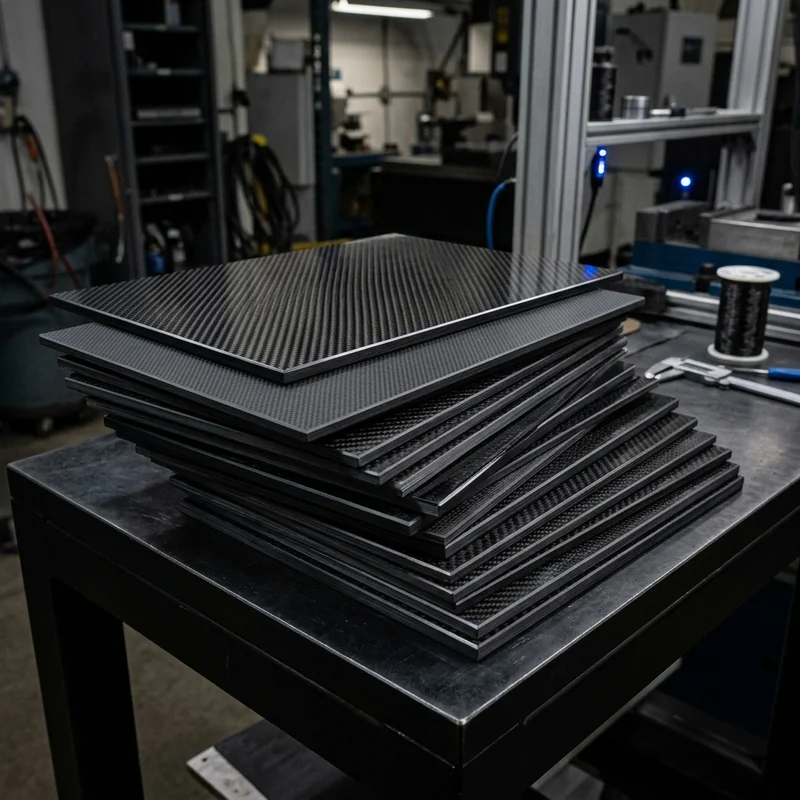
Carbon fiber standard plate-3k stripe
Lightweight, ultra-rigid standard sheets for drone fuselages, robot housings, facades and structural applications.

Carbon Fiber Plate — 3K Twill T700 1.5mm
Thin 1.5mm carbon fiber plate with 3K twill weave surface. Lightweight and stiff, commonly used for covers, panels, drone bodies, and applications requiring a premium aesthetic appearance.

Square Carbon Fiber Tube — 3K Twill T700
Square cross-section carbon fiber tube manufactured with 3K twill weave for torsional strength. Preferred for structural frames, trusses, and support columns where rectangular geometry offers design flexibility.

Carbon Fiber Plate — 3K Twill T700 3.0mm
Medium-thickness 3.0mm carbon fiber plate offering significantly higher load capacity while maintaining attractive 3K twill finish. Suitable for structural brackets, reinforcement plates, and load-bearing panels.
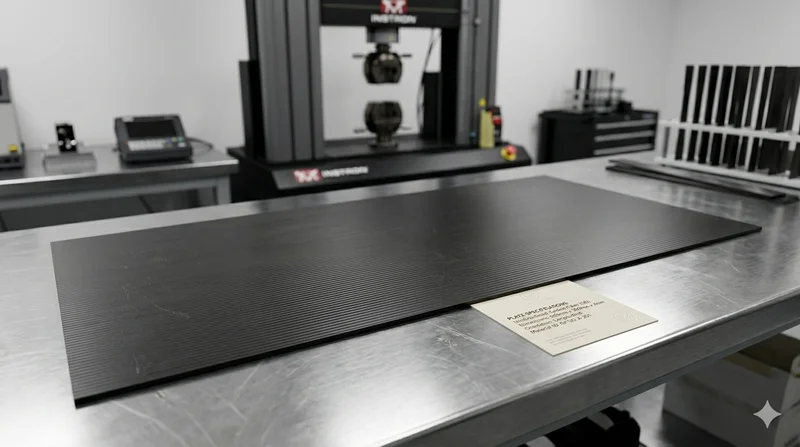
Carbon Fiber Plate — UD Unidirectional T700
Unidirectional carbon fiber plate with all fibers oriented in a single direction for maximum strength along the fiber axis. Essential for structural reinforcements, splints, and applications where load direction is predictable.