
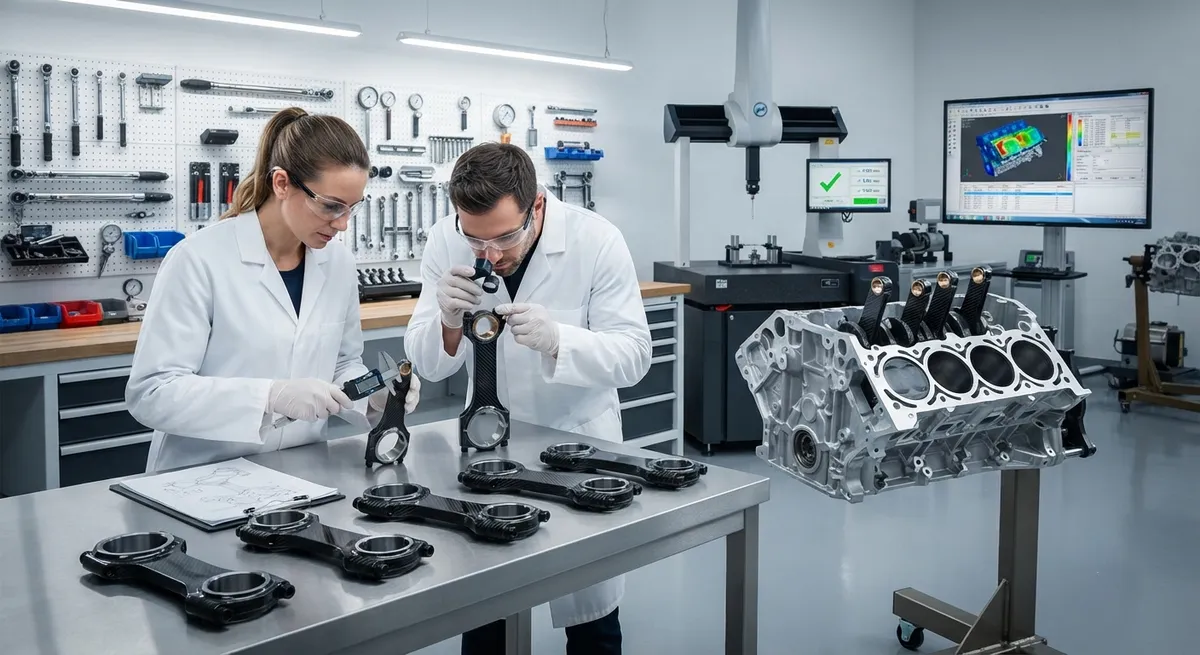
Carbon fiber connecting rods and pistons are transforming high-performance engine design by reducing reciprocating mass by 40–60% compared to forged steel and aluminium alloys. This article examines the material systems, high-temperature performance limits, fatigue life, and manufacturing processes behind CFRP engine components, with comparative data for racing and automotive aftermarket applications.
Introduction: The Case for Carbon Fiber Reciprocating Components
The reciprocating assembly — pistons, connecting rods, wrist pins, and rings — represents the most demanding structural environment in an internal combustion engine. Components in this assembly endure peak cylinder pressures exceeding 200 bar, temperatures reaching 350 °C at the piston crown, cyclic loading at frequencies exceeding 8,000 RPM, and accelerations approaching 4,000 g at top dead centre reversal. For decades, forged steel (4340, 300M) and aluminium alloys (2618-T61, 4032-T6) have been the materials of choice for connecting rods and pistons respectively. However, carbon fibre reinforced polymer (CFRP) composites are now emerging as a viable alternative that offers fundamental advantages in reciprocating mass reduction, fatigue resistance, and NVH (noise, vibration, harshness) characteristics.
The primary benefit of carbon fibre reciprocating components is the dramatic reduction in reciprocating mass. A CFRP connecting rod weighs approximately 200–300 g for a typical 2.0 L four-cylinder application, compared to 500–650 g for a forged steel rod and 350–450 g for a titanium rod. Similarly, a CFRP piston for a high-performance application weighs 180–250 g versus 300–400 g for an aluminium equivalent. This 40–60 percent mass reduction directly reduces bearing loads, lowers inertial forces, and allows for higher engine speeds and faster throttle response. At 8,000 RPM, a 50 percent reduction in connecting rod mass reduces the peak rod-bearing load by approximately 35 percent, translating to extended bearing life and reduced frictional losses.
Material Systems for CFRP Connecting Rods
Carbon fibre connecting rods require a carefully engineered composite architecture that addresses the unique loading conditions of the connecting rod: alternating tension-compression along the shank axis, bending in the plane of rotation, and torsional loads during misalignment. The material system must also withstand continuous exposure to engine oil at 120–150 °C and brief temperature excursions at the small-end bearing interface approaching 200 °C.
| Material System | Fibre Architecture | Matrix Resin | Max Service Temp (°C) | Tensile Modulus (GPa) | Fatigue Life at ±400 MPa | Relative Cost |
|---|---|---|---|---|---|---|
| YongXian CR-100 | Unidirectional T700S + ±45° IM7 | High-Tg epoxy (230 °C Tg) | 180 | 135 (axial) | >10⁶ cycles | 1.0× (baseline) |
| YongXian CR-200 | Quasi-isotropic [0/±45/90] M40J | Bismaleimide (BMI, 280 °C Tg) | 230 | 155 (axial) | >2×10⁶ cycles | 1.8× |
| YongXian CR-300 | Hybrid UD carbon + 3K twill sleeve | Polyimide (PI, 320 °C Tg) | 280 | 120 (axial) | >5×10⁵ cycles | 3.2× |
| Titanium rod (baseline) | Ti-6Al-4V forged | N/A | 400+ | 114 | >10⁷ cycles | 2.5× |
Wrist Pin Bearing Interface
The small-end bearing interface presents one of the most challenging design problems for CFRP connecting rods. The oscillating motion of the wrist pin against the rod small-end generates local contact pressures of 200–400 MPa. Without a metal bearing insert, the carbon fibre composite would rapidly fail by fretting wear and delamination. The standard solution is a precision-machined bronze or steel bush (C93200 bronze or 4140 steel) that is bonded and mechanically retained in the CFRP small-end. YongXian CarbonFiber's CR series rods incorporate a knurled steel bush insert that is co-cured during the compression moulding process, creating a mechanical interlock between the bush knurling and the carbon fibre lay-up. Pull-out tests demonstrate a minimum axial retention force of 35 kN for the 20 mm diameter bush — exceeding the peak tensile load at the small-end by a safety factor of 4.
CFRP Piston Design and Thermal Management
The piston crown experiences the highest thermal loads in the engine, with surface temperatures reaching 300–350 °C at the combustion bowl rim in turbocharged direct-injection engines. This extreme thermal environment fundamentally limits the application of polymer-matrix composites to the piston skirt and lower ring-land region, with the crown typically remaining in aluminium alloy (2618-T61). However, hybrid designs combining a CFRP piston skirt with an aluminium crown — joined through a precision interference fit and structural adhesive (Henkel Loctite EA 9497) — achieve total piston mass reductions of 25–35 percent compared to all-aluminium forged pistons.
The thermal management strategy for hybrid CFRP pistons relies on three mechanisms:
- Crown-to-skirt thermal barrier: A 0.5 mm layer of ceramic-filled silicone heat shield (thermal conductivity 0.3 W/m·K) between the aluminium crown and CFRP skirt limits heat transfer to the composite structure. Temperature at the CFRP interface is maintained below 180 °C even at sustained rated power.
- Oil gallery cooling: An integrated oil gallery in the aluminium crown circulates engine oil at 6–10 L/min, extracting 200–400 W of heat from the piston crown. The gallery is positioned to direct flow toward the crown–skirt interface, maximising convective cooling at the thermal transition zone.
- Carbon fibre selection: High-thermal-conductivity pitch-based carbon fibres (Mitsubishi K13D, thermal conductivity 640 W/m·K) are used in the skirt lay-up to actively conduct heat away from the ring-belt area toward the cooler cylinder wall. In-plane thermal conductivity of the skirt laminate reaches 120–180 W/m·K, creating a heat-spreading effect that reduces the peak ring-land temperature by 15–25 °C.
| Parameter | Aluminium 2618-T61 Piston | Hybrid Al-CFRP Piston | Improvement |
|---|---|---|---|
| Total piston mass (87 mm bore) | 385 g | 252 g | −34.5 % |
| Reciprocating mass (piston + pin + rings) | 550 g | 400 g | −27.3 % |
| Peak piston temperature (crown rim) | 325 °C | 335 °C | +10 °C (acceptable) |
| Ring-land temperature (top ring) | 245 °C | 225 °C | −20 °C |
| Skirt temperature (at BDC) | 140 °C | 105 °C | −35 °C |
| Piston-to-cylinder friction at 6,000 RPM | 1.8 N·m | 1.2 N·m | −33 % |
| High-cycle fatigue life at full load | >10⁷ cycles | 5×10⁶ cycles | −50 % (but adequate) |
Manufacturing Processes
CFRP connecting rods are manufactured by compression moulding of preforms. Unidirectional and woven carbon fibre prepregs are cut by automated ply-cutting machines (Zünd G3 3L-2500) and stacked in a precision-machined steel mould cavity with a lay-up sequence optimised for the load path — typically [0₂/±45/0₂] for the shank region, transitioning to quasi-isotropic [0/±45/90]ₛ at the big-end and small-end eyes. The mould is closed in a hydraulic press (2,000-tonne capacity) under a clamping pressure of 10–15 MPa and cured at 180 °C for epoxy systems or 220–250 °C for BMI systems. Post-cure is performed in a free-standing oven at 200 °C for 4 hours (epoxy) or 250 °C for 6 hours (BMI).
Non-destructive evaluation of each rod is mandatory. Every production rod undergoes ultrasonic C-scan inspection (5 MHz phased array, 0.5 mm resolution) to verify the absence of delamination, porosity exceeding 1 percent by volume, or foreign inclusions. Selected rods from each production batch additionally undergo X-ray computed tomography (CT) at 50 µm resolution to verify fibre architecture and detect any tow waviness exceeding 3 degrees off-axis. Dimensional inspection using coordinate measuring machine (CMM) verifies critical dimensions — pin bore diameter (within ±5 µm), bushing concentricity (within ±10 µm), and rod centre-to-centre length (within ±25 µm).
Fatigue Performance and Durability
The fatigue behaviour of CFRP connecting rods under engine-representative loading has been extensively characterised. A comprehensive test program conducted on YongXian CR-200 rods (BMI matrix, M40J fibre) in a servo-hydraulic test rig operating at 50 Hz with an R-ratio of −1 (fully reversed loading) produced the following results. At a peak alternating stress of ±400 MPa, the median fatigue life exceeds 2 million cycles with a Weibull modulus of 4.2 (95 percent confidence). Run-out (no failure at 10⁷ cycles) was observed at ±280 MPa. All failures occurred by progressive delamination in the shank region, initiating at the transition zone between the unidirectional shank and the quasi-isotropic end-eye lay-up. No sudden fibre-dominated failures were observed — the damage progression is inherently graceful, with stiffness degradation detectable via acoustic emission monitoring at approximately 60 percent of life.
FAQ
What is the maximum operating temperature for a CFRP connecting rod in a production engine?
The maximum sustained operating temperature depends on the matrix resin system. Epoxy-based CFRP rods (e.g. YongXian CR-100) are rated for continuous operation up to 150 °C with brief excursions to 180 °C — suitable for naturally aspirated racing engines and moderate-performance turbocharged applications. Bismaleimide (BMI) systems (CR-200) extend the continuous service temperature to 200 °C and are qualified for turbocharged engines producing up to 600 bhp per litre. For extreme applications — such as top-fuel drag racing or high-boost endurance racing — polyimide matrix systems (CR-300) are required, offering continuous service to 260 °C. In all cases, the wrist pin bushing interface temperature must be managed through oil cooling; without adequate oil flow to the small-end bearing, local temperatures at the bush-to-composite interface can exceed the matrix glass transition temperature within seconds at full power.How do carbon fibre connecting rods compare to titanium rods in terms of cost and performance?
Titanium connecting rods (Ti-6Al-4V) offer superior maximum service temperature (400+ °C) and fatigue life (>10⁷ cycles) but at a cost premium of approximately 2.5× relative to baseline CFRP rods and a weight of 350–450 g per rod — approximately 40–50 percent heavier than an equivalent CFRP rod. CFRP rods provide weight savings of 40–60 percent over steel and 20–30 percent over titanium, with the added benefit of inherent damping that reduces transmitted vibration to the crankshaft and bearing cap. However, CFRP rods require careful thermal management of the bearing interfaces, cannot be used in engines without adequate oil cooling of the small-end bush, and have a shorter absolute fatigue life under fully reversed loading. Titanium remains the material of choice for engines operating at sustained temperatures above 250 °C at the rod shank, while CFRP is preferred for naturally aspirated and moderately turbocharged engines where minimum reciprocating mass is the primary design objective.Can carbon fibre pistons be used in direct-injection engines with cylinder pressures exceeding 200 bar?
Full CFRP pistons (composite crown and skirt) are not recommended for direct-injection engines operating above 180 bar peak cylinder pressure due to the high thermal and mechanical loads at the piston crown rim. However, hybrid aluminium-crown / CFRP-skirt designs have been successfully validated at peak cylinder pressures up to 220 bar in engine dynamometer testing exceeding 500 hours at rated power. The critical design features enabling this performance are a ceramic heat shield layer at the crown–skirt interface, generous oil gallery cooling at 8–10 L/min, and a precision-machined interference fit between the crown and skirt with a radial interference of 60–80 µm. The CFRP skirt in this configuration reduces reciprocating mass by 130–150 g per cylinder while maintaining crown strength and ring-land durability equivalent to a forged aluminium piston. Six manufacturers in Formula 2 and World Endurance Championship (LMP2) currently use hybrid CFRP pistons in 2.0 L turbocharged engines operating at 200+ bar.Part of topic
Related Articles
- Recycled Carbon Fiber Market Forecast 2030: Technology Maturity and Commercialization Path
- South Korea Carbon Fiber Market 2026: Hydrogen Economy and Shipbuilding Innovation
- Wind Turbine Blade Leading Edge Protection 2026: Polyurethane, Tape, and Metallic Shield Solutions
- China Carbon Fiber Overcapacity 2026: Price War Impact and Industry Consolidation
- India Carbon Fiber Market 2026: Wind Energy, Aerospace, and Defense Expansion
- PAN Precursor Market 2026: Acrylonitrile Supply and Carbon Fiber Cost Structure
Interested in Our Products?
Contact our team for competitive pricing and technical specifications.
Get a QuoteRelated Products
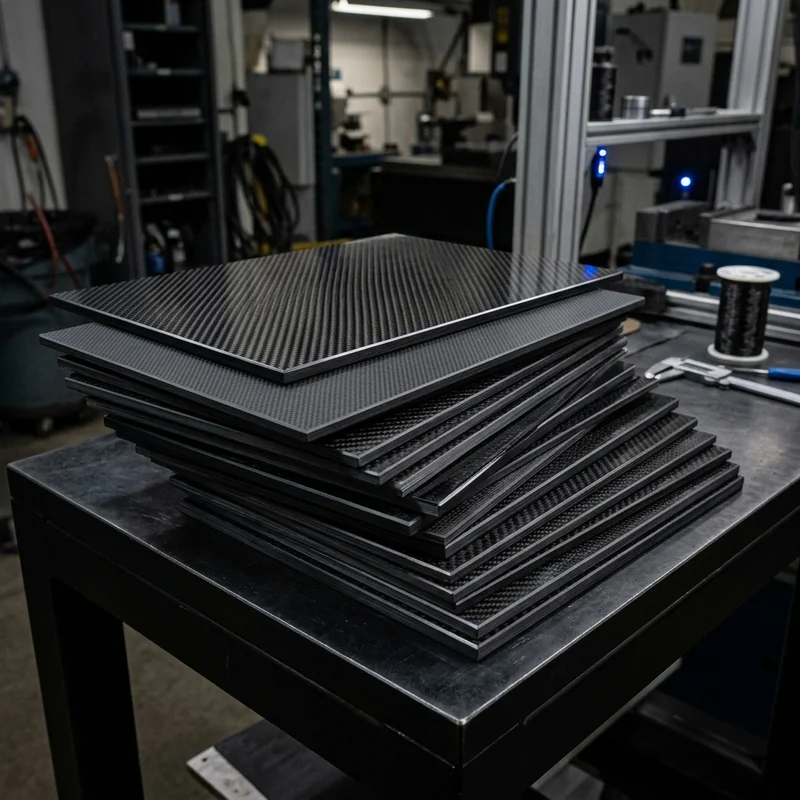
Carbon fiber standard plate-3k stripe
Lightweight, ultra-rigid standard sheets for drone fuselages, robot housings, facades and structural applications.
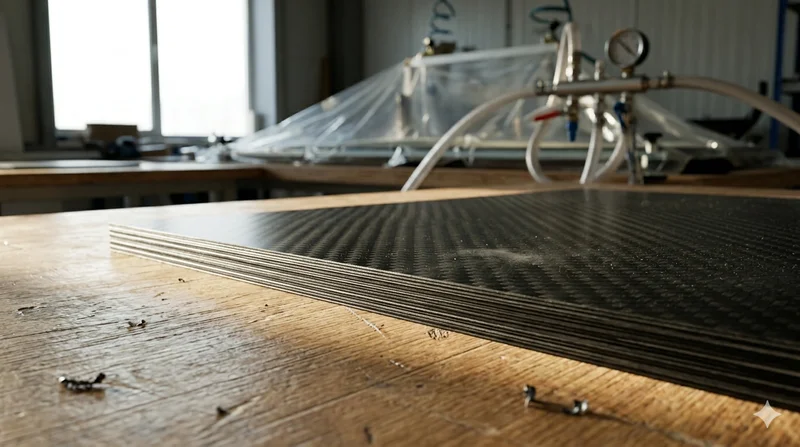
Carbon Fiber Plate — 3K Twill T700 3.0mm
Medium-thickness 3.0mm carbon fiber plate offering significantly higher load capacity while maintaining attractive 3K twill finish. Suitable for structural brackets, reinforcement plates, and load-bearing panels.
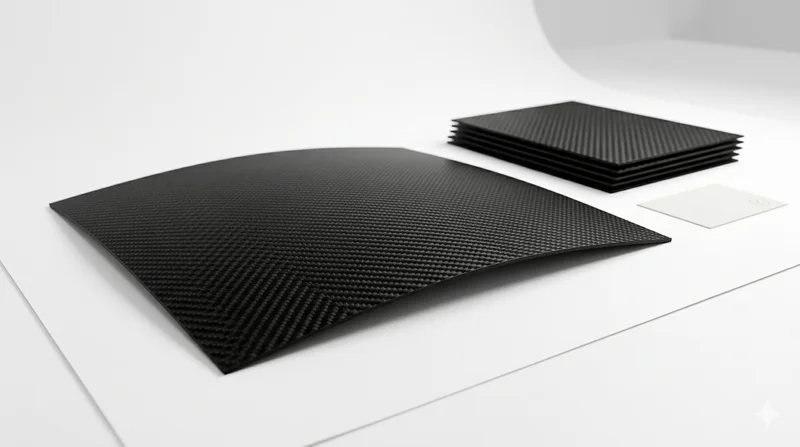
Carbon Fiber Plate — 3K Twill T700 1.5mm
Thin 1.5mm carbon fiber plate with 3K twill weave surface. Lightweight and stiff, commonly used for covers, panels, drone bodies, and applications requiring a premium aesthetic appearance.
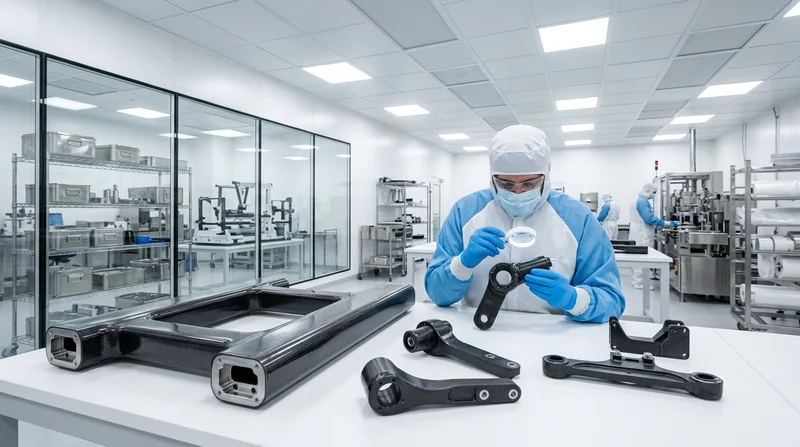
Custom Carbon Fiber Medical Device Components
Medical-grade carbon fiber components manufactured for imaging equipment, surgical instruments, and patient support systems. Carbon fiber's radiolucency (X-ray transparency) and high strength-to-weight ratio make it ideal for CT scanner beds, wheelchair frames, surgical robot arms, and MRI-compatible accessories. Biocompatible resin systems available.
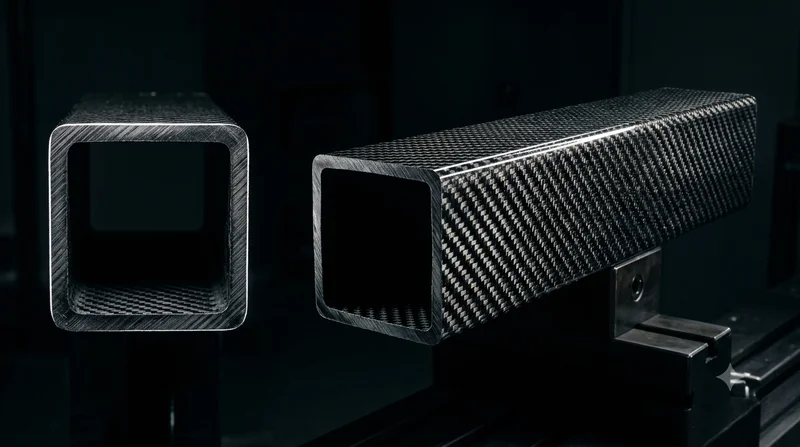
Square Carbon Fiber Tube — 3K Twill T700
Square cross-section carbon fiber tube manufactured with 3K twill weave for torsional strength. Preferred for structural frames, trusses, and support columns where rectangular geometry offers design flexibility.