
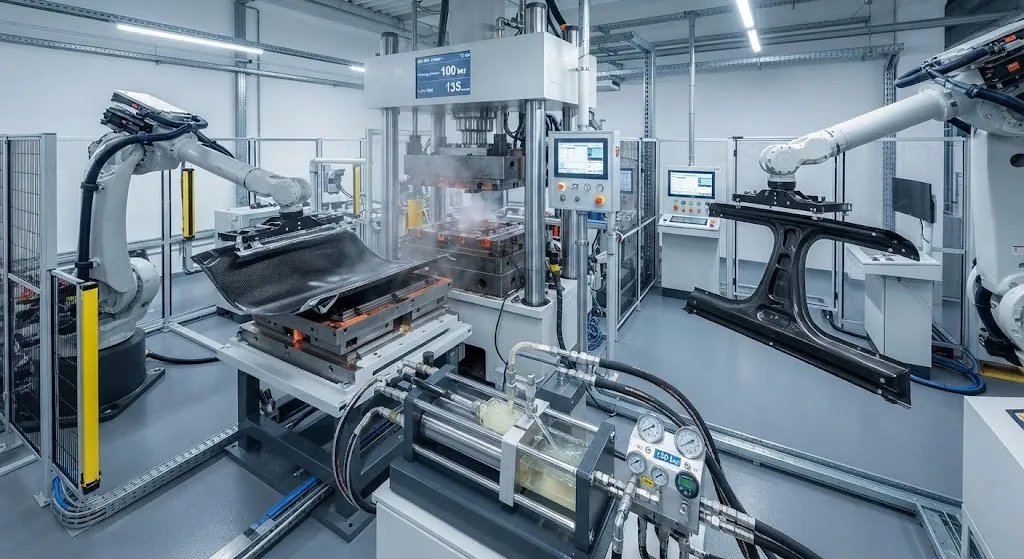
High-pressure resin transfer molding — commonly abbreviated as HP-RTM — has emerged as the dominant manufacturing process for producing carbon fiber reinforced polymer (CFRP) structural components in automotive series production. Unlike aerospace prepreg-autoclave workflows that accept cycle times o
Introduction
High-pressure resin transfer molding — commonly abbreviated as HP-RTM — has emerged as the dominant manufacturing process for producing carbon fiber reinforced polymer (CFRP) structural components in automotive series production. Unlike aerospace prepreg-autoclave workflows that accept cycle times of several hours, automotive OEMs require parts off the mold in under three minutes to match the throughput rates of steel and aluminum stamping lines. Achieving this cycle time while maintaining the mechanical properties, surface quality, and dimensional tolerances that vehicle engineers demand requires precise optimization of every process variable: resin injection pressure, mold temperature, fiber preform architecture, and cure kinetics.
This article explains the physics behind HP-RTM cycle time optimization, quantifies the impact of each process parameter on cure speed and part quality, reviews the tooling and automation systems that enable high-rate production, and provides practical guidance for engineers evaluating HP-RTM against alternative composite forming processes for automotive applications.
How HP-RTM Works
The HP-RTM process consists of five sequential stages, each contributing to the total cycle time:
- Preform loading: A dry carbon fiber preform — typically a multi-axial non-crimp fabric (NCF) cut and oriented for the target mechanical properties — is placed into the matched metal mold. Automated preform loading with robotic pick-and-place systems achieves loading times of 15-25 seconds.
- Mold closing and compression: The hydraulic press closes the mold to the target cavity thickness, compressing the preform. Compression speeds of 50-150 mm/s with final pressures of 80-150 bar ensure consistent fiber volume fraction (Vf) of 50-58%.
- Resin injection: Mixed two-component epoxy resin is injected at 80-200 bar through strategically placed injectors, filling the mold cavity in 15-40 seconds. The high injection pressure — 10-20x higher than conventional RTM — is the defining feature that enables rapid fill and short cycle times.
- Cure: The exothermic epoxy cure reaction progresses under elevated mold temperatures (130-160 degrees C). Cure times range from 60-120 seconds for fast-cure resin systems, accounting for 40-60% of the total cycle.
- Mold opening and part extraction: The press opens, ejector pins release the part, and a robotic unloader removes the finished component. Extraction times of 10-20 seconds complete the cycle.
Total cycle times in production HP-RTM cells range from 90 seconds for simple geometries to 180 seconds for large structural parts with complex rib networks. The theoretical minimum cycle time is governed by resin flow physics and cure kinetics, not by equipment speed.
Process Parameters Governing HP-RTM Cycle Time
Four primary parameters interact to determine both the achievable cycle time and the resulting part quality:
| Parameter | Range (Typical) | Effect on Cycle Time | Effect on Part Quality |
|---|---|---|---|
| Injection pressure | 80-200 bar | Higher pressure means faster fill and shorter cycle | Risk of fiber washout above 180 bar |
| Mold temperature | 130-160 degrees C | Higher temp means faster cure and shorter cycle | Thermal degradation above 170 degrees C for some resins |
| Resin reactivity (gel time) | 15-60 s at 150 degrees C | Lower gel time means faster cure and shorter cycle | Insufficient flow if gel time too short |
| Fiber volume fraction (Vf) | 50-58% | Higher Vf means less resin to inject and faster fill | Higher Vf means higher mechanical properties but risk of dry spots |
The interaction between injection pressure and gel time is particularly critical. If the resin gels before the mold is completely filled, the result is a dry-spot defect that compromises mechanical integrity. HP-RTM process design therefore requires simultaneous optimization of fill time (governed by pressure, permeability, and preform thickness) and gel time (governed by resin chemistry and temperature).
Resin Systems for Fast-Cure HP-RTM
The development of fast-cure epoxy resin systems has been the single most important enabler of sub-three-minute HP-RTM cycle times. Automotive-grade HP-RTM resins differ from aerospace epoxies in several key respects:
- Gel time: Automotive resins are formulated with gel times of 15-30 seconds at 150 degrees C, compared to 60-180 seconds for aerospace resins. This requires highly reactive hardener chemistry — typically anhydride or fast-amine systems.
- Exotherm management: Fast-cure resins generate significant exothermic heat. For thick parts exceeding 3 mm, peak exotherm temperatures can exceed mold temperature by 40-80 degrees C, risking thermal degradation. Internal mold cooling channels and staged cure profiles manage this risk.
- Post-cure properties: Fast-cure automotive resins achieve glass transition temperatures (Tg) of 120-140 degrees C, sufficient for automotive under-hood and structural applications but below the 180 degrees C-plus Tg of aerospace resins. This is an acceptable trade-off for the cycle time advantage.
- Demold strength: Resins must develop sufficient green strength within the cure cycle to allow part extraction without distortion. Typical demold flexural strength targets are 80-120 MPa, achieved within 60-90 seconds of cure.
Tooling and Press Systems for High-Rate Production
HP-RTM tooling must withstand high injection pressures, rapid thermal cycling, and hundreds of thousands of production cycles. Key tooling considerations include:
- Mold materials: Tool steel (P20, H13) for high-volume production; aluminum alloys for prototype and low-volume runs. Surface hardness of 50-55 HRC ensures wear resistance against carbon fiber abrasion.
- Injection system: High-pressure piston or screw injectors with mixing heads that achieve plus or minus 1% component ratio accuracy. Continuous mixing heads eliminate purge waste between shots.
- Temperature control: Dedicated heating and cooling circuits maintain mold temperature uniformity within plus or minus 3 degrees C across the cavity. Conformal cooling channels — produced by metal 3D printing — reduce thermal gradient hotspots by 40-60%.
- Press specifications: Hydraulic or hybrid presses with 1,000-4,000 ton clamping force, closing speed of 100-200 mm/s, and positional accuracy of plus or minus 0.1 mm to maintain consistent part thickness.
Cycle Time Benchmarking: HP-RTM vs Alternative Processes
HP-RTM occupies a specific position in the cycle time spectrum of composite forming processes:
| Process | Typical Cycle Time | Part Size Range | Capital Investment |
|---|---|---|---|
| HP-RTM | 90-180 seconds | 0.2-3.0 m2 | $2-8M per cell |
| Conventional RTM | 5-20 minutes | 0.5-10+ m2 | $0.5-3M per cell |
| Compression RTM (CRTM) | 120-300 seconds | 0.3-5.0 m2 | $1-5M per cell |
| Wet compression molding | 60-150 seconds | 0.2-2.0 m2 | $0.8-3M per cell |
| Sheet molding compound (SMC) | 30-90 seconds | 0.1-1.5 m2 | $0.5-2M per cell |
| Prepreg stamp forming | 120-300 seconds | 0.1-1.0 m2 | $1-4M per cell |
HP-RTM is faster than conventional RTM by 5-10x because of the high injection pressure, which reduces fill time from minutes to seconds. It is competitive with wet compression molding and SMC for medium-complexity geometries, but offers superior fiber volume fraction control and mechanical properties because the dry preform is placed before injection rather than mixed in-situ.
Production Case Studies
Several automotive OEMs and tier-1 suppliers have demonstrated HP-RTM at production scale:
- BMW i-series: The BMW i3 and i8 passenger cell (Life Module) used HP-RTM for the roof panel, side panels, and B-pillar structures, achieving cycle times of 120-150 seconds for parts weighing 3-8 kg. The production cell at Landshut operates at approximately 50 parts per shift.
- Audi A8 B-pillar reinforcement: The fourth-generation Audi A8 introduced an HP-RTM carbon fiber B-pillar that combines inner and outer structural elements in a single molding operation, replacing a multi-piece steel assembly. Cycle time of 135 seconds with a part weight reduction of 40%.
- McLaren Automotive: McLaren's Composites Technology Centre in Sheffield uses HP-RTM for the MonoCell chassis of its sports cars, achieving cycle times under 120 seconds for the single-piece passenger cell.
- General Motors: GM has prototyped HP-RTM roof panels and structural cross-members for pickup trucks, targeting cycle times of 90 seconds to match the throughput of existing stamping lines.
Frequently Asked Questions
What is the minimum cycle time achievable with HP-RTM for automotive carbon fiber parts?
The practical minimum cycle time for HP-RTM is approximately 60-90 seconds for thin-walled parts (1.5-2.5 mm wall thickness) with simple geometries and no internal ribs. For structural parts with complex rib networks and wall thicknesses of 3-5 mm, realistic cycle times are 120-180 seconds. The theoretical limit is governed by the fastest possible resin fill (approximately 5-15 seconds at 200 bar injection pressure for a 1 m2 mold) plus the minimum cure time to reach demold strength (40-60 seconds at 160 degrees C for fast-cure resins). Below 60 seconds, the risk of incomplete cure, residual volatiles, and fiber washout increases substantially.
How does HP-RTM cycle time affect part mechanical properties compared to autoclave-cured prepreg?
HP-RTM parts typically achieve 85-95% of the mechanical properties of autoclave-cured prepreg laminates at the same fiber volume fraction. The difference is primarily in interlaminar properties — HP-RTM uses dry fiber preforms with lower inter-fiber bonding quality than prepreg. Tensile strength and modulus are typically within 5-10% of prepreg values, while compression-after-impact (CAI) strength may be 10-15% lower. For automotive structural applications, this difference is acceptable because the design loads are lower than aerospace and the weight savings from replacing steel (50-60% weight reduction) far outweigh the composite property penalties.
What are the main cost drivers in HP-RTM cycle time optimization?
The three dominant cost drivers are: (1) resin material cost, which scales with cycle time because faster cures require more expensive reactive resin systems; (2) press utilization, where each second of cycle time translates to $0.50-2.00 in amortized capital cost for a $5M press cell; and (3) energy consumption, particularly for mold heating, where maintaining 150 degrees C mold temperature at high throughput requires 50-100 kW of continuous heating power. Optimizing cycle time therefore requires balancing resin cost against throughput gain — a 30-second reduction in cycle time may save $1-3M annually in press amortization but increase resin cost by 5-10% if a more reactive (and expensive) hardener is required.
Conclusion
HP-RTM cycle time optimization is the enabling technology that makes carbon fiber cost-competitive with metals for automotive structural applications. By achieving cycle times of 90-180 seconds through fast-cure resin systems, high-pressure injection, and precision-controlled tooling, HP-RTM delivers the throughput rates that automotive OEMs require while maintaining the 40-60% weight advantage of carbon fiber composites over steel. The process parameters — injection pressure, mold temperature, resin reactivity, and fiber volume fraction — must be co-optimized to avoid the competing risks of dry spots, incomplete cure, and thermal degradation.
For automotive engineers evaluating carbon fiber forming processes, HP-RTM offers the best combination of cycle time, part complexity, and mechanical performance for medium-to-high volume production. Explore our carbon fiber fabrics and HP-RTM-compatible materials, or contact our engineering team to discuss resin system selection and process parameter optimization for your automotive program.
Part of topic
Related Articles
- Carbon Fiber Polymer Matrix Composite Fire Resistance: Intumescent Coatings and Fire-Barrier Solutions
- Continuous Fiber Reinforced Thermoplastics: CFRT vs Thermoset Processing and Applications
- Carbon Fiber Nanostitching and Interleaving: Toughness Enhancement for Delamination Resistance
- Bio-Based Carbon Fiber Precursors: Lignin and Polyethylene for Low-Cost Production
- Large-Tow Carbon Fiber Cost Analysis: 48K vs 60K Price-Performance Comparison
- Carbon Fiber-Resin Interface Bonding: Surface Treatment and Coupling Agent Optimization
Interested in Our Products?
Contact our team for competitive pricing and technical specifications.
Get a QuoteRelated Products

Carbon Fiber Fishing Rod Blank
High-quality carbon fiber fishing rod blank manufactured from multiple grades of Toray carbon fiber cloth. Available in a wide range of lengths, powers, and actions for freshwater and saltwater applications. Suitable for OEM rod building.

Carbon Fiber Plate — 3K Twill T700 1.5mm
Thin 1.5mm carbon fiber plate with 3K twill weave surface. Lightweight and stiff, commonly used for covers, panels, drone bodies, and applications requiring a premium aesthetic appearance.
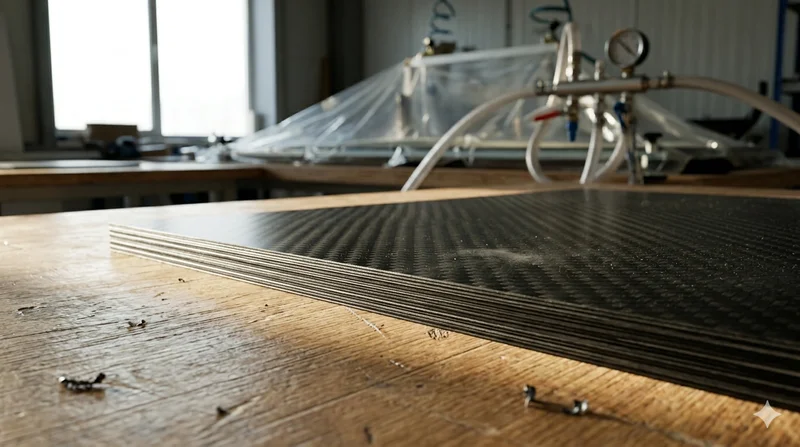
Carbon Fiber Plate — 3K Twill T700 3.0mm
Medium-thickness 3.0mm carbon fiber plate offering significantly higher load capacity while maintaining attractive 3K twill finish. Suitable for structural brackets, reinforcement plates, and load-bearing panels.

Carbon Fiber Trekking Pole
Lightweight carbon fiber trekking pole manufactured from high-grade carbon fiber tube. Weighs only 160g per pole while providing superior shock absorption and durability for hiking, trail running, and backpacking.
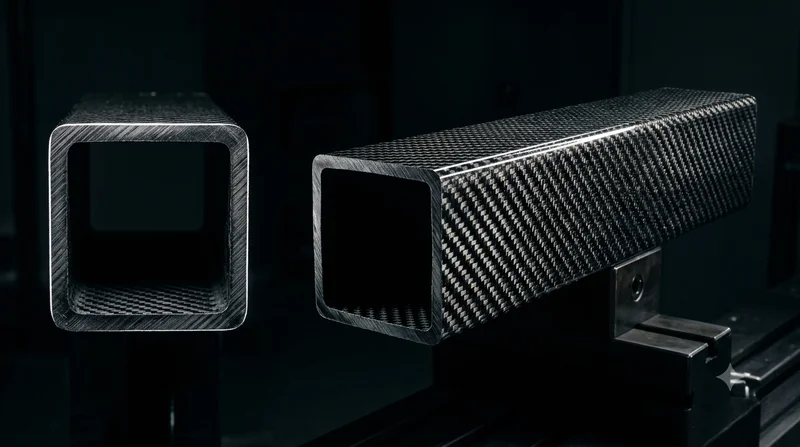
Square Carbon Fiber Tube — 3K Twill T700
Square cross-section carbon fiber tube manufactured with 3K twill weave for torsional strength. Preferred for structural frames, trusses, and support columns where rectangular geometry offers design flexibility.