
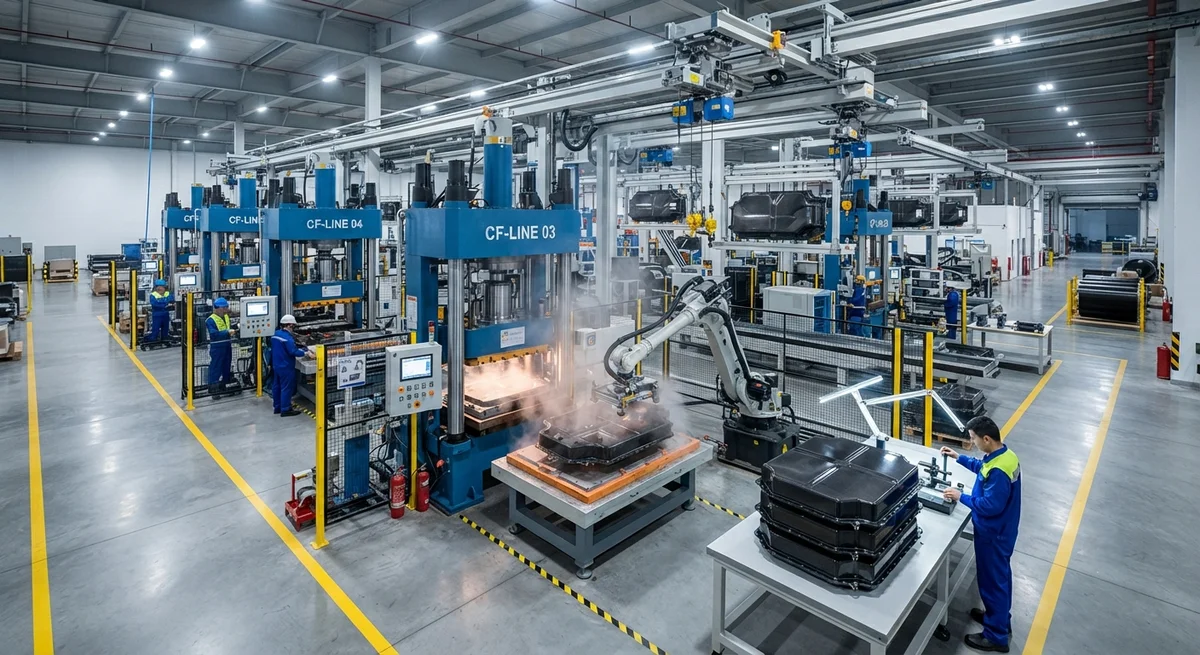
A comprehensive market analysis of the automotive carbon fiber composites industry — covering MarketsandMarkets projections to $19.35B by 2031, segment-by-segment breakdown, EV lightweighting trends, and strategic opportunities for B2B suppliers.
Introduction
The global automotive carbon fiber composites market is on a trajectory to reach $19.35 billion by 2031, according to the latest comprehensive report from MarketsandMarkets. Growing at a compound annual growth rate (CAGR) of 12.7% from a 2026 base of $10.62 billion, this market expansion is being driven by the convergence of three powerful trends: the accelerating transition to electric vehicles (EVs), increasingly stringent global fuel economy and emissions regulations, and the industrialization of high-volume carbon fiber manufacturing processes that are steadily driving down material costs.
For B2B buyers in the automotive supply chain, understanding the granular dynamics of this market — segment by segment, region by region — is critical for strategic sourcing, technology investment, and competitive positioning. This article provides a deep-dive analysis of the key growth drivers, market segments, regional dynamics, and actionable insights for carbon fiber suppliers targeting the automotive sector. The automotive sector currently consumes approximately 14,500 metric tons of carbon fiber annually, representing 22% of total global carbon fiber demand. By 2031, this figure is projected to reach 38,000 metric tons, driven largely by structural applications in battery electric vehicle platforms.
| Market Segment | 2026 Value ($B) | 2031 Value ($B) | CAGR | Key Driver |
|---|---|---|---|---|
| Structural Body & Chassis | 3.85 | 7.42 | 14.0% | EV battery enclosure, monocoque frames |
| Interior & Trim | 1.92 | 3.15 | 10.4% | Luxury/premium vehicle customization |
| Powertrain & Drivetrain | 1.45 | 2.68 | 13.1% | Electric motor rotors, driveshafts |
| Suspension & Steering | 1.08 | 1.95 | 12.5% | Composite leaf springs, control arms |
| Exterior Panels | 0.95 | 1.82 | 13.9% | Hood, roof, door panels for EVs |
| Underhood Components | 0.72 | 1.28 | 12.2% | Engine covers, intake manifolds |
| Other (fasteners, brackets) | 0.65 | 1.05 | 10.1% | NVH optimization, parts consolidation |
| Total | 10.62 | 19.35 | 12.7% |
EV Lightweighting: The Primary Demand Driver
The single most powerful driver of automotive carbon fiber demand is the electric vehicle lightweighting imperative. Every 100 kg of mass reduction in an EV extends driving range by 8–12 km and reduces battery capacity requirements by 1.5–2.0 kWh, translating to approximately $200–$300 in battery cost savings. With global EV sales projected to reach 45 million units by 2031 (from 14 million in 2026), the cumulative lightweighting opportunity is immense. Carbon fiber composites offer the highest specific strength and stiffness of any practical automotive structural material:
- Battery enclosures: Carbon fiber composite battery packs weigh 40–55% less than equivalent steel designs and 25–35% less than aluminum designs. The Tesla Cybertruck's composite bed, BMW iX's carbon cage, and Lucid Air's composite floor structure all exemplify this trend. By 2031, 35% of new EV platforms are expected to incorporate carbon fiber structural battery enclosures.
- Monocoque body structures: Full carbon fiber monocoques, once reserved for hypercars like the McLaren Senna and Ferrari LaFerrari, are migrating to high-volume production. The BMW i3 and i8 pioneered this approach at scale. New entrants like Rivian and Lucid are adopting hybrid aluminum-CFRP architectures for their SUV platforms.
- Rotating and unsprung mass: Carbon fiber driveshafts reduce rotational inertia by 60–70% compared to steel. Carbon fiber wheels — now offered as OEM options on the Chevrolet Corvette Z06, Porsche 911 GT3, and Ford Mustang Shelby GT500 — reduce unsprung mass by 35–45% per corner.
Regional Market Dynamics
The automotive carbon fiber composites market shows distinct regional characteristics that B2B suppliers must navigate:
- North America (32% market share): Driven by the US EV transition (targeting 50% EV penetration by 2030), the Tesla ecosystem (Giga Texas, Giga Nevada), and the entrenched motorsport and luxury performance vehicle culture. Domestic carbon fiber production capacity is expanding, with the US Department of Energy's $2.8 billion in grants for domestic battery and materials manufacturing including $450 million specifically for carbon fiber production lines.
- Europe (28% market share): The EU's fleet-wide CO2 target of 0 g/km for new cars by 2035 creates the strongest regulatory driver globally. Germany's automotive OEMs — BMW, Mercedes-Benz, Volkswagen, and Porsche — are the largest European consumers of automotive-grade carbon fiber. The EU's Carbon Border Adjustment Mechanism (CBAM) favors locally-sourced materials with lower carbon footprints.
- Asia-Pacific (33% market share): China alone accounts for 60% of global EV production. Chinese carbon fiber producers — including Zhongfu Shenying, Guangwei Composites, and Jilin Carbon Valley — are rapidly scaling automotive-grade capacity. Japan's Toray, Teijin, and Mitsubishi Chemical remain dominant in high-end prepreg supply, while South Korea's Hyosung Advanced Materials and SK Chemicals are expanding rapidly.
- Rest of World (7% market share): Emerging automotive composite markets in India (Mahindra, Tata), Southeast Asia (VinFast in Vietnam), and the Middle East are growing at 15–18% CAGR from a small base, driven by new EV assembly plants and government industrialization programs.
Material Cost Trends and the $20/kg Threshold
The widely cited $20/kg carbon fiber cost threshold for mainstream automotive adoption is being approached from multiple directions. Industrial-grade carbon fiber (T300 class, 3.5 GPa tensile strength, 230 GPa modulus) has declined from $35/kg in 2018 to approximately $22/kg in 2026 for large-volume contracts (>500 metric tons/year). Automotive-grade carbon fiber (T700 class, 4.9 GPa) currently ranges from $28–$38/kg. The convergence of large-tow precursor technology (50K and 60K tow), microwave-assisted plasma oxidation (reducing stabilization time from 120 minutes to 30 minutes), and alternative precursor sources (lignin-based, textile-grade PAN) is expected to drive industrial-grade fiber below $18/kg by 2029.
Frequently Asked Questions
What carbon fiber grades are most commonly used in automotive applications?
The automotive sector primarily uses T700-class (4.9 GPa tensile strength) and T300-class (3.5 GPa) carbon fibers. T700 is preferred for structural components (crash structures, monocoques, battery enclosures) due to its balance of strength and cost. T300 is used for semi-structural and cosmetic parts (trim panels, engine covers, underbody shields). Emerging applications for high-modulus fibers (M40 class, 400 GPa) include electric motor rotor sleeves and driveshafts requiring torsional stiffness.
How does the automotive carbon fiber supply chain differ from aerospace?
The automotive supply chain prioritizes volume, speed, and cost over the exhaustive traceability and documentation required in aerospace. Automotive-grade carbon fiber typically has wider mechanical property allowables (±8% vs ±3% for aerospace), shorter qualification cycles, and accepts lower-cost precursor materials. However, the line is blurring as automotive safety regulations (FMVSS, ECE, C-NCAP) impose increasingly stringent crash performance requirements that demand consistent material properties. The emerging automotive CFRP supply chain favors intermediate-modulus fibers (290–320 GPa) processed via high-rate compression molding with cycle times under 5 minutes.
What are the key barriers to wider adoption of carbon fiber in mainstream vehicles?
The three primary barriers are: (1) material cost — even at $22/kg, carbon fiber is 5–8× more expensive than advanced high-strength steel ($2.80–$4.50/kg) and 3–4× more than aluminum ($6–$8/kg); (2) cycle time — compression molding of CFRP takes 3–10 minutes per part versus 15–30 seconds for steel stamping, requiring fundamentally different production line designs and capital investment; and (3) recycling infrastructure — the lack of established, cost-effective carbon fiber recycling for end-of-life vehicles remains a regulatory and environmental concern, particularly in EU markets, though pyrolysis-based recycling capacity is projected to reach 12,000 metric tons annually by 2030.
Part of topic
Related Articles
- Recycled Carbon Fiber Market Forecast 2030: Technology Maturity and Commercialization Path
- South Korea Carbon Fiber Market 2026: Hydrogen Economy and Shipbuilding Innovation
- Wind Turbine Blade Leading Edge Protection 2026: Polyurethane, Tape, and Metallic Shield Solutions
- China Carbon Fiber Overcapacity 2026: Price War Impact and Industry Consolidation
- India Carbon Fiber Market 2026: Wind Energy, Aerospace, and Defense Expansion
- PAN Precursor Market 2026: Acrylonitrile Supply and Carbon Fiber Cost Structure
Interested in Our Products?
Contact our team for competitive pricing and technical specifications.
Get a QuoteRelated Products

Carbon Fiber Plate — 3K Twill T700 1.5mm
Thin 1.5mm carbon fiber plate with 3K twill weave surface. Lightweight and stiff, commonly used for covers, panels, drone bodies, and applications requiring a premium aesthetic appearance.
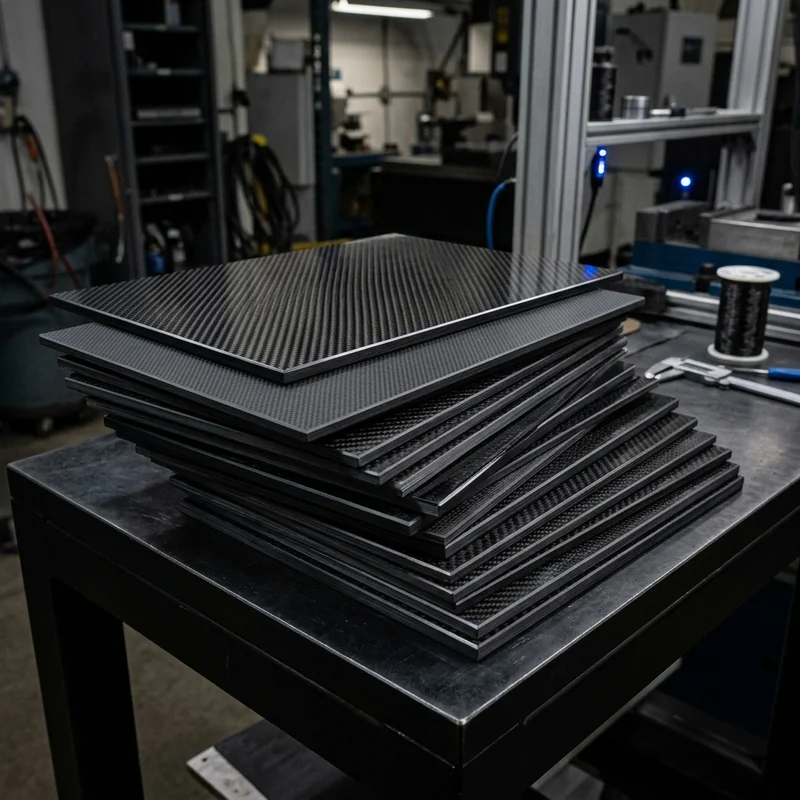
Carbon fiber standard plate-3k stripe
Lightweight, ultra-rigid standard sheets for drone fuselages, robot housings, facades and structural applications.

Square Carbon Fiber Tube — 3K Twill T700
Square cross-section carbon fiber tube manufactured with 3K twill weave for torsional strength. Preferred for structural frames, trusses, and support columns where rectangular geometry offers design flexibility.

Carbon Fiber Plate — 3K Twill T700 3.0mm
Medium-thickness 3.0mm carbon fiber plate offering significantly higher load capacity while maintaining attractive 3K twill finish. Suitable for structural brackets, reinforcement plates, and load-bearing panels.
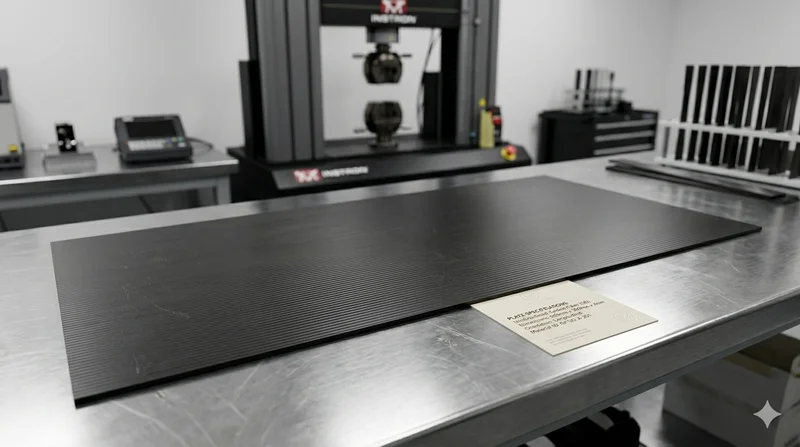
Carbon Fiber Plate — UD Unidirectional T700
Unidirectional carbon fiber plate with all fibers oriented in a single direction for maximum strength along the fiber axis. Essential for structural reinforcements, splints, and applications where load direction is predictable.