
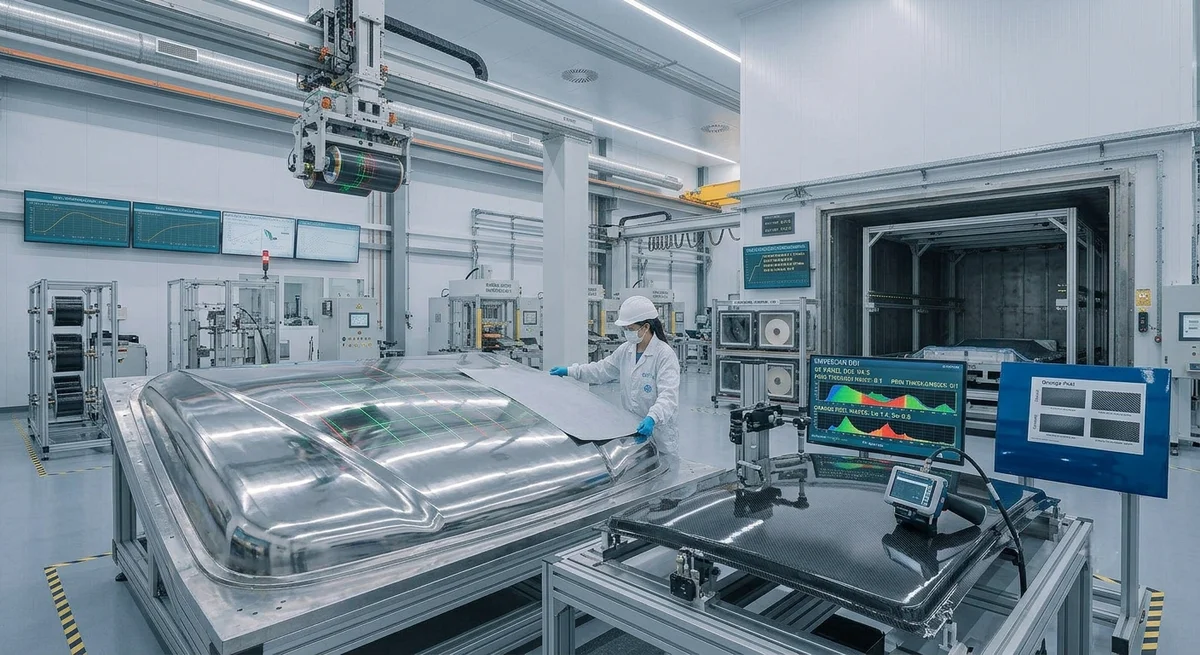
A technical guide to achieving Class A surface finish in carbon fiber automotive panels — covering material selection, mold design, process parameters, and quality inspection for paint-ready composite body panels.
Introduction
Class A surface finish — defined as a surface with no visible defects under showroom lighting conditions — is the single most demanding quality requirement in carbon fiber automotive body panel manufacturing. The global market for carbon fiber automotive exterior panels is projected to reach USD 1.6 billion by 2030, growing at 14.2% CAGR. Achieving Class A finish adds 15–30% to manufacturing cost compared to a standard structural-grade part.
| Defect Type | Class A Acceptance | Inspection Method |
|---|---|---|
| Surface Porosity | None at 30 cm under 1,000 lux | Visual + dye penetrant |
| Fiber Print-Through | Wavefront ≤0.3 µm | Wavescan DOI meter |
| Surface Waviness | Wa < 0.3 µm over 20 mm | Profilometer |
| Orange Peel (painted) | DOI ≥ 90, Wa < 0.15 µm | DOI meter |
Material Selection
- Low-shrinkage epoxy resins (≤0.05% linear shrinkage). UV-curable gel coats provide 0.1–0.3 mm resin-rich surface layer.
- Fine-weave prepreg (2×2 twill or 5-harness satin) + surface veil (30–80 g/m²) eliminates fiber print-through.
Tooling and Mold Design
- Mold surface: Ra ≤ 0.05 µm (mirror polish). Nickel-coated Invar tools offer best CTE match.
- Temperature uniformity: ±2°C max gradient across mold surface.
Frequently Asked Questions
Can unpainted carbon fiber achieve Class A?
Exposed carbon fiber with clear coat achieves Wa 0.5–0.8 µm and DOI 70–80 — below the painted Class A standard (Wa < 0.15 µm, DOI ≥ 90). True Class A requires high-build primer + base coat + clear coat.
Cost premium for Class A finish?
15–30% for painted, 20–40% for clear-coated. For a typical hood panel (1.2–1.8 m²), $80–$150 premium per panel at volumes above 2,000 units/year.
Part of topic
Related Articles
- Bio-Based Carbon Fiber Precursors: Lignin and Polyethylene for Low-Cost Production
- Large-Tow Carbon Fiber Cost Analysis: 48K vs 60K Price-Performance Comparison
- Carbon Fiber-Resin Interface Bonding: Surface Treatment and Coupling Agent Optimization
- Digital Twin for Carbon Fiber Manufacturing: Real-Time Process Monitoring and Defect Prevention
- Thermoplastic Carbon Fiber Welding for Automotive: Ultrasonic and Induction Welding Process Windows
- Large-Tow Carbon Fiber Wet Spinning: Process Optimization for 48K/60K Production Efficiency
Interested in Our Products?
Contact our team for competitive pricing and technical specifications.
Get a QuoteRelated Products

Carbon Fiber Plate — 3K Twill T700 1.5mm
Thin 1.5mm carbon fiber plate with 3K twill weave surface. Lightweight and stiff, commonly used for covers, panels, drone bodies, and applications requiring a premium aesthetic appearance.

Square Carbon Fiber Tube — 3K Twill T700
Square cross-section carbon fiber tube manufactured with 3K twill weave for torsional strength. Preferred for structural frames, trusses, and support columns where rectangular geometry offers design flexibility.

Carbon Fiber Plate — 3K Twill T700 3.0mm
Medium-thickness 3.0mm carbon fiber plate offering significantly higher load capacity while maintaining attractive 3K twill finish. Suitable for structural brackets, reinforcement plates, and load-bearing panels.
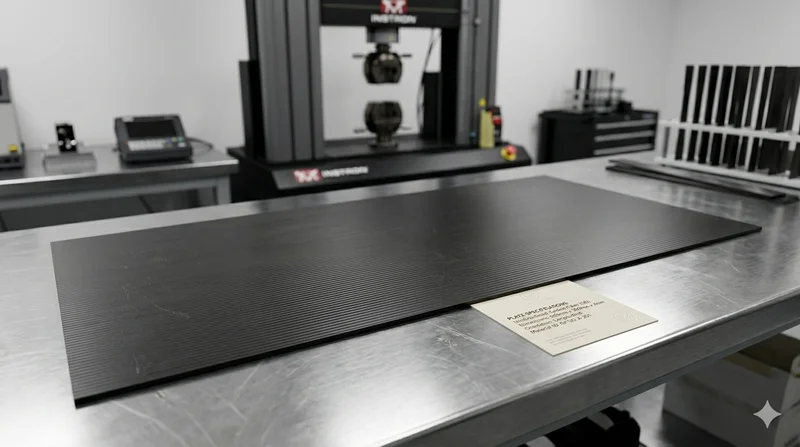
Carbon Fiber Plate — UD Unidirectional T700
Unidirectional carbon fiber plate with all fibers oriented in a single direction for maximum strength along the fiber axis. Essential for structural reinforcements, splints, and applications where load direction is predictable.
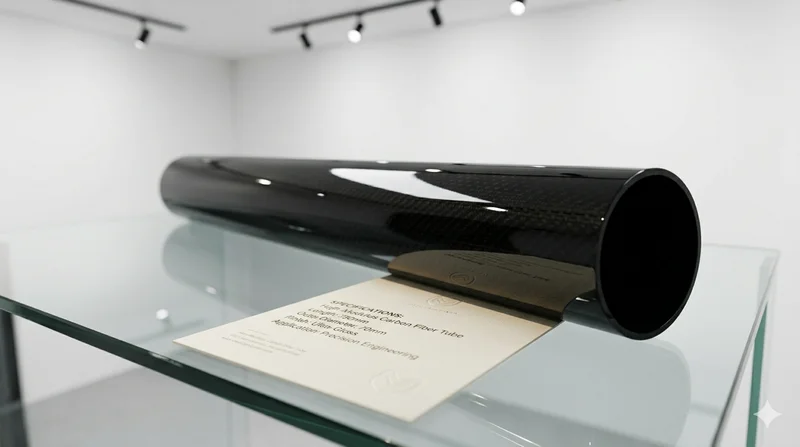
High Modulus Round Carbon Fiber Tube — M40
High modulus round tube manufactured with M40 grade fiber (tensile modulus 400 GPa). Designed for applications where maximum stiffness-to-weight ratio is critical, such as optical systems, precision machinery, and aerospace structures.