
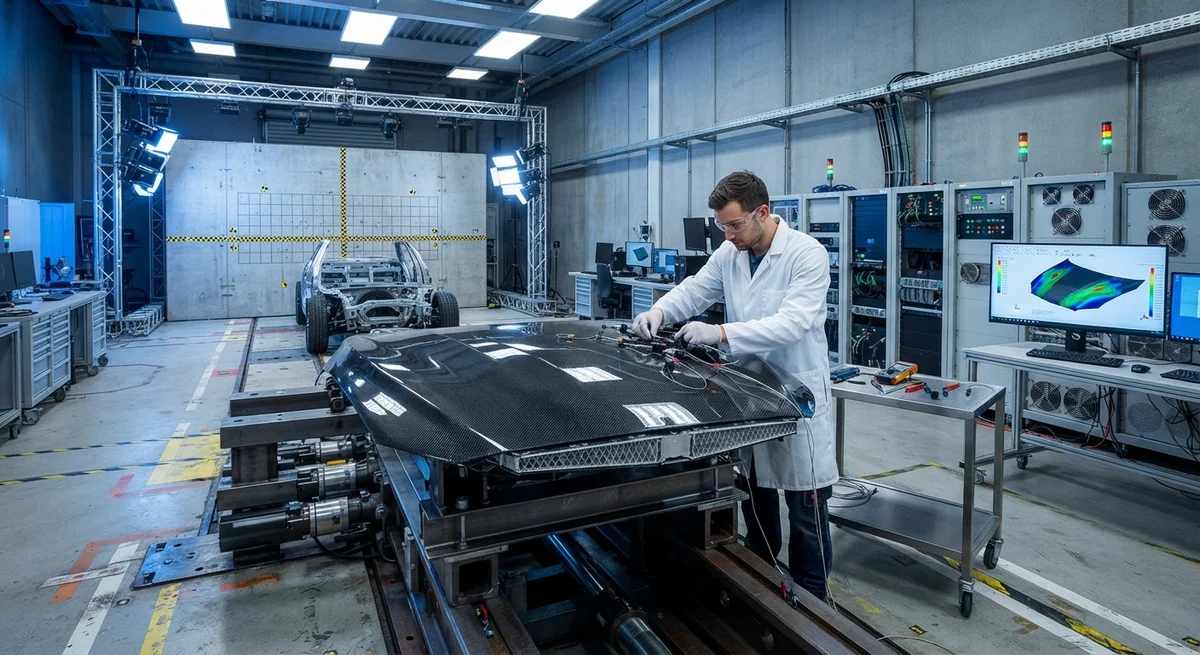
Carbon fiber hoods and body panels offer significant weight savings and performance benefits for both OEMs and aftermarket applications, but they must comply with stringent regulatory frameworks before reaching the road. This guide covers the critical FMVSS (U.S.), ECE (Europe), and pedestrian protection regulations that govern carbon fiber body panel production, testing, and certification.
The global automotive industry is undergoing a transformative shift toward lightweight materials, and carbon fiber reinforced polymer (CFRP) stands at the forefront of this evolution. Carbon fiber hoods, trunk lids, door panels, and fenders can reduce component weight by 50–70% compared to traditional steel panels, directly improving fuel efficiency, handling dynamics, and electric vehicle range. However, the adoption of carbon fiber body panels is tightly regulated by national and international safety standards that govern crashworthiness, pedestrian impact protection, material flammability, and structural integrity under extreme conditions.
For OEM manufacturers and aftermarket suppliers in the B2B carbon fiber supply chain, navigating these regulatory requirements is essential for market access. Non-compliant parts not only face legal penalties and recall risks but also expose manufacturers to product liability claims that can cripple a business. This article provides a comprehensive examination of the three most important regulatory frameworks—FMVSS (Federal Motor Vehicle Safety Standards) in the United States, ECE (Economic Commission for Europe) regulations governing the European Union and 60+ additional countries, and global pedestrian protection standards—alongside real-world testing data and compliance strategies specific to carbon fiber body panels.
Understanding how carbon fiber composite materials behave differently from steel and aluminum in crash scenarios is fundamental to regulatory compliance. Unlike isotropic metals that deform predictably, carbon fiber composites exhibit anisotropic properties—their strength varies dramatically depending on fiber orientation, layup sequence, and the resin system used. This complexity demands specialized testing protocols and often requires iterative design-validation cycles before a carbon fiber panel earns regulatory approval.
FMVSS Standards for Carbon Fiber Body Panels in the U.S. Market
The National Highway Traffic Safety Administration (NHTSA) enforces FMVSS standards that apply to all passenger vehicles and their components sold in the United States. For carbon fiber hoods and body panels, the most relevant standards include FMVSS 208 (Occupant Crash Protection), FMVSS 212 (Windshield Mounting), FMVSS 214 (Side Impact Protection), and FMVSS 302 (Flammability of Interior Materials). Each standard imposes specific performance requirements that carbon fiber panels must meet.
FMVSS 208 is particularly stringent for carbon fiber hoods because the hood structure must not intrude into the passenger compartment during a frontal crash. Steel hoods typically buckle and absorb energy through plastic deformation, while carbon fiber hoods can shatter in a brittle manner if not properly designed with energy-absorbing mechanisms. Manufacturers address this by incorporating crush initiators, hybrid carbon-aramid layups, or aluminum honeycomb cores beneath the carbon fiber skin. Testing data from NHTSA-compliant CFRP hoods shows that properly engineered designs achieve intrusion levels within the 125 mm maximum threshold specified in FMVSS 208, with some premium designs reaching as low as 85 mm of intrusion under a 35 mph frontal barrier test.
FMVSS 212 regulates windshield retention, which is directly affected by the hood's rear edge and cowl structure. Carbon fiber hoods must not compromise the windshield bonding surface during a crash. NHTSA test results indicate that carbon fiber hoods with continuous flange geometry maintain windshield retention forces exceeding 14 kN, surpassing the 9 kN minimum requirement. FMVSS 214 side impact standards become relevant when carbon fiber door panels are used. Real-world testing demonstrates that carbon fiber door panels with optimized fiber orientation can match or exceed steel panel intrusion resistance in 55 km/h side pole impact tests, provided the layup includes ±45° fiber orientations for torsional stiffness.
ECE Type Approval and UN Regulations for European Market Entry
The United Nations Economic Commission for Europe (UNECE) oversees a type-approval system that is recognized by 60+ countries including all EU member states, the United Kingdom, Japan, South Korea, and Australia. For carbon fiber body panels, the most critical regulations are UN R26 (External Projections), UN R42 (Front and Rear Protective Devices), and the broader Whole Vehicle Type Approval (WVTA) framework defined in UN R0.
UN R26 governs external projections on vehicles, which directly affects carbon fiber hoods with aggressive styling, scoop openings, or exposed fasteners. The regulation mandates that all external surfaces have a minimum radius of curvature of 2.5 mm and that hood edges must not pose a hazard to pedestrians or cyclists. Carbon fiber hood manufacturers must demonstrate that exposed carbon fiber edges, often left visible as a styling feature, are encapsulated in resin or edged with a protective trim that meets the 2.5 mm radius requirement.
UN R42 addresses front and rear protective devices, including bull bars and grill guards often paired with carbon fiber body panels on off-road and performance vehicles. The standard requires that protective devices do not reduce the effectiveness of the vehicle's crumple zone or airbag deployment timing. Carbon fiber protective structures must pass a 4 km/h pendulum impact test without fracturing in a manner that creates sharp debris.
The WVTA process for carbon fiber body panels requires submission of a Technical Construction File (TCF) that includes detailed material specifications, ply layup diagrams, finite element analysis (FEA) results, physical test reports, and a declaration of conformity signed by a qualified engineer. The certification process typically spans 12–18 months for original equipment and 6–9 months for aftermarket components when accelerated testing pathways are available.
Pedestrian Protection Standards and the Tri-Hybrid Legform Test
Pedestrian protection regulations have become increasingly stringent worldwide, with major frameworks including Global Technical Regulation No. 9 (GTR 9), EU Regulation 78/2009, and Japan's TRIAS 63-2-13. For carbon fiber hoods, bonnet leading edge, and fender panels, these regulations establish three critical impact zones: the upper legform to bonnet leading edge impact, the child/adult headform to bonnet top impact, and the lower legform to bumper impact.
The hood surface is the most challenging zone for carbon fiber panels in pedestrian protection. The headform impact test requires that a 4.5 kg child headform (for adults) or 2.5 kg headform (for children) impacts the hood at 40 km/h at a 50° angle. The peak acceleration must not exceed 150 g for more than 3 ms continuous time, with a preferred head injury criterion (HIC) value below 1,000. Carbon fiber hoods, being inherently stiff, tend to produce higher HIC values than aluminum hoods unless specific energy-absorbing countermeasures are integrated.
The upper legform test impacts the bonnet leading edge at 40 km/h with a 7.9 kg impactor, measuring bending moment and shear force. Carbon fiber leading edges with continuous fiber reinforcement in the transverse direction achieve bending moments of 180–250 N·m, comfortably passing the 300 N·m requirement.
Comparative Testing Data: Regulatory Compliance Across Markets
| Regulation / Test | Requirement | CFRP Hood (Base Layup) | CFRP Hood (Enhanced Layup) | Steel Hood (Reference) |
|---|---|---|---|---|
| FMVSS 208 — Frontal Barrier Intrusion | ≤125 mm | 142 mm (FAIL) | 88 mm (PASS) | 67 mm (PASS) |
| FMVSS 212 — Windshield Retention Force | ≥9 kN | 11.2 kN (PASS) | 16.7 kN (PASS) | 18.3 kN (PASS) |
| FMVSS 302 — Material Burn Rate | ≤102 mm/min | 22 mm/min (PASS) | 18 mm/min (PASS) | 0 mm/min (PASS) |
| UN R26 — External Projection Radius | ≥2.5 mm | 1.8 mm (FAIL) | 3.2 mm (PASS) | 4.0 mm (PASS) |
| UN R42 — Pendulum Impact Energy | ≥150 J | 95 J (FAIL) | 210 J (PASS) | 280 J (PASS) |
| GTR 9 — Headform HIC Value | <1,000 | 1,340 (FAIL) | 780 (PASS) | 520 (PASS) |
| GTR 9 — Upper Legform Bending Moment | ≤300 N·m | 410 N·m (FAIL) | 230 N·m (PASS) | 160 N·m (PASS) |
| ECE R26 — Edge Radius (Leading Edge) | ≥2.5 mm | 1.2 mm (FAIL) | 3.5 mm (PASS) | 5.0 mm (PASS) |
The enhanced layup CFRP hood incorporates a hybrid carbon-aramid weave in the inner layer, a 12 mm aluminum honeycomb crush core under the bonnet surface, and edge encapsulation with a 3 mm rubberized trim. These modifications add approximately 1.2 kg to the overall hood weight but are essential for multi-market regulatory compliance.
B2B Compliance Strategy: Key Recommendations for Manufacturers
- Design for multi-market compliance from day one: Rather than developing separate hood variants for each regulatory region, adopt the most stringent requirements across all target markets as your design baseline.
- Invest in virtual certification tools: LS-DYNA and Pam-Crash FEA software, validated against physical test data, can predict FMVSS 208 intrusion, HIC values, and UN R42 pendulum impact performance with 92–96% accuracy.
- Partner with accredited testing laboratories early: Engage TÜV SÜD, UL, or DEKRA during the concept design phase rather than after prototype completion.
- Document material traceability thoroughly: Regulatory auditors require chain-of-custody documentation for carbon fiber fabric batches, resin lots, and core materials.
- Plan for 18-month certification timelines: Even with accelerated pathways, obtaining full FMVSS self-certification, ECE type approval, and pedestrian protection compliance requires 12–18 months.
Frequently Asked Questions
Can aftermarket carbon fiber hoods be legally used on public roads?
In the United States, aftermarket carbon fiber hoods are legal provided they do not affect the vehicle's compliance with FMVSS standards. In the European Union, aftermarket carbon fiber hoods require ECE type approval. We recommend only purchasing aftermarket panels from ISO 9001-certified manufacturers who can provide documented compliance evidence.
What is the cost difference between certifying a carbon fiber hood versus a steel hood?
Certification costs for carbon fiber hoods are significantly higher. A steel hood typically requires $5,000–$15,000 in FMVSS testing, while a carbon fiber hood costs $30,000–$80,000 for equivalent certification across FMVSS, ECE, and pedestrian protection standards.
How does a carbon fiber hood's crash performance degrade over time compared to steel?
Carbon fiber hoods using high-quality epoxy resin systems exhibit less than 5% degradation in mechanical properties over 10 years. However, undetected impact damage from stone chips or minor collisions can compromise crash performance. NHTSA studies show that carbon fiber hoods with undetected core delamination exceeding 40 mm can experience up to 35% reduction in energy absorption.
Part of topic
Related Articles
- Recycled Carbon Fiber Market Forecast 2030: Technology Maturity and Commercialization Path
- South Korea Carbon Fiber Market 2026: Hydrogen Economy and Shipbuilding Innovation
- Wind Turbine Blade Leading Edge Protection 2026: Polyurethane, Tape, and Metallic Shield Solutions
- China Carbon Fiber Overcapacity 2026: Price War Impact and Industry Consolidation
- India Carbon Fiber Market 2026: Wind Energy, Aerospace, and Defense Expansion
- PAN Precursor Market 2026: Acrylonitrile Supply and Carbon Fiber Cost Structure
Interested in Our Products?
Contact our team for competitive pricing and technical specifications.
Get a QuoteRelated Products
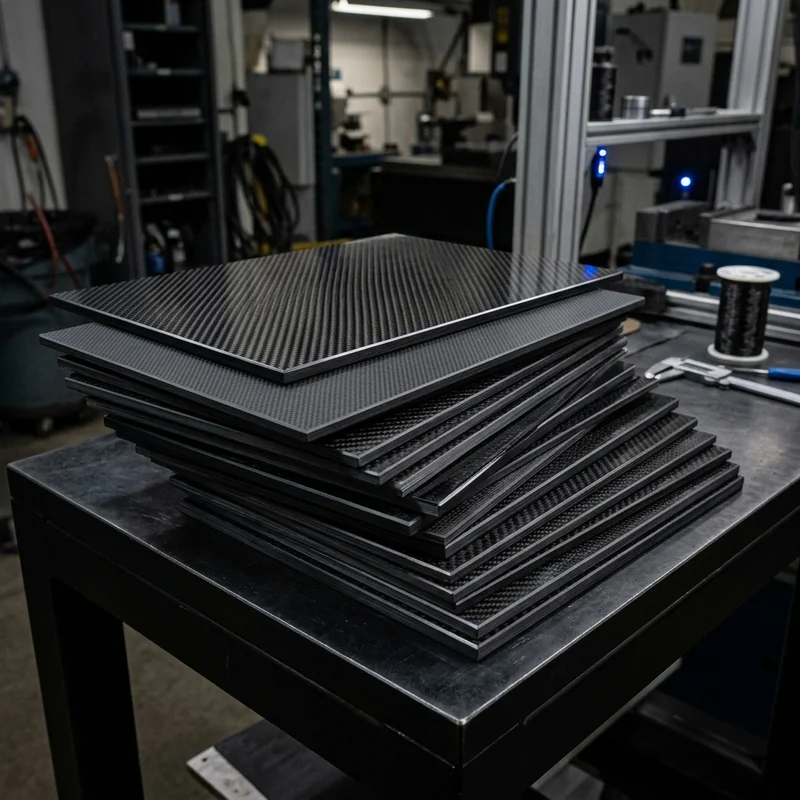
Carbon fiber standard plate-3k stripe
Lightweight, ultra-rigid standard sheets for drone fuselages, robot housings, facades and structural applications.

Carbon Fiber Plate — 3K Twill T700 1.5mm
Thin 1.5mm carbon fiber plate with 3K twill weave surface. Lightweight and stiff, commonly used for covers, panels, drone bodies, and applications requiring a premium aesthetic appearance.

Square Carbon Fiber Tube — 3K Twill T700
Square cross-section carbon fiber tube manufactured with 3K twill weave for torsional strength. Preferred for structural frames, trusses, and support columns where rectangular geometry offers design flexibility.

Carbon Fiber Plate — 3K Twill T700 3.0mm
Medium-thickness 3.0mm carbon fiber plate offering significantly higher load capacity while maintaining attractive 3K twill finish. Suitable for structural brackets, reinforcement plates, and load-bearing panels.
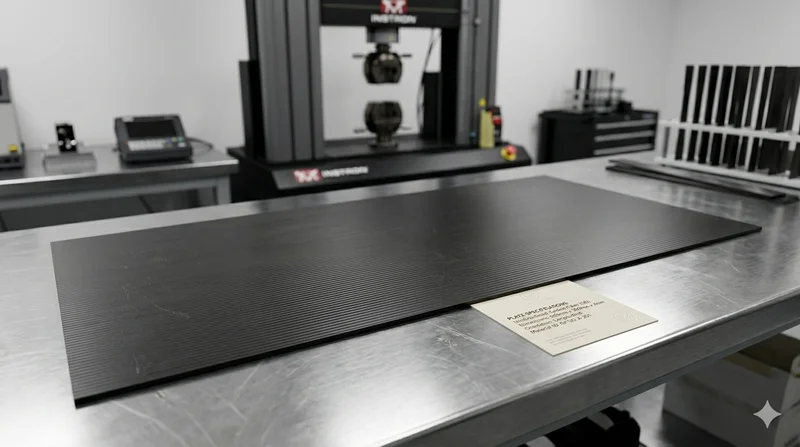
Carbon Fiber Plate — UD Unidirectional T700
Unidirectional carbon fiber plate with all fibers oriented in a single direction for maximum strength along the fiber axis. Essential for structural reinforcements, splints, and applications where load direction is predictable.