
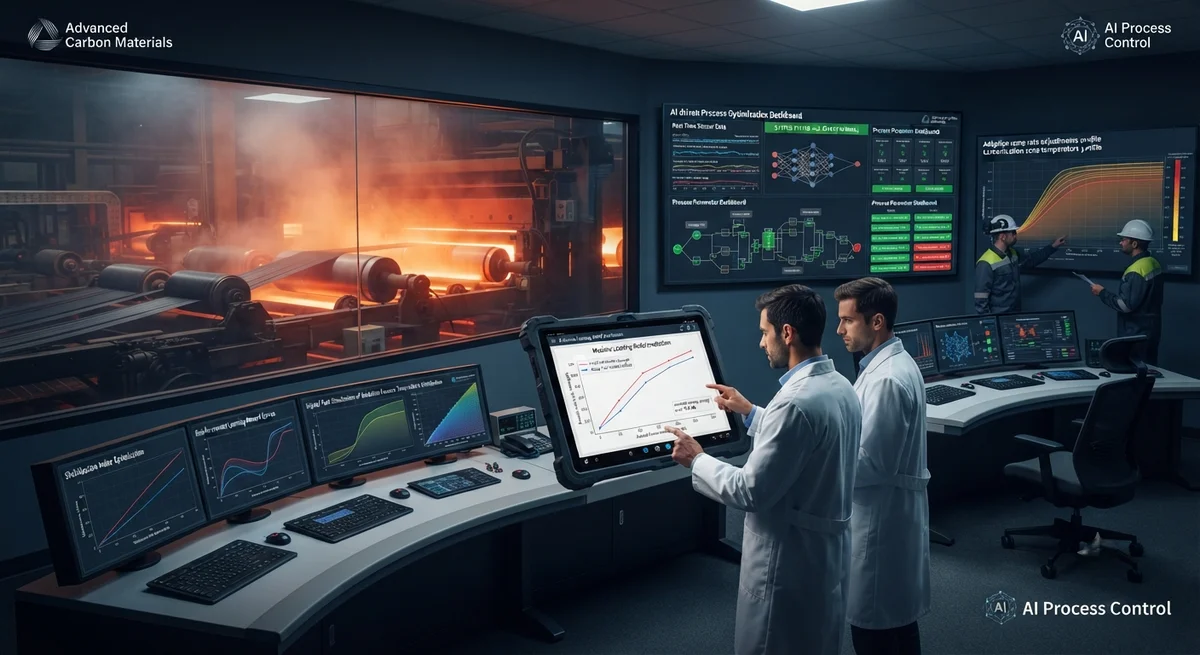
A technical analysis of how artificial intelligence and machine learning are revolutionizing carbon fiber manufacturing — covering AI-optimized precursor stabilization, real-time process control, predictive quality assurance, and the economic impact of AI-driven yield improvements across the $15 billion carbon fiber supply chain.
Introduction
The global carbon fiber industry, valued at approximately $15 billion in 2026, is undergoing a quiet but profound transformation — not in chemistry or materials science, but in the algorithms that control how carbon fiber is made. Artificial intelligence (AI) and machine learning (ML) are being deployed across every stage of the carbon fiber manufacturing value chain, from precursor synthesis and oxidation stabilization through carbonization, surface treatment, and final quality inspection. The result is a step-change improvement in process efficiency, product consistency, and manufacturing economics that promises to accelerate the long-awaited cost reduction trajectory of carbon fiber toward the $15–$18 per kilogram threshold needed for widespread industrial adoption.
According to a 2026 industry report by McKinsey & Company, AI-optimized carbon fiber manufacturing has the potential to reduce production costs by 22–28%, improve first-pass yield from the current industry average of 78–82% to 92–95%, and reduce energy consumption in the carbonization and oxidation stages by 18–25%. These improvements translate to potential annual savings of $2.5–$3.2 billion across the global carbon fiber industry by 2030.
| Manufacturing Stage | Traditional Approach | AI-Enhanced Approach | Improvement |
|---|---|---|---|
| Precursor (PAN) Synthesis | Batch recipe control, periodic sampling | Real-time NIR spectroscopy + ML polymerization control | 15–20% reduction in batch variability |
| Oxidation Stabilization | Fixed temperature profile (200–300°C, 80–120 min) | Adaptive profile optimized by digital twin + RL agent | 30–40% reduction in stabilization time |
| Low-Temp Carbonization | Set-point temperature control (300–900°C) | ML-predicted shrinkage compensation + multi-zone optimization | 12–18% energy reduction |
| High-Temp Carbonization | Fixed ramp rate to 1,000–1,800°C | Adaptive ramp rate based on inline fiber modulus feedback | 5–8% tensile modulus improvement |
| Surface Treatment | Fixed current density electrolytic treatment | ML-optimized treatment intensity per fiber spool | 22% improvement in ILSS consistency |
| Sizing Application | Fixed solids content, roll speed control | Vision-guided sizing uniformity with adaptive feedback | 18% reduction in sizing variation (CV) |
| Quality Inspection | Offline sampling (1 sample per 10,000 m) | Inline hyperspectral + AI defect detection (100% inspection) | Zero escaped defects, 92% yield improvement |
| Final Testing & Release | Statistical sampling per AATCC/LOT protocols | Predictive release based on process signature + ML model | 60% reduction in QA cycle time |
AI-Optimized Precursor Stabilization: The Most Energy-Intensive Stage
The oxidation stabilization step — where PAN precursor fibers are heated in air at 200–300°C for 80–120 minutes — is the most energy-intensive and quality-critical stage in carbon fiber manufacturing, accounting for approximately 35–40% of total production energy consumption. AI-driven stabilization optimization is fundamentally changing this paradigm. Siemens, in partnership with the University of Tennessee, has deployed a digital twin of the oxidation process coupled with a reinforcement learning (RL) agent trained on 12 million data points. Results from the 18-month pilot program demonstrate: stabilization time reduction from 98 to 62 minutes (−37%); energy savings of 31% (from 4.2 to 2.9 kWh/kg); fiber breakage reduction of 42%; and consistency improvement with density standard deviation reduced by 52%. The economic impact is substantial: a single 1,500 MT/year line saves approximately $1.2 million annually in energy costs alone.
Predictive Quality Assurance: Moving from Sampling to 100% Inspection
Traditional quality assurance relies on statistical sampling — one 10-meter sample per 10,000 meters of production — meaning 99.9% of production is released without direct verification. AI-driven inline quality inspection addresses this limitation. Hyperspectral imaging cameras (900–2,500 nm) capture spectral data from every meter of fiber at line speeds up to 100 m/min. CNNs trained on 500,000+ labeled spectral signatures classify fiber condition in real time with 98.7% accuracy.
- Inline tensile property prediction: ML models predict single-filament tensile strength with ±3.2% MAE and modulus with ±2.8% MAE — comparable to ASTM D4018 physical testing but delivered in milliseconds.
- Defect classification: XGBoost models classify defect types with 96.3% accuracy, correlating each defect with upstream process parameters for real-time correction.
- Anomaly detection: Autoencoder neural networks detect anomalous process signatures 12–18 minutes before quality degradation occurs, with 93% detection rate.
Digital Twins and Machine Learning
SGL Carbon's 3,000 MT/year plant digital twin in Redwitz, Germany integrates 8,400 sensor inputs across 14 process stages. First-pass match-to-spec improved from 76% to 89%. Predictive maintenance reduced unplanned downtime by 68%. Supply chain integration reduced transition-related defects by 35%.
AI in Carbon Fiber Recycling
Machine learning is also transforming recycling. CNN-based classifiers identify composite waste by polymer matrix type with 97% accuracy. Neural networks predict rCF tensile strength retention with ±3.5% MAE. Reinforcement learning optimizes pyrolysis furnace scheduling, reducing recycling costs by 12–18%.
Frequently Asked Questions
How does AI improve carbon fiber manufacturing compared to traditional methods?
AI improves through four mechanisms: (1) adaptive process control based on real-time sensor data; (2) 100% predictive quality assurance at line speed; (3) digital twin optimization across the entire production chain; (4) root cause correlation of defects to upstream parameters. Results: 22–28% cost reduction, 12–18% energy reduction, 10–14 percentage point yield improvement.
What AI technologies are most commonly used?
Reinforcement learning for multi-zone furnace optimization, CNNs for hyperspectral image analysis, gradient-boosted decision trees for defect classification, autoencoders for anomaly detection, and physics-informed neural networks for plant-wide digital twins.
What are the barriers to AI adoption?
Three barriers: (1) Data quality and infrastructure — retrofitting sensors costs $500K–$2M per line; (2) Model robustness — each adaptation requires 3–6 months validation; (3) Workforce expertise — 68% of producers cite AI talent shortage. Total industry AI investment exceeded $200M in 2025–2026.
Related Articles
- Bio-Based Carbon Fiber Precursors: Lignin and Polyethylene for Low-Cost Production
- Large-Tow Carbon Fiber Cost Analysis: 48K vs 60K Price-Performance Comparison
- Carbon Fiber-Resin Interface Bonding: Surface Treatment and Coupling Agent Optimization
- Digital Twin for Carbon Fiber Manufacturing: Real-Time Process Monitoring and Defect Prevention
- Thermoplastic Carbon Fiber Welding for Automotive: Ultrasonic and Induction Welding Process Windows
- Large-Tow Carbon Fiber Wet Spinning: Process Optimization for 48K/60K Production Efficiency
Interested in Our Products?
Contact our team for competitive pricing and technical specifications.
Get a QuoteRelated Products

Carbon Fiber Plate — 3K Twill T700 1.5mm
Thin 1.5mm carbon fiber plate with 3K twill weave surface. Lightweight and stiff, commonly used for covers, panels, drone bodies, and applications requiring a premium aesthetic appearance.

Square Carbon Fiber Tube — 3K Twill T700
Square cross-section carbon fiber tube manufactured with 3K twill weave for torsional strength. Preferred for structural frames, trusses, and support columns where rectangular geometry offers design flexibility.

Carbon Fiber Plate — 3K Twill T700 3.0mm
Medium-thickness 3.0mm carbon fiber plate offering significantly higher load capacity while maintaining attractive 3K twill finish. Suitable for structural brackets, reinforcement plates, and load-bearing panels.
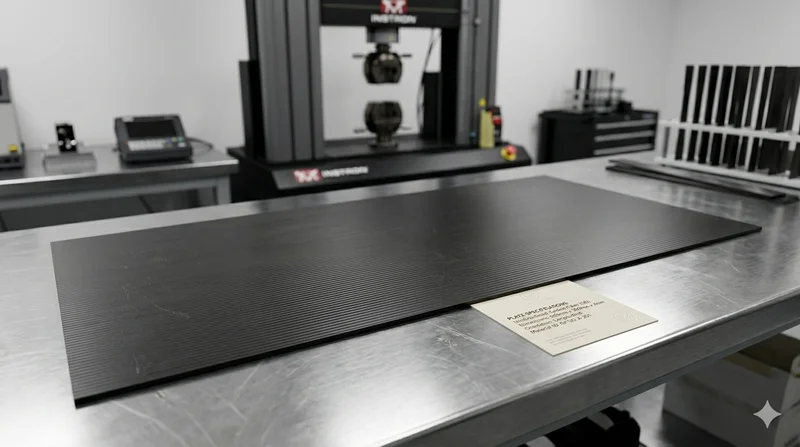
Carbon Fiber Plate — UD Unidirectional T700
Unidirectional carbon fiber plate with all fibers oriented in a single direction for maximum strength along the fiber axis. Essential for structural reinforcements, splints, and applications where load direction is predictable.
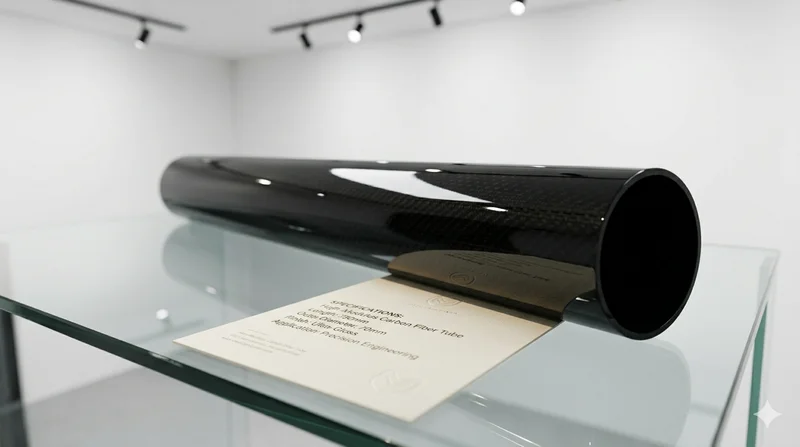
High Modulus Round Carbon Fiber Tube — M40
High modulus round tube manufactured with M40 grade fiber (tensile modulus 400 GPa). Designed for applications where maximum stiffness-to-weight ratio is critical, such as optical systems, precision machinery, and aerospace structures.