
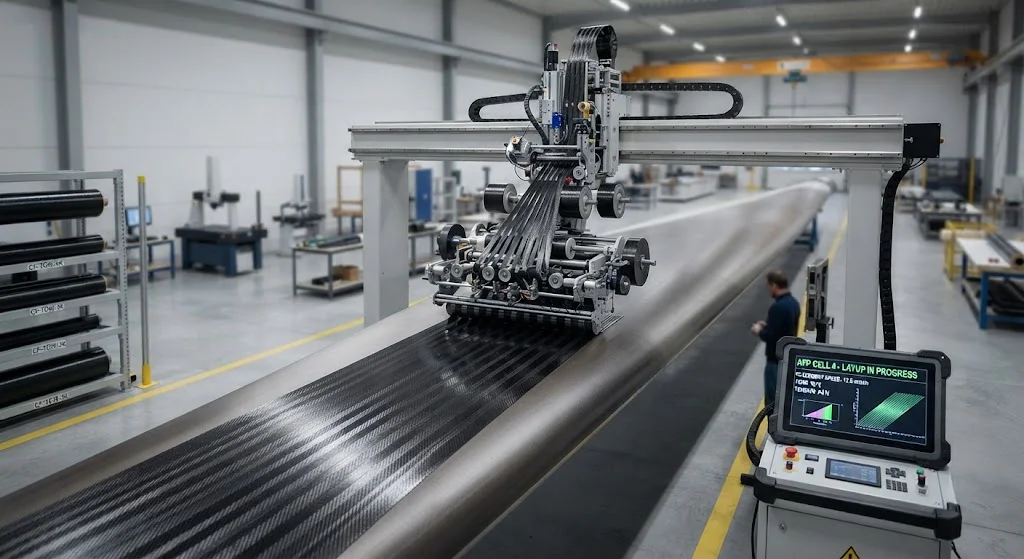
Automated fiber placement (AFP) is transforming small wind turbine blade manufacturing, enabling higher production rates and more consistent quality than manual layup. This article examines AFP technology adaptation for blades in the 10-50 meter range, process parameters, and economic analysis.
Introduction
Small wind turbines — typically defined as those with rotor diameters under 50 meters and rated capacity below 500 kW — represent a growing segment of the renewable energy market. Unlike utility-scale turbines where carbon fiber spar caps are standard, small wind turbine blades have historically relied on glass fiber due to cost constraints. However, as blade lengths increase and performance demands grow, carbon fiber is becoming essential even in this segment.
Automated fiber placement (AFP) technology, originally developed for aerospace primary structures, is now being adapted for small wind turbine blade production. This adaptation addresses the fundamental challenge of small wind blade manufacturing: achieving the throughput and quality consistency needed for commercial viability while managing the cost premiums associated with carbon fiber materials.
AFP Technology Adaptation
Adapting AFP for small wind turbine blades requires modifications from aerospace-grade systems:
Machine configuration: Smaller, more affordable AFP systems designed for non-aerospace applications typically feature 8-16 tape laying heads with 3.175 mm (1/8 inch) or 6.35 mm (1/4 inch) tape widths. These systems cost $500K-$1.5M compared to $5-15M for aerospace-grade AFP machines, making them accessible to small wind blade manufacturers.
Tape material: Small wind blade AFP typically uses dry carbon fiber tapes or pre-impregnated tapes with lower-cost resin systems. Dry fiber with subsequent resin infusion (AFP+infusion) is gaining popularity because it eliminates the cold storage requirements and shelf life limitations of prepreg materials.
Compaction method: Heated roller compaction at 80-120°C with 2-5 bar pressure replaces the autoclave consolidation used in aerospace. This in-situ consolidation reduces cycle time and equipment costs while achieving adequate void content (< 2%) for wind turbine applications.
Process Parameters
Key process parameters for AFP in small wind blade manufacturing:
Layup speed: Modern AFP systems achieve 30-60 m/min tape placement rates for small wind applications. This translates to layup times of 2-4 hours for a 30-meter blade spar cap, compared to 8-16 hours for manual layup.
Course width optimization: Narrow tapes (3.175 mm) provide better conformity to blade curvature but require more courses and longer layup times. Wide tapes (12.7 mm or wider) are faster but may bridge on tight radii. The optimal width depends on blade geometry and production rate requirements.
Gap and overlap control: AFP systems achieve ±0.5 mm gap/overlap control, significantly better than the ±2-3 mm typical of manual layup. This precision translates to more consistent mechanical properties and reduced material waste.
Temperature profiling: Preheat temperature (40-80°C), compaction temperature (80-120°C), and cooling rate must be optimized for the specific resin system to achieve adequate inter-laminar bonding without thermal degradation.
Economic Analysis
The economics of AFP for small wind blades show clear advantages at production volumes above 50-100 blades per year:
Material cost reduction: AFP reduces carbon fiber waste from 15-25% (manual layup) to 3-8%, saving $5-15 per kg of carbon fiber used. For a 30-meter blade with 200 kg of carbon fiber, this represents $1,000-$3,000 savings per blade.
Labor cost reduction: AFP reduces direct labor content from 40-60 hours (manual layup) to 8-15 hours per blade. At fully loaded labor rates of $50-80/hour, this saves $1,500-$3,750 per blade.
Quality cost reduction: More consistent layup quality reduces rework rates from 5-10% (manual) to 1-3% (AFP), avoiding $500-$2,000 per blade in rework costs.
Capital amortization: At 100 blades per year, the AFP system cost ($500K-$1.5M) amortizes to $5,000-$15,000 per blade over a 10-year system life, which is offset by the labor and material savings.
Quality Assurance
AFP for small wind blades requires adapted quality assurance procedures:
In-process monitoring: Real-time vision systems verify tape placement accuracy, detecting gaps, overlaps, and wrinkles as they occur. Thermal imaging confirms compaction temperature uniformity.
Post-layup inspection: Ultrasonic inspection of critical areas (spar cap to skin bonds, trailing edge joints) verifies laminate quality. Full-area inspection is typically not required for small wind applications due to lower consequence of failure.
Mechanical testing: Coupon testing from production parts validates laminate mechanical properties and inter-laminar shear strength. Testing frequency can be reduced once the process is qualified and stable.
Conclusion
Automated fiber placement technology is making carbon fiber small wind turbine blades commercially viable by reducing manufacturing costs, improving quality consistency, and enabling higher production rates. As the small wind market grows and blade lengths increase, AFP will become the standard manufacturing method for this segment, supporting the broader adoption of wind energy in distributed generation applications.
Part of topic
Related Articles
- Bio-Based Carbon Fiber Precursors: Lignin and Polyethylene for Low-Cost Production
- Large-Tow Carbon Fiber Cost Analysis: 48K vs 60K Price-Performance Comparison
- Carbon Fiber-Resin Interface Bonding: Surface Treatment and Coupling Agent Optimization
- Digital Twin for Carbon Fiber Manufacturing: Real-Time Process Monitoring and Defect Prevention
- Thermoplastic Carbon Fiber Welding for Automotive: Ultrasonic and Induction Welding Process Windows
- Large-Tow Carbon Fiber Wet Spinning: Process Optimization for 48K/60K Production Efficiency
Interested in Our Products?
Contact our team for competitive pricing and technical specifications.
Get a QuoteRelated Products
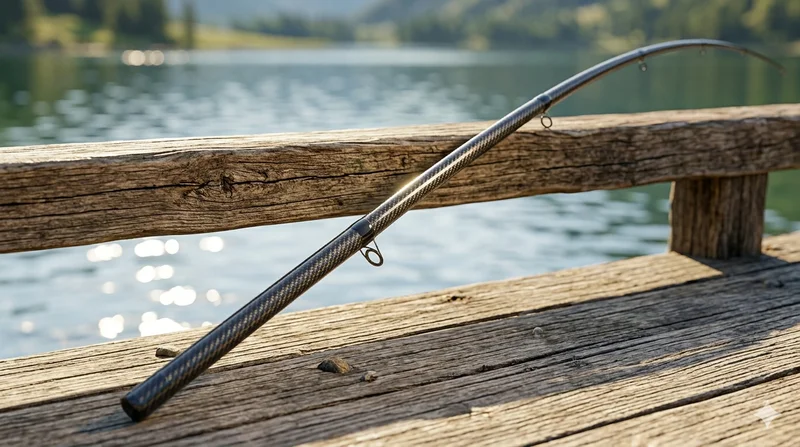
Carbon Fiber Fishing Rod Blank
High-quality carbon fiber fishing rod blank manufactured from multiple grades of Toray carbon fiber cloth. Available in a wide range of lengths, powers, and actions for freshwater and saltwater applications. Suitable for OEM rod building.
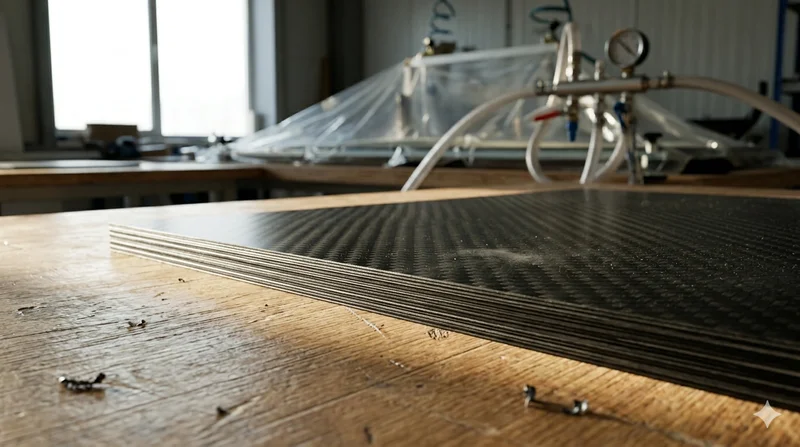
Carbon Fiber Plate — 3K Twill T700 3.0mm
Medium-thickness 3.0mm carbon fiber plate offering significantly higher load capacity while maintaining attractive 3K twill finish. Suitable for structural brackets, reinforcement plates, and load-bearing panels.
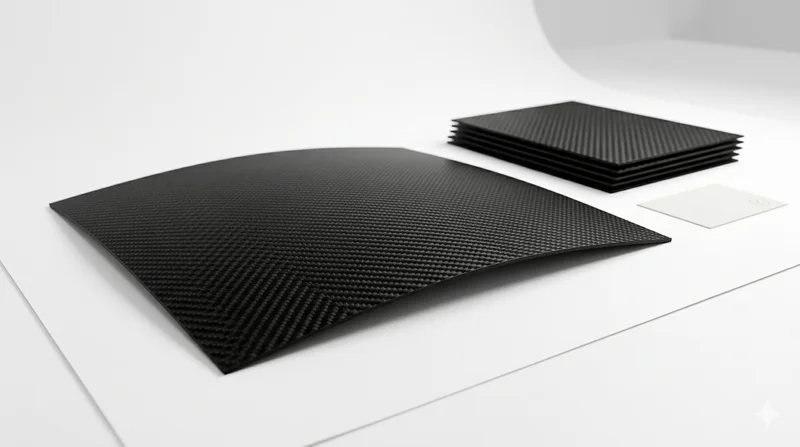
Carbon Fiber Plate — 3K Twill T700 1.5mm
Thin 1.5mm carbon fiber plate with 3K twill weave surface. Lightweight and stiff, commonly used for covers, panels, drone bodies, and applications requiring a premium aesthetic appearance.
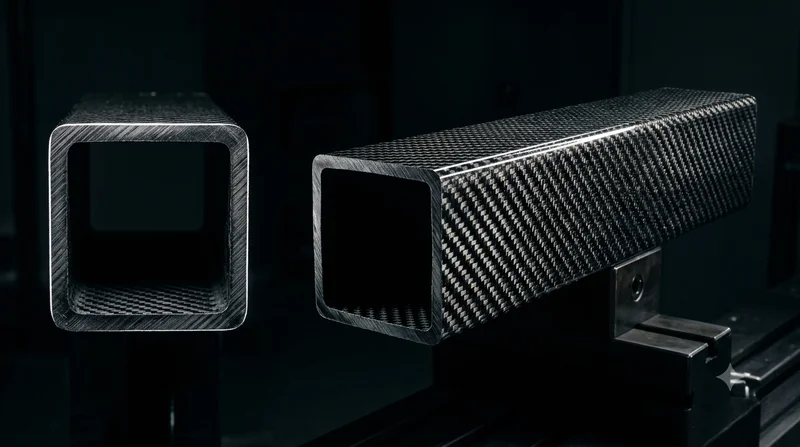
Square Carbon Fiber Tube — 3K Twill T700
Square cross-section carbon fiber tube manufactured with 3K twill weave for torsional strength. Preferred for structural frames, trusses, and support columns where rectangular geometry offers design flexibility.
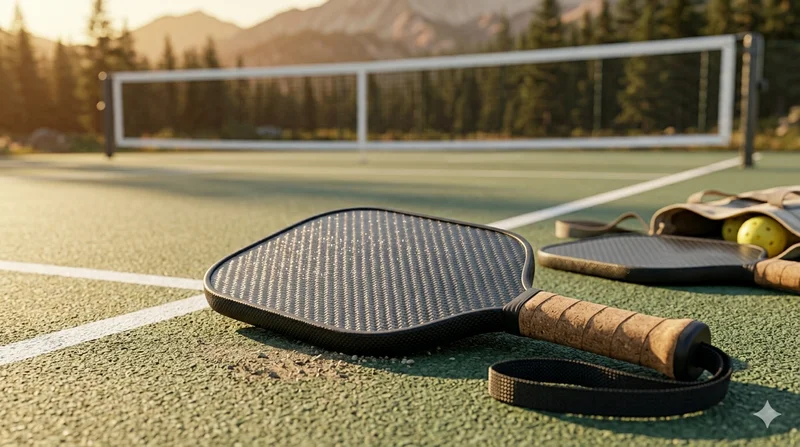
Carbon Fiber Pickleball Paddle
High-performance pickleball paddle with Toray T700 carbon fiber face and polypropylene honeycomb core. Delivers excellent power-to-weight ratio, spin generation, and vibration dampening for competitive play.