The wind energy industry faces a fundamental manufacturing challenge: as turbine ratings increase from 10-15 MW to 15-20 MW and beyond, wind blades are growing longer, heavier, and more complex. A single blade for a 15 MW offshore turbine can exceed 100 meters in length and require 25-4
Introduction
The wind energy industry faces a fundamental manufacturing challenge: as turbine ratings increase from 10-15 MW to 15-20 MW and beyond, wind blades are growing longer, heavier, and more complex. A single blade for a 15 MW offshore turbine can exceed 100 meters in length and require 25-40 metric tons of composite material. Manual layup processes that were adequate for smaller blades are becoming bottlenecks that limit production capacity, increase costs, and introduce quality variability. Automated Fiber Placement (AFP) technology addresses these challenges by depositing carbon fiber tape or tow at rates of 500-1,000 kg/hour — a 250-500x improvement over manual layup productivity.
For wind blade manufacturers evaluating capital investment decisions, understanding the economics of AFP systems is critical. The technology requires significant upfront investment — typically $5-15 million for a complete AFP system — but offers potentially transformative benefits in throughput, material utilization, and quality consistency. This article analyzes the economic case for AFP in wind blade manufacturing, quantifies the comparison against manual and semi-automated methods, and provides a framework for evaluating return on investment.
AFP Technology and Throughput Advantages
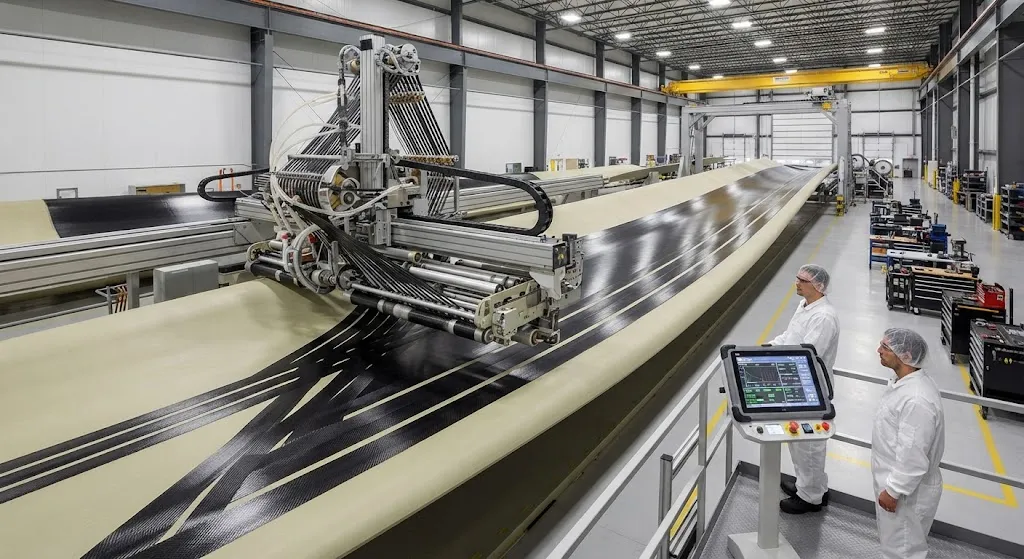
Automated Fiber Placement systems use robotic heads to precisely deposit carbon fiber prepreg tape or dry fiber tow onto a mold surface. The technology has evolved significantly from its aerospace origins to address the specific requirements of wind blade manufacturing:
- Multi-tow heads: Modern AFP heads can deposit 16-32 tows simultaneously, each tow 3-12 mm wide, achieving coverage widths of 50-150 mm per pass. This multi-tow approach enables high deposition rates while maintaining fiber alignment accuracy.
- High-speed deposition: AFP systems for wind applications operate at head speeds of 30-60 meters per minute, with deposition rates of 500-1,000 kg/hour depending on fiber type, tow width, and part geometry. This compares to manual layup rates of approximately 2 kg/hour per worker.
- Continuous fiber placement: Unlike hand layup, which creates discontinuities at ply boundaries, AFP produces continuous fiber paths that optimize structural performance and reduce stress concentrations.
- In-process quality monitoring: Integrated vision systems and tension monitoring detect gaps, overlaps, and fiber misalignment in real-time, reducing quality escapes and rework requirements.
The throughput advantage is particularly significant for the spar cap and shear web components, which represent the primary structural elements of wind blades and consume the majority of composite material. These thick, unidirectional components are ideally suited to AFP deposition.
Economic Comparison: AFP vs Manual Layup
The economic case for AFP in wind blade manufacturing can be analyzed across several cost categories:
| Cost Category | Manual Layup | AFP System | Difference |
|---|---|---|---|
| Deposition rate | ~2 kg/hour per worker | 500-1,000 kg/hour | 250-500x faster |
| Material waste | 20-30% (cutting + scrap) | 2-5% (optimized paths) | 15-25% reduction |
| Labor content per blade | 800-1,200 person-hours | 40-80 person-hours (setup + supervision) | 90-95% reduction |
| Quality consistency | Operator-dependent | Process-controlled | Reduced variability |
| Capital investment | Minimal (tools + fixtures) | $5-15 million (AFP system) | Significant upfront |
| Production rate | 1-2 blades/week (per team) | 4-8 blades/week (single system) | 3-8x increase |
The material waste reduction is particularly significant for carbon fiber wind blades. Carbon fiber prepreg costs $15-30 per kilogram, and a single 100-meter blade may require 25-40 tons of material. At 20-30% waste, manual layup generates 5-12 tons of scrap material per blade, representing $75,000-$360,000 in wasted material. AFP's 2-5% waste rate reduces this to 0.5-2 tons, saving $7,500-$60,000 per blade in material costs alone.
Return on Investment Analysis
The ROI calculation for AFP systems depends on production volume, blade size, and local labor costs. A simplified model for a blade manufacturer producing 200+ blades per year:
- Annual labor savings: At 90% labor reduction, with composite technicians costing $50-80/hour fully burdened, the savings range from $7-12 million annually for a facility producing 200 large blades.
- Material waste savings: At 20% waste reduction on 200 blades × 30 tons average × $20/kg, the annual material savings are approximately $2.4 million.
- Production rate improvement: Higher throughput enables increased production volume without proportional facility expansion, generating additional revenue from increased market share.
- Quality cost reduction: Fewer defects, reduced rework, and lower warranty claims contribute an estimated 5-10% reduction in quality-related costs.
Against these savings, theAFP system capital cost of $5-15 million, plus integration, training, and maintenance costs of $1-2 million annually, produces a simple payback period of 1-3 years for high-volume producers. For lower-volume operations, the economics are less favorable, and hybrid approaches combining manual layup with selective automation may be more appropriate.
Implementation Considerations
Successful AFP implementation in wind blade manufacturing requires addressing several technical and operational challenges:
Part geometry limitations: AFP systems work best on relatively flat or gently curved surfaces. The complex double-curvature geometry of wind blade tips and trailing edges may still require hand layup or alternative automation approaches. Most manufacturers use AFP for the spar cap and primary structural elements, with manual or semi-automated processes for complex geometry regions.
Material format requirements: AFP requires prepreg tape or dry fiber tow in specific formats. The transition from hand layup fabric to AFP-compatible material formats may require changes to material procurement and storage processes.
Workforce transition: AFP systems require operators with different skills than manual layup technicians. Training programs and workforce transition planning are essential for successful implementation. The shift from labor-intensive manual processes to capital-intensive automation requires organizational adaptation.
Mold and tooling modifications: AFP systems require molds with specific surface characteristics and vacuum compatibility. Existing hand layup molds may require modification or replacement to be compatible with AFP processes.
Frequently Asked Questions
What is the minimum production volume justifying AFP investment for wind blades?
AFP investment economics typically require annual production volumes of 150-200+ large wind blades to achieve acceptable payback periods of 2-4 years. Below this threshold, the capital cost amortization over fewer units produces less favorable economics. For manufacturers producing 50-150 blades annually, hybrid approaches combining selective AFP automation for high-volume components (spar caps) with manual layup for complex geometry regions may provide a more appropriate balance of investment and return. The specific threshold depends on blade size, local labor costs, and the degree of automation desired. Some manufacturers have successfully implemented AFP at lower volumes by sharing systems across multiple product lines or offering contract AFP services to other manufacturers.
How does AFP affect wind blade structural performance compared to manual layup?
AFP generally produces wind blade structures with superior and more consistent mechanical properties compared to manual layup. The continuous fiber paths, precise fiber alignment, and controlled compaction pressure produce laminates with lower void content (typically <1% vs 2-5% for hand layup) and more uniform fiber volume fraction. These improvements translate to better fatigue performance and more predictable structural behavior. For wind blades subjected to 20+ years of cyclic loading, the consistency benefits of AFP are particularly valuable. Some blade designs have been optimized to take advantage of AFP capabilities, enabling weight reductions of 5-15% compared to equivalent hand-laid structures while meeting the same structural requirements.
What are the main technical risks of implementing AFP for wind blade production?
Key technical risks include: (1) Gap and overlap control — AFP can create small gaps or overlaps between tape courses that affect structural performance; modern systems minimize these through precise motion control and real-time monitoring, but they cannot be completely eliminated. (2) Thickness variation — AFP deposited laminates can exhibit thickness variation at course boundaries, requiring careful process optimization. (3) Corner and edge handling — AFP heads have difficulty depositing material into sharp corners or onto narrow edges, often requiring supplemental hand layup. (4) Material compatibility — not all carbon fiber prepreg formats are suitable for AFP processing, limiting material selection options. (5) Maintenance complexity — AFP systems require specialized maintenance and troubleshooting expertise. These risks can be managed through proper system selection, operator training, and process development, but they should be carefully evaluated during the investment decision process.
Conclusion
Automated Fiber Placement technology offers wind blade manufacturers a compelling path to address the production challenges created by increasing turbine size and blade length. The throughput improvement from 2 kg/hour manual rates to 500-1,000 kg/hour AFP rates, combined with 15-25% material waste reduction and 90-95% labor content reduction, creates economic benefits that can justify the significant capital investment for high-volume producers. The technology is most effectively applied to the primary structural elements — spar caps and shear webs — where the combination of thick laminates, unidirectional fibers, and high material volume maximizes the return on automation investment. For manufacturers evaluating AFP adoption, the key considerations are production volume thresholds, geometry compatibility, workforce transition requirements, and the alignment of technology capabilities with specific blade design requirements. As wind turbine ratings continue to increase, AFP technology is positioned to become an increasingly essential manufacturing capability for competitive blade production.
To explore carbon fiber materials optimized for automated fiber placement in wind blade applications, browse our AFP-compatible prepreg and tow products or contact our technical team to discuss material specifications and processing requirements for your AFP implementation.
Part of topic
Related Articles
- Bio-Based Carbon Fiber Precursors: Lignin and Polyethylene for Low-Cost Production
- Large-Tow Carbon Fiber Cost Analysis: 48K vs 60K Price-Performance Comparison
- Carbon Fiber-Resin Interface Bonding: Surface Treatment and Coupling Agent Optimization
- Digital Twin for Carbon Fiber Manufacturing: Real-Time Process Monitoring and Defect Prevention
- Thermoplastic Carbon Fiber Welding for Automotive: Ultrasonic and Induction Welding Process Windows
- Large-Tow Carbon Fiber Wet Spinning: Process Optimization for 48K/60K Production Efficiency
Interested in Our Products?
Contact our team for competitive pricing and technical specifications.
Get a QuoteRelated Products
Carbon Fiber Watch Strap — 20mm/22mm Quick-Release
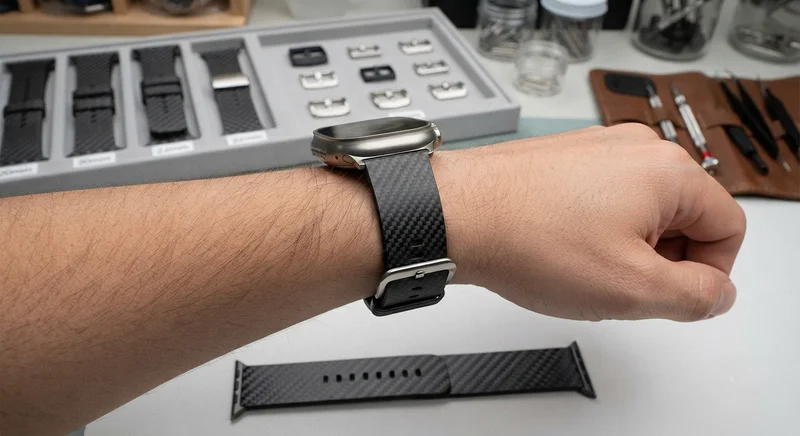
Premium carbon fiber watch strap with quick-release spring bars. Woven from T700 3K twill prepreg with a flexible resin system that conforms to the wrist. Available in 20mm and 22mm lug widths, compatible with Apple Watch, Samsung Galaxy Watch, Garmin, and traditional mechanical watches. Features a stainless steel buckle and carbon fiber keepers. The natural weave pattern makes each strap unique.
Carbon Fiber Fishing Rod Blank
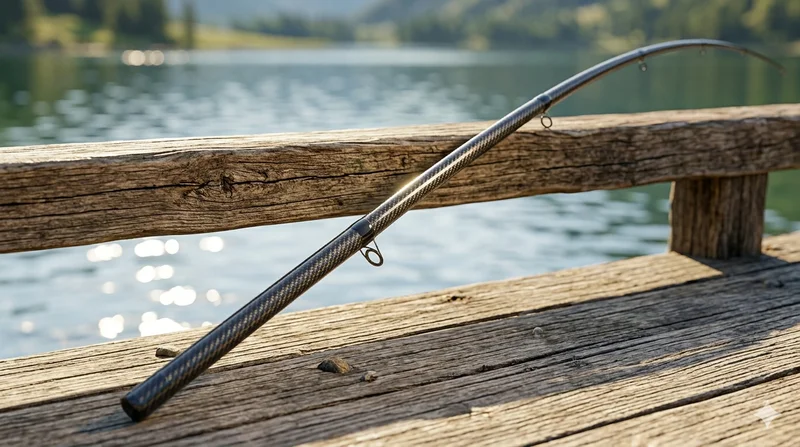
High-quality carbon fiber fishing rod blank manufactured from multiple grades of Toray carbon fiber cloth. Available in a wide range of lengths, powers, and actions for freshwater and saltwater applications. Suitable for OEM rod building.
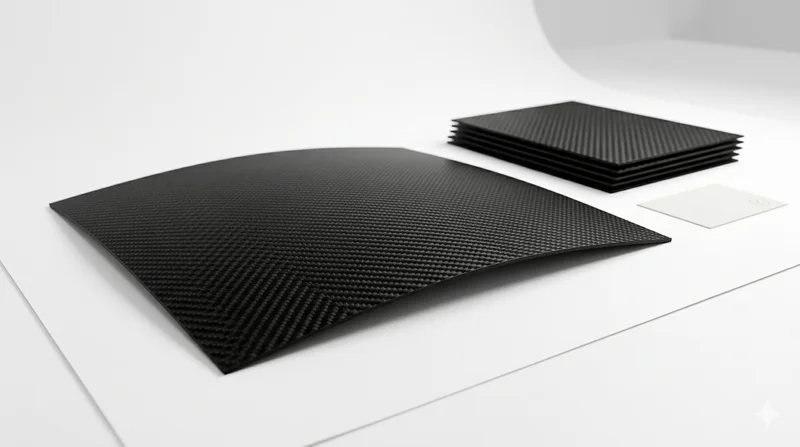
Carbon Fiber Plate — 3K Twill T700 1.5mm
Thin 1.5mm carbon fiber plate with 3K twill weave surface. Lightweight and stiff, commonly used for covers, panels, drone bodies, and applications requiring a premium aesthetic appearance.
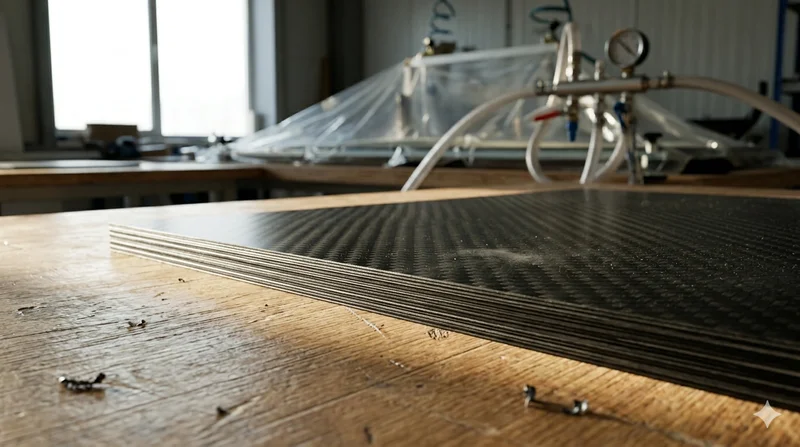
Carbon Fiber Plate — 3K Twill T700 3.0mm
Medium-thickness 3.0mm carbon fiber plate offering significantly higher load capacity while maintaining attractive 3K twill finish. Suitable for structural brackets, reinforcement plates, and load-bearing panels.
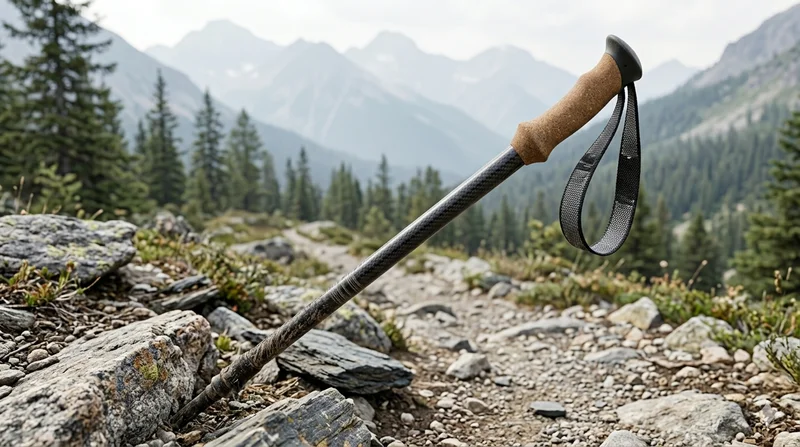
Carbon Fiber Trekking Pole
Lightweight carbon fiber trekking pole manufactured from high-grade carbon fiber tube. Weighs only 160g per pole while providing superior shock absorption and durability for hiking, trail running, and backpacking.