
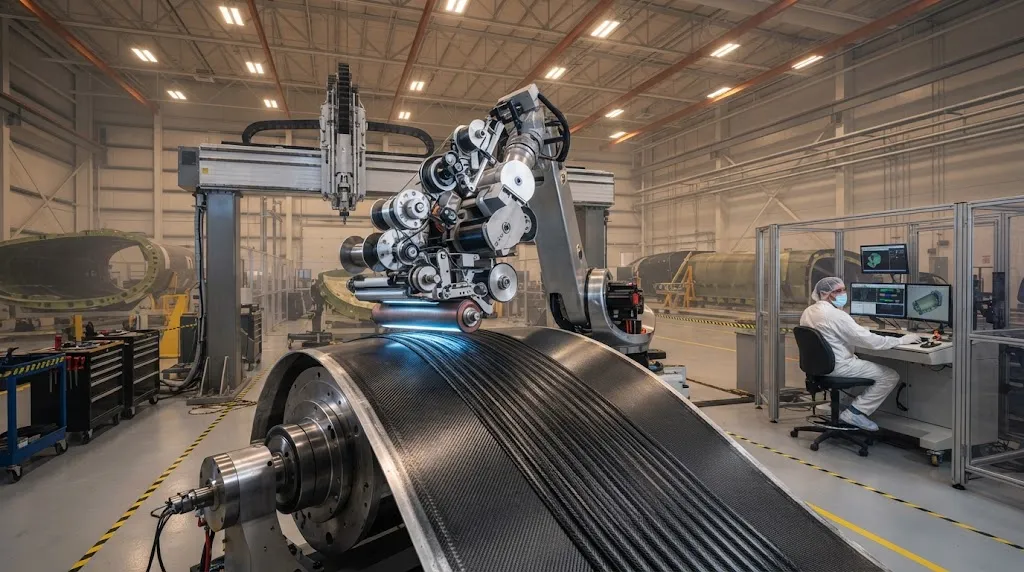
Automated Fiber Placement (AFP) has become the dominant manufacturing technology for large aerospace composite structures, from fuselage barrels to wing skins and engine nacelles. The technology's appeal lies in its ability to lay down multiple tows of prepreg material simultaneously —
Introduction
Automated Fiber Placement (AFP) has become the dominant manufacturing technology for large aerospace composite structures, from fuselage barrels to wing skins and engine nacelles. The technology's appeal lies in its ability to lay down multiple tows of prepreg material simultaneously — typically 16 to 32 tows per head — at deposition rates of 50-100 kg per hour, achieving fiber placement accuracy within ±0.5 mm. However, the economic case for AFP depends critically on two factors: cycle time per part and labor content. Aerospace manufacturers operating at rates of 60-120 airplane per year require AFP systems that minimize both variables to achieve the cost targets needed for program profitability.
This article examines the primary cost drivers in AFP operations, quantifies the cycle time optimization strategies that reduce part manufacturing time by 30-50%, and analyzes the labor savings that transform AFP from a capital-intensive alternative to a cost-effective production solution. The data presented reflects current industry benchmarks from aerospace prime contractors and Tier 1 suppliers operating AFP cells at production rates.
AFP Cost Structure Breakdown
Understanding AFP economics requires decomposing the total part cost into its constituent elements. The table below presents a typical cost breakdown for a mid-size aerospace composite component manufactured using AFP:
| Cost Element | Percentage of Total | Key Optimization Levers |
|---|---|---|
| Material (prepreg tows) | 35-45% | Tow width optimization, nesting efficiency, scrap reduction |
| Capital depreciation (AFP head + robot) | 15-25% | Utilization rate, uptime improvement, multi-shift operation |
| Labor (technician + engineer) | 15-25% | Automation level, inspection integration, reduced manual touch-up |
| Tooling (mandrel + fixturing) | 10-15% | Universal tooling, quick-change fixtures, tool life extension |
| Quality assurance | 8-12% | Inline inspection, automated defect detection, reduced rework |
| Consumables (vacuum, peel ply) | 3-5% | Reusable consumables, process consolidation |
The material cost dominates the bill of materials, but the most significant opportunities for cost reduction lie in cycle time and labor optimization — the areas where AFP technology provides the greatest leverage over manual or semi-automated processes.
Cycle Time Optimization Strategies
Cycle time in AFP operations encompasses material placement time, repositioning time, quality inspection time, and non-productive time (tape changes, head maintenance, system faults). Reducing each component requires specific technical and operational interventions:
- Placement speed optimization: Modern AFP heads achieve maximum deposition rates of 2,000-3,000 mm/s, but actual placement speed is limited by compaction roller dynamics, tow tension control, and curvature of the substrate. Running at 80-90% of maximum speed with optimized compaction parameters typically yields 15-20% cycle time reduction versus conservative speed settings.
- Corner and transition efficiency: Each corner transition or change in placement direction introduces deceleration, repositioning, and acceleration phases. Optimizing the tool path to minimize sharp corners — using tangent arcs and smooth transitions — reduces non-productive time by 25-40% on complex geometries.
- Tow management automation: Automated cut-and-restart systems eliminate manual intervention for tow breaks, splice management, and start/stop operations. Advanced systems achieve tow management cycle times under 0.5 seconds per event, compared to 5-15 seconds for manual operations.
- Multi-head parallel processing: Dual-head or gantry-style AFP systems with independent placement heads can process symmetrical parts simultaneously, effectively doubling throughput for wing skins, fuselage panels, and other mirror-image components.
These strategies collectively reduce part cycle time by 30-50% compared to baseline AFP operations, with the magnitude depending on part complexity and current operational maturity.
Labor Savings Analysis
The labor content in composite part manufacturing has historically been the largest cost differentiator between AFP and manual processes. A typical aerospace composite part manufactured by hand layup requires 200-400 labor hours per part for material placement, inspection, and rework. The same part produced on an AFP system requires 40-80 labor hours — a reduction of 60-80% — distributed across fewer but more skilled positions:
- AFP operator: One operator per AFP cell manages material placement, monitors process parameters, and handles routine troubleshooting. This role replaces 4-8 hand layup technicians.
- Quality technician: Inline inspection systems and automated defect detection reduce inspection labor by 50-70%, with the remaining effort focused on first-article verification and process monitoring.
- Process engineer: AFP requires higher-skilled engineering support for programming, optimization, and process development, but this cost is amortized across higher production volumes.
- Touch-up and rework: AFP's placement accuracy typically reduces rework labor by 40-60%, eliminating the manual correction of fiber orientation, gap, and overlap defects common in hand layup.
The net labor savings at production rates of 60+ parts per year typically range from $150,000 to $300,000 per part compared to manual layup, depending on part size and complexity.
ROI Calculation Framework
Capital investment in AFP systems ranges from $2-8 million per cell, including the robot, AFP head, tooling, and integration. The return on investment depends on production volume, part value, and the labor baseline being replaced. A simplified ROI model shows:
| Parameter | Conservative | Moderate | Aggressive |
|---|---|---|---|
| Capital investment ($M) | 4.0 | 4.0 | 4.0 |
| Annual production volume | 50 parts | 80 parts | 120 parts |
| Labor savings per part ($K) | 150 | 200 | 250 |
| Annual labor savings ($M) | 7.5 | 16.0 | 30.0 |
| Payback period (years) | 6.4 | 3.0 | 1.6 |
Even in the conservative scenario with lower production volumes and modest labor savings, AFP achieves payback within 6-7 years — well within the typical 15-20 year lifecycle of aerospace production programs. At higher rates, the economics become compelling, with payback under 2 years.
Implementation Best Practices
Successful AFP cost reduction requires a systematic approach that addresses technology, process, and organizational factors:
- Baseline measurement: Establish accurate cycle time and labor content baselines before implementing optimizations. Without measurement, improvement targets cannot be validated.
- Sequential optimization: Address the largest cycle time contributors first — typically material placement speed and repositioning efficiency — before investing in secondary improvements.
- Inline quality integration: Implement automated inspection systems (thermography, laser profiling, vision systems) to reduce post-process inspection labor and enable real-time process correction.
- Operator training: Invest in comprehensive operator training that covers both routine operations and troubleshooting. Skilled operators reduce unplanned downtime by 30-50%.
- Continuous improvement: Establish feedback loops between production data, quality metrics, and process parameters to drive ongoing optimization.
The most successful AFP implementations treat cost reduction as a continuous journey rather than a one-time project, achieving 5-10% annual improvements in cycle time and labor efficiency.
Frequently Asked Questions
How does AFP cost compare to automated tape laying (ATL) for large composite structures?
AFP and ATL serve different segments of the composite manufacturing spectrum. ATL uses wide tapes (75-300 mm) and achieves higher deposition rates (100-200 kg/hour) for large, gently curved structures like wing skins and fuselage panels. AFP uses narrower tows (3.2-12.7 mm) and offers greater design flexibility for complex geometries with tighter radii. Cost per kilogram of placed material is 10-20% lower for ATL on suitable parts, but AFP's versatility makes it the preferred choice for 70-80% of aerospace composite structures. The optimal choice depends on part geometry, production rate, and design requirements.
What are the main technical challenges in achieving AFP cycle time targets?
The primary technical challenges include: (1) compaction roller dynamics at high placement speeds, which can cause tow distortion and fiber waviness; (2) thermal management of heated compaction systems that enable tack and consolidation; (3) tow tension control across multiple tows to prevent buckling and maintain uniform fiber alignment; (4) trajectory planning for complex geometries that minimizes corners and transitions; and (5) material behavior variability across prepreg batches that requires adaptive process control. Addressing these challenges requires close collaboration between AFP equipment suppliers, material suppliers, and manufacturing engineers.
What labor skills are required for AFP operations and how do training costs compare to manual layup?
AFP operators require skills in CNC programming, composite material handling, process parameter optimization, and basic troubleshooting — a higher skill level than manual layup technicians. Training typically requires 3-6 months for basic competency and 12-18 months for advanced optimization capabilities. Training costs are 2-3x higher than for manual layup, but this is offset by the 60-80% reduction in labor headcount per part. Additionally, AFP operators command 20-30% higher wages, reflecting the specialized skills required. The net labor cost per part is still significantly lower due to the dramatic reduction in labor hours.
Conclusion
Automated Fiber Placement cost reduction is achievable through systematic optimization of cycle time, labor content, and process efficiency. The 30-50% cycle time improvements from placement speed optimization, corner efficiency, and multi-head processing, combined with 60-80% labor savings from automation, transform AFP from a capital-intensive technology to a cost-effective production solution for high-rate aerospace programs. With payback periods ranging from 1.6 to 6.4 years depending on production volume, AFP delivers compelling returns on investment while enabling the production rates required for next-generation commercial and military aircraft.
For engineers evaluating AFP technology for their composite manufacturing operations, the key considerations are part complexity, production volume, and the current labor baseline being replaced. Explore our carbon fiber prepreg materials optimized for AFP applications, including towpreg, slit tape, and custom-formatted materials for automated placement systems, or contact our engineering team to discuss material selection and process optimization for your AFP program.
Part of topic
Related Articles
- Bio-Based Carbon Fiber Precursors: Lignin and Polyethylene for Low-Cost Production
- Large-Tow Carbon Fiber Cost Analysis: 48K vs 60K Price-Performance Comparison
- Carbon Fiber-Resin Interface Bonding: Surface Treatment and Coupling Agent Optimization
- Digital Twin for Carbon Fiber Manufacturing: Real-Time Process Monitoring and Defect Prevention
- Thermoplastic Carbon Fiber Welding for Automotive: Ultrasonic and Induction Welding Process Windows
- Large-Tow Carbon Fiber Wet Spinning: Process Optimization for 48K/60K Production Efficiency
Interested in Our Products?
Contact our team for competitive pricing and technical specifications.
Get a QuoteRelated Products
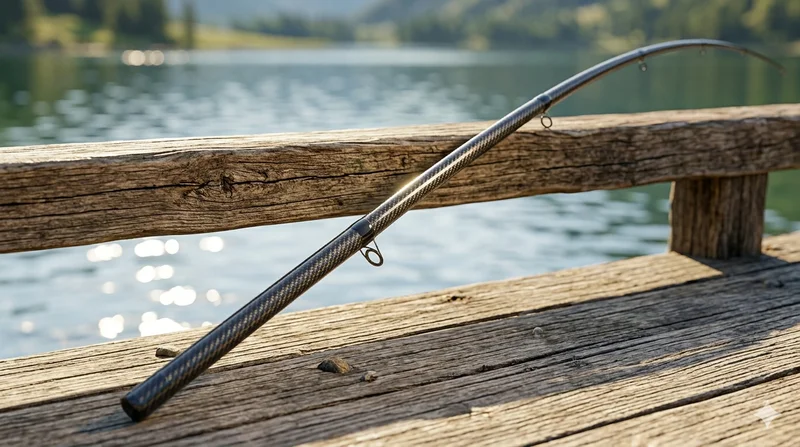
Carbon Fiber Fishing Rod Blank
High-quality carbon fiber fishing rod blank manufactured from multiple grades of Toray carbon fiber cloth. Available in a wide range of lengths, powers, and actions for freshwater and saltwater applications. Suitable for OEM rod building.

Carbon Fiber Plate — 3K Twill T700 1.5mm
Thin 1.5mm carbon fiber plate with 3K twill weave surface. Lightweight and stiff, commonly used for covers, panels, drone bodies, and applications requiring a premium aesthetic appearance.

Carbon Fiber Plate — 3K Twill T700 3.0mm
Medium-thickness 3.0mm carbon fiber plate offering significantly higher load capacity while maintaining attractive 3K twill finish. Suitable for structural brackets, reinforcement plates, and load-bearing panels.

Square Carbon Fiber Tube — 3K Twill T700
Square cross-section carbon fiber tube manufactured with 3K twill weave for torsional strength. Preferred for structural frames, trusses, and support columns where rectangular geometry offers design flexibility.
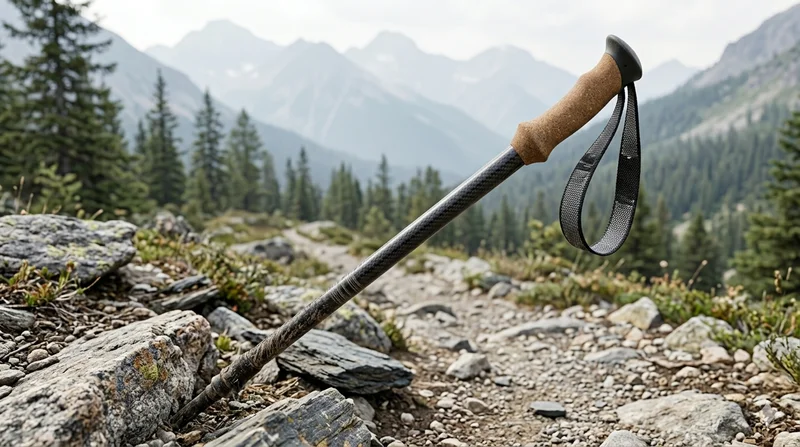
Carbon Fiber Trekking Pole
Lightweight carbon fiber trekking pole manufactured from high-grade carbon fiber tube. Weighs only 160g per pole while providing superior shock absorption and durability for hiking, trail running, and backpacking.