

Every carbon fiber that flies in a commercial or military aircraft arrived there through a qualification chain that few outside the industry see. A fiber lot is not certified; a part is. The chain runs from raw fiber lot to prepreg lot, to test laminate, to subcomponent, and finally to
Introduction
Every carbon fiber that flies in a commercial or military aircraft arrived there through a qualification chain that few outside the industry see. A fiber lot is not certified; a part is. The chain runs from raw fiber lot to prepreg lot, to test laminate, to subcomponent, and finally to the full-scale article whose certification authorizes production. Each stage has its own tests, its own contingency limits and its own schedule, and the sum of those schedules is the true lead time for introducing a new fiber supplier. This article walks the qualification chain stage by stage, explains why the process gates programs like FLRAA and T1100-class selections, and shows why program-level material selection happens years before the first part is made.
The Qualification Chain: Fiber Lot to Certified Part
Qualification begins with a raw fiber lot — a batch of continuous fiber produced under an approved process specification. The lot carries mechanical and physical test data: tensile strength and modulus, density, sizing type and content, and surface properties. But a fiber lot alone certifies nothing, because the aircraft does not fly on raw fiber. The fiber must be converted to prepreg, layered into a laminate, cured, machined and finally validated as part of a structure. The chain below shows the sequence and what each stage gates:
| Stage | What Is Qualified | Key Tests | Typical Timeline |
|---|---|---|---|
| Fiber lot | A specific fiber batch to the process specification | Tensile, modulus, density, sizing, surface | Weeks |
| Prepreg lot | Fiber plus resin system as a converted material lot | Resin content, tack, gel time, volatile content | Weeks to months |
| Test laminate | Cured laminate from the prepreg lot | Lamina strengths, knockdowns, environmental conditioning | Months |
| Subcomponent | Representative structural detail or joint | Static and fatigue allowables, damage tolerance | Months to a year |
| Full-scale certification | The production article as installed and flown | Static test, repeated-load tests, airworthiness findings | One to several years |
Each stage is a gate: the part cannot move forward until the previous stage's data passes. The practical consequence is that a supplier's shortest realistic path from first sample to flying part is measured in years, not quarters.
Why the Chain Gates New Suppliers
The gate structure protects the program, but it is also the economic barrier that new fiber suppliers face. Qualification data is generated to the buyer's specification, at the buyer's test houses or approved laboratories, and it accrues confidence only with repeated lots over time. Two effects follow:
- Statistical basis: allowables come from many replicate tests across multiple lots, so a single impressive test batch is meaningless; only consistent production history builds the dataset.
- Lock-in: once a fiber and prepreg system is qualified into a certified part, replacing it means re-running most of the chain, which is why OEMs change suppliers reluctantly and only for a compelling cost or supply reason.
The result is matching inertia: established suppliers hold their positions from program to program, while new entrants — including domestic fiber brands with competitive mechanical data — remain limited to secondary structure, non-structural parts or civilian applications until they accumulate the same qualification history.
Program-Level Material Selection: FLRAA and the T1100 Class
Program-level selection happens at the front of the chain, before qualification even starts, and it is where the latest high-performance fibers are chosen or passed over. The U.S. Army's Future Long-Range Assault Aircraft (FLRAA) program is a current example: its main rotor blades and dynamic components are being built around newly qualified, high-performance fiber systems, with selection driven by the specific mass, stiffness and damage-tolerance requirements of the flight envelope rather than by catalog properties alone. T1100-class fibers — toray's T1100G and its equivalents — appear in such programs because their combination of high strength near 7 GPa class, moderate modulus and good processability unlocks blade and airframe weight savings that mid-modulus fibers cannot reach.
The same gate logic explains a recurring industrial pattern: Chinese domestic fibers, despite reaching T1100-class mechanical specifications, face a Western military qualification barrier that is not about strength data. Certification sovereignty — the requirement that mission-critical material chains remain inside approved, traceable supply networks — closes the door that the qualification chain itself would otherwise leave open. For Western programs, this makes the fiber source part of the qualification question from day one; for domestic programs, it is exactly why national substitutes are being qualified through the same staged chain.
How Long It Really Takes and What Can Be Compressed
A realistic full-chain timeline for a new fiber into a major program is three to five years from first sample to certified part, with the certification stage itself commonly consuming the longest single block. What can be compressed, and what cannot, matters for anyone planning material strategy:
- Cannot compress: the physical test matrix, cure and conditioning cycles, and the flight-proven accumulation of in-service data — those are calendar-bound.
- Can compress: parallel prepreg development, early supplier involvement in component design, and qualification conducted against a mature specification that does not change mid-chain.
The strategic reading is simple: the wagon starts moving long before the contract. Programs that front-load fiber selection and start qualification in parallel with component design see their materials reach certification years before competitors who wait until the airframe structure is frozen.
Frequently Asked Questions
Why is a fiber lot not simply certified once?
Because the airworthiness authority certifies parts, not raw materials, and a fiber lot's properties only mean something after conversion into the prepreg, laminate and structure that actually carry load. Each subsequent stage adds its own failure modes — resin-fiber interface, environmental knockdowns, fatigue in the cured system — so the chain must generate data at every level. Re-certification is also part of the system: when the process specification changes, or a trending property drifts, the relevant stage is revisited, which is why suppliers maintain batch records and statistical process control as part of the qualification package.
Can a new fiber with excellent mechanical data enter quickly?
Only if the mechanical data is accompanied by the full qualification chain run to the buyer's specification. Excellent coupon properties compress nothing by themselves: the statistical allowables, prepreg compatibility, environmental conditioning and full-scale certification still run on calendar time. A realistic floor is several years for a primary-structure fiber. What excellent data can do is make the supplier's proposal competitive at the program-select stage, which is precisely the point where program-level selection decides whether the qualification chain will be entered at all.
What role does the FLRAA program play in fiber qualification practice?
FLRAA is a current high-visibility example of program-level selection driving fiber qualification. Its main rotor and dynamic-component requirements exceed what older mid-modulus fibers could support on mass and stiffness, so the program has driven qualification of newer high-performance fiber systems, including T1100-class products. For material suppliers, the program demonstrates the full chain in action: selection at the front, staged qualification through the middle, and certified parts at the end. For observers, it illustrates why mechanical specifications alone do not open military programs — qualification sovereignty and traceable supply chains are gating factors of equal weight.
Why are Chinese domestic fibers historically excluded from Western military platforms?
The exclusion is not primarily about mechanical performance — several domestic brands now publish T1100-class strengths and moduli. The barrier is certification sovereignty: Western military programs require mission-critical materials to come from approved, traceable, politically secure supply chains, and qualification rules encode that requirement. Even a flawless technical dossier cannot satisfy a certification requirement that the source nation itself be qualified. This is precisely why domestic programs in China run their own qualification chains for national substitutes — to build the same gated, traceable history that Western suppliers already hold, one stage at a time.
Conclusion
Aerospace fiber qualification is a staged chain from raw fiber lot to certified part, and the chain, not the catalog, is what determines how fast a new supplier can enter a program. Each stage gates the next with its own tests and calendar, which is why T1100-class selections and programs like FLRAA run on multi-year time scales, and why certification sovereignty — not raw strength data — is the real barrier for domestic fibers in Western military applications. Program-level material selection is the decision point where all of this is set in motion, and it happens years before the first certified part flies.
For engineering and procurement teams planning aerospace material programs, starting the qualification conversation with a capable, traceable fiber supplier is the single fastest lever on total lead time. Review our carbon fiber product range and specifications, or contact our engineering team to discuss qualification support for your application.
Part of topic
Related Articles
- Bio-Based Carbon Fiber Precursors: Lignin and Polyethylene for Low-Cost Production
- Large-Tow Carbon Fiber Cost Analysis: 48K vs 60K Price-Performance Comparison
- Carbon Fiber-Resin Interface Bonding: Surface Treatment and Coupling Agent Optimization
- Digital Twin for Carbon Fiber Manufacturing: Real-Time Process Monitoring and Defect Prevention
- Thermoplastic Carbon Fiber Welding for Automotive: Ultrasonic and Induction Welding Process Windows
- Large-Tow Carbon Fiber Wet Spinning: Process Optimization for 48K/60K Production Efficiency
Interested in Our Products?
Contact our team for competitive pricing and technical specifications.
Get a QuoteRelated Products
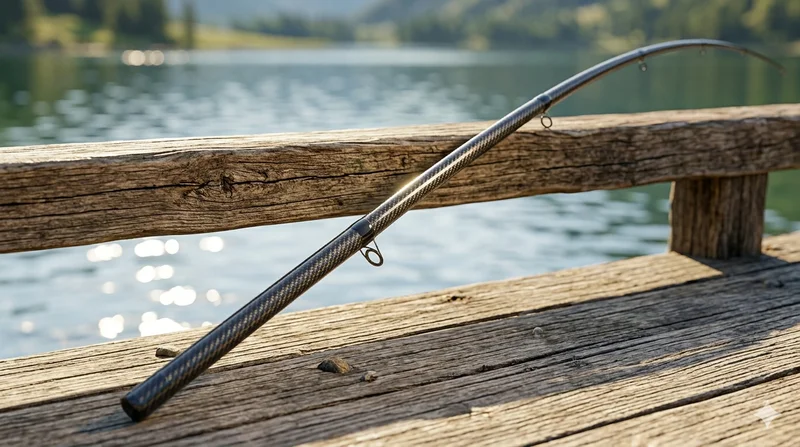
Carbon Fiber Fishing Rod Blank
High-quality carbon fiber fishing rod blank manufactured from multiple grades of Toray carbon fiber cloth. Available in a wide range of lengths, powers, and actions for freshwater and saltwater applications. Suitable for OEM rod building.

Carbon Fiber Plate — 3K Twill T700 3.0mm
Medium-thickness 3.0mm carbon fiber plate offering significantly higher load capacity while maintaining attractive 3K twill finish. Suitable for structural brackets, reinforcement plates, and load-bearing panels.

Carbon Fiber Plate — 3K Twill T700 1.5mm
Thin 1.5mm carbon fiber plate with 3K twill weave surface. Lightweight and stiff, commonly used for covers, panels, drone bodies, and applications requiring a premium aesthetic appearance.

Square Carbon Fiber Tube — 3K Twill T700
Square cross-section carbon fiber tube manufactured with 3K twill weave for torsional strength. Preferred for structural frames, trusses, and support columns where rectangular geometry offers design flexibility.
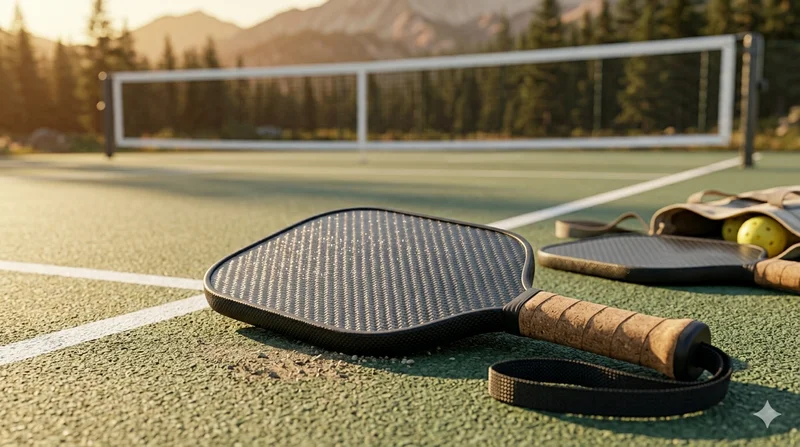
Carbon Fiber Pickleball Paddle
High-performance pickleball paddle with Toray T700 carbon fiber face and polypropylene honeycomb core. Delivers excellent power-to-weight ratio, spin generation, and vibration dampening for competitive play.