
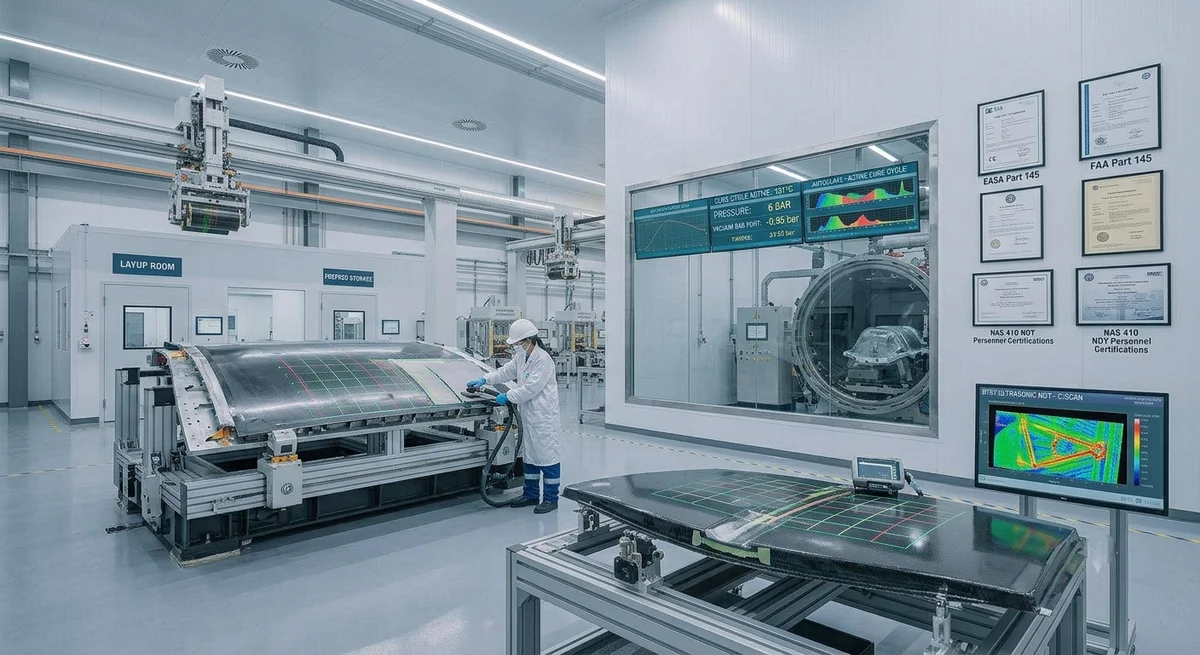
A comprehensive guide to certification requirements for carbon fiber composite repair in aerospace — covering EASA Part 145, FAA AC 145-6, repair design approvals, technician qualifications, and quality system audits.
Introduction
The global aerospace composites repair market is valued at approximately USD 1.8 billion in 2026, growing at 8.4% CAGR as composite usage in commercial aircraft continues to expand. The Boeing 787 Dreamliner — with 50% composite content by weight — and the Airbus A350 XWB — at 53% composite content — have fundamentally changed the MRO (Maintenance, Repair, and Overhaul) landscape. Carbon fiber reinforced polymer (CFRP) components now constitute primary and secondary structures on modern aircraft, requiring specialized repair certification that differs significantly from traditional aluminum repairs.
EASA (European Union Aviation Safety Agency) and FAA (Federal Aviation Administration) have established rigorous frameworks governing composite repair. Non-compliance with these certification requirements can result in airworthiness directive (AD) actions, grounding of aircraft, and substantial liability exposure for MRO facilities. Understanding these regulatory requirements is essential for B2B buyers seeking certified composite repair services and for MRO operators expanding their CFRP repair capabilities.
| Requirement | EASA (Part 145 / Part 21) | FAA (AC 145-6 / AC 20-107B) | Key Difference |
|---|---|---|---|
| Facility Certification | EASA Part 145 Approval | FAR Part 145 Repair Station Certificate | EASA requires separate MOE; FAA uses RSQM |
| Technician Qualification | EASA Part 66 (B1.1 or B2) + Composite training per AMC 20-29 | FAA A&P License + company-approved OJT + AC 65-33A | EASA mandates composite module; FAA relies on employer training |
| Repair Design Approval | EASA Part 21 (DOA/POA) — STC or Minor Change | FAA DER approval or STC via ODA | EASA Form 1 vs FAA Form 8130-3 |
| NDT Requirements | EASA Part 145 — NDT per EN 4179 / NAS 410 | FAA — NDT per NAS 410 or SNT-TC-1A | EASA mandates third-party NDT body |
| Audit Frequency | Every 24 months + continuous surveillance | Every 24 months + random inspections | EASA includes design org if POA held |
EASA Part 145 Composite Repair Requirements
EASA's certification framework for composite repair is structured around three pillars: facility, personnel, and process:
- Facility Requirements (Part 145.A.25): MRO facilities must maintain controlled-environment work areas with temperature (18–25°C), humidity (≤65% RH), and cleanliness (Class 100,000 or better). Separate layup, curing, and inspection zones are required. Prepreg storage must maintain freezer conditions (−18°C ± 3°C) with continuous monitoring and 24-hour backup power.
- Technician Certification (Part 66 + AMC 20-29): B1.1 and B2 license holders must complete 80 hours of composite-specific theory and 160 hours of supervised practical training. Training covers: material identification, damage assessment (tap testing, ultrasonic A-scan, shearography), wet layup and prepreg repair, vacuum bagging and autoclave curing. Recertification every 24 months with 16 hours of continuing education.
- Process Documentation (Part 145.A.45): Each repair must have a documented Process Specification detailing materials, layup sequence, cure cycle, and inspection criteria. Deviations from OEM-approved procedures require EASA Form 1 approval.
FAA Composite Repair Certification
The FAA framework under AC 145-6 and AC 20-107B shares similar objectives but differs in implementation:
- Repair Station Certification (FAR Part 145): FAA-certified repair stations must include composite repair in their Ops Specs. The RSQM must document scope of composite work. Major structural repairs require FAA engineering approval via DER or ODA.
- Technician Qualification: AC 65-33A provides guidelines for employer-based training. Technicians must demonstrate proficiency in damage identification, scarf repair design (taper ratio 20:1 to 30:1), moisture removal (2–4 hours at 70–90°C), and NDT verification.
Frequently Asked Questions
What is the difference between EASA Part 145 and FAA Part 145 certification?
EASA requires a Maintenance Organization Exposition (MOE), while FAA uses a Repair Station Quality Manual (RSQM). EASA mandates EASA Form 1 for all repaired components. EASA also requires Part 66 license holders to have composite-specific endorsements, whereas the FAA relies on employer OJT programs verified through the RSQM.
Can a repair developed for one aircraft type be applied to another?
No — composite repair approvals are type-specific and design-specific. A scarf repair procedure validated for the Boeing 787 horizontal stabilizer cannot be automatically applied to the Airbus A350 rear pressure bulkhead. Each repair must be approved through the applicable design approval process.
What are the consequences of performing composite repairs without proper certification?
Civil penalties of up to €30,000 per violation per day (EASA) or $50,000 per violation (FAA), potential criminal prosecution for falsification of records, aircraft grounding via airworthiness directive, and invalidation of hull and liability insurance.
Part of topic
Related Articles
- Bio-Based Carbon Fiber Precursors: Lignin and Polyethylene for Low-Cost Production
- Large-Tow Carbon Fiber Cost Analysis: 48K vs 60K Price-Performance Comparison
- Carbon Fiber-Resin Interface Bonding: Surface Treatment and Coupling Agent Optimization
- Digital Twin for Carbon Fiber Manufacturing: Real-Time Process Monitoring and Defect Prevention
- Thermoplastic Carbon Fiber Welding for Automotive: Ultrasonic and Induction Welding Process Windows
- Large-Tow Carbon Fiber Wet Spinning: Process Optimization for 48K/60K Production Efficiency
Interested in Our Products?
Contact our team for competitive pricing and technical specifications.
Get a QuoteRelated Products

Carbon Fiber Plate — 3K Twill T700 1.5mm
Thin 1.5mm carbon fiber plate with 3K twill weave surface. Lightweight and stiff, commonly used for covers, panels, drone bodies, and applications requiring a premium aesthetic appearance.

Square Carbon Fiber Tube — 3K Twill T700
Square cross-section carbon fiber tube manufactured with 3K twill weave for torsional strength. Preferred for structural frames, trusses, and support columns where rectangular geometry offers design flexibility.
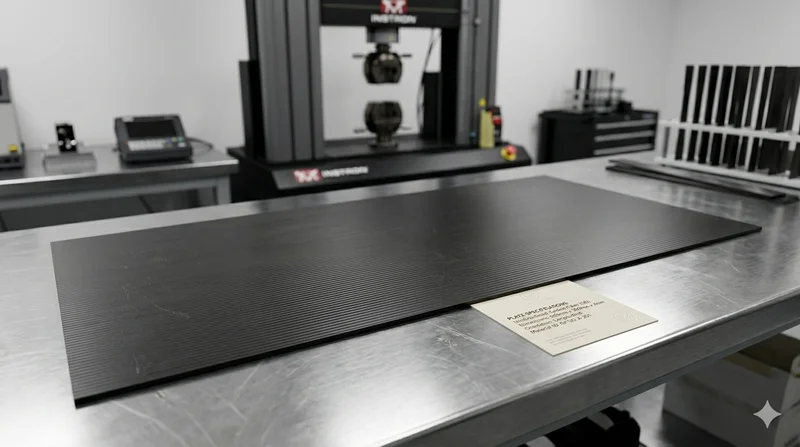
Carbon Fiber Plate — UD Unidirectional T700
Unidirectional carbon fiber plate with all fibers oriented in a single direction for maximum strength along the fiber axis. Essential for structural reinforcements, splints, and applications where load direction is predictable.
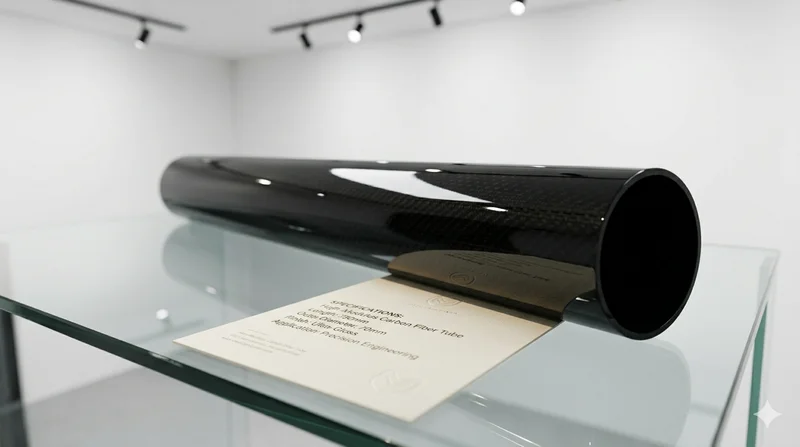
High Modulus Round Carbon Fiber Tube — M40
High modulus round tube manufactured with M40 grade fiber (tensile modulus 400 GPa). Designed for applications where maximum stiffness-to-weight ratio is critical, such as optical systems, precision machinery, and aerospace structures.
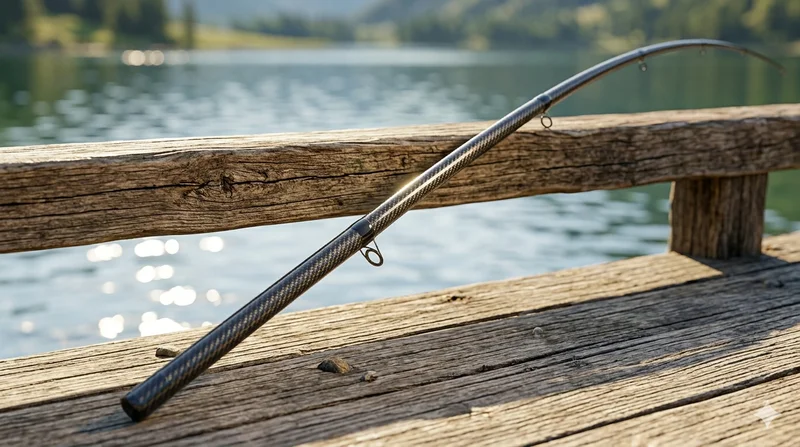
Carbon Fiber Fishing Rod Blank
High-quality carbon fiber fishing rod blank manufactured from multiple grades of Toray carbon fiber cloth. Available in a wide range of lengths, powers, and actions for freshwater and saltwater applications. Suitable for OEM rod building.