
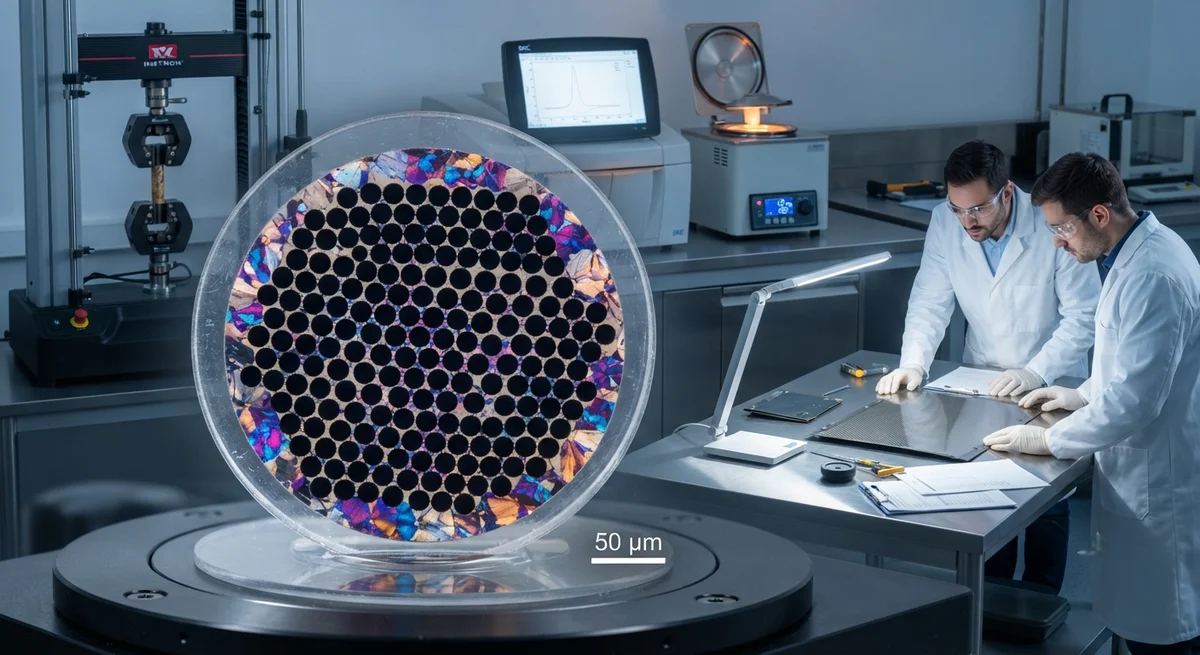
The resin matrix system in carbon fiber composites is not merely a binder for fibers — it is the critical determinant of thermal performance, impact resistance, manufacturing cycle time, and long-term durability of aerospace structures, with thermoset epoxy, BMI, PEEK, and PEKK systems each offering distinct trade-offs.
The Hidden Half of Composite Performance
In carbon fiber reinforced polymer (CFRP) composites, the carbon fibers carry the structural load, but it is the matrix — the polymer resin system that surrounds and binds the fibers — that determines how that load is transferred, how the structure behaves at temperature extremes, how it resists impact and environmental degradation, and how quickly it can be manufactured. Despite representing only 30–45% of the composite volume and 20–35% of the raw material cost, the matrix is the decisive factor in roughly 70% of composite part failures encountered in service.
The aerospace industry employs four primary classes of matrix resins: high-performance epoxy, bismaleimide (BMI), PEEK, and PEKK, each occupying a distinct position on the performance–cost–processability spectrum.
Comparative Matrix System Properties
| Property | Epoxy (High-Perf) | BMI | PEEK | PEKK |
|---|---|---|---|---|
| Max service temp (dry) | 120–150°C | 200–230°C | 150–170°C | 150–170°C |
| Max service temp (wet) | 80–100°C | 160–180°C | 140–160°C | 140–160°C |
| G_IC (interlaminar toughness) | 0.15–0.30 kJ/m² | 0.20–0.35 kJ/m² | 1.0–1.5 kJ/m² | 0.8–1.2 kJ/m² |
| Moisture absorption (24h) | 1.5–3.0% | 2.0–3.5% | 0.1–0.5% | 0.2–0.6% |
| Glass transition temp (Tg) | 180–220°C | 280–320°C | 143°C | 158°C |
| Cure/processing temp | 120–180°C | 180–240°C | 380–400°C | 330–380°C |
| Relative material cost | 1.0x (baseline) | 1.8–2.5x | 2.5–3.5x | 2.2–3.0x |
High-Performance Epoxy: The Workhorse
Epoxy resin systems account for approximately 72% of structural composite applications on current commercial aircraft programs. Modern toughened epoxies incorporate thermoplastic particles or rubber modifiers to improve interlaminar fracture toughness. However, the primary limitation is hot/wet performance degradation — at 80–100°C under saturated conditions, epoxy matrix composites lose 35–50% of their compression strength.
Key Selection Criteria
- Service temperature envelope: Below 120°C — toughened epoxy. 120–180°C — PEKK or BMI. Above 180°C — BMI.
- Impact damage tolerance: PEEK and PEKK offer 5–10x higher interlaminar fracture toughness versus epoxy.
- Manufacturing volume: For high-rate production (<10 min cycle), thermoplastic matrices essential. For moderate rates, OOA epoxy offers best cost balance.
- Chemical resistance: PEEK offers best resistance to Skydrol, jet fuel, and de-icing fluids.
- Sustainability: Thermoplastic matrices are recyclable via remelting; thermosets cannot be remelted.
Case Study: Next-Generation Nacelle Matrix Selection
| Criterion | Epoxy (toughened) | BMI | PEKK (TPC) |
|---|---|---|---|
| Temperature margin | −40°C (fails) | +40°C (passes) | +10°C (marginal) |
| Impact resistance (BVID) | 15 J | 12 J | 45 J |
| Cycle time (per part) | 12 hours | 16 hours | 1.5 hours |
| Per-part cost @ 1,000/yr | $4,200 | $5,800 | $3,600 |
Frequently Asked Questions
What is the difference between thermoset and thermoplastic matrix systems?
Thermoset matrices undergo an irreversible chemical curing reaction — they cannot be remelted. Thermoplastic matrices melt when heated and solidify when cooled — a reversible physical process. Thermosets dominate ~85% of structural composite applications; thermoplastics are the fastest-growing segment with 18–22% annual growth.
How does moisture absorption affect different resin systems?
Epoxy absorbs 1.5–3.0% moisture, reducing compression strength by 35–50% at elevated temperature. PEEK and PEKK absorb only 0.1–0.6% moisture, retaining over 85% of properties at 150°C wet.
What are emerging trends in aerospace composite matrix development?
Key trends include low-melt PAEK (LM-PAEK) processing at 280–310°C, self-healing matrices, out-of-autoclave epoxy, recyclable thermoset vitrimers, and nano-enhanced matrices with carbon nanotubes or graphene.
Part of topic
Related Articles
- Bio-Based Carbon Fiber Precursors: Lignin and Polyethylene for Low-Cost Production
- Large-Tow Carbon Fiber Cost Analysis: 48K vs 60K Price-Performance Comparison
- Carbon Fiber-Resin Interface Bonding: Surface Treatment and Coupling Agent Optimization
- Digital Twin for Carbon Fiber Manufacturing: Real-Time Process Monitoring and Defect Prevention
- Thermoplastic Carbon Fiber Welding for Automotive: Ultrasonic and Induction Welding Process Windows
- Large-Tow Carbon Fiber Wet Spinning: Process Optimization for 48K/60K Production Efficiency
Interested in Our Products?
Contact our team for competitive pricing and technical specifications.
Get a QuoteRelated Products

Carbon Fiber Plate — 3K Twill T700 1.5mm
Thin 1.5mm carbon fiber plate with 3K twill weave surface. Lightweight and stiff, commonly used for covers, panels, drone bodies, and applications requiring a premium aesthetic appearance.

Square Carbon Fiber Tube — 3K Twill T700
Square cross-section carbon fiber tube manufactured with 3K twill weave for torsional strength. Preferred for structural frames, trusses, and support columns where rectangular geometry offers design flexibility.

Carbon Fiber Plate — 3K Twill T700 3.0mm
Medium-thickness 3.0mm carbon fiber plate offering significantly higher load capacity while maintaining attractive 3K twill finish. Suitable for structural brackets, reinforcement plates, and load-bearing panels.
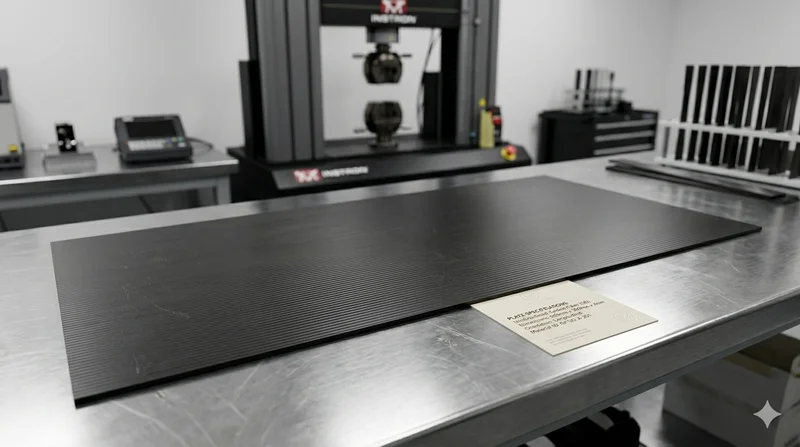
Carbon Fiber Plate — UD Unidirectional T700
Unidirectional carbon fiber plate with all fibers oriented in a single direction for maximum strength along the fiber axis. Essential for structural reinforcements, splints, and applications where load direction is predictable.
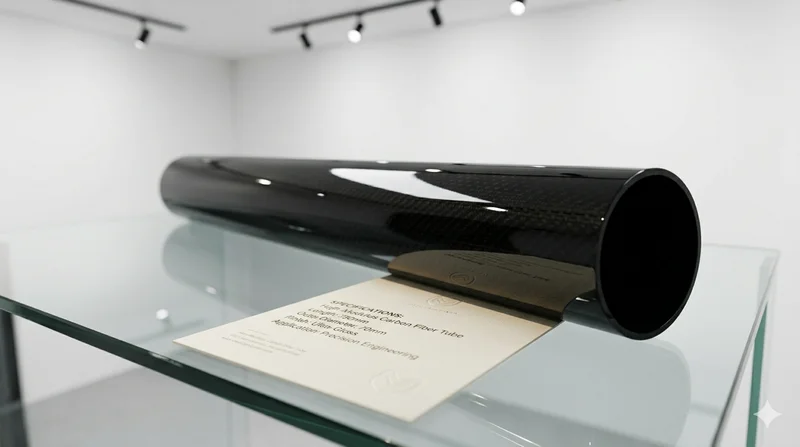
High Modulus Round Carbon Fiber Tube — M40
High modulus round tube manufactured with M40 grade fiber (tensile modulus 400 GPa). Designed for applications where maximum stiffness-to-weight ratio is critical, such as optical systems, precision machinery, and aerospace structures.