
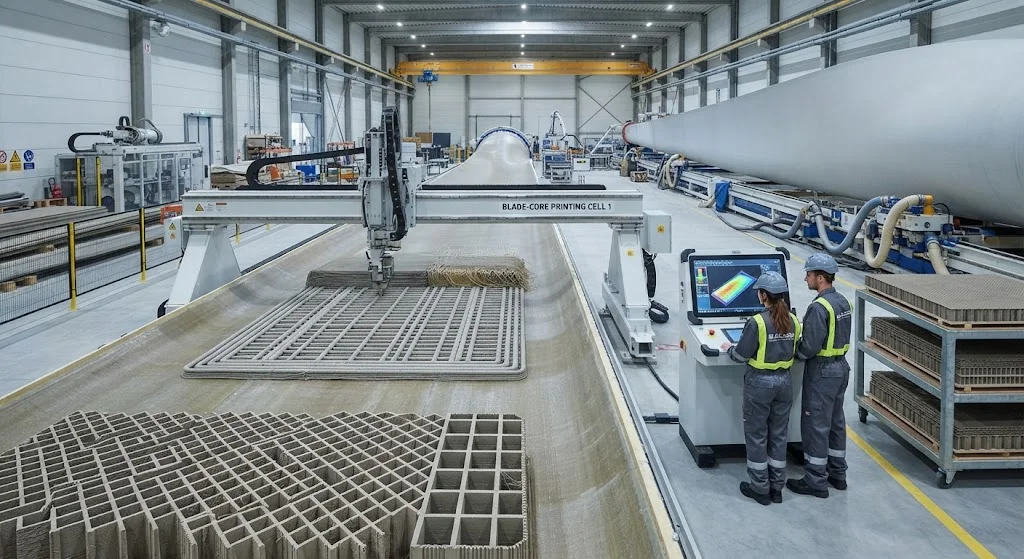
A modern wind turbine blade is, in structural terms, a sandwich construction wrapped around two load-carrying spar caps: thin, stiff outer skins separated by a low-density core that stabilizes them against buckling and carries shear. The skin is carbon or glass fiber laminate; the core
Introduction
A modern wind turbine blade is, in structural terms, a sandwich construction wrapped around two load-carrying spar caps: thin, stiff outer skins separated by a low-density core that stabilizes them against buckling and carries shear. The skin is carbon or glass fiber laminate; the core is almost always balsa wood or polymer foam, machined from blocks and bonded in place. In a 100-meter-plus blade, the core is also a serious quantity problem — square meters of panel area, hundreds of tons of core material across a production line, and a machining step that removes a meaningful share of every block as scrap.
The core, in other words, is a ripe target for reinvention. Research roadmaps led by the US National Renewable Energy Laboratory and the Department of Energy's Advanced Materials Office have identified 3D-printed cores as a priority route, with stated targets of at least 10 percent weight and cost reduction and a 15 percent reduction in blade production cycle time. This article examines what an additive core actually is, how it outperforms foam on the specific jobs a blade core must do, and what stands between the demonstrator lab and the production blade.
What a Printed Core Changes
A 3D-printed core replaces machined foam blocks with an extruded polymer lattice, printed layer by layer directly to the shape of the blade panel it will occupy. The change is not incremental; it alters three structural and manufacturing fundamentals at once. First, geometry is now free: an additive core can be printed net-shape or near-net-shape, eliminating the machining step and its scrap entirely. Second, density becomes a design variable rather than a catalog choice: the designer can grade cell size and wall thickness continuously along the panel, putting more material where loads are high and less where they are not. Third, features that foam requires secondary operations to create — drainage and vent channels, insert pockets, local stiffening — are simply printed in.
All three properties compound at blade scale. Because a long blade panel varies continuously in load, the ability to match core density to local stress is worth more in a 110-meter blade than in a 40-meter one, and the machining-waste saving grows with the square meters of panel. This is why the additive case is strongest precisely in the largest blades, where cores are a bigger absolute weight and cost line than ever before.
Core Options Compared
The table below positions printed cores against the incumbent materials on the properties that matter most to a blade designer:
| Property | Balsa wood | PVC foam | PET foam | 3D-printed polymer core |
|---|---|---|---|---|
| Typical density range (kg/m3) | 120-250 | 60-200 | 100-220 | 150-400, graded by design |
| Net-shape capability | No — machined | No — machined | No — machined | Yes — printed to shape |
| Density tailoring | Discrete grades | Discrete grades | Discrete grades | Continuous, cell by cell |
| Moisture behavior | Absorbs; requires sealing | Closed-cell, low uptake | Closed-cell, low uptake | Low uptake; drainage printed in |
| Machining waste | Significant | Significant | Significant | Near zero |
| Integrated features | Separate operations | Separate operations | Separate operations | Printed in-situ |
The comparison is not a clean win on every row — closed-cell foam remains excellent on moisture and cost per kilogram — but the additive rows that matter most at scale, net-shape capability and waste, swing decisively toward printing, and the density-tailoring row is simply out of reach of any machined material.
Designing for Additive Cores
Designing an additive core is a different discipline from selecting a foam grade. The designer works in cell geometry: cell size, strut thickness and lattice pattern become the free parameters that determine shear modulus, crush strength and density. Perforated or honeycomb-like grid cells provide good shear performance in the plane of the panel; closed-cell patterns suit local crush or fastening zones; and the lattice can transition smoothly between open and closed topology along the panel length where the loading changes.
Two design points deserve particular attention. The first is the bond line: a printed lattice must present a surface that both the skin laminate and the adhesive can grip reliably, which drives requirements on surface texture and on the shape of the cell openings that face the skin. The second is panel integrity: because printed cores introduce a new pattern of internal voids, the designer must verify that shear transfer across the core is continuous and that no local cutting of struts creates a weak path. These are exactly the questions that the qualification program, not the demonstrator, answers with data.
Process Economics: Where the 10 Percent and 15 Percent Come From
The roadmap targets are not arbitrary. The 10 percent weight saving comes from grading density against actual load, removing material that machined foam must carry uniformly, while the cost component follows the core bill in several ways: less material consumed overall, no machining scrap, and no secondary operations for channels and inserts. The 15 percent cycle-time target comes from the blade production line itself: laminate the skin, place the printed core, bond, and close the panel, with the core arriving ready-to-install rather than routed, cleaned and kitted from machined blocks.
The economics scale with throughput. Large-format polymer extrusion systems can print a substantial panel core per day, and a blade factory's production rhythm — one core set per blade position, synchronized with layup and cure — determines whether printing replaces the machining cell or merely complements it. For blade producers, the adoption decision turns less on printer technology than on production sequencing: a printed core that is ready when the skin is ready, with no rework, is worth more to the factory than a slightly cheaper core that is not.
Qualification: From Demonstrator to Type-Certified Blade
No blade core — however promising — flies on a commercial turbine without passing through the blade industry's material and design qualification system, built around standards such as IEC 61400-5 and DNV-ST-0376 for composite blade structures. An additive core supplier should expect to clear the same gates as any new core material:
- Property allowables: a statistically grounded database of shear, crush, fatigue and environmental properties at the densities the design uses.
- Bond-system validation: skin-to-core adhesive performance on printed surfaces, including aging and fatigue tests.
- Sub-component testing: sandwich panels representative of blade sections, loaded to verify buckling and shear behavior against simulation.
- Production process control: print-parameter monitoring, lot traceability and inspection criteria that mirror the rigor of machined-core quality systems.
The gate structure is well defined, but the data generation is the real cost: hundreds of coupons, months of fatigue testing, and a blade manufacturer willing to carry the development risk. This is why the near-term additive-core adopters are likely to be blade manufacturers and core suppliers working together on a specific platform, rather than the core technology arriving as a drop-in commodity.
Frequently Asked Questions
What is the actual weight saving from 3D-printed blade cores?
The roadmap target is at least 10 percent against conventional cores, achieved by grading density to local load instead of using a single foam grade throughout the panel. The saving is largest in the thickest sections of large blades, where core volume is highest and the uniform-density penalty of machined foam is most wasteful. Exact numbers depend on the blade platform, but the direction of the saving is consistent: remove material where the load does not need it.
How does a printed core compare on cost with balsa or PET foam?
Material cost per kilogram of printed polymer is comparable to or higher than commodity foam, but the installed cost is what matters. Printed cores eliminate machining scrap, secondary drainage and insert operations, and kitting, which together represent a large share of the delivered-core cost. At production scale the roadmap models total core cost reduction of at least 10 percent; at low volumes the economics favor foam, which is why additive adoption is a production-scale decision.
Is a 3D-printed core compatible with existing blade manufacturing lines?
Yes in principle, and that is a deliberate design requirement of the roadmap work. The printed core occupies the same panel position and bonds to the same laminates and adhesives as a machined foam core. The factory changes are upstream: a printing cell replaces the machining and kitting cell, and logistics adjust to just-in-time core delivery. The laminate, infusion and cure stages of the blade line remain unchanged.
Why is printed-core adoption starting with the largest blades?
Because every additive advantage grows with scale. Net-shape savings multiply with panel area, density grading is most valuable where loads vary most along the chord, and the absolute weight and cost of cores is highest in 100-meter-plus platforms. The qualification burden, meanwhile, is the same at any size, so the return on that investment is simply largest on the biggest blades.
Conclusion
3D-printed blade cores are a net-shape answer to a net-shape problem: a production-scale blade needs cores that arrive ready to install, carry only the density the load demands, and waste nothing in machining. The roadmap numbers — at least 10 percent weight and cost reduction, 15 percent faster blade cycle time — are credible because they compound the scrap elimination, the density grading and the in-situ features that foam cannot match at 100-meter scale. The path to the commercial blade runs through the standard qualification gate, and the pioneers will be blade manufacturers and core suppliers developing a printed platform together. For anyone on the material supply side, the message is practical: the largest blades have made core design a weight and cost line worth reinventing, and additive cores are the serious candidate to reinvent it.
If you define blade or panel core systems and want to understand how advanced materials fit the sandwich of the future, review our carbon and glass fabric range, or contact our team to discuss skin and bonding materials for next-generation blade structures.
Related Articles
- Bio-Based Carbon Fiber Precursors: Lignin and Polyethylene for Low-Cost Production
- Large-Tow Carbon Fiber Cost Analysis: 48K vs 60K Price-Performance Comparison
- Carbon Fiber-Resin Interface Bonding: Surface Treatment and Coupling Agent Optimization
- Digital Twin for Carbon Fiber Manufacturing: Real-Time Process Monitoring and Defect Prevention
- Thermoplastic Carbon Fiber Welding for Automotive: Ultrasonic and Induction Welding Process Windows
- Large-Tow Carbon Fiber Wet Spinning: Process Optimization for 48K/60K Production Efficiency
Interested in Custom Carbon Fiber Products?
Contact our team for competitive pricing and technical specifications.
Get a QuoteRelated Products
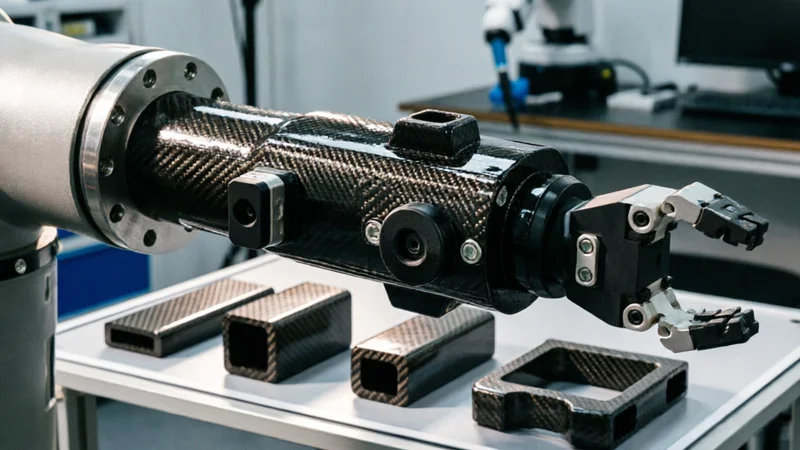
Carbon Fiber Robot End Effector Link — Custom Shape & Sensor Integration
Custom-shaped carbon fiber end effector links for robotic arms. Designed for automation integrators and research labs requiring lightweight, rigid connections between the robot wrist and gripper/tool. Can incorporate sensor mounting bosses, cable routing channels, and quick-change interfaces.
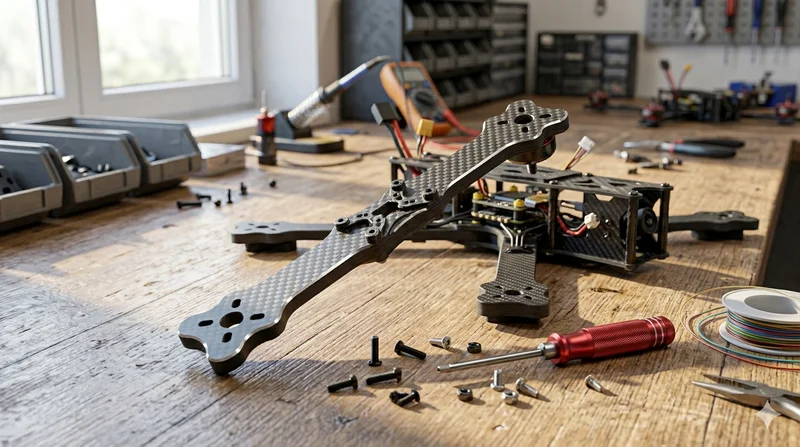
Carbon Fiber Drone Arm
Precision-molded carbon fiber drone arm combining unidirectional fiber for stiffness and woven layers for torsional strength. Designed for FPV, photography, and industrial drone platforms. Each arm is CNC-machined to exact specifications.
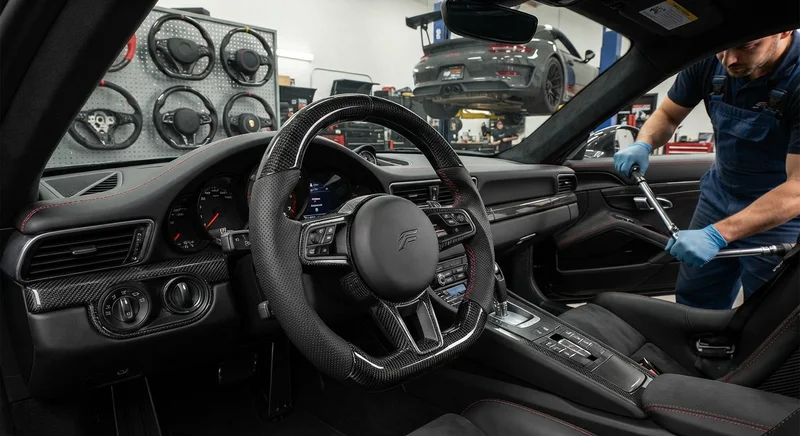
Carbon Fiber Steering Wheel — Custom Leather-Wrapped with CF Inlay
Custom carbon fiber steering wheel with genuine leather wrapping and carbon fiber inlay sections. Molded from T700 3K prepreg for maximum rigidity with a 30% weight reduction over OEM wheels. Available in D-shape (flat bottom) and round profiles. Direct bolt-on fitment for popular sports car and performance vehicle models. Custom stitching color and leather grade available.
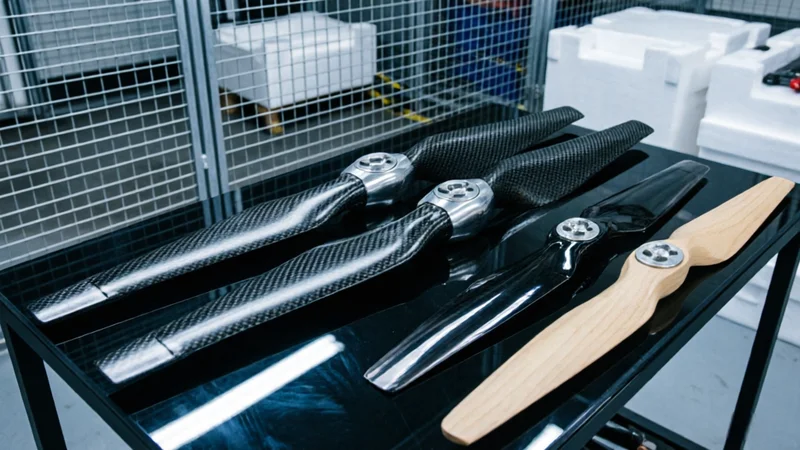
Carbon Fiber Drone Propeller — High-Performance Prepreg Molded
Prepreg-molded carbon fiber propellers for industrial and racing drones. Optimized airfoil design with balanced blade geometry for maximum thrust efficiency. 3-5× stiffer than nylon/plastic props, reducing blade flutter and improving flight stability. Available in common sizes or custom diameter/pitch.