
Choosing a carbon fibre tube manufacturer without a factory audit is how buyers end up with tubes that look correct on the drawing yet fail under real loads, vibration or moisture. A catalog photo cannot tell you whether the mill controls wall thickness on a wet-wound mandrel, whether the fiber grad
Introduction
Choosing a carbon fibre tube manufacturer without a factory audit is how buyers end up with tubes that look correct on the drawing yet fail under real loads, vibration or moisture. A catalog photo cannot tell you whether the mill controls wall thickness on a wet-wound mandrel, whether the fiber grade on the invoice matches the tow actually loaded on the creel, or whether first-article reports are measured or assumed. This guide walks through the checkpoints a buyer should run on site, what evidence to request before the visit, and how the answers differ when you are comparing domestic plants with carbon fiber tube manufacturers in india or other export hubs.
You will learn what a legitimate tube manufacturer must be able to show on the shop floor, how to distinguish a carbon fibre tube supplier from a conversion plant, and how to turn audit findings into a purchasing decision rather than a hospitality tour.
What a Carbon Fibre Tube Manufacturer Actually Produces
Many companies that call themselves tube manufacturers only cut, sand and rebrand purchased stock. A real manufacturer owns at least one core process: pultrusion, filament winding, roll wrapping, or roll-wrapped prepreg curing on a controlled mandrel. Before the audit, confirm which process the supplier claims, because each one demands different equipment, skills and records.
- Pultrusion lines: creel racks, resin bath, heated die, puller and cutter. Ask for die temperature logs and line speed records for your size.
- Filament winding cells: mandrel library, winding programs by angle and ply count, tension control. Request the winding program sheet for a comparable tube.
- Roll-wrapped or prepreg facilities: autoclave or oven cure charts, bagging procedure, ply book for woven or UD layups.
- Finishing and machining: cut-to-length saws, facing, drilling fixtures, and whether inserts are bonded in-house or outsourced.
If the tour only shows a warehouse of finished tubes and a sanding bench, you are visiting a carbon fibre tube supplier dressed as a factory, not a manufacturer.
How to Audit a Carbon Fibre Tube Manufacturer: Six Checkpoints
Structure the visit around evidence, not presentations. Each checkpoint below should produce a document, a photo, or a live demonstration you can verify in front of the process owner.
| Checkpoint | What to request | Red flag | Pass signal |
|---|---|---|---|
| Material control | Fiber lot labels, cert for T300/T700 grade, storage conditions | Unlabeled bobbins, no cert on file | Lot number on every creel position, certs cross-checked to invoice |
| Process control | Cure charts, winding tension logs, die temperature trend | Manual settings with no printout | Logged parameters retained for 12 months minimum |
| Dimensional inspection | First-article report, CMM or gauge records, straightness method | Only calipers on finished tube | Documented OVAL, wall and straightness limits with sample size |
| Non-conformance handling | Scrap rate trend, rework procedure, customer complaint log | Scrap bin behind the line, no data | Closed-loop NCR with root cause and corrective action |
| Engineering support | Ply schedule review, FEA or laminate calculation on request | Only answers price and lead time | Engineer walks through layup options for your load case |
| Traceability | Batch record linking tube serial or date code to fiber lot and operator | Paper only in a drawer | Traveler card or MES record with sign-off at each station |
Score each checkpoint pass, conditional or fail. Two fails on material control or process control should end the qualification, regardless of how attractive the price is.
Carbon Fibre Tube Supplier vs Manufacturer: Who You Are Actually Buying From
A carbon fibre tube supplier and a carbon fibre tube manufacturer solve different problems, and mixing them up inflates both risk and cost. The supplier keeps stock, cuts to length and ships fast; the manufacturer builds to a drawing with a defined layup and inspection plan.
| Buying scenario | Preferred partner | Why |
|---|---|---|
| Standard OD, next-week delivery | Stocking supplier | Inventory beats tooling lead time |
| Custom wall, defined modulus target | Manufacturer with winding or pultrusion control | Layup determines stiffness, not catalog stock |
| Structural tube for certification program | Manufacturer with AS9100 or IATF discipline | Traceability and NCR process are mandatory |
| Prototype, one to five pieces | Manufacturer accepting sample MOQ | Supplier may cut from stock that does not match the ply schedule |
Ask the sales engineer directly whether the quote is ex-works from their own line or transshipped from a partner mill. A honest answer saves a second audit later.
Carbon Fiber Tube Manufacturers in India: What Changes in an Audit
India hosts a growing base of carbon fiber tube manufacturers in india serving automotive, drone and sporting-goods programs. The audit method stays the same, but logistics, certification and documentation need extra attention in that market.
- Certification mix: ISO 9001 is common; AS9100 or IATF 16949 appears on plants that export into aerospace or automotive supply chains. Confirm the certificate scope covers tube manufacturing, not only trading.
- Imported fiber: Many plants convert imported Japanese or Chinese tow. Check whether the fiber grade is locked in the contract or left to substitution when prices move.
- Export paperwork: Packing lists, certificates of origin and test reports should be bilingual or English; ask for a sample dossier before the first shipment.
- Visit planning: Book the audit with at least two weeks notice, plan a full day on site, and bring your own go/no-go checklist so the visit does not collapse into a sales meeting.
Used correctly, an Indian manufacturing partner can shorten lead times for regional programs; used loosely, a thin process system becomes your quality problem after the containers clear customs.
Turning Audit Findings into a Carbon Fiber Tubing Suppliers Shortlist
After two or three visits, convert notes into a shortlist that procurement can act on. Keep the scoring simple so the decision survives budget reviews.
- Technical fit (40 percent): process type matches the design, fiber grade available, tolerance capability demonstrated on a sample.
- Quality system (30 percent): material and process records, NCR discipline, inspection method you can repeat on receipt.
- Commercial terms (20 percent): MOQ per size, lead time measured from drawing approval, payment and Incoterms clarity.
- Capacity and stability (10 percent): enough lines and skilled operators to absorb your volume without auctioning your schedule to the floor.
Share the scored shortlist with engineering and quality, not only purchasing. The lowest landed quote from an unaudited vendor is rarely the lowest total cost once scrap, delay and redesign enter the picture.
Frequently Asked Questions
How long does a factory audit of a carbon fibre tube manufacturer take?
Plan a full day on site for one plant, plus half a day for document review before and after the visit. A remote pre-audit of certificates, process flow and a sample first-article report can cut the on-site agenda to the two or three riskiest process steps.
What documents should I request before visiting a tube manufacturer?
Ask for the quality manual summary, material certificates for the grades you intend to buy, one redacted first-article dimensional report, the process flow from creel to packing, and the last twelve months of scrap or non-conformance trend if they will share it under NDA.
Is a carbon fibre tube supplier always riskier than a manufacturer?
No. For standard sizes and urgent repairs a stocking supplier is the correct choice. Risk rises only when a supplier claims custom layup capability it does not own. During qualification, map each product line to either owned manufacturing or documented third-party conversion.
Conclusion
Audit evidence beats brochure claims every time. Walk the line, match fiber lot labels to certificates, read the cure or winding logs, and insist on a first-article report you can reproduce on receipt inspection. Whether you shortlist domestic plants or carbon fiber tube manufacturers in india, the same six checkpoints apply.
YongXian operates pultruded, filament-wound and roll-wrapped tube production with lot traceability and first-article documentation for export buyers. Review our carbon fiber tube capabilities or send your drawing for an audit-ready quote.
Part of topic
Related Articles
- Where Is Carbon Fiber Manufactured: A Global Production Map
- Buy Fishing Rod Carbon Fiber: Blanks and Build Quality
- Carbon Fiber Supplier in UAE: Free Zone Sourcing Guide
- Best Alibaba Carbon Fiber Supplier: A Vetting Guide for Buyers
- How to Shortlist the Best Carbon Fiber Supplier in 2026
- Carbon Fiber Supplier Selection Checklist: 12 Points Before You Sign
Interested in Our Products?
Contact our team for competitive pricing and technical specifications.
Get a QuoteRelated Products

Round Carbon Fiber Tube — 3K Plain Weave T700
Standard round carbon fiber tube manufactured from Toray T700 grade fiber with 3K plain weave. Offers balanced strength and stiffness for general industrial applications including robotics, automation, sports equipment, and aerospace structures.
Carbon Fiber Drone Arm
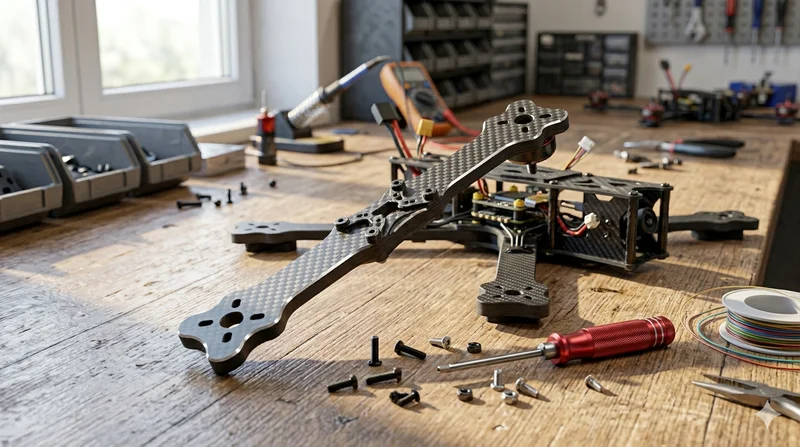
Precision-molded carbon fiber drone arm combining unidirectional fiber for stiffness and woven layers for torsional strength. Designed for FPV, photography, and industrial drone platforms. Each arm is CNC-machined to exact specifications.

Carbon Fiber Pickleball Paddle
High-performance pickleball paddle with Toray T700 carbon fiber face and polypropylene honeycomb core. Delivers excellent power-to-weight ratio, spin generation, and vibration dampening for competitive play.

Square Carbon Fiber Tube — 3K Twill T700
Square cross-section carbon fiber tube manufactured with 3K twill weave for torsional strength. Preferred for structural frames, trusses, and support columns where rectangular geometry offers design flexibility.
Round Carbon Fiber Tube — UD Unidirectional T700
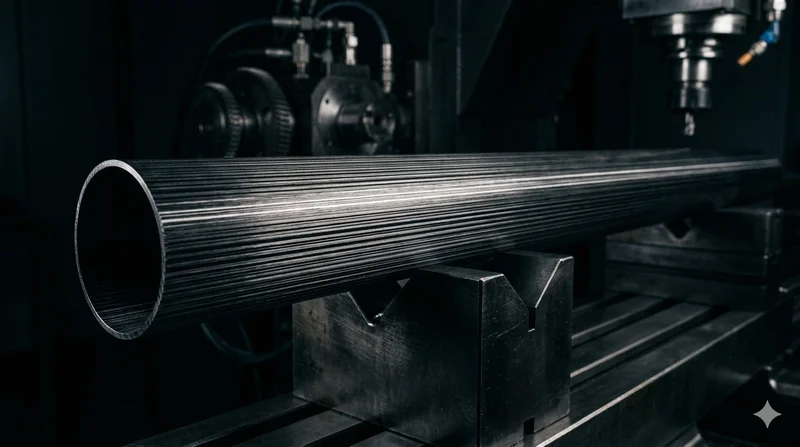
Unidirectional (UD) round tube with all fibers aligned axially for maximum longitudinal stiffness. Ideal for applications requiring high bending rigidity with minimal weight, such as shafts, struts, and structural reinforcements.