
A carbon fiber tube Amazon search returns hundreds of listings, and for a small hobby build or a quick repair it is genuinely convenient to order a tube and have it arrive in two days. The problem is that a carbon fiber tube Amazon listing is built for a consumer click, not for an engineer, so it of
Introduction
A carbon fiber tube Amazon search returns hundreds of listings, and for a small hobby build or a quick repair it is genuinely convenient to order a tube and have it arrive in two days. The problem is that a carbon fiber tube Amazon listing is built for a consumer click, not for an engineer, so it often leads with a low price and a generic photo while leaving out the fibre grade, the wall thickness, and whether the tube is pultruded, roll-wrapped, or a decorative carbon sleeve over a fibreglass core. The result is that many buyers receive a tube that looks right in the photos but is far weaker than expected, or that does not match the diameter they need. Understanding what a listing really tells you is the difference between a good purchase and a wasted order.
This guide explains how to read a carbon fiber tube Amazon listing, when the marketplace is the right source, when to buy from a manufacturer instead, and the specifications to check before you commit.
What You Actually Get from Carbon Fiber Tube Amazon Listings
Marketplace tubes occupy a wide quality range, and the listing photo rarely shows the difference. In practice, most carbon fiber tube Amazon items fall into one of four categories:
- Genuine pultruded rod or tube: A solid or hollow carbon tube with fibre running axially, sold by diameter and length. It is what most buyers think they are ordering.
- Roll-wrapped tube: Fibre wrapped around a mandrel at alternating angles, giving better hoop strength but usually a rougher surface and a visible seam line.
- Carbon-wrapped fibreglass tube: A real carbon skin over a fibreglass core, giving a carbon look at lower weight and cost but much lower stiffness than an all-carbon tube.
- Decorative carbon sleeve: A thin cosmetic layer with little structural value, often sold as a dressing tube for furniture or automotive trim.
Because the listing rarely says which of these it is, the burden falls on the buyer to read the specifications carefully and ask the seller directly. The table below shows what typical listings claim and what to verify instead:
| Listing Claim | What It Often Means | What to Verify |
|---|---|---|
| High strength carbon fiber | Unstated fibre grade | Ask for the grade (T300, T700) and fibre volume |
| Lightweight and rigid | No numbers given | Ask for tensile modulus or wall thickness |
| Smooth finish | Sand-filled or painted surface | Confirm it is not a fibreglass core |
| Precision diameter | Tolerance not stated | Ask for the OD and ID tolerance |
| Carbon fiber tube | Could be a decorative sleeve | Confirm it is structural, not cosmetic |
Reading a Carbon Fiber Tube Amazon Listing Like an Engineer
A usable listing answers five questions, and if any is missing you should treat the tube as unverified:
- Fibre grade: A real structural tube names its fibre, usually a standard modulus grade such as T300 or T700. A listing that only says carbon fiber without a grade is a warning sign.
- Wall thickness and diameter: Both the outside diameter and the wall must be given, because a tube that matches your OD may still have a paper-thin wall that collapses under a clamp.
- Manufacturing process: Pultruded, roll-wrapped, and filament wound tubes behave differently, and the process is rarely stated in marketplace listings.
- Resin system: Epoxy tubes are stronger and more heat resistant than polyester, but the listing seldom says which resin is used.
- Straightness and length tolerance: A tube sold as straight may have a visible bow that matters in a precision frame.
Amazon or Manufacturer: Which Carbon Fiber Tube Source Fits
The marketplace is a good fit for some purchases and a poor fit for others. The honest comparison is not about which is better in general, but about which matches your need:
| Factor | Marketplace Listing | Manufacturer Direct |
|---|---|---|
| Minimum order | One piece | Usually a small batch or a length |
| Delivery speed | Fast, often two days | Days to weeks depending on stock |
| Fibre grade disclosure | Rarely stated | Always specified |
| Custom diameter or layup | Not possible | Standard offering |
| Test data | Almost never provided | Available on request |
| Price per unit at volume | High | Lower |
| Best for | Hobby, one-off, quick repair | Production, structural, custom |
For a model aircraft spar, a camera boom, or a display frame, a marketplace tube is often all you need. For anything that carries a person, a machine load, or a safety requirement, the missing grade and wall data become a real risk, and a manufacturer direct order with a specification sheet is the safer route even if it costs more and takes longer.
Specifications That Matter, and Ones That Do Not
Not every number in a listing is worth your attention. The specifications that genuinely decide whether a carbon fiber tube works are:
- Outside diameter and tolerance: The single most important fit dimension, and the one most often quoted loosely.
- Wall thickness: Drives bending stiffness and crush resistance; a listing that omits it is unusable for structural work.
- Fibre grade and direction: Axial pultruded fibre is stiff in bending, hoop-wound fibre is strong under internal pressure.
- Fibre volume fraction: Higher is stronger and stiffer, typically 55 to 70 percent for a good tube.
- Resin type: Epoxy outperforms polyester in strength and temperature resistance.
Numbers that rarely help a buying decision include an unspecified tensile strength quoted without a test standard, a weight that does not state whether it is per metre or per piece, and a glossy finish claim that says nothing about structure. When a listing leads with appearance rather than dimensions, treat it as a decorative product until the seller proves otherwise.
Sourcing Carbon Fiber Tubes Beyond the Marketplace
When a marketplace listing cannot give you the data you need, the next step is a specialist supplier who publishes specifications. Most buyers search for a carbon fiber tube near me or for carbon fiber tube suppliers, and many compare a carbon fiber tube USA supplier on price and lead time once a project moves past the hobby stage. When you contact a supplier, ask for the outside diameter and wall tolerance, the fibre grade, the manufacturing process, the resin system, and any test data on the specific size you need. A supplier who answers those questions in writing is one you can design around; a supplier who deflects them is a risk, whatever the price.
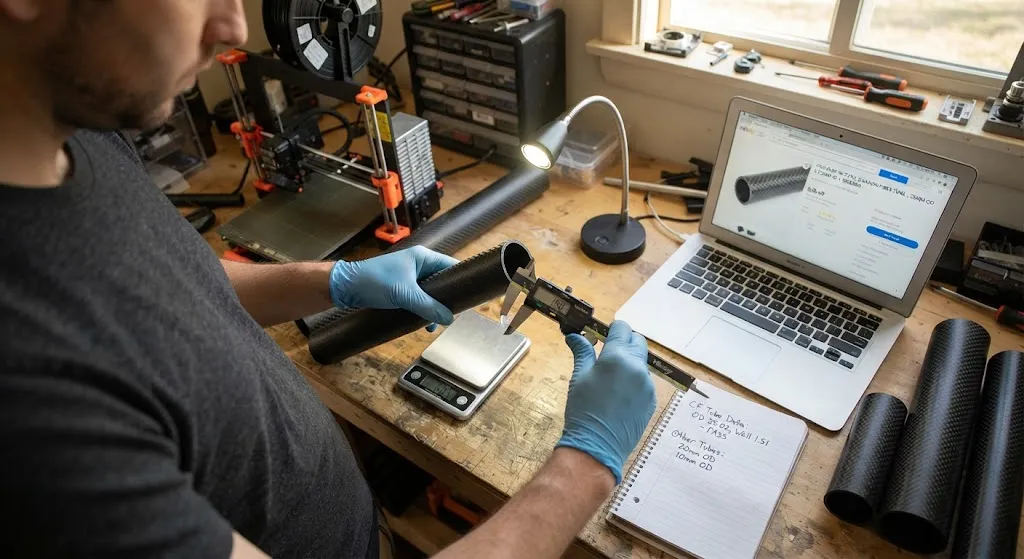
It also helps to order one sample before committing to a batch. A single tube in hand lets you check the actual wall thickness with a caliper, weigh it, flex it in a simple jig, and confirm the inside and outside diameters match the drawing. That one sample costs very little compared with a production run built on an optimistic listing.
Frequently Asked Questions
Is carbon fiber tube on Amazon good quality?
It varies enormously. Some marketplace listings are genuine pultruded or roll-wrapped carbon tubes that are perfectly suitable for hobby and light structural use, while others are fibreglass cores with a carbon cosmetic layer, or decorative sleeves with almost no structural value. The listing photo rarely reveals the difference. The safe approach is to check whether the seller states the fibre grade, wall thickness, and manufacturing process. If those are missing, treat the tube as decorative until proven otherwise, and order a single sample to verify before buying in quantity.
How do I know if a carbon fiber tube is real or fake?
A few checks are decisive. Weigh the tube and compare it with the expected weight of a solid carbon tube of that size, since a fibreglass core is noticeably heavier. Measure the wall thickness with a caliper at several points; a very thin wall sold as structural is a warning. Flex the tube gently and listen and feel for a soft, springy response typical of a glass core. Look at an end face under bright light: an all-carbon tube shows a uniform dark wall, while a wrapped tube may show a lighter core. Finally, ask the seller for the fibre grade and process in writing.
When should I buy carbon fiber tube from a manufacturer instead of Amazon?
Go to a manufacturer whenever the tube carries a structural load, needs a specific fibre grade or wall thickness, or must match a tolerance. If a person could be hurt or a machine could be damaged by a tube failure, the missing specification data on a marketplace listing is not worth the risk. Manufacturers also offer custom diameters, layups, and cut lengths, and they can provide test data for your exact size. For hobby projects, quick repairs, and non-critical frames, the marketplace convenience is usually fine and the lower commitment is an advantage.
Conclusion
Buying carbon fiber tube Amazon listings can be quick and convenient, but the marketplace is built for consumer clicks rather than engineering decisions, so the specifications that decide whether a tube will carry your load are often missing. Read every listing for fibre grade, wall thickness, process, and resin, and treat an appearance-led listing as decorative until the seller proves otherwise. For hobby and non-critical work the marketplace is a fine source; for structural, custom, or safety-relevant tubes, go to a manufacturer who will put the numbers in writing and supply a sample to verify.
If your project needs a tube with known fibre grade, wall thickness, and process, browse our carbon fiber tube range with pultruded, roll-wrapped, and filament wound options in T300, T700, and high-modulus grades, or contact our engineering team with your diameter, wall, and load case for a quote and a sample.
Part of topic
Related Articles
Interested in Our Products?
Contact our team for competitive pricing and technical specifications.
Get a QuoteRelated Products
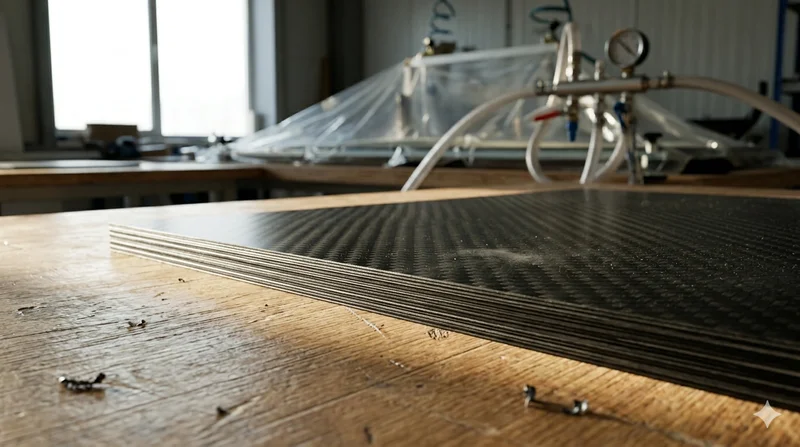
Carbon Fiber Plate — 3K Twill T700 3.0mm
Medium-thickness 3.0mm carbon fiber plate offering significantly higher load capacity while maintaining attractive 3K twill finish. Suitable for structural brackets, reinforcement plates, and load-bearing panels.

Carbon Fiber Plate — 3K Twill T700 1.5mm
Thin 1.5mm carbon fiber plate with 3K twill weave surface. Lightweight and stiff, commonly used for covers, panels, drone bodies, and applications requiring a premium aesthetic appearance.

Square Carbon Fiber Tube — 3K Twill T700
Square cross-section carbon fiber tube manufactured with 3K twill weave for torsional strength. Preferred for structural frames, trusses, and support columns where rectangular geometry offers design flexibility.
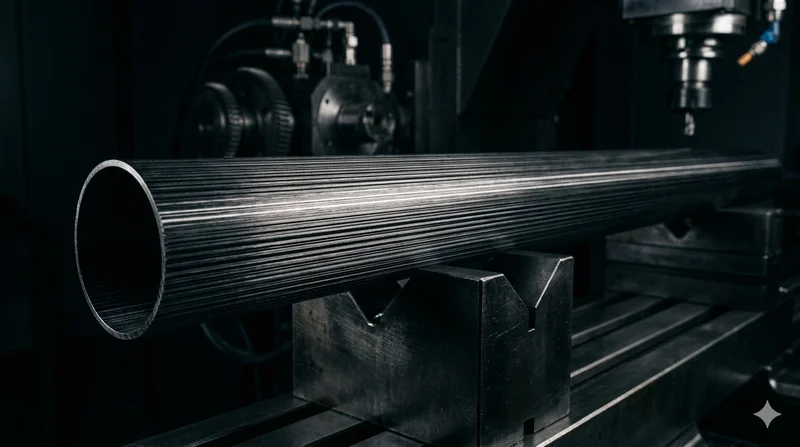
Round Carbon Fiber Tube — UD Unidirectional T700
Unidirectional (UD) round tube with all fibers aligned axially for maximum longitudinal stiffness. Ideal for applications requiring high bending rigidity with minimal weight, such as shafts, struts, and structural reinforcements.
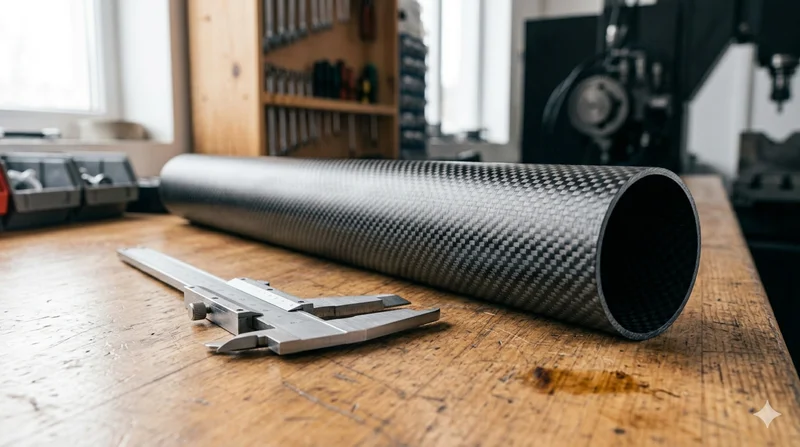
Round Carbon Fiber Tube — 3K Plain Weave T700
Standard round carbon fiber tube manufactured from Toray T700 grade fiber with 3K plain weave. Offers balanced strength and stiffness for general industrial applications including robotics, automation, sports equipment, and aerospace structures.