
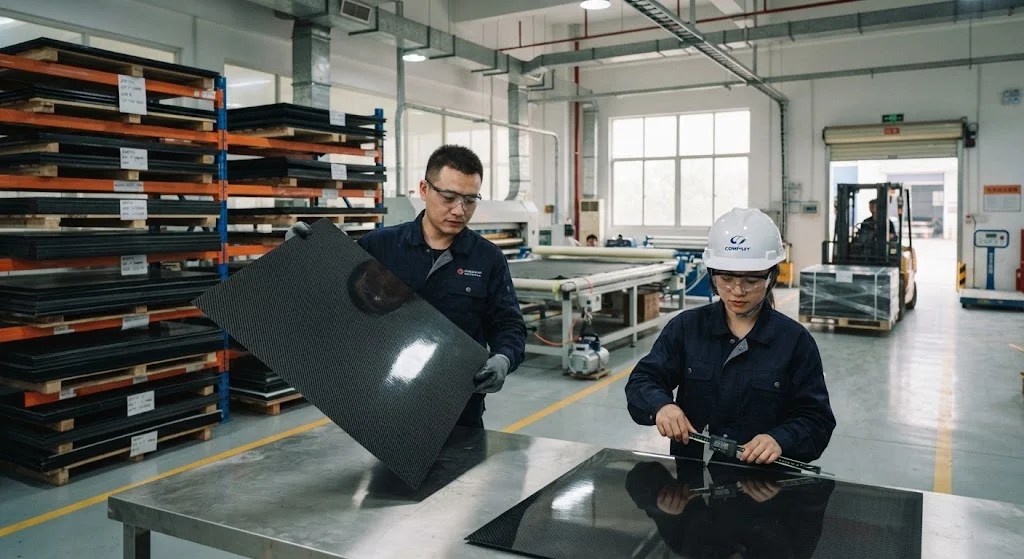
Carbon fiber sheets are the most accessible form of carbon fibre reinforced polymer (CFRP): flat, rigid panels that combine a tensile strength several times that of steel with a density of only 1.6 g/cm³. They appear everywhere from aerospace interior panels and automotive trim to drone frames, robo
Introduction
Carbon fiber sheets are the most accessible form of carbon fibre reinforced polymer (CFRP): flat, rigid panels that combine a tensile strength several times that of steel with a density of only 1.6 g/cm³. They appear everywhere from aerospace interior panels and automotive trim to drone frames, robotic arms, mould tools, and marine components. Their signature woven surface — usually a plain or 2x2 twill weave in 3K tow — has also made them a design material in watches, phone cases, and architectural cladding.
This guide explains what carbon fiber sheets are, how the different weave and fibre types compare, the specifications you need to specify one correctly, where they are used, and how to buy them from a supplier, whether you need one sheet for a prototype or thousands for production.
What Are Carbon Fiber Sheets?
A carbon fiber sheet is a cured laminate: layers of carbon fibre fabric or unidirectional plies are impregnated with epoxy resin and cured under heat and pressure, producing a rigid panel typically 0.5-25 mm thick. The finished sheet can be cut, machined, drilled, and bonded like a metal plate, but at a fraction of the weight. Two broad categories exist:
- Fabric-based sheets: Woven carbon fibre cloth (usually 3K or 12K tow) impregnated with resin. These show the classic woven pattern and are the standard choice for visible parts.
- Unidirectional (UD) sheets: All fibres aligned in one direction for maximum stiffness and strength along that axis. Used where loads are predictable, such as in beams, spars, and reinforcements.
The panel can also be supplied as prepreg (uncured, resin-impregnated fabric that the buyer cures themselves) or as a fully cured laminate ready to machine. Most industrial buyers purchase cured sheets, while manufacturers producing their own parts buy prepreg.
The manufacturing route is the same as for any composite part: dry fabric or unidirectional plies are impregnated with resin — either off-line to make prepreg or in the mould by resin infusion — then consolidated under heat and pressure in a press or autoclave. The fibre volume fraction reached during consolidation, typically 55-65%, is the single biggest influence on final mechanical properties: a panel cured at 60% fibre volume is noticeably stiffer and stronger than one cured at 50%. Reputable suppliers document this figure on every material data sheet.
Types of Carbon Fiber Sheets
The weave pattern affects appearance, handling, and to a lesser extent mechanical performance. The table below compares the most common weave styles:
| Weave Type | Appearance | Drape / Handling | Typical Use |
|---|---|---|---|
| Plain weave (1x1) | Checkerboard, tight | Poorest drape, stable | Flat panels, tooling boards |
| Twill weave (2x2) | Diagonal lines | Good drape, stable | Most visible parts, automotive, marine |
| Harness satin | Glossy, smooth | Excellent drape | Complex curved shapes |
| Unidirectional | No pattern, parallel fibres | Not drapable | Structural beams, spars |
Fibre grade matters as much as weave. Standard-modulus fibres such as T300 (3,530 MPa tensile strength) and T700 (4,900 MPa) dominate the sheet market, while intermediate and high-modulus fibres (T800, M40) are used where stiffness is critical. The tow size — 1K, 3K, 6K, or 12K — refers to the number of filaments per strand and mainly affects the coarseness of the visible pattern.
Carbon Fiber Sheets: Key Specifications
When you specify a carbon fiber sheet, the following parameters define the product:
| Parameter | Typical Range | Notes |
|---|---|---|
| Thickness | 0.5-25 mm | 1-3 mm most common for panels |
| Standard sizes | 1,000 by 1,000 mm; 1,200 by 2,400 mm | Cut-to-size available from most suppliers |
| Tensile strength | 3,500-4,900 MPa | T300 to T700 fibre grades |
| Tensile modulus | 230-294 GPa | Standard modulus; higher for HM fibres |
| Density | 1.55-1.60 g/cm³ | About 20% of steel density |
| Fibre volume fraction | 55-65% | Drives mechanical performance |
| Surface finish | Glossy, matte, or textured | Glossy 3K twill most common for visible use |
Two properties deserve attention. First, carbon fiber sheets are anisotropic: the tensile strength and modulus quoted apply along the fibre direction, and a woven sheet with fibres in two directions delivers roughly 60-70% of a unidirectional sheet's stiffness in each axis. Second, the resin system sets the service temperature and environmental resistance — standard epoxy sheets serve well to about 120-150°C, while high-temperature systems extend this considerably.
Applications of Carbon Fiber Sheets
Because carbon fiber sheets can be cut and machined into almost any flat part, they appear across nearly every industry:
- Aerospace and UAV: Interior panels, brackets, radio-frequency-transparent housings, and drone frames where stiffness-to-weight is decisive.
- Automotive: Trim panels, floorboards, engine covers, and lightweight stiffeners in race cars and EVs.
- Marine: Hatch covers, deck panels, and interior fittings that resist corrosion and saltwater.
- Industrial: Rollers, conveyor components, machine guards, inspection tools, and fixture plates where low inertia and dimensional stability reduce wear and energy use.
- Robotics and automation: Robot arm links and end-effector plates that reduce moving mass and improve positioning accuracy.
- Medical: Imaging-table tops and radiolucent frames that are stiff yet transparent to X-rays.
In each case, the design trade-off is the same: carbon fiber sheets cost more than aluminium or steel but deliver lower weight, higher specific stiffness, corrosion resistance, and the fatigue behaviour needed for moving parts.
How to Buy Carbon Fiber Sheets
Buying carbon fiber sheets is straightforward once you know the parameters above. Most suppliers sell standard sizes (1,000 by 1,000 mm and 1,200 by 2,400 mm) in thicknesses from 0.5 mm to 25 mm, and nearly all offer cut-to-size service with CNC machining for holes, slots, and profiles. Pricing scales with thickness, fibre grade, and surface finish: a standard 3K twill panel is the most economical, while high-modulus or aerospace-qualified sheets carry a premium.
When choosing a carbon fiber sheets supplier, check that they publish material data sheets with fibre type, fibre volume fraction, and tested mechanical properties; confirm their dimensional tolerance and edge finish for machined parts; and review their quality system for consistent batch-to-batch performance. Buyers in the USA and Europe should confirm stock availability and shipping arrangements, and ask about panel flatness tolerance if the sheet will be used as a tooling board or bonding substrate.
Frequently Asked Questions
How thick should a carbon fiber sheet be?
For most visible and light-structural parts, 1-3 mm is the sweet spot: thin enough to keep weight and cost low, thick enough for useful stiffness. A 1 mm sheet suits trim, covers, and enclosures; 2-3 mm suits panels that carry light loads, brackets, and floorboards; and 5 mm and above is used for structural elements, tooling boards, and load-bearing plates. If in doubt, model the required stiffness for your load case rather than guessing — carbon fiber sheets are anisotropic, so stiffness depends on orientation as well as thickness.
Can I cut carbon fiber sheets myself?
Yes, with the right tools. Thin sheets (up to about 2 mm) can be cut with a fine-tooth carbide blade, a diamond disc on a grinder or circular saw, or a water jet for best edge quality. Drilling requires carbide or diamond bits at moderate speeds to avoid delamination, and edges should be sealed with resin or CA glue after cutting. Cutting produces carbon dust that is conductive and an irritant, so work with local exhaust and a respirator. For complex shapes or dozens of identical parts, CNC machining by the supplier is usually cleaner and more economical.
How do I tell a quality carbon fiber sheet from a poor one?
Check the surface, the edge, and the documentation. A quality sheet has a uniform weave pattern with no gaps, a smooth, pinhole-free surface, and straight, cleanly finished edges without fraying or delamination. Flex it gently: a well-made sheet returns crisply and feels dense, while a resin-rich or poorly cured sheet feels soft and springy. Finally, ask for the material data sheet and verify the fibre type, fibre volume fraction (55-65% is the quality range), and tested flexural and tensile properties. If a supplier cannot document the fibre grade and test data, treat the sheet as cosmetic grade regardless of appearance.
Conclusion
Carbon fiber sheets combine the engineering properties of CFRP — high strength, low density, stiffness, and corrosion resistance — in a form that can be cut, machined, and bonded like conventional sheet metal. With standard sizes, cut-to-size services, and well-documented specifications, they are the practical entry point to carbon fibre for engineers, fabricators, and product developers.
If you are planning a carbon fiber sheet project, browse our carbon fiber sheet and panel range or contact our technical team for thickness selection, cutting services, and volume pricing for your application.
Part of topic
Related Articles
Interested in Our Products?
Contact our team for competitive pricing and technical specifications.
Get a QuoteRelated Products

Carbon Fiber Plate — 3K Twill T700 3.0mm
Medium-thickness 3.0mm carbon fiber plate offering significantly higher load capacity while maintaining attractive 3K twill finish. Suitable for structural brackets, reinforcement plates, and load-bearing panels.

Carbon Fiber Plate — 3K Twill T700 1.5mm
Thin 1.5mm carbon fiber plate with 3K twill weave surface. Lightweight and stiff, commonly used for covers, panels, drone bodies, and applications requiring a premium aesthetic appearance.

Square Carbon Fiber Tube — 3K Twill T700
Square cross-section carbon fiber tube manufactured with 3K twill weave for torsional strength. Preferred for structural frames, trusses, and support columns where rectangular geometry offers design flexibility.
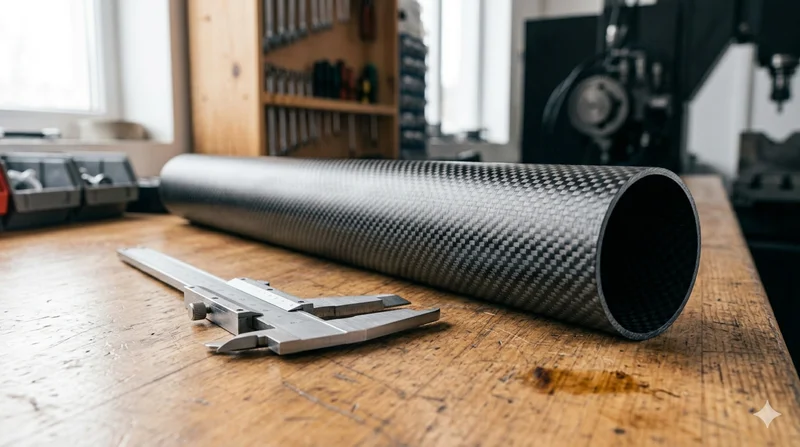
Round Carbon Fiber Tube — 3K Plain Weave T700
Standard round carbon fiber tube manufactured from Toray T700 grade fiber with 3K plain weave. Offers balanced strength and stiffness for general industrial applications including robotics, automation, sports equipment, and aerospace structures.
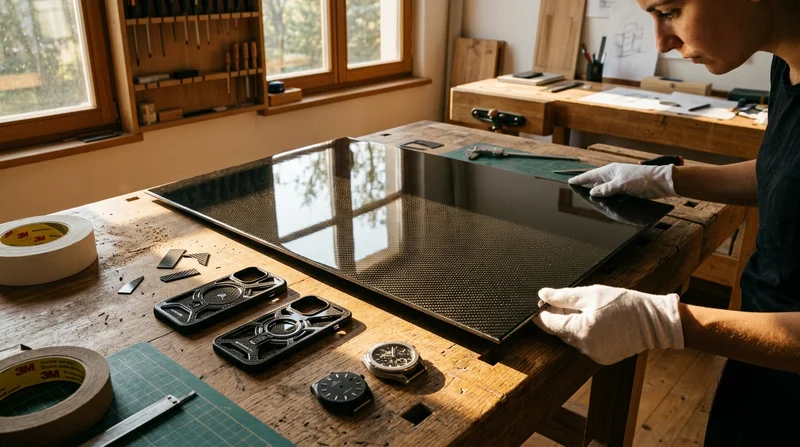
Carbon Fiber Plate — High-Gloss Decorative
High-gloss decorative carbon fiber plate with a mirror-like surface finish. The glossy coating enhances the visible 3K twill weave, creating a premium aesthetic for consumer-facing applications. Lightweight yet stiff, available in thin gauges for easy cutting and forming.