
Carbon fiber sheet uses have grown far beyond the aerospace parts that made the material famous. A carbon fiber sheet is a flat CFRP panel, usually 0.5-6 mm thick, that combines tensile strength several times that of steel at a density of only 1.6 g/cm³, with excellent stiffness and fatigue resistan
Introduction
Carbon fiber sheet uses have grown far beyond the aerospace parts that made the material famous. A carbon fiber sheet is a flat CFRP panel, usually 0.5-6 mm thick, that combines tensile strength several times that of steel at a density of only 1.6 g/cm³, with excellent stiffness and fatigue resistance. Those properties translate into a remarkably broad range of applications: structural aircraft components, automotive body panels, drone frames, robot arms, boat hulls, mould tools, medical braces, and even consumer goods such as watch cases and laptop shells. The common thread is that designers choose a carbon fiber sheet where stiffness per kilogram, thinness, or the woven surface finish gives a measurable advantage over metal, plastic, or fibreglass.
This guide surveys the main carbon fiber sheet uses by industry, explains how sheet grade, thickness, and layup change the behaviour of the part, and lists what to verify when buying sheets from carbon fiber sheet suppliers.
Why Carbon Fiber Sheets Are Used
Every carbon fiber sheet use case comes back to the same set of material properties, compared in the table below:
| Property | Carbon Fiber Sheet | Aluminium | Steel | Fibreglass |
|---|---|---|---|---|
| Tensile strength | 2,500-3,500 MPa | 300-550 MPa | 400-700 MPa | 1,000-2,000 MPa |
| Density | 1.6 g/cm³ | 2.7 g/cm³ | 7.8 g/cm³ | 1.9 g/cm³ |
| Stiffness (modulus) | 230-294 GPa (T300-T800) | 70 GPa | 200 GPa | 70-90 GPa |
| Fatigue performance | Excellent | Good | Limited by yield | Good |
| Corrosion resistance | Excellent | Requires coating | Requires coating | Good |
| Thermal expansion | Near zero | High | Medium | Medium |
Strength and stiffness at one-fifth the density of steel, near-zero thermal expansion, and immunity to corrosion are the properties that open up so many carbon fiber sheet uses. The woven surface is a design bonus that has turned the material into a visible premium finish in consumer products.
Carbon Fiber Sheet Uses by Industry
The main carbon fiber sheet uses group naturally by industry:
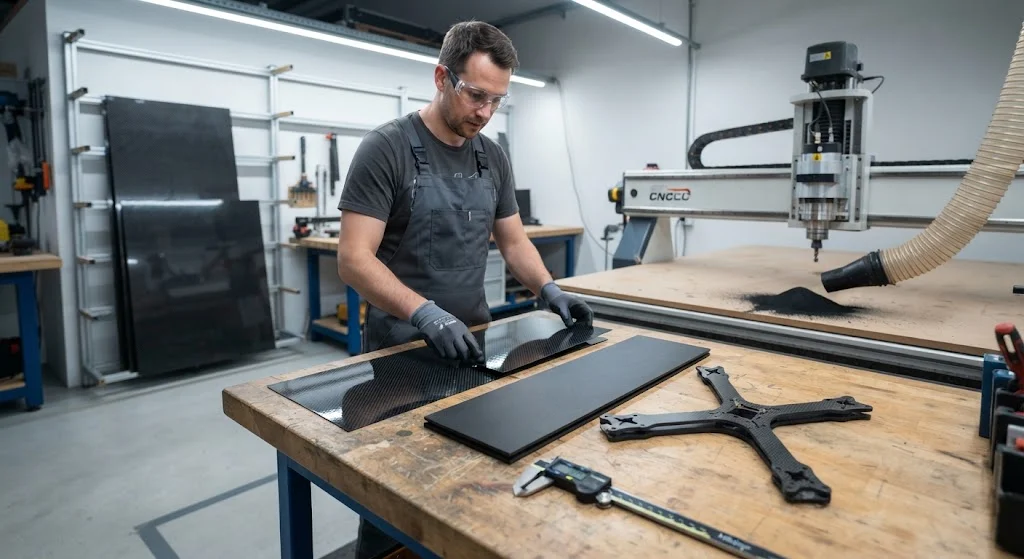
- Aerospace and drones: Interior panels, control surfaces, drone frames and arms, and satellite structure components where every gram counts. Sheets are cut and machined into lightweight stiff members that replace aluminium brackets.
- Automotive: Body panels, bonnets, spoilers, interior trim, and structural stiffeners. Carbon fiber sheet uses in cars focus on weight reduction and, in performance models, the visible weave finish.
- Marine: Boat hull panels, hatch covers, deck components, and mast fittings. Corrosion resistance and stiffness make sheets ideal for saltwater environments.
- Robotics and automation: Robot arm links, end-effector plates, gantry beams, and base plates. High stiffness keeps positioning accurate and reduces vibration.
- Construction and infrastructure: Strengthening plates bonded to concrete and steel structures, formwork panels, and architectural cladding. Carbon fiber sheet uses in retrofit work extend the life of existing structures.
- Medical and sports equipment: Braces, splints, wheelchair frames, prosthetics, and sporting goods such as snowboards and paddle blades.
- Consumer products: Watch cases, phone cases, laptop lids, luggage, and furniture. The weave finish is a premium aesthetic as much as a functional material.
Across all of these, the designer picks sheet thickness, fibre grade, and layup to match the load path: thin woven sheets for panels and trim, thicker unidirectional laminates for structural members, and hybrid layups where impact resistance matters.
Sheet Grade, Thickness, and Layup Selection
Carbon fiber sheet uses differ mainly in how the sheet is specified. The table below summarises the common grades and what they suit:
| Grade | Tensile Strength | Modulus | Typical Sheet Uses |
|---|---|---|---|
| T300 (standard) | 3,530 MPa | 230 GPa | General panels, trim, drone parts, prototypes |
| T700 (intermediate) | 4,900 MPa | 230 GPa | Structural parts, automotive, robotics |
| T800 (high strength) | 5,880 MPa | 294 GPa | High-load aerospace and performance parts |
| High-modulus (M-series) | 2,500-4,000 MPa | 390-490 GPa | Stiffness-critical members, satellites |
Layup matters as much as grade. A 0°/90° woven sheet gives balanced stiffness in two directions and is the default for panels. A unidirectional sheet is stiff along one axis and suits beams and stiffeners. Quasi-isotropic layups with layers at 0°, 45°, and 90° give the most uniform behaviour and are used for structural plates where loads come from several directions.
Processing Carbon Fiber Sheets
Sheets arrive as flat cured panels, and fabricators cut, drill, and machine them into finished parts. Because CFRP is abrasive and conductive, carbon fiber sheet uses in production require carbide tooling, dust extraction, and edge sealing after cutting. Typical workshop processes include CNC routing for precise profiles, waterjet cutting for clean edges without heat damage, and hand cutting with carbide blades for simple panels. Cut edges are sealed with resin or edge paint to prevent moisture ingress and delamination, and holes are drilled with diamond or carbide bits rather than standard steel tooling.
Thin sheets up to about 3 mm can be cut with a jigsaw using a carbide blade; thicker plates need a waterjet, CNC router, or diamond saw for a clean result. Every cut produces conductive dust that must be extracted, since carbon dust can damage electronics and irritate skin.
Carbon Fiber Sheet Uses: Buying and Sourcing
Whether you need one sheet for a prototype or hundreds for production, the buying criteria are the same: verify the fibre grade and tensile strength, the cured thickness tolerance, the weave type and finish, and the size range offered. Carbon fiber sheet suppliers typically stock standard sizes such as 500 x 500 mm, 1,000 x 1,000 mm, and 1,000 x 2,000 mm, with custom sizes cut to order. For structural use, ask for the material data sheet and batch test records; for cosmetic use, check the surface finish and weave alignment.
Prices scale with grade, thickness, and quantity. T300 woven sheets are the economical choice for most panel and trim uses, while T700 and T800 add strength for load-bearing parts. Suppliers serving the USA and Europe should provide consistent tolerances and documented QC, which matters because a variation of a tenth of a millimetre in thickness changes both the stiffness and the fit of the finished part.
Frequently Asked Questions
Can carbon fiber sheets be cut at home?
Thin sheets up to roughly 3 mm can be cut with a fine-tooth carbide jigsaw blade, a Dremel with a cutting disc, or heavy scissors for very thin laminates. The key requirements are carbide tooling, eye and skin protection, and good dust extraction, because carbon dust is conductive and irritating. Thicker plates need a waterjet, CNC router, or diamond-blade saw for clean edges. Whichever method you use, seal the cut edges with thin resin or edge paint afterwards so moisture cannot enter the laminate and cause delamination.
What thickness of carbon fiber sheet do I need?
For trim, panels, and cosmetic parts, 0.5-1.5 mm sheets are typical. For structural members and load-bearing plates, 2-6 mm sheets are common, and the exact thickness depends on the load and span. A useful rule of thumb is that doubling the thickness roughly octuples the bending stiffness, so small thickness increases make a large difference in how rigid a panel feels. If in doubt, model the part with the manufacturer's modulus value, or ask the supplier for a stiffness calculation.
Are carbon fiber sheets stronger than steel?
In tension, a T700 carbon fiber sheet has a tensile strength around 4,900 MPa, roughly seven times that of common structural steel, while weighing only a fifth as much. However, comparisons depend on loading mode: carbon fiber is brittle and has no yielding, so it fails suddenly, while steel bends and absorbs energy before failure. For stiffness per kilogram and tensile strength per kilogram, carbon fiber wins clearly; for impact toughness and ductility, steel is better. This is why carbon fiber sheet uses favour stiffness- and weight-critical parts, while metals remain in high-impact, high-temperature, or cost-critical applications.
Conclusion
Carbon fiber sheet uses now cover almost every industry that needs stiffness, strength, and light weight in a flat panel form. The material's combination of properties — tensile strength several times that of steel at one-fifth the density, near-zero thermal expansion, and corrosion resistance — makes it the default choice for an expanding list of structural, functional, and cosmetic applications. Specifying the right grade, thickness, and layup is the difference between a panel that simply looks the part and one that performs structurally.
If you are selecting carbon fiber sheets for a new application, browse our carbon fibre sheet and plate range or contact our technical team for grade and layup recommendations, cutting services, and volume pricing.
Part of topic
Related Articles
Interested in Our Products?
Contact our team for competitive pricing and technical specifications.
Get a QuoteRelated Products

Carbon Fiber Plate — 3K Twill T700 3.0mm
Medium-thickness 3.0mm carbon fiber plate offering significantly higher load capacity while maintaining attractive 3K twill finish. Suitable for structural brackets, reinforcement plates, and load-bearing panels.

Carbon Fiber Plate — 3K Twill T700 1.5mm
Thin 1.5mm carbon fiber plate with 3K twill weave surface. Lightweight and stiff, commonly used for covers, panels, drone bodies, and applications requiring a premium aesthetic appearance.

Square Carbon Fiber Tube — 3K Twill T700
Square cross-section carbon fiber tube manufactured with 3K twill weave for torsional strength. Preferred for structural frames, trusses, and support columns where rectangular geometry offers design flexibility.
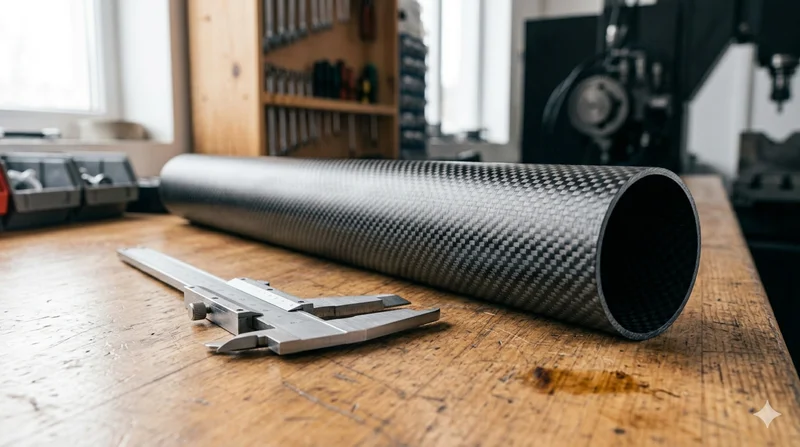
Round Carbon Fiber Tube — 3K Plain Weave T700
Standard round carbon fiber tube manufactured from Toray T700 grade fiber with 3K plain weave. Offers balanced strength and stiffness for general industrial applications including robotics, automation, sports equipment, and aerospace structures.
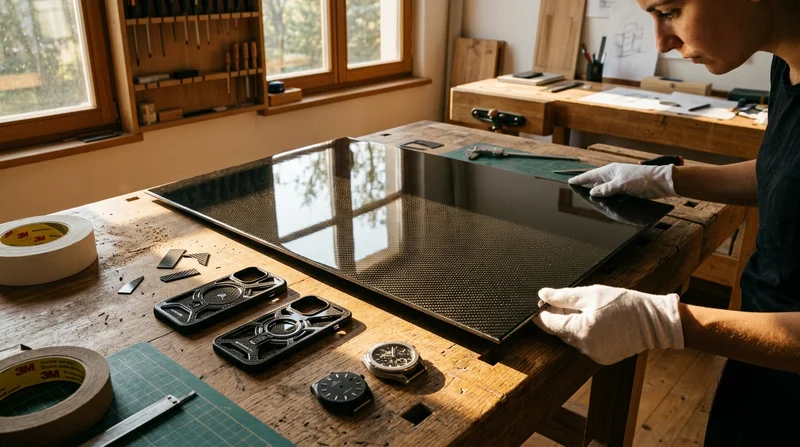
Carbon Fiber Plate — High-Gloss Decorative
High-gloss decorative carbon fiber plate with a mirror-like surface finish. The glossy coating enhances the visible 3K twill weave, creating a premium aesthetic for consumer-facing applications. Lightweight yet stiff, available in thin gauges for easy cutting and forming.