
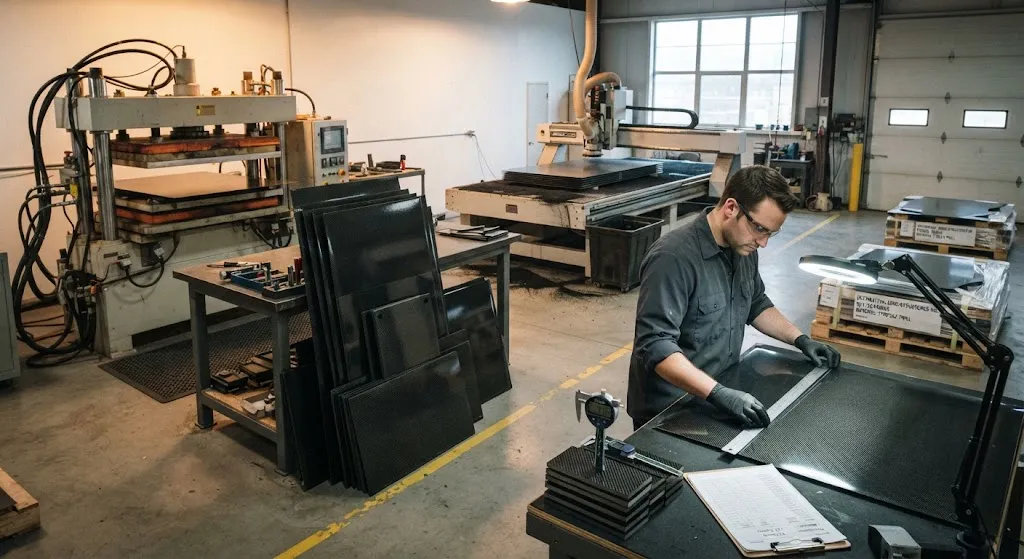
Carbon fiber sheet material is one of the most widely specified forms of carbon fiber composite: a rigid, flat laminate of carbon fiber reinforced polymer (CFRP) that provides exceptional stiffness and strength at a fraction of the weight of metal. Engineers choose carbon fiber sheet material when t
Introduction
Carbon fiber sheet material is one of the most widely specified forms of carbon fiber composite: a rigid, flat laminate of carbon fiber reinforced polymer (CFRP) that provides exceptional stiffness and strength at a fraction of the weight of metal. Engineers choose carbon fiber sheet material when they need thin, stiff panels that remain dimensionally stable — for drone chassis plates, automotive body panels, robotic baseplates, aerospace interior panels, and medical backboards. Sheets are available in three principal forms — cured rigid panels, uncured prepreg, and dry fabric — each suited to a different production route.
This guide explains how carbon fiber sheet material is manufactured, how grades compare in mechanical properties, where sheets outperform metals and fibreglass, and the specification points that matter when buying from carbon fiber sheet material suppliers.
How Carbon Fiber Sheet Material Is Manufactured
Depending on the form factor required, carbon fiber sheet material is produced through three main routes:
- Autoclave curing of prepreg: Layers of unidirectional or woven prepreg are stacked in a defined orientation sequence, vacuum-bagged, and cured under heat and pressure in an autoclave. This produces the highest-performance panels with low void content, used for aerospace-grade parts.
- Compression molding: Prepreg or sheet molding compound is placed between heated platens and pressed to thickness. The cycle is faster and the cost is lower, making this the standard route for large-volume automotive and industrial panels.
- Vacuum infusion of dry fabric: Dry woven fabric is placed in a mold, infused with resin under vacuum, and cured in an oven. This suits large panels and low-to-medium series production where tooling cost must stay low.
Most rigid carbon fiber sheet material sold to engineers and small manufacturers is a cured flat panel, typically 0.5-10 mm thick, cut to size. Prepreg sheets, by contrast, are supplied cold-stored and uncured so that the buyer performs the layup and cure, which gives the buyer control over orientation and thickness but requires handling discipline.
Carbon Fiber Sheet Material Grades and Properties
The mechanical properties of carbon fiber sheet material depend on the fibre grade, the fiber volume fraction, and the layup orientation. The table below compares a typical quasi-isotropic carbon fiber sheet (T700 fibre, 60% fiber volume) with steel and aluminium sheet of the same thickness:
| Property | Carbon Fiber Sheet (T700) | Steel Sheet | Aluminium Sheet |
|---|---|---|---|
| Tensile strength (MPa) | 600-900 | 400-700 | 200-450 |
| Tensile modulus (GPa) | 55-70 | 200-210 | 68-72 |
| Density (g/cm³) | 1.55-1.60 | 7.85 | 2.70 |
| Specific stiffness (GPa per g/cm³) | 35-45 | 26 | 26 |
| Thermal expansion (ppm/°C) | -0.5 to 0.5 | 12 | 23 |
| Corrosion resistance | Excellent | Poor without coating | Good, galvanic risks |
Two details matter when reading this table. First, the sheet is quasi-isotropic: fibres run in several directions, so the panel is stiff in every direction, but each individual direction is less strong than a unidirectional laminate of the same fibres. Second, the near-zero thermal expansion of carbon fiber sheet material is a decisive advantage for precision platforms such as measurement fixtures, optical mounts, and robotic structures that must not change dimension with temperature.
Key Applications of Carbon Fiber Sheets
Carbon fiber sheet material appears wherever stiffness per unit mass and dimensional stability justify a higher material cost:
- Aerospace: Interior panels, equipment bays, and stiffeners where certified material traceability and low weight are mandatory.
- Drones and UAVs: Chassis plates, battery decks, and camera mounts cut from sheet, replacing heavier aluminium plates.
- Automotive and motorsport: Floor panels, bulkheads, and trim where every gram saved improves performance.
- Robotics: Base plates, gantry plates, and end-effector frames where stiffness reduces deflection and improves positioning accuracy.
- Medical: Backboards, braces, and imaging tables that must be radiolucent, stiff, and light.
- Industrial tooling: Jigs, fixtures, and vacuum tables that benefit from thermal stability and a hard, wear-resistant surface.
In each case the trade-off is identical: the higher material price is accepted because the system-level benefit — a lighter structure, better dimensional stability, or a longer service life — outweighs it.
When designing with carbon fiber sheet material, three rules keep weight low without compromising strength. First, orient the fibres to the load — a quasi-isotropic layup is convenient, but a unidirectional panel is significantly stiffer in the loaded direction for the same weight. Second, work with panel thickness rather than against it: because bending stiffness scales with the cube of thickness, a small increase in thickness delivers a large increase in stiffness, which can let you step down to a lower fibre grade and save cost. Third, plan machining and edge treatment at the design stage, because holes, cutouts, and unsealed edges are where both stress and moisture concentrate. Following these rules turns the raw performance of the material into a reliable, repeatable part.
Sourcing Carbon Fiber Sheet Material
When you buy carbon fiber sheet material, the specification determines both performance and price. Define these parameters before contacting suppliers:
| Parameter | Typical Range | Why It Matters |
|---|---|---|
| Thickness | 0.5-10 mm standard | Sets stiffness, weight, and fastening behaviour |
| Fibre grade | T300, T700, T800, high-modulus | Determines the strength and modulus baseline |
| Layup | Unidirectional, woven, quasi-isotropic | Controls directional stiffness and warpage |
| Surface finish | Glossy, matte, twill, or textured | Affects appearance, bonding, and paint adhesion |
| Thickness tolerance | ±0.05 to ±0.15 mm | Critical for stacked assemblies and machining |
| Panel size | Cut-to-size or full 1.2 x 2.4 m sheet | Drives material utilisation and scrap rate |
Three sourcing points deserve emphasis. First, request the material data sheet and the fibre grade in writing — sheet quoted at commodity prices may use lower-grade fibre with noticeably lower modulus. Second, check panel flatness and thickness tolerance against your machining plan, because warpage shows up later as fit problems in assembly. Third, for structural or safety-relevant parts, ask about batch traceability; if you buy prepreg, confirm the out-time and cold-chain handling with the supplier. Reputable carbon fiber sheet material suppliers, including those serving the North American and European markets, will cut to size, machine, or laminate to your drawing.
Frequently Asked Questions
Is carbon fiber sheet material stronger than aluminium sheet?
In tensile strength, a quasi-isotropic carbon fiber sheet (600-900 MPa with T700 fibre) is roughly two to four times stronger than common aluminium sheet (200-450 MPa) and comparable to or better than structural steel (400-700 MPa). Its tensile modulus is lower than steel (55-70 GPa versus 200-210 GPa) because the panel is quasi-isotropic, but because carbon is about five times lighter, it is roughly 1.5 times stiffer per unit mass than steel or aluminium. For bending-dominated parts, the panel thickness and the fibre orientation determine the real comparison, so evaluate sheets against your specific loading case rather than a single property.
Can carbon fiber sheet material be machined, drilled, and tapped?
Yes, carbon fiber sheet can be cut, drilled, and routed with the correct tooling. Use carbide or diamond-coated cutters, run moderate speeds, and support the panel on both sides to prevent delamination at the edges. For holes, sharp carbide drills with light feed and a backing plate produce clean bores. For threaded fasteners, use bonded metal inserts or through-bolts with washers instead of tapping directly into the composite, because threads cut into the laminate reduce the load-carrying section and risk edge splitting. Sealing machined edges with a thin epoxy is recommended where edges will be exposed to moisture or repeated loading.
What is the difference between carbon fiber sheet and carbon fiber plate?
In practice the two terms describe the same product at different thicknesses. Sheet generally refers to thin laminates — roughly 0.5-3 mm — that allow modest curvature and are commonly used for skins, covers, and stiffeners. Plate usually refers to thicker panels, roughly 3-25 mm, that are rigid, machinable, and used for structural brackets, baseplates, and fixtures. Both are flat CFRP laminates manufactured by the same curing processes; the difference is thickness, stiffness, and intended use rather than a difference in material chemistry.
Conclusion
Carbon fiber sheet material delivers a specific stiffness above steel and aluminium, near-zero thermal expansion, and excellent corrosion resistance, which is why it has become the default material for thin, stiff panels in aerospace, drones, robotics, and medical equipment. The technology is mature — cured panels, prepreg, and dry fabric are all standard products with well-understood specifications — and the main risk in buying is specification ambiguity rather than material capability.
If you are designing a lightweight structure or replacing metal panels in an existing product, browse our carbon fiber sheet and plate range, available in T300, T700, and high-modulus grades with cut-to-size and machining service, or contact our engineering team for a quote and specification review.
Part of topic
Related Articles
Interested in Our Products?
Contact our team for competitive pricing and technical specifications.
Get a QuoteRelated Products
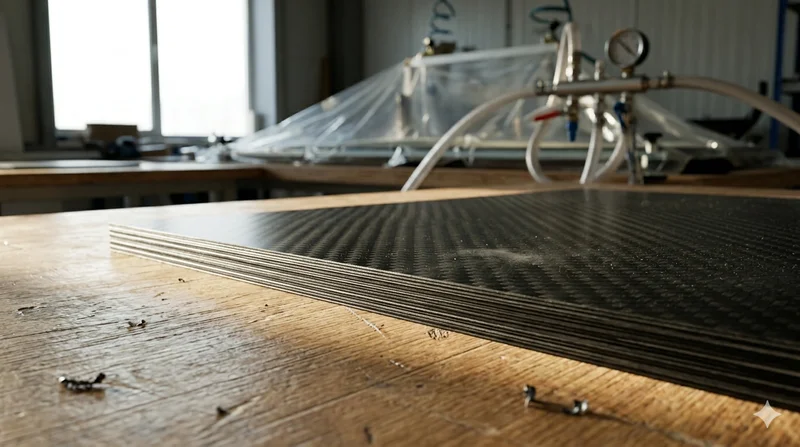
Carbon Fiber Plate — 3K Twill T700 3.0mm
Medium-thickness 3.0mm carbon fiber plate offering significantly higher load capacity while maintaining attractive 3K twill finish. Suitable for structural brackets, reinforcement plates, and load-bearing panels.

Carbon Fiber Plate — 3K Twill T700 1.5mm
Thin 1.5mm carbon fiber plate with 3K twill weave surface. Lightweight and stiff, commonly used for covers, panels, drone bodies, and applications requiring a premium aesthetic appearance.
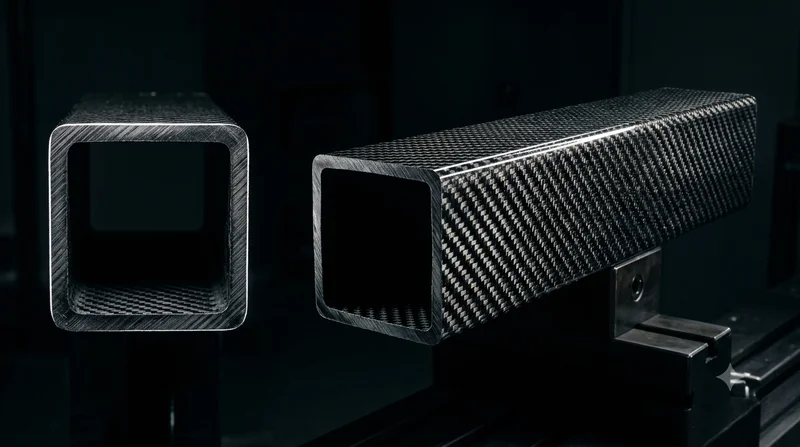
Square Carbon Fiber Tube — 3K Twill T700
Square cross-section carbon fiber tube manufactured with 3K twill weave for torsional strength. Preferred for structural frames, trusses, and support columns where rectangular geometry offers design flexibility.
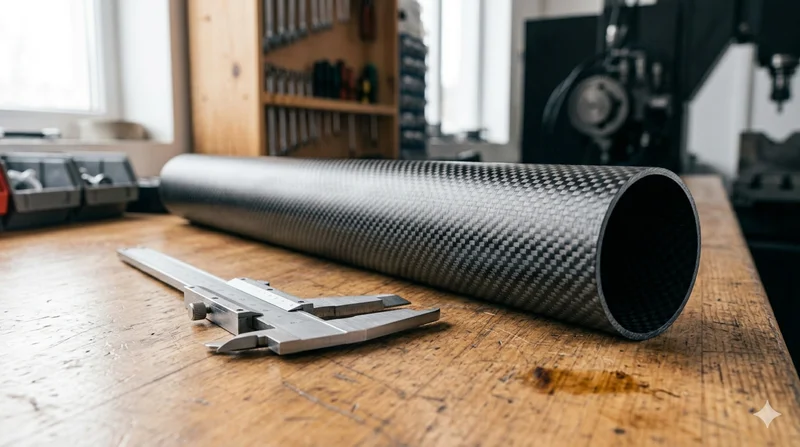
Round Carbon Fiber Tube — 3K Plain Weave T700
Standard round carbon fiber tube manufactured from Toray T700 grade fiber with 3K plain weave. Offers balanced strength and stiffness for general industrial applications including robotics, automation, sports equipment, and aerospace structures.
High Modulus Round Carbon Fiber Tube — M40
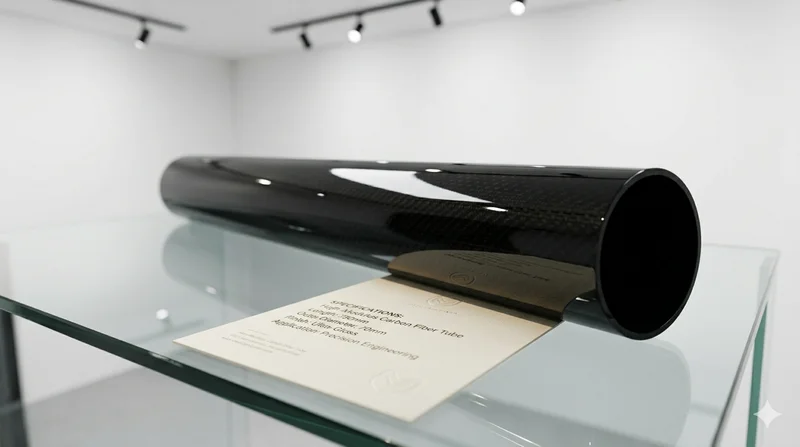
High modulus round tube manufactured with M40 grade fiber (tensile modulus 400 GPa). Designed for applications where maximum stiffness-to-weight ratio is critical, such as optical systems, precision machinery, and aerospace structures.