
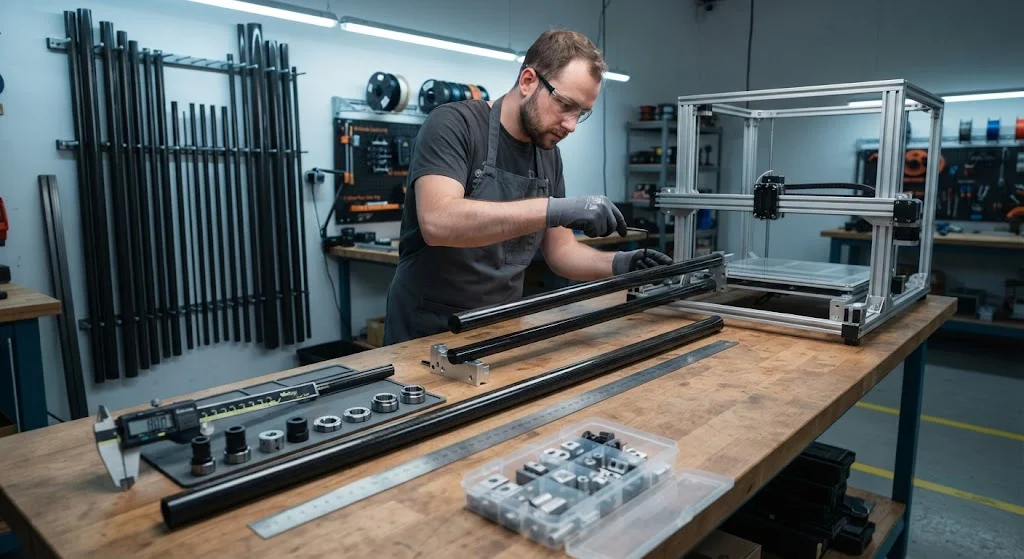
Carbon fiber rod guides are precision shafts used to guide linear motion in machinery — most visibly in 3D printers, where a pair of carbon fiber rods guides the print head across the gantry, and in automation equipment such as pick-and-place machines, CNC routers, and custom linear stages. Their ap
Introduction
Carbon fiber rod guides are precision shafts used to guide linear motion in machinery — most visibly in 3D printers, where a pair of carbon fiber rods guides the print head across the gantry, and in automation equipment such as pick-and-place machines, CNC routers, and custom linear stages. Their appeal is simple: a carbon fiber guide rod delivers high stiffness and straightness at a fraction of the weight of a steel shaft, which reduces the moving mass that motors must accelerate and decelerate. That lower mass translates into faster acceleration, less vibration, and quieter operation in machines where the guide is part of the moving carriage rather than a stationary rail.
This guide covers what carbon fiber rod guides are, how they compare with steel and aluminium shafts across the properties that matter, the specifications to specify when buying, and the practical points of mounting and maintenance.
What Are Carbon Fiber Rod Guides?
A carbon fiber rod guide is a cylindrical shaft, typically 8-20 mm in diameter, manufactured by pultrusion or filament winding, with a ground or polished surface that lets a bearing carriage slide along it. In 3D printers, two parallel rods support a gantry that carries the print head, with linear bearings or bushings riding on the rod surface. In automation equipment, the same arrangement appears in gantries, Z-axis stages, and material-handling rails. The rod must be straight, round, and consistent in diameter along its length, because any variation shows up directly as binding or play in the bearing.
The table below compares carbon fiber with the metals most commonly used for guide shafts:
| Property | Carbon Fiber Rod | Steel Shaft | Aluminium Shaft |
|---|---|---|---|
| Density | 1.6 g/cm³ | 7.8 g/cm³ | 2.7 g/cm³ |
| Axial modulus | 230-294 GPa | 200 GPa | 70 GPa |
| Weight of 10 mm x 300 mm rod | ~38 g | ~184 g | ~64 g |
| Surface hardness | High (resin-rich skin) | Very high (hardened) | Moderate |
| Corrosion resistance | Excellent | Requires coating | Requires anodising |
| Wear characteristics | Good with compatible bearings | Excellent | Good |
| Relative cost | High | Moderate | Low |
Carbon fiber rod guides win on stiffness per kilogram, weight, and corrosion resistance. Steel shafts win on surface hardness and the enormous installed base of compatible bearings. Aluminium is the budget option where loads are light. The choice depends on whether the guide is moving (where weight matters most) or stationary (where hardness and cost dominate).
Moving vs Stationary Guides
The biggest design decision is whether the carbon fiber rod guide moves with the carriage or stays fixed while the carriage travels along it:
- Moving rod, stationary carriage: Common in some 3D printer designs where the rods are fixed to the print bed platform and the whole assembly translates. Weight reduction here directly cuts the moving mass.
- Fixed rod, moving carriage: The classic gantry arrangement. The rod is mounted to the frame and bearings ride along it. Weight matters less, but straightness and surface finish matter more, since the bearing travels the full length.
- Rotating rod, fixed nut or bearing: Used in leadscrew-style drives where the rod also transmits rotation. Requires the rod to be both straight and torsionally stiff.
For moving-rod designs, the weight saving of carbon fiber is the headline benefit: replacing two steel 10 mm rods with carbon fiber versions can cut several hundred grams of moving mass, which shortens acceleration times and reduces motor strain. For fixed-rod designs, the benefits shift to corrosion resistance, vibration damping, and the distinctive appearance, while the surface must still meet the bearing's requirements.
Key Specifications for Carbon Fiber Rod Guides
When specifying carbon fiber rod guides, the following parameters define the product:
| Parameter | Typical Range | Why It Matters |
|---|---|---|
| Diameter | 8-20 mm | Must match the bearing bore exactly |
| Diameter tolerance | +/-0.05 mm or better | Tight fit prevents play and binding |
| Straightness | 0.1-0.3 mm per metre | Bends cause binding in long strokes |
| Surface finish | Ground or polished | Smooth surface reduces bearing wear |
| Fibre orientation | 0° pultruded or wound | Axial stiffness and bending strength |
| Length | 300-1,000 mm | Determines travel range |
| End treatment | Cut, chamfered, or mounted | Affects mounting and bearing entry |
Two specifications dominate the buying decision: diameter tolerance and straightness. A rod that is 0.1 mm oversized jams in a fixed linear bearing; one that is undersized develops play that ruins print or positioning quality. Straightness matters most over long strokes, where a slight bow translates into measurable error at the ends of travel. Reputable suppliers state both values on the data sheet.
Bearing Compatibility
Carbon fiber rod guides must be matched to the right bearing. Standard steel linear bearings can run on carbon fiber rods, but the pairing deserves care:
- Linear ball bearings (LM series): Work well on ground carbon rods with smooth surfaces; the balls ride on the resin-rich surface.
- Plain bearings and bushings: A good match for carbon fiber; some plain-bearing materials pair better with the slightly softer composite surface than with hardened steel.
- Dry-running polymer bushings: Often the best pairing for carbon fiber rods, since the polymer and composite surface wear compatibly.
- Direct contact (rod as rail): Avoid running a hardened steel roller directly on the carbon surface under high load, since it can cut the resin skin.
In practice, most 3D printer and light automation applications use polymer bushings or LM-type ball bearings on carbon fiber rod guides with good results. Matching the bearing to the rod surface finish, and keeping the surface clean and lightly lubricated where the bearing spec calls for it, extends the life of both parts.
Mounting and Installation Tips
Installing carbon fiber rod guides correctly avoids most field problems:
- Support both ends: Secure each end in a clamp or bracket with a full-width contact, and check alignment with a straight edge or dial indicator before final tightening.
- Avoid over-clamping: Crushing the rod in a tight clamp can damage the surface and create a flat spot that binds the bearing.
- Leave room for thermal movement: Carbon fiber expands far less than aluminium or steel frames, so the frame's thermal movement, not the rod's, governs clearance and alignment in temperature-changing environments.
- Protect the surface: Handle rods by the ends, keep them in their protective wrapping until installation, and avoid contact with sharp tools that can score the resin surface.
- Check parallelism for dual-rod gantries: Two parallel rods must be aligned within the bearing's tolerance; misalignment causes binding and uneven wear.
Because carbon fiber rods are lighter and stiffer than steel equivalents, they are easier to handle during installation and hold alignment well once mounted. The main installation errors are over-clamping and misalignment between paired rods, both of which are straightforward to avoid with careful setup.
Buying Carbon Fiber Rod Guides
Whether you are upgrading a 3D printer, building a custom machine, or sourcing guides for production equipment, buy carbon fiber rod guides from a supplier who can state the specifications that matter: diameter tolerance, straightness per metre, surface finish, and fibre grade. Pultruded rods with a ground surface are the standard choice for guide duty; filament wound rods suit applications where the guide also sees torsional load. Verify the length and end treatment match your mounting plan, and ask for the material data sheet if the guide carries structural load.
For small quantities, ready-made rods in standard diameters and lengths are the fast path. For production equipment, order custom lengths and tolerances with documented QC, and confirm the bearing type you intend to run so the supplier can match the surface finish accordingly. Suppliers serving the USA and Europe should provide consistent dimensional data, since a guide rod that varies in diameter or straightness between batches will show up as inconsistent machine performance.
Frequently Asked Questions
Can I replace the steel shafts in my 3D printer with carbon fiber rods?
Yes, carbon fiber rod guides are a popular upgrade in printers where the rods move with the carriage, because the weight saving improves acceleration and reduces motor strain. Two checks matter before swapping: the rod diameter must match the bearing bore exactly, and the frame must be aligned to the rod's straightness. Ground pultruded rods with a smooth surface work with standard LM bearings and polymer bushings. If your printer has long fixed rods, the weight benefit is smaller, but corrosion resistance and vibration damping still make carbon fiber an attractive option.
Are carbon fiber rod guides as stiff as steel shafts?
Along the axis, a carbon fiber rod made with T700-class fibre reaches a modulus of about 230 GPa, comparable to steel's 200 GPa, while weighing less than a quarter as much. Bending stiffness depends on diameter, and since carbon rods are usually specified in the same diameters as steel shafts, they match or exceed steel stiffness per unit length. The differences are surface hardness — steel is harder and resists scoring better — and cost, where steel is cheaper. For stiffness per kilogram, carbon fiber wins clearly, which is why it suits moving guides where mass matters.
What bearings should I use with carbon fiber rod guides?
Polymer plain bushings are the most compatible pairing and are common in 3D printers; LM-type ball bearings also run well on ground carbon rods with a smooth surface. Avoid high-load contact from hardened steel rollers directly on the rod, which can cut the resin-rich surface. Match the bearing to the rod's surface finish, and follow the bearing's lubrication guidance — some polymer bushings run dry, while ball bearings may call for light oil. Keeping the rod surface clean extends the life of both the bearing and the rod.
Conclusion
Carbon fiber rod guides deliver the stiffness of steel at a fraction of the weight, with excellent corrosion resistance and vibration damping, making them a strong choice for 3D printer carriages, automation gantries, and custom linear stages. The decision comes down to whether the guide moves (where carbon fiber's weight saving is the headline benefit) or stays fixed (where surface hardness and cost favour steel). Diameter tolerance, straightness, and surface finish are the specifications that determine whether the guide performs, so buying from a supplier who documents these values is the key step.
If you are upgrading a machine or sourcing guide rods for production, browse our carbon fibre rod and tube range or contact our technical team for diameter, tolerance, and straightness recommendations, custom lengths, and volume pricing.
Related Articles
Interested in Our Products?
Contact our team for competitive pricing and technical specifications.
Get a QuoteRelated Products

Carbon Fiber Plate — 3K Twill T700 3.0mm
Medium-thickness 3.0mm carbon fiber plate offering significantly higher load capacity while maintaining attractive 3K twill finish. Suitable for structural brackets, reinforcement plates, and load-bearing panels.

Carbon Fiber Plate — 3K Twill T700 1.5mm
Thin 1.5mm carbon fiber plate with 3K twill weave surface. Lightweight and stiff, commonly used for covers, panels, drone bodies, and applications requiring a premium aesthetic appearance.

Square Carbon Fiber Tube — 3K Twill T700
Square cross-section carbon fiber tube manufactured with 3K twill weave for torsional strength. Preferred for structural frames, trusses, and support columns where rectangular geometry offers design flexibility.
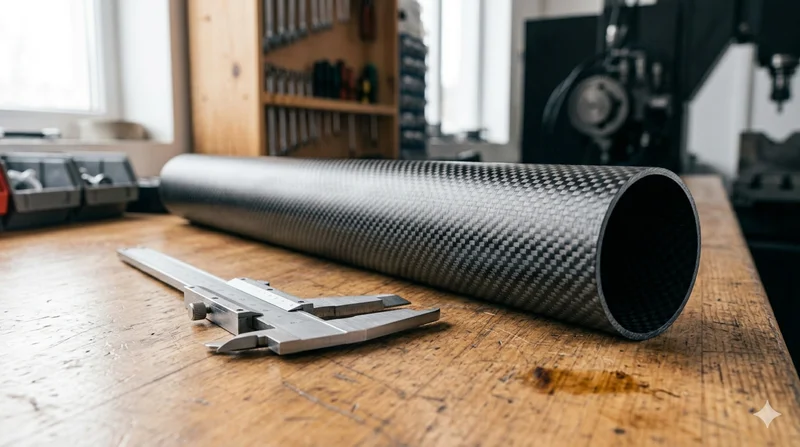
Round Carbon Fiber Tube — 3K Plain Weave T700
Standard round carbon fiber tube manufactured from Toray T700 grade fiber with 3K plain weave. Offers balanced strength and stiffness for general industrial applications including robotics, automation, sports equipment, and aerospace structures.
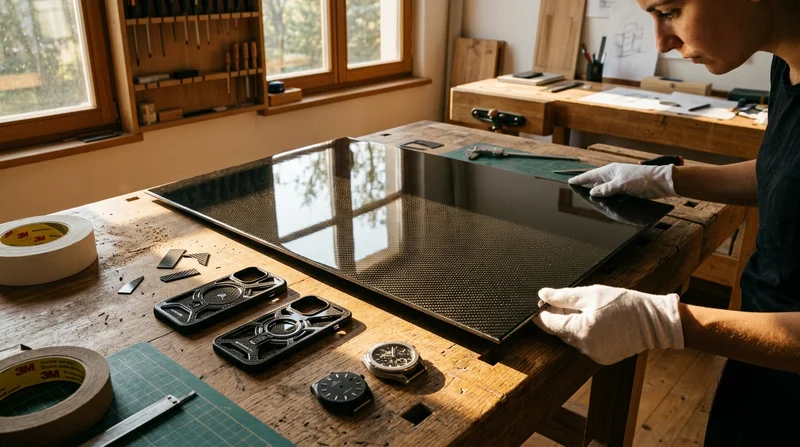
Carbon Fiber Plate — High-Gloss Decorative
High-gloss decorative carbon fiber plate with a mirror-like surface finish. The glossy coating enhances the visible 3K twill weave, creating a premium aesthetic for consumer-facing applications. Lightweight yet stiff, available in thin gauges for easy cutting and forming.