
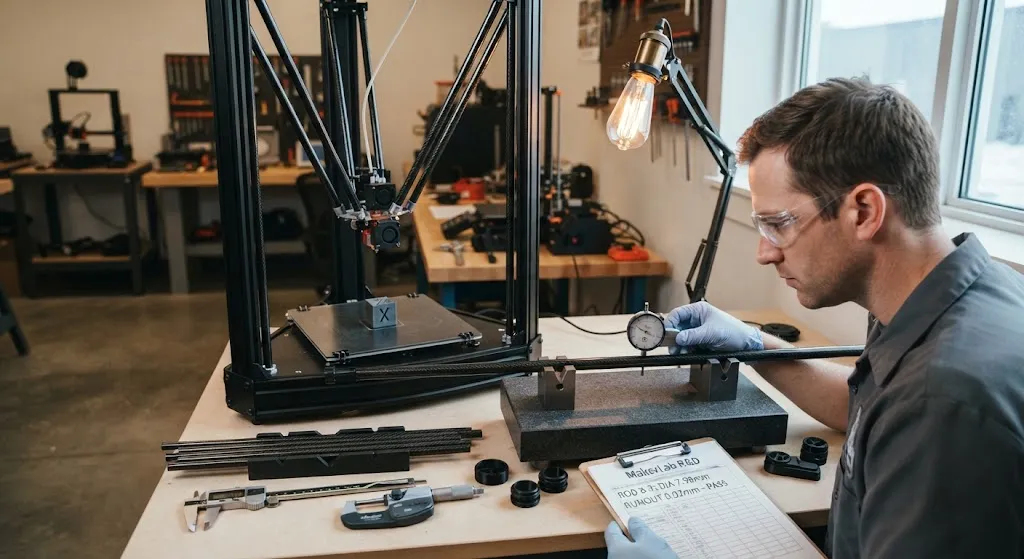
A carbon fiber rod delta printer is a delta 3D printer whose three vertical guide towers use carbon fiber rods instead of steel rails or chrome shafts. Delta printers move a lightweight effector on three arms, and the rods that guide each carriage determine how smoothly and how fast the head can tra
Introduction
A carbon fiber rod delta printer is a delta 3D printer whose three vertical guide towers use carbon fiber rods instead of steel rails or chrome shafts. Delta printers move a lightweight effector on three arms, and the rods that guide each carriage determine how smoothly and how fast the head can travel. Because a carbon fiber rod delta printer lowers the moving mass and increases stiffness in the motion system, it prints faster with less ringing and ghosting, and the rods never rust or require lubrication. For hobbyists and small production shops that run deltas day in and day out, the upgrade is one of the most effective mechanical changes available.
This guide explains how delta kinematics work, why carbon fiber rod delta printer upgrades deliver measurable gains, the specifications that matter when buying rods, and how to convert an existing printer safely.
What Is a Carbon Fiber Rod Delta Printer?
Unlike a Cartesian printer, which moves the print head along three fixed axes, a delta printer positions its head by moving three carriages up and down on vertical towers. Each carriage is connected to the head by a pair of parallel arms, and the intersection of the three arm pairs determines the nozzle position in space. The vertical guides that the carriages slide on are usually round steel rods or chrome-plated shafts; in a carbon fiber rod delta printer, these guides are carbon fiber composite rods with a precision-ground surface.
The key mechanical requirement for these guides is a combination that steel does not naturally offer: very high axial straightness, a hard wear-resistant surface for linear bearings, and a low coefficient of thermal expansion so that the tower spacing stays constant as the machine warms up. Pultruded carbon fiber rods, finished to a consistent diameter and straightness, meet all three requirements at roughly one quarter of the weight of an equivalent steel shaft.
Why Carbon Fiber Rods Improve Delta Printer Performance
The benefits of converting to a carbon fiber rod delta printer come from physics, not marketing:
- Lower moving mass: The carriage, bearings, and rod are all lighter, so the motors accelerate the head faster and stop it with less overshoot.
- Less ringing and ghosting: A stiffer, lighter motion system vibrates at a higher frequency with lower amplitude, so the surface artifacts that appear after direction changes are visibly reduced.
- Higher print speed at equal quality: Because acceleration limits can be raised without degrading surface finish, a carbon rod machine prints the same part faster.
- No corrosion, no lubrication: Carbon fiber rods do not rust and run dry against linear bearings, which suits shops with humid air or environments where oil mist is undesirable.
- Dimensional stability: The near-zero thermal expansion of carbon keeps the three towers parallel and the build volume consistent as the printer warms up.
The table below compares a typical carbon fiber guide rod with a chrome steel shaft of the same 8 mm diameter used in common delta kits:
| Property | Carbon Fiber Rod | Chrome Steel Shaft |
|---|---|---|
| Density (g/cm³) | 1.55-1.65 | 7.85 |
| Weight per metre at 8 mm (g) | 78-83 | 395 |
| Axial modulus (GPa) | 120-160 | 200-210 |
| Specific stiffness (GPa per g/cm³) | 77-100 | 26 |
| Thermal expansion (ppm/°C) | -0.5 to 0.5 | 12 |
| Corrosion resistance | Excellent | Requires plating, rusts if damaged |
| Surface for bearings | Ground, sealed epoxy surface | Hard chrome, ground |
The weight per metre is the number that matters for a delta: three rods of 500 mm each save roughly 470 g of moving and structural mass compared with steel shafts, which directly reduces the inertia the motors must manage.
Carbon Fiber Rod Specifications for Delta Printers
Not every carbon fiber rod is suitable as a printer guide. The following specifications separate a rod that works from one that wears out bearings or binds:
| Parameter | Recommended Value | Why It Matters |
|---|---|---|
| Diameter | 8 mm or 10 mm, matching bearings | Must match the linear bearing bore precisely |
| Diameter tolerance | ±0.02 mm or better | Oversize rods bind; undersize rods cause play |
| Straightness | 0.1 mm per metre or better | Bent guides create visible print artifacts |
| Surface finish | Ground, sealed, low-friction | Affects bearing life and smoothness of travel |
| Fiber orientation | Unidirectional, high fiber volume | Delivers axial stiffness and straightness |
| Length | Cut to tower height plus margin | Allows secure mounting at both ends |
Two points deserve emphasis. First, always measure the actual rod diameter before assembling — carbon fiber rods from some suppliers vary more than metal shafts, and the rod must seat in the linear bearing without play. Second, choose a rod with a sealed surface; a raw machined carbon surface can shed fibres and wear the bearing balls. Reputable carbon fiber rod suppliers sell printer-grade rods with a documented diameter, straightness, and a smooth epoxy-sealed surface, and they can cut to the exact length your delta tower requires.
Building or Upgrading a Carbon Fiber Rod Delta Printer
If you already own a delta printer with steel shafts, the conversion is straightforward. Remove the carriages from the steel rods, clean the bearing blocks, mount the new carbon fiber rods in the existing end brackets, and check that each carriage slides freely along its full travel. Re-tram the towers and re-run the calibration routine — delta printers are sensitive to tower geometry, so the calibration is not optional after a rod change. Users who run this upgrade typically report a noticeable reduction in ringing at speeds above 100 mm/s and a quieter machine, because the lighter carriages generate less vibration.
For a new build, specify the rods as part of the frame design rather than an afterthought: order rods 20-30 mm longer than the tower travel, and use printed or machined end caps that clamp the rod without crushing the composite. When buying, compare suppliers on diameter tolerance, straightness, and documented surface treatment rather than price alone, because a guide rod is the one component that defines how the entire motion system feels.
Frequently Asked Questions
Can I replace the steel rods on my existing delta printer with carbon fiber rods?
Yes, in most cases the conversion is a drop-in change. Delta printers that use round steel guide rods accept carbon fiber rods of the same diameter, provided the rods meet the tolerance and straightness requirements described above. You will need to remove the carriages, swap the rods, re-tram the towers, and run the full calibration routine. One caveat: if your printer uses hardened linear rails rather than round rods, carbon fiber rods do not apply, because the rail profile is machined steel. Check the guide type before ordering.
What diameter carbon fiber rod should a delta printer use?
The diameter must match the linear bearings in your carriages, which for most delta kits is 8 mm, with 10 mm common on larger machines. There is little benefit in choosing a different diameter than the bearings specify, because the bearing bore determines the rod size, and a mismatched rod either binds or introduces play. If you are designing a new machine, 8 mm rods with two bearings per carriage provide a good balance of stiffness and weight; go to 10 mm for very tall towers or heavy carriages.
Do carbon fiber rods in a delta printer need lubrication?
No, carbon fiber rods are designed to run dry against linear bearings, which is one of the advantages of the upgrade — there is no oil film to collect dust and no maintenance schedule. The surface is sealed with epoxy, which gives it a low coefficient of friction against the steel balls of the bearing. Avoid applying grease, because it attracts dust and grit that can wear both the rod surface and the bearing. If a carriage starts to feel rough, clean the rod surface and check the bearing rather than adding lubricant.
Conclusion
A carbon fiber rod delta printer replaces steel guide shafts with carbon fiber composite rods, cutting the moving mass in the three towers by roughly three quarters and adding stiffness that reduces ringing and ghosting. The result is a faster, quieter, more consistent machine that never rusts and needs no lubrication — a practical upgrade for any shop that runs deltas. The specifications are straightforward: match the bearing diameter, demand tight tolerance and straightness, and choose a sealed-surface rod from a supplier that documents the material.
If you are planning a delta build or an upgrade, browse our carbon fiber rod range, available in 8 mm and 10 mm printer-grade diameters with tight straightness tolerance and cut-to-length service, or contact our engineering team for guidance on rod selection for your machine.
Related Articles
Interested in Our Products?
Contact our team for competitive pricing and technical specifications.
Get a QuoteRelated Products
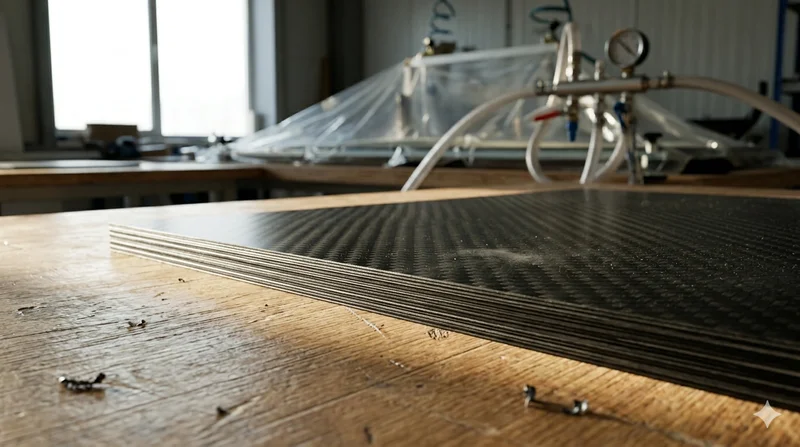
Carbon Fiber Plate — 3K Twill T700 3.0mm
Medium-thickness 3.0mm carbon fiber plate offering significantly higher load capacity while maintaining attractive 3K twill finish. Suitable for structural brackets, reinforcement plates, and load-bearing panels.

Carbon Fiber Plate — 3K Twill T700 1.5mm
Thin 1.5mm carbon fiber plate with 3K twill weave surface. Lightweight and stiff, commonly used for covers, panels, drone bodies, and applications requiring a premium aesthetic appearance.

Square Carbon Fiber Tube — 3K Twill T700
Square cross-section carbon fiber tube manufactured with 3K twill weave for torsional strength. Preferred for structural frames, trusses, and support columns where rectangular geometry offers design flexibility.
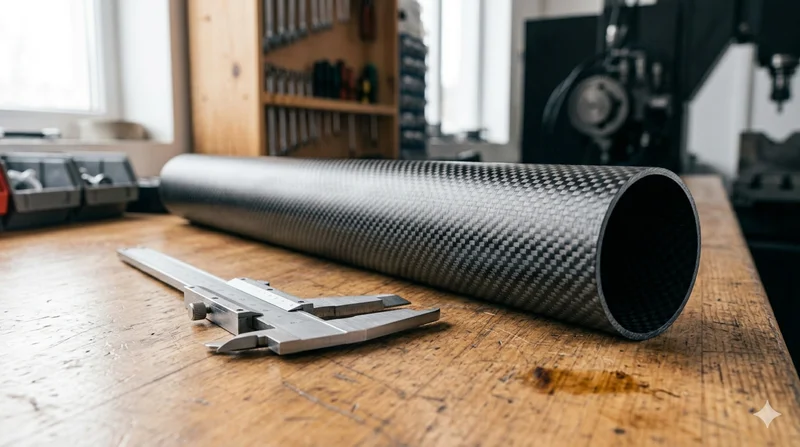
Round Carbon Fiber Tube — 3K Plain Weave T700
Standard round carbon fiber tube manufactured from Toray T700 grade fiber with 3K plain weave. Offers balanced strength and stiffness for general industrial applications including robotics, automation, sports equipment, and aerospace structures.
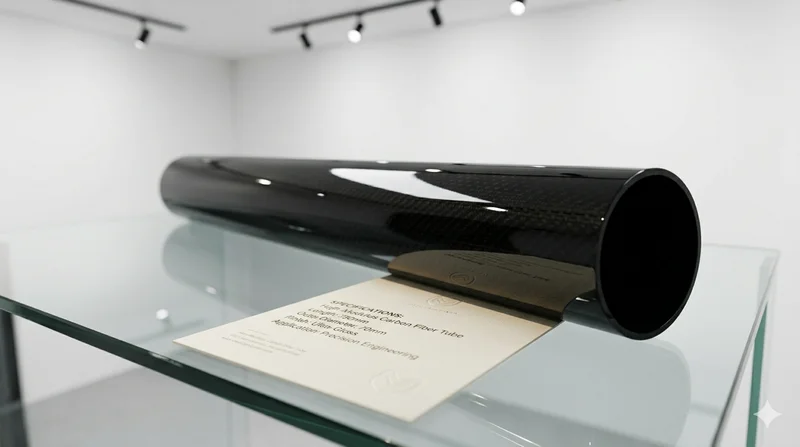
High Modulus Round Carbon Fiber Tube — M40
High modulus round tube manufactured with M40 grade fiber (tensile modulus 400 GPa). Designed for applications where maximum stiffness-to-weight ratio is critical, such as optical systems, precision machinery, and aerospace structures.