
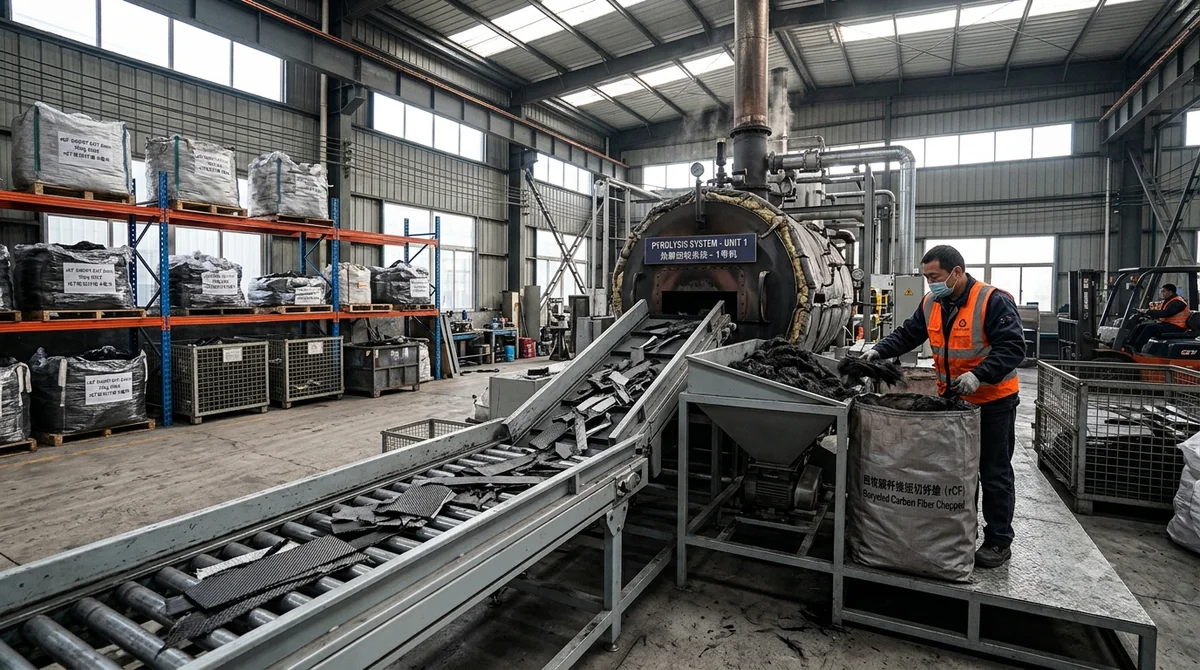
With global carbon fiber recycling capacity exceeding 25,000 tonnes per year and EU regulations tightening, recycled carbon fiber (rCF) is transforming supply chains. We compare pyrolysis, solvolysis, and mechanical grinding technologies across cost, output quality, and commercial maturity.
Introduction
Carbon fiber recycling has transitioned from laboratory research to industrial-scale production. As of 2026, global recycling capacity exceeds 25,000 tonnes per year, driven by three converging forces: tightening EU waste regulations (the Waste Framework Directive now mandates 70% composite recycling rates for end-of-life vehicles), a tripling of production capacity since 2023, and rising virgin carbon fiber prices due to energy cost increases. At YongXian CarbonFiber, we integrate recycled carbon fiber (rCF) into select non-structural product lines and work with certified recycling partners to offer our OEM customers end-of-life recovery options.
Recycling Technology Comparison
Three dominant technologies serve the carbon fiber recycling market. Each operates at a different cost point and produces fiber with distinct mechanical properties.
| Parameter | Pyrolysis | Solvolysis | Mechanical Grinding |
|---|---|---|---|
| Technology maturity | Commercial (TRL 9) | Pilot (TRL 6–7) | Commercial (TRL 9) |
| Global capacity share | 65% | 10% | 25% |
| Output fiber form | Chopped (3–150 mm) | Continuous tow | Milled (< 1 mm) |
| Tensile strength retention | 70–90% | 90–95% | 50–70% |
| Tensile modulus retention | 85–95% | 95–100% | 60–80% |
| Processing cost ($/kg) | $4–8 | $10–18 | $1–3 |
| Sizing removal | Complete | Complete | Partial |
| Energy consumption (MJ/kg) | 15–25 | 30–50 | 2–5 |
Applications for Recycled Carbon Fiber
Recycled carbon fiber has established itself in specific application tiers where cost reduction outweighs the modest mechanical property trade-off.
- Nonwoven mats and ADF preforms: Achieve 60–80% of continuous-fiber laminate properties at 40–60% lower material cost. Used in automotive underbody panels, seat structures, and interior trim.
- Compression-molded compounds: Sheet molding compound (SMC) incorporating 25–40% rCF by weight yields tensile modulus of 15–25 GPa and tensile strength of 180–250 MPa. Suitable for semi-structural brackets, housings, and covers.
- Thermoplastic injection pellets: PA6, PA66, and PP compounds with 15–40% rCF loading provide stiffness improvements of 2–3× over unreinforced base resins. Applications include consumer electronics frames, drone components, and hand tool housings.
- Construction reinforcement: Short rCF fibers (3–12 mm) added to concrete at 0.5–1.5% volume fraction increase flexural strength by 30–60% and reduce crack propagation.
Economic and Environmental Impact
The carbon footprint advantage is substantial. Virgin T700 carbon fiber production emits 25–35 kg CO₂e per kg of fiber. Recycled carbon fiber from pyrolysis emits 5–10 kg CO₂e per kg, a reduction of 65–75%. At current energy prices, the break-even point for recycling operations is approximately 2,000 tonnes per year of input scrap—a threshold that most regional recycling facilities now exceed. The economic case strengthens with the EU Carbon Border Adjustment Mechanism (CBAM) which adds an estimated $2–4/kg cost premium to virgin fiber imports from non-compliant producers starting in 2027.
Frequently Asked Questions
Can recycled carbon fiber match virgin performance in structural applications?
Not for primary aerospace or high-cycle fatigue applications where 100% property retention is required. However, rCF achieves 70–90% of virgin strength in SMC formats at 40–60% lower cost, making it viable for automotive, marine, and industrial equipment components. We recommend rCF for non-critical structural elements where weight reduction remains important but absolute strength at ultimate load is not the primary design constraint.
What is the carbon footprint reduction compared to virgin fiber?
Recycled carbon fiber reduces CO₂ emissions by 65–75%. Pyrolysis-derived rCF produces 5–10 kg CO₂e per kg of output fiber, versus 25–35 kg CO₂e per kg for virgin T700-grade fiber. This differential is expected to widen as carbon pricing mechanisms expand globally.
How do OEMs qualify recycled carbon fiber for production parts?
Qualification follows a three-stage process: (1) lot-to-lot consistency testing of mechanical properties per ASTM D3039 (tensile) and ASTM D7264 (flexural); (2) coupon-level mechanical testing of molded plaques at three fiber volume fractions; and (3) pilot production run of 100–500 parts with dimensional and performance validation. We assist customers with all three stages at our facility.
Does recycling degrade the fiber surface chemistry for bonding with epoxy?
Pyrolysis removes the original sizing completely, which can reduce interfacial shear strength (IFSS) by 15–30% unless re-sizings are applied. Modern recycling lines include a post-treatment plasma or chemical sizing application step that restores IFSS to within 10% of virgin fiber values. We specify re-sized rCF for all structural applications.
Conclusion
Carbon fiber recycling has matured into a commercially viable, environmentally necessary component of the composite supply chain. With global capacity exceeding 25,000 tonnes per year and processing costs as low as $1–3/kg for mechanical grinding, rCF offers OEM buyers a credible path to reduce material costs and Scope 3 emissions simultaneously. At YongXian CarbonFiber, we supply virgin and recycled carbon fiber products tailored to your application requirements. Contact our team to discuss rCF qualification for your next production run.
Part of topic
Related Articles
- Recycled Carbon Fiber Market Forecast 2030: Technology Maturity and Commercialization Path
- South Korea Carbon Fiber Market 2026: Hydrogen Economy and Shipbuilding Innovation
- Wind Turbine Blade Leading Edge Protection 2026: Polyurethane, Tape, and Metallic Shield Solutions
- China Carbon Fiber Overcapacity 2026: Price War Impact and Industry Consolidation
- India Carbon Fiber Market 2026: Wind Energy, Aerospace, and Defense Expansion
- PAN Precursor Market 2026: Acrylonitrile Supply and Carbon Fiber Cost Structure
Interested in Our Products?
Contact our team for competitive pricing and technical specifications.
Get a QuoteRelated Products
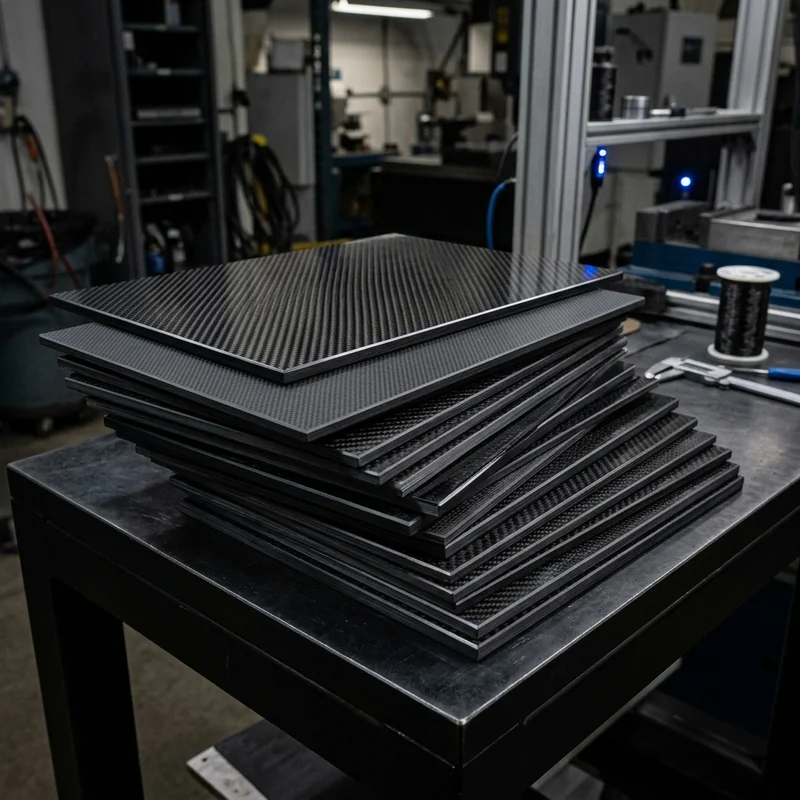
Carbon fiber standard plate-3k stripe
Lightweight, ultra-rigid standard sheets for drone fuselages, robot housings, facades and structural applications.

Carbon Fiber Plate — 3K Twill T700 1.5mm
Thin 1.5mm carbon fiber plate with 3K twill weave surface. Lightweight and stiff, commonly used for covers, panels, drone bodies, and applications requiring a premium aesthetic appearance.

Square Carbon Fiber Tube — 3K Twill T700
Square cross-section carbon fiber tube manufactured with 3K twill weave for torsional strength. Preferred for structural frames, trusses, and support columns where rectangular geometry offers design flexibility.

Carbon Fiber Plate — 3K Twill T700 3.0mm
Medium-thickness 3.0mm carbon fiber plate offering significantly higher load capacity while maintaining attractive 3K twill finish. Suitable for structural brackets, reinforcement plates, and load-bearing panels.
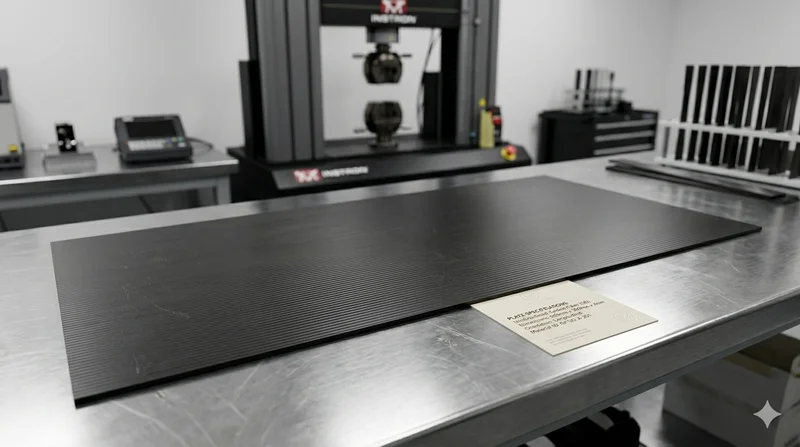
Carbon Fiber Plate — UD Unidirectional T700
Unidirectional carbon fiber plate with all fibers oriented in a single direction for maximum strength along the fiber axis. Essential for structural reinforcements, splints, and applications where load direction is predictable.