
A carbon fiber plate shoe insert is a thin, rigid insole plate that you drop into an existing shoe to add a lever under the foot. Unlike the plates bonded into super-shoes during manufacturing, an insert is removable: it upgrades a shoe you already own, can be moved between pairs, and is available a
Introduction
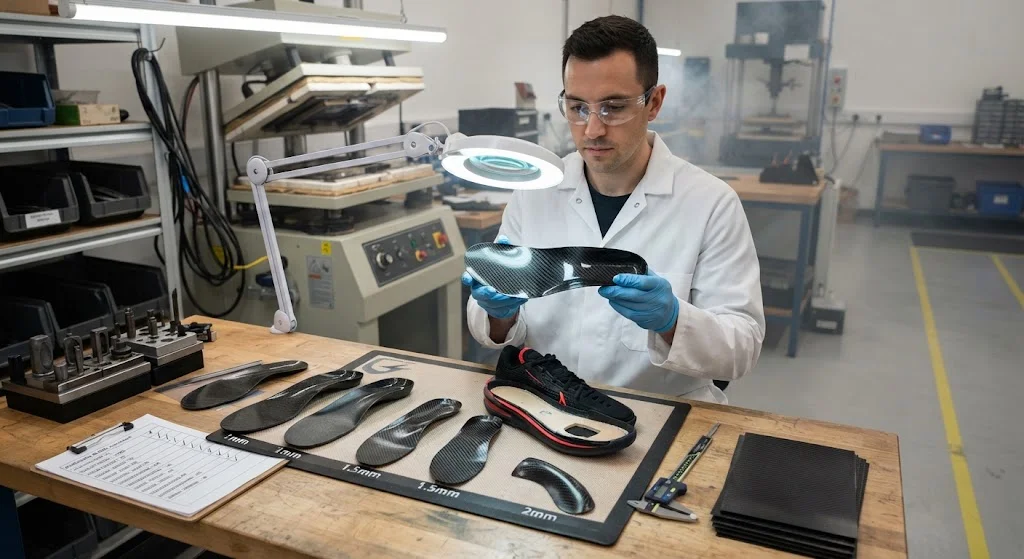
A carbon fiber plate shoe insert is a thin, rigid insole plate that you drop into an existing shoe to add a lever under the foot. Unlike the plates bonded into super-shoes during manufacturing, an insert is removable: it upgrades a shoe you already own, can be moved between pairs, and is available as a standalone product in a range of thicknesses and curvatures. The concept borrows directly from the marathon footwear that reshaped distance running, but the insert format makes the same carbon fiber plate technology available to basketball players, hikers, and everyday walkers without buying a new shoe.
This guide covers how carbon fiber plate shoe inserts work, which activities benefit most, the specifications buyers should check, and how to source quality inserts — whether you are buying a single pair for personal use or ordering inserts in volume for a footwear brand.
What Is a Carbon Fiber Plate Shoe Insert?
A carbon fiber plate shoe insert is a curved laminate, typically 1.0-2.5 mm thick, made from carbon fibre reinforced polymer (CFRP) and cut to an insole footprint. It sits on top of the original insole or replaces it, under the arch and forefoot. The plate acts as a stiff lever: at heel strike it stores strain energy as it bends, and at toe-off it springs back, returning part of that energy to the stride. The same geometry, tuned with different stiffness and curvature, provides arch support and motion control in walking shoes and work boots.
The table below compares carbon fiber with the materials most often used in aftermarket shoe inserts:
| Property | Carbon Fiber | TPU | EVA Foam | Steel |
|---|---|---|---|---|
| Flexural stiffness | Very high | Medium | Low | Very high |
| Density | 1.6 g/cm³ | 1.2 g/cm³ | 0.15 g/cm³ | 7.8 g/cm³ |
| Energy return | High (up to 90%) | Moderate | Low | Minimal |
| Weight | ~15-25 g per insert | ~20-30 g | ~10 g | ~80-120 g |
| Fatigue life | 100k+ flex cycles | Good | Compresses over time | High, but heavy |
| Relative cost | Highest | Low | Lowest | Low |
Carbon fiber wins where stiffness, thinness, and weight matter together: a plate thin enough to fit under the foot without raising it noticeably, stiff enough to behave as an effective lever, and light enough that a pair of inserts adds less than 50 grams to the shoe.
Where a Carbon Fiber Plate Shoe Insert Helps Most
The benefit of an insert depends on the activity and the shoe it goes into. The clearest gains show up in these uses:
- Basketball and court sports: A full-length plate under a cushioned shoe adds a firm push-off platform for jumping and cutting, and reduces fatigue in the foot and calf during long sessions.
- Hiking and trail walking: A moderately stiff plate with arch support stiffens flexible trail shoes, reduces strain on the plantar fascia over long distances, and protects the foot from stone bruising on rough terrain.
- Work boots and standing jobs: A supportive plate with a mild rocker distributes pressure and reduces metatarsal fatigue for workers who stand or walk on hard floors for eight hours or more.
- Recreational running: Runners who do not want to replace their current shoes can add an insert to gain part of the energy-return benefit of a plated shoe at a fraction of the cost.
- Everyday walking and recovery: A softer, more flexible insert provides gentle arch support in casual shoes and helps ease the transition after foot injuries.
The insert does not change the midsole foam of the shoe, so its effect is additive: it contributes stiffness and energy return while the shoe's own cushioning continues to absorb impact. This is why inserts pair well with neutral, well-cushioned shoes rather than minimalist models with little underfoot material.
Key Specifications to Check
Not all carbon fiber plate shoe inserts are the same. The specifications below determine how an insert feels and performs:
| Specification | Typical Range | Why It Matters |
|---|---|---|
| Thickness | 1.0-2.5 mm | Thicker plates are stiffer; thinner fit more shoes |
| Fibre grade | T300 / T700 | Sets strength and modulus baseline |
| Layup | Unidirectional or 0°/90° weave | Controls stiffness direction and flex feel |
| Curvature / flex point | Custom per size | Governs the lever effect and comfort |
| Size range | EU 36-47 (US 4-13) | Must match the shoe's insole length |
| Surface finish | Glossy or matte, edge-sealed | Prevents edge delamination and splintering |
| Top cover | Foam or fabric bonded | Adds comfort; some users prefer bare plate |
For a shoe insert, fit is as important as material. The plate must match the insole length of the target shoe, and the flex point should sit close to the natural bending line of the foot, roughly under the ball of the foot. An insert that is too stiff for the user's weight will feel harsh; one that is too flexible adds little. Manufacturers typically offer two or three stiffness variants for this reason.
How Inserts Are Manufactured
Quality carbon fiber plate shoe inserts are produced by stacking prepreg carbon fiber in a heated compression mould, which gives precise thickness control, consistent curvature, and clean sealed edges. The process is the same used for performance running shoe plates, scaled to insole geometry. Wet layup and hand-cut methods produce cheaper but less consistent parts, with more variable thickness and rougher edges that can delaminate under repeated flexing.
Prototyping a new insert size or curvature takes two to four weeks with a composite supplier, and production tooling amortises over thousands of pairs. For a footwear brand, this means an insert programme can be validated with a small batch before committing to volume tooling.
Buying Carbon Fiber Plate Shoe Inserts
Individual buyers typically choose between ready-made inserts in standard sizes and semi-custom plates that can be trimmed to fit. Ready-made inserts are the fastest option and are sold in size ranges covering most feet. Semi-custom plates come in larger blanks that the user trims with scissors or a rotary tool, allowing a closer fit for unusual foot shapes or specific shoes.
When buying carbon fiber plate shoe inserts from a supplier, verify the manufacturing method (compression-moulded prepreg versus wet layup), the stiffness variants offered, the size range, and test evidence such as flex-fatigue data. Suppliers serving the USA and Europe should provide material data sheets and consistent dimensional tolerances, because an insert that varies in thickness by a quarter of a millimetre changes the feel of the shoe noticeably.
Frequently Asked Questions
Will a carbon fiber plate shoe insert make my shoes uncomfortable?
A correctly sized insert with the right stiffness for your weight is generally comfortable from the first wear, though some users notice the firmer feel for a few days. The common causes of discomfort are a plate that is too long for the shoe, a flex point that sits too far forward or backward, or an insert that is stiffer than the user needs. Choosing the right size and a moderate stiffness variant, and gradually increasing wear time, avoids most of these issues. If a plate is uncomfortable in one shoe, it may fit perfectly in another with a different insole depth.
Can I use a carbon fiber plate shoe insert in any shoe?
Inserts work best in shoes with a removable insole and enough depth to accept the plate without raising the heel excessively. Running shoes, basketball shoes, hiking boots, and most lace-up work boots qualify. Very shallow shoes, such as some dress shoes or minimalist trainers, may feel tight with an insert added. As a rule, if the original insole lifts out easily, the shoe is a good candidate, and most users can wear the plate with the original insole above it for added cushioning.
How long do carbon fiber plate shoe inserts last?
A well-made insert survives well over 100,000 flex cycles, which translates to years of regular use; the carbon plate itself rarely fails. In practice the top cover or the shoe's own foam wears out first. Inserts used daily for high-impact sports should be inspected periodically for edge delamination or splintering, and replaced if the top layer separates. Because the plate is removable, you can transfer it to a new shoe when the old pair wears out, which is one of the main advantages over bonded-in plates.
Conclusion
A carbon fiber plate shoe insert is the most accessible way to add the proven benefits of a carbon plate — energy return, stiffness, and foot support — to shoes you already own. The technology is mature: compression-moulded prepreg inserts are precise, fatigue-tested, and available in thicknesses and curvatures tuned for basketball, hiking, work, and everyday use. For buyers, the decisions come down to fit, stiffness, and supplier quality rather than whether the concept works, because the evidence from performance footwear is well established.
If you are developing an insert product line or sourcing inserts in volume, explore our carbon fibre sheet and plate products or contact our technical team for layup recommendations, prototyping, and volume pricing.
Part of topic
Related Articles
Interested in Our Products?
Contact our team for competitive pricing and technical specifications.
Get a QuoteRelated Products

Carbon Fiber Plate — 3K Twill T700 3.0mm
Medium-thickness 3.0mm carbon fiber plate offering significantly higher load capacity while maintaining attractive 3K twill finish. Suitable for structural brackets, reinforcement plates, and load-bearing panels.

Carbon Fiber Plate — 3K Twill T700 1.5mm
Thin 1.5mm carbon fiber plate with 3K twill weave surface. Lightweight and stiff, commonly used for covers, panels, drone bodies, and applications requiring a premium aesthetic appearance.

Square Carbon Fiber Tube — 3K Twill T700
Square cross-section carbon fiber tube manufactured with 3K twill weave for torsional strength. Preferred for structural frames, trusses, and support columns where rectangular geometry offers design flexibility.
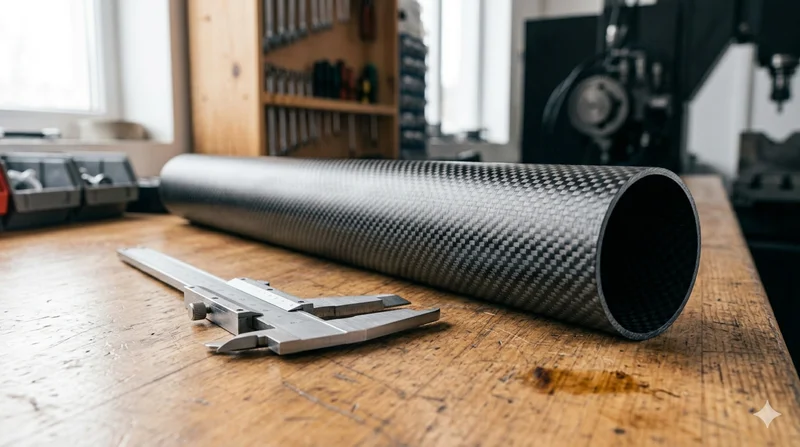
Round Carbon Fiber Tube — 3K Plain Weave T700
Standard round carbon fiber tube manufactured from Toray T700 grade fiber with 3K plain weave. Offers balanced strength and stiffness for general industrial applications including robotics, automation, sports equipment, and aerospace structures.
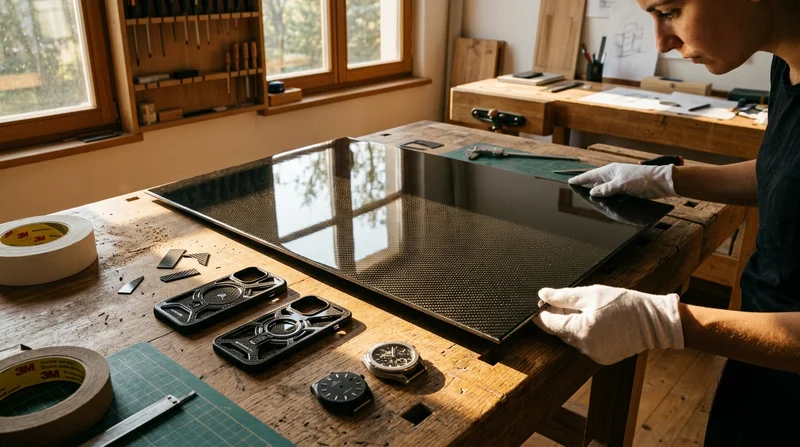
Carbon Fiber Plate — High-Gloss Decorative
High-gloss decorative carbon fiber plate with a mirror-like surface finish. The glossy coating enhances the visible 3K twill weave, creating a premium aesthetic for consumer-facing applications. Lightweight yet stiff, available in thin gauges for easy cutting and forming.