
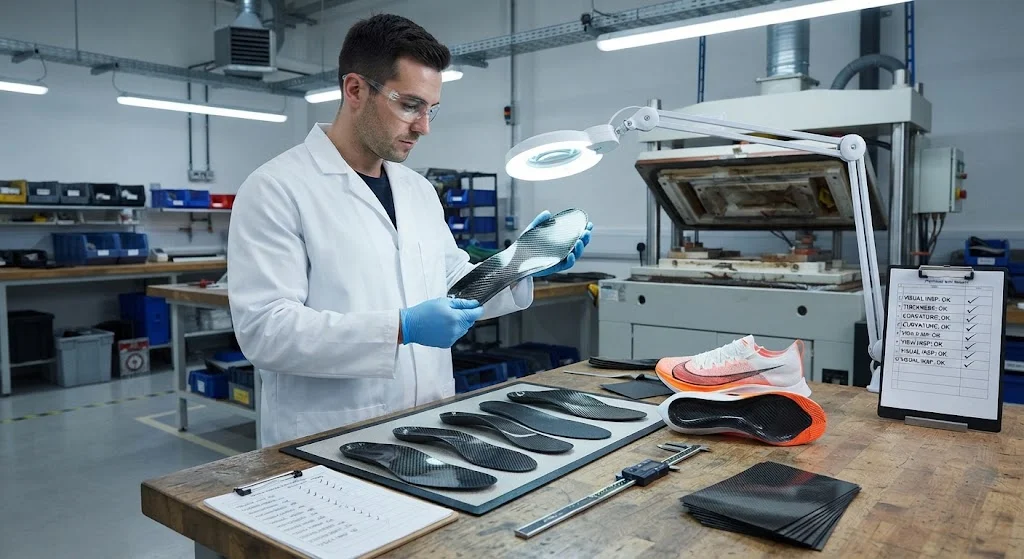
The carbon fiber plate insole became famous in 2017, when a marathon shoe with a curved carbon plate helped runners break the two-hour barrier conversation and reset elite marathon records within a few years. The principle is simple: a carbon fiber plate insole acts as a stiff lever that stores elas
Introduction
The carbon fiber plate insole became famous in 2017, when a marathon shoe with a curved carbon plate helped runners break the two-hour barrier conversation and reset elite marathon records within a few years. The principle is simple: a carbon fiber plate insole acts as a stiff lever that stores elastic energy during the landing phase and returns it during push-off, reducing the energy cost of running. The same plate geometry, with different stiffness and thickness, is used in medical footwear to support the foot arch and control excessive motion.
This guide covers how carbon fiber plate insoles work, what the performance evidence shows, the specifications buyers should specify, and what to look for in a supplier whether you manufacture running shoes, build custom orthotics, or procure insoles for clinical footwear.
What Is a Carbon Fiber Plate Insole?
A carbon fiber plate insole is a thin laminate, typically 1.0-3.0 mm thick, made from carbon fibre reinforced polymer (CFRP), positioned inside the shoe between the outsole and the midsole foam, or bonded into a removable insole assembly. In performance running shoes the plate runs the full length of the foot and is curved so that the foot, plate, and foam form a lever system: as the heel compresses the foam at landing, the plate stores strain energy, and at toe-off the plate springs back, propelling the runner forward.
The plate material determines the behaviour of the whole system. The table below compares carbon fibre with the alternatives commonly used in insoles and midsoles:
| Property | Carbon Fibre | Fibreglass | Nylon | TPU |
|---|---|---|---|---|
| Flexural stiffness | Very high | High | Medium | Low-medium |
| Density | 1.6 g/cm³ | 1.9 g/cm³ | 1.1 g/cm³ | 1.2 g/cm³ |
| Fatigue life | Excellent | Good | Good | Good |
| Thickness for equal stiffness | Thinnest | Thicker | Much thicker | Much thicker |
| Relative cost | Highest | Medium | Low | Low |
The combination of very high stiffness at minimal thickness is exactly why carbon fibre is used: a plate thin enough to fit in a shoe while stiff enough to behave as an effective lever, with a fatigue life that survives hundreds of kilometres of running.
How Carbon Fiber Plate Insoles Improve Running Performance
The performance benefit of a curved carbon fiber plate insole has been studied extensively since the 2017 breakthrough. Key findings include:
- Lower energy cost: Studies report a 2-4% reduction in the energy cost of running at sub-maximal speeds, which translates to roughly 1-2% faster race times over a marathon distance.
- Lever effect at the metatarsophalangeal joint: The plate moves the effective pivot point of push-off forward, reducing the work done by the calf muscles.
- Spring storage and return: The curved plate stores strain energy at landing and returns up to 90% of it at toe-off, acting like a second spring in series with the foam.
- Reduced ankle plantarflexion: A stiffer plate reduces ankle range of motion, shifting work to the hip and reducing fatigue in the lower leg late in a race.
The magnitude of the benefit depends on geometry. Full-length plates with a pronounced curvature and moderate stiffness outperform flat or partial-length plates. Notably, the effect is not simply "stiffer is better": plates that are too stiff or too flat can reduce efficiency, which is why plate curvature and layup orientation are tuned for each shoe model and runner profile.
Carbon Fiber Plate Insoles in Medical and Orthotic Applications
Outside performance running, carbon fiber plate insoles are used in medical footwear and custom orthotics where stiffness and thinness are clinical advantages:
- Diabetic foot protection: A full-length rigid plate distributes plantar pressure and offloads high-pressure zones, reducing ulcer risk in neuropathic feet. The thin profile fits inside standard diabetic shoes.
- Plantar fasciitis support: A plate with a modest arch reinforcement reduces strain on the plantar fascia by limiting the windlass effect and controlling midfoot collapse.
- Post-surgical and fracture immobilisation: Carbon fibre footplates in walkers and braces provide rigid support at a fraction of the weight of metal equivalents.
- Custom functional orthotics: Plates can be trimmed, shaped, and overlaid with cushioning to build prescription orthotics that are thinner than traditional acrylic or polypropylene devices.
For clinical use, the plate must be specified for stiffness, flex point location, and thickness to match the patient's weight and activity level, and the finished device must be verifiable against the prescription.
Specifications That Matter When Sourcing
Whether you source plates for running shoes or orthotics, the following specifications define the product:
| Parameter | Typical Range | Why It Matters |
|---|---|---|
| Thickness | 1.0-3.0 mm | Determines stiffness and fit within the shoe stack |
| Fibre type | T300 / T700 grade | Sets strength and modulus baseline |
| Layup orientation | 0°/90° woven or unidirectional | Controls flex behaviour and spring-back |
| Curvature / flex point | Custom per model | Governs the lever effect and comfort |
| Surface finish | Glossy or matte, edge-sealed | Prevents edge delamination in flex |
| Fatigue testing | 100k+ flex cycles | Confirms survival of running life |
Plates for performance shoes are usually manufactured by laying prepreg carbon fibre in a heated compression mould, which gives precise thickness control and consistent curvature. Prototypes can be produced in weeks, and production tooling amortises over tens of thousands of pairs.
Cost and Choosing a Supplier
A carbon fiber plate insole typically costs a small fraction of the finished shoe, but it is the most engineered component in the midsole stack. Pricing depends on fibre grade, thickness, curvature complexity, and volume: simple flat plates are inexpensive, while curved, full-length, fatigue-tested plates carry a premium. Most serious manufacturers buy directly from composite suppliers who specialise in footwear components.
When evaluating carbon fiber plate insole suppliers, verify their composite process capability (prepreg compression moulding versus wet layup), their quality system, whether they offer custom curvature and layup development, and their testing evidence — flex fatigue data matters more than a glossy brochure. Suppliers serving the USA and Europe should be able to provide material data sheets, batch QC records, and consistent dimensional tolerances, because a plate that varies in thickness by half a millimetre changes the feel of the shoe.
Frequently Asked Questions
Do carbon plate shoes actually make you faster?
Peer-reviewed studies consistently report a 2-4% reduction in the energy cost of running at steady speeds for curved full-length plates, which corresponds to roughly 1-2% faster race times over a marathon. The benefit is real but conditional: it is largest at moderate speeds, depends on the runner's gait, and disappears if the plate geometry does not suit the individual. For most recreational runners, the plate also provides noticeable comfort and support, but the headline efficiency gain applies mainly to continuous running, not walking or sprinting.
Can I put a carbon fiber plate insole in any shoe?
A full-length plate needs a shoe with enough midsole depth and a suitable drop to accommodate it without raising the heel excessively. Performance super-shoes are designed around the plate, so the best results come from shoes built for it. If you are adding a removable carbon plate insole to an existing shoe, choose a shoe with a removable insole, check that your foot does not sit too high, and confirm the flex point of the plate aligns with your natural toe-off. For medical use, the plate should be fitted by a podiatrist or orthotist to avoid unintended pressure points.
How long do carbon fiber plate insoles last?
A well-manufactured plate survives hundreds of kilometres of running; the flex-fatigue life of prepreg CFRP plates typically exceeds 100,000 bending cycles, which outlasts the midsole foam of the shoe. In practice, the plate is rarely the first component to fail — the foam compresses and loses its return first, and the upper wears out. For medical devices, replace or recheck the insole when the cushioning layer degrades or when the patient's foot condition changes, typically every 6-12 months, while the carbon plate itself usually remains structurally sound.
Conclusion
The carbon fiber plate insole is a small component with an outsized effect: a 2-4% running efficiency gain that reshaped elite marathoning, and a thin, rigid platform that improves diabetic and orthotic footwear. The technology is mature — prepreg compression moulding delivers precise, fatigue-tested plates at footwear-appropriate cost — and the specification is now well understood.
If you are developing a performance shoe or a medical footwear line, explore our carbon fibre sheet and plate products or contact our technical team for layup recommendations, prototyping, and volume pricing for your insole programme.
Part of topic
Related Articles
Interested in Our Products?
Contact our team for competitive pricing and technical specifications.
Get a QuoteRelated Products

Carbon Fiber Plate — 3K Twill T700 3.0mm
Medium-thickness 3.0mm carbon fiber plate offering significantly higher load capacity while maintaining attractive 3K twill finish. Suitable for structural brackets, reinforcement plates, and load-bearing panels.

Carbon Fiber Plate — 3K Twill T700 1.5mm
Thin 1.5mm carbon fiber plate with 3K twill weave surface. Lightweight and stiff, commonly used for covers, panels, drone bodies, and applications requiring a premium aesthetic appearance.

Square Carbon Fiber Tube — 3K Twill T700
Square cross-section carbon fiber tube manufactured with 3K twill weave for torsional strength. Preferred for structural frames, trusses, and support columns where rectangular geometry offers design flexibility.
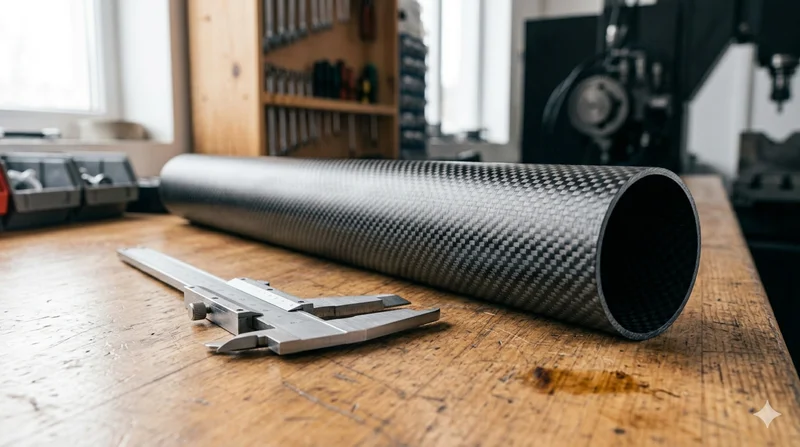
Round Carbon Fiber Tube — 3K Plain Weave T700
Standard round carbon fiber tube manufactured from Toray T700 grade fiber with 3K plain weave. Offers balanced strength and stiffness for general industrial applications including robotics, automation, sports equipment, and aerospace structures.
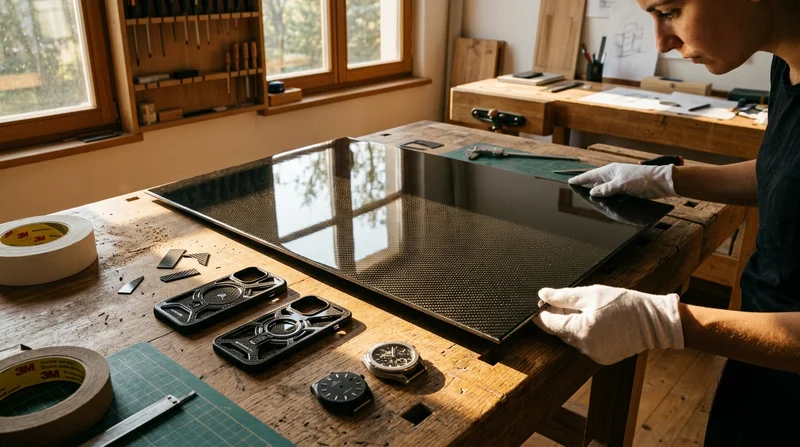
Carbon Fiber Plate — High-Gloss Decorative
High-gloss decorative carbon fiber plate with a mirror-like surface finish. The glossy coating enhances the visible 3K twill weave, creating a premium aesthetic for consumer-facing applications. Lightweight yet stiff, available in thin gauges for easy cutting and forming.