
Carbon fiber parts Houston industrial buyers specify for oil and gas, aerospace, and machinery applications face a supply environment shaped by the region's energy economy. Houston is the headquarters of more than half of the publicly traded oil and gas companies in the United States, and the Texas
Introduction
Carbon fiber parts Houston industrial buyers specify for oil and gas, aerospace, and machinery applications face a supply environment shaped by the region's energy economy. Houston is the headquarters of more than half of the publicly traded oil and gas companies in the United States, and the Texas Gulf Coast hosts one of the world's densest clusters of refineries, petrochemical plants, and drilling service companies. These operators demand components that survive corrosive fluids, high pressure, and repeated handling, and carbon fiber increasingly meets those requirements where steel and aluminum fall short.
This guide covers the structure of the Houston carbon fiber parts market, the specific demand drivers in the energy sector, how to evaluate carbon fiber parts Houston suppliers, and the practical questions of lead time, certification, and cost that determine whether Texas buyers source locally or import from international manufacturers.
The Houston Carbon Fiber Parts Market Structure
The Houston region combines a strong local fabrication base with heavy reliance on imported carbon fiber material and parts. Local machine shops, pressure vessel fabricators, and industrial distributors have developed composite capabilities over the past two decades, largely serving oilfield equipment, chemical processing, and defense programs based in Texas. At the same time, most raw carbon fiber tow and prepreg is produced outside Texas, and many engineered composite parts are imported from Asia and Europe.
| Market Segment | Typical Carbon Fiber Parts | Primary Buyers |
|---|---|---|
| Oil and gas equipment | Downhole tool housings, drill pipe centralizers, valve stems, frac plugs | Drilling and completion service companies |
| Chemical processing | Corrosion-resistant shafts, pump components, heat exchanger parts | Petrochemical plant operators |
| Aerospace and defense | Drone airframes, radomes, ground support structures | Defense primes and system integrators |
| Industrial machinery | Robot arms, pick-and-place grippers, spindles, guard panels | Automation and packaging equipment makers |
Houston's strength is system integration. The region has deep expertise in pressure equipment, welding, and machining, and local composite suppliers increasingly pair carbon fiber parts with the metal fittings, coatings, and testing that turn a raw composite component into a service-ready assembly. Buyers who need certification, non-destructive examination, and material traceability can obtain all of it within the Houston area, which is a significant advantage over off-shore sourcing for critical equipment.
Energy Sector Demand for Carbon Fiber Parts Houston
The energy sector is the defining buyer of carbon fiber parts Houston suppliers serve. Three demand streams dominate:
- Downhole tools: Carbon fiber housings and sleeves reduce weight in wireline and slickline tools, improve corrosion resistance in sour gas wells, and provide electrical and thermal isolation for logging instruments.
- Composite tubulars and centralizers: Filament wound carbon and hybrid tubes resist the corrosion fatigue that attacks steel drill pipe and casing in deep and high-temperature wells.
- Frac and completion components: Dissolvable and drillable composite plugs, balls, and seats shorten completion times and reduce intervention costs in unconventional wells across the Permian Basin and the Eagle Ford.
The transition to lower-carbon energy adds another layer of demand. Hydrogen transport and storage projects in the Houston Ship Channel area require composite pressure vessels and piping that resist hydrogen embrittlement, and carbon fiber reinforced components are specified for hydrogen trailers, dispensers, and stationary storage. Offshore wind projects in the Gulf of Mexico, expected to begin construction in the late 2020s, will require corrosion-resistant composite components for turbine systems and subsea structures. These applications extend the Houston carbon fiber market beyond traditional oil and gas into the energy transition supply chain.
Evaluating Carbon Fiber Parts Houston Suppliers
Supplier selection for carbon fiber parts Houston buyers depends on five criteria: manufacturing capability, quality systems, material sourcing, lead time, and cost transparency. The table below summarizes what to verify at each stage:
| Criterion | What to Verify | Red Flags |
|---|---|---|
| Manufacturing capability | Processes in-house: autoclave, oven cure, CNC machining, filament winding | Subcontracting all fabrication with no process control |
| Quality systems | ISO 9001 or AS9100 certification, in-house NDT capability, batch records | Certificates without supporting test data |
| Material sourcing | Traceable fiber grade and resin system, datasheets on file | Unspecified or generic material claims |
| Lead time | Confirmed production slot, realistic tooling time for custom parts | Unstated backlog or repeated slippage |
| Cost transparency | Itemized material, tooling, labor, and NDT costs | Quotes that exclude testing or finishing |
For critical oil and gas parts, buyers should also confirm that the supplier understands the applicable industry requirements, including NACE corrosion standards, ASME pressure equipment practice, and customer-specific material qualification procedures. A Houston CFRP supplier with pressure-equipment experience in the local market will typically quote shorter development cycles for qualified components than a general-purpose composites shop.
Local Sourcing Versus Importing Carbon Fiber Parts
Houston buyers weigh local sourcing against imports using four factors: lead time, certification, shipping cost, and volume. Local fabricators quote 2-6 weeks for prototype parts and 4-10 weeks for production runs, and they handle certification and testing within the same metro area. Imports from Asia typically require 8-16 weeks including ocean freight, plus customs clearance and quality inspection, but unit costs can be 20-40% lower for standard parts at sufficient volume.
- Prototypes and critical equipment: Local sourcing is almost always preferred because development iterations, material verification, and third-party inspection are faster and more controllable.
- Standard parts at volume: Imported carbon fiber parts become attractive when the design is frozen, the quality baseline is established, and the order volume justifies tooling and freight investment.
- Hybrid approach: Many Houston buyers prototype locally and scale with an international manufacturer that maintains a US distribution point, combining local engineering support with offshore unit economics.
Texas sales tax, freight insurance, and the cost of carrying inventory all enter the comparison. Buyers who underestimate the hidden costs of importing — inspection delays at the port of Houston, customs brokerage, and rework on out-of-spec batches — often find that a capable local partner, whether a Texas carbon fiber dealer or a specialist fabricator, is competitive on total landed cost for mid-size programs. The composite parts Houston market has enough qualified capacity that most prototype and production needs can be met without leaving the metro area.
Frequently Asked Questions
Can carbon fiber parts handle the high temperatures and pressures of oilfield service?
Yes, within the limits of the resin system. Carbon fiber itself retains strength above 1,000°C, but the epoxy matrix softens above roughly 150-180°C, so carbon fiber parts for downhole service use high-temperature resin systems with glass transition temperatures matched to the well conditions. Pressure ratings depend on wall thickness and winding architecture; filament wound parts are routinely qualified for the same pressure classes as steel equivalents at a fraction of the weight. Buyers should require test data at the actual service temperature rather than relying on room-temperature datasheets.
How long does it take to get a custom carbon fiber part made in Houston?
For a straightforward CNC-machined plate or tube part, allow 2-4 weeks including material procurement and machining. For a molded or filament wound component requiring tooling, allow 4-8 weeks for tooling plus 2-4 weeks for the first production lot. A qualified and documented part for critical oil and gas service can take 8-12 weeks because of the testing and certification steps. These timelines are typical for the Houston area and significantly shorter than import cycles when development iterations are involved.
Is carbon fiber cost-effective compared with steel or titanium for industrial parts?
Carbon fiber is rarely cheaper per kilogram than steel, but it wins on total system cost when weight, corrosion resistance, or fatigue life drives the design. A composite part that eliminates a counterweight, reduces maintenance, or extends service life in a corrosive environment can be the lowest-cost option over the equipment lifecycle. For static, non-corrosive applications where weight is not critical, steel or aluminum remains the economical choice. The comparison should always be lifecycle cost in the specific service environment, not material price per kilogram.
Conclusion
The carbon fiber parts Houston market is defined by energy sector demand, a capable local fabrication base, and a growing role in the energy transition. Buyers in oil and gas, chemical processing, aerospace, and industrial machinery can source qualified carbon fiber components locally for critical and prototype work, while maintaining import options for standard parts at volume. Supplier evaluation should focus on manufacturing capability, quality systems, material traceability, and honest lead times rather than price alone.
YongXian manufactures carbon fiber tubing, plates, and machined components to specification and ships worldwide with full material data and certification. Browse our carbon fiber products or contact our engineering team to discuss the carbon fiber parts Houston programs we can support with competitive lead times and complete documentation.
Part of topic
Related Articles
- Carbon Fiber Sheet for Sale: In-Stock Inventory and Custom Order Lead Times
- Carbon Fiber Sheet Supplier: Direct Factory Pricing and Custom Cut-to-Size Services
- Carbon Fiber Sheet Roll: Continuous Roll Supply for High-Volume Production
- Carbon Fibre for Sale: Reading Listings, Grades and Lead Times
- Carbon Fiber Near Me: Why Local Sourcing Beats Cross-Border for Prototyping
- Carbon Fiber Rod Blanks: Supply Chain and Custom Cutting Services
Interested in Our Products?
Contact our team for competitive pricing and technical specifications.
Get a QuoteRelated Products
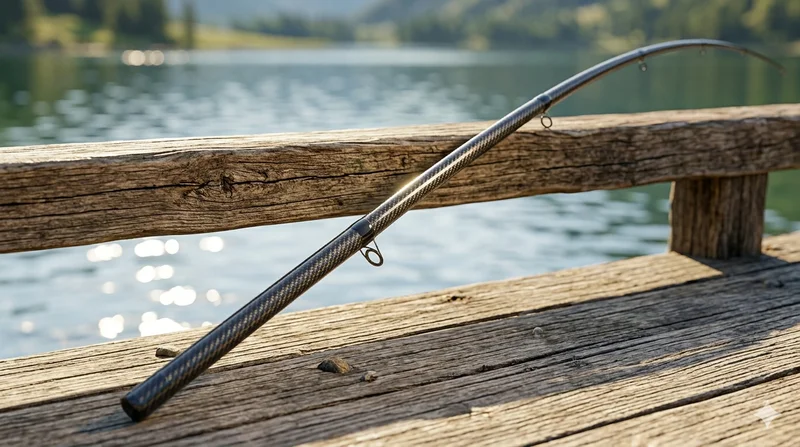
Carbon Fiber Fishing Rod Blank
High-quality carbon fiber fishing rod blank manufactured from multiple grades of Toray carbon fiber cloth. Available in a wide range of lengths, powers, and actions for freshwater and saltwater applications. Suitable for OEM rod building.

Carbon Fiber Plate — 3K Twill T700 3.0mm
Medium-thickness 3.0mm carbon fiber plate offering significantly higher load capacity while maintaining attractive 3K twill finish. Suitable for structural brackets, reinforcement plates, and load-bearing panels.

Carbon Fiber Plate — 3K Twill T700 1.5mm
Thin 1.5mm carbon fiber plate with 3K twill weave surface. Lightweight and stiff, commonly used for covers, panels, drone bodies, and applications requiring a premium aesthetic appearance.
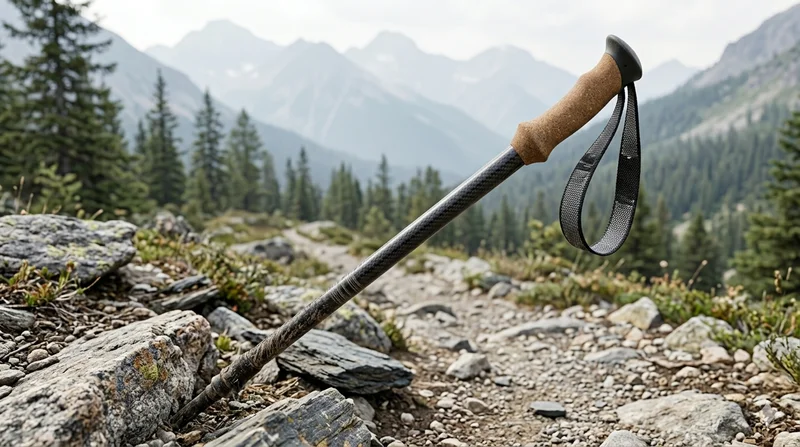
Carbon Fiber Trekking Pole
Lightweight carbon fiber trekking pole manufactured from high-grade carbon fiber tube. Weighs only 160g per pole while providing superior shock absorption and durability for hiking, trail running, and backpacking.

Square Carbon Fiber Tube — 3K Twill T700
Square cross-section carbon fiber tube manufactured with 3K twill weave for torsional strength. Preferred for structural frames, trusses, and support columns where rectangular geometry offers design flexibility.