
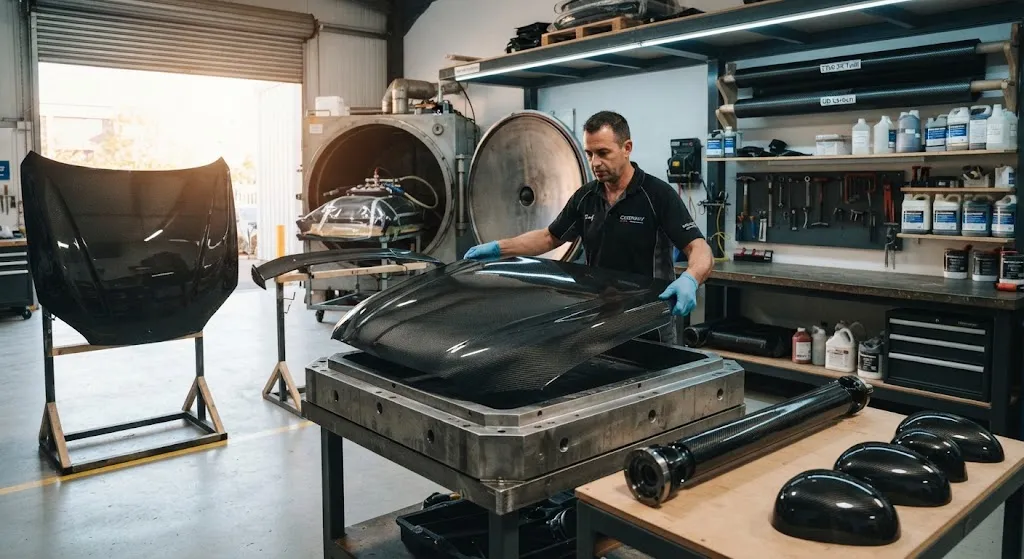
Carbon fiber parts for cars are composite components manufactured from woven carbon fiber fabric impregnated with epoxy resin and cured under heat and pressure. The material offers tensile strength of 3,500-6,000 MPa in the fiber direction at a density of only 1.6 g/cm³, which gives it a strength-to
Introduction
Carbon fiber parts for cars are composite components manufactured from woven carbon fiber fabric impregnated with epoxy resin and cured under heat and pressure. The material offers tensile strength of 3,500-6,000 MPa in the fiber direction at a density of only 1.6 g/cm³, which gives it a strength-to-weight ratio roughly five times that of steel and three times that of aluminium. For enthusiasts, tuners and OEM engineers alike, carbon fiber parts for cars deliver the same reduction in unsprung mass and body weight that was once reserved for Formula 1 and supercar programs.
This guide explains how carbon fiber car parts are made, which parts give the biggest weight savings, what the parts cost, and how to verify quality when comparing suppliers.
How Carbon Fiber Car Parts Are Manufactured
The manufacturing route determines the strength, surface quality and price of carbon fiber parts for cars. The four dominant processes are:
- Prepreg autoclave: pre-impregnated carbon fabric is laid into a mold, vacuum-bagged and cured in an autoclave under pressure. Highest strength and best surface finish; used for OEM and motorsport parts.
- Resin transfer molding (RTM): dry fabric is placed in a closed mold and epoxy is injected under pressure. Good production rates with strong, void-free parts; common for medium-volume runs.
- Compression molding: chopped carbon fiber or sheet molding compound is pressed in heated dies. Lower cost, shorter cycle times; suited to interior trims and semi-structural parts.
- Dry carbon layup: hand-laminated fabric is vacuum-bagged and cured at room temperature or in an oven. Used for custom one-off panels and repairs; finish depends heavily on the laminator's skill.
Each process yields a real carbon fiber part, but the mechanical properties and price differ by an order of magnitude. A prepreg hood and a compression-molded trim panel are both carbon, yet only the prepreg part is structural.
Which Parts Give the Biggest Weight Savings
Weight saved in rotating and unsprung components has a multiplied effect on handling, braking and acceleration. The table below shows typical weight savings for common carbon fiber parts for cars compared with the standard steel or aluminium component.
| Part | Stock Material | Carbon Fiber Weight | Weight Saved | Effect |
|---|---|---|---|---|
| Hood (bonnet) | Steel, 18-22 kg | 6-9 kg | 55-65% | Lower nose weight, better turn-in |
| Roof panel | Steel, 15-18 kg | 5-7 kg | 55-65% | Lower center of gravity |
| Rear spoiler | ABS / fibreglass, 4-6 kg | 2-3 kg | 40-50% | Less tail weight, real downforce |
| Drive shaft | Steel, 8-10 kg | 3-4 kg | 55-65% | Less driveline inertia, faster revs |
| Brake ducts | Plastic, 1-2 kg | 0.5-1 kg | 40-50% | Reduced unsprung mass |
For a typical sports sedan, replacing the hood, roof, trunk lid and drive shaft with carbon fiber removes 40-60 kg — roughly the weight of a passenger — while increasing torsional rigidity where the roof panel is replaced. That is why a well-executed carbon fiber parts package changes lap times and fuel economy at the same time.
Structural vs. Cosmetic Carbon Fiber Parts
Buyers evaluating carbon fiber parts for cars often encounter two very different product categories. Structural parts — hoods, roofs, diffusers and drive shafts — carry real loads and must be manufactured with engineered layups, autoclave or RTM curing, and documented strength. Cosmetic parts — mirror caps, interior trims, pillar covers — are usually made with cheaper wet-lay or compression processes and are safe because they carry almost no load. The distinction matters because a cosmetic part priced like a structural part is a bad deal, while a structural part built with cosmetic processes is a safety risk. Ask the supplier which process was used and whether the part is load-bearing before comparing prices.
| Category | Typical Process | Price Range (per part) | Fit Standard |
|---|---|---|---|
| Cosmetic trim (mirror caps, pillars) | Wet layup / compression | $50-250 | Visual fit, light duty |
| Panels (hoods, trunks, spoilers) | Prepreg or RTM | $400-2,000 | OEM-fit with hardware |
| Structural (shafts, arms, cages) | Autoclave prepreg / RTM | $1,000-5,000+ | Engineered, load-tested |
The price bands above are indicative for carbon fiber parts for cars in 2026; a part's value should be judged by process, fiber quality and testing, not by price alone.
Wet Carbon vs. Dry Carbon: What Buyers Should Know
Two surface finishes dominate the market. Wet carbon parts are made from pre-preg or wet-laminated fabric and then clear-coated, producing a glossy, deep-looking weave that is the classic motorsport aesthetic. Dry carbon parts are cured without a final gel coat and show a matte, textured weave; they are lighter and preferred in motorsport because the visible weave allows surface inspection for delamination. Wet carbon is more common in road-car styling parts because it looks richer under showroom light and hides minor surface imperfections. Neither finish indicates strength by itself — the layup schedule and curing process determine that.
Cost Expectations and Total Installed Price
The price of carbon fiber parts for cars scales with process and size. A cosmetic mirror cap may cost $50-150, while a full prepreg hood for a modern sports car typically runs $800-2,000 and a carbon drive shaft $900-1,800. To that price, add fitment work: panel gaps, hood pins or latch modifications, and paint matching if the part is not left exposed. Buyers comparing suppliers should also ask about UV protection — exposed carbon fiber degrades and yellows in sunlight unless the clear coat contains UV inhibitors. A slightly more expensive part with a proper UV-stable clear coat is cheaper over five years than a bargain part that needs refinishing.
Quality Checks Before You Buy
Whether you buy online or from a fabricator, run the same checks before ordering carbon fiber parts for cars:
- Weave and surface: inspect the weave for distortion, pin-holes and dry spots; a good part has uniform weave with no exposed fiber ends.
- Process documentation: ask whether the part is prepreg, RTM or wet-lay, and whether it is structural or cosmetic.
- Weight verification: weigh the delivered part against the stated weight; a carbon fiber part that is unexpectedly heavy suggests a thick resin layer, not more fiber.
- Fit trial: structural panels need a test fit; slight warpage is common in cheap molds and ruins panel gaps.
- UV protection: confirm the clear coat contains UV inhibitors if the part will see sunlight.
A reputable supplier answers all five without hesitation and provides photos of the mold and layup process on request.
Frequently Asked Questions
How much weight can carbon fiber parts for cars really save?
Realistic savings are 40-65% per replaced body panel and 50-65% for rotating parts like drive shafts. A full exterior package on a typical sedan removes 40-60 kg, and a carbon drive shaft also cuts driveline inertia, which improves throttle response. Cosmetic trim saves little weight but reduces visual mass. The exact figure depends on the original part's material and the carbon part's layup quality.
Are carbon fiber car parts safe for road use?
Yes, when they are manufactured with the correct process for their function. Structural parts such as hoods, roofs and drive shafts must be built with engineered layups and proper curing to carry loads reliably, and they should be installed with the correct hardware. Cosmetic parts carry negligible load. Buy from suppliers who state the process and load rating, and have structural parts inspected if you are unsure of the build quality.
Why is carbon fiber so much more expensive than fibreglass?
Carbon fiber costs 10-20 times more per kilogram than fibreglass, and the fabric, tooling and autoclave or RTM processing add further cost. The premium buys three things: roughly double the stiffness, a strength-to-weight ratio that fibreglass cannot approach, and the distinctive woven look. For weight-critical structural parts the cost is justified; for purely cosmetic parts, fibreglass with a carbon-look finish is often the pragmatic choice.
Conclusion
Carbon fiber parts for cars deliver the largest weight savings in body panels and rotating components, and the quality of the result depends on the manufacturing process, fiber quality and installation. Decide which parts are structural and which are cosmetic, verify the process and UV protection before buying, and compare suppliers on documentation rather than price alone. The right supplier will tell you exactly how a part is made and what it is rated for.
YongXian manufactures carbon fiber automotive parts including hoods, spoilers, drive shafts and custom panels with prepreg and RTM processes. View our carbon fiber product range or request a quote with your vehicle model and part list.
Related Articles
- Carbon Fiber Plate Amazon: Complete Guide
- Carbon Fiber And PU Case: Complete Guide
- Carbon Fiber Manufacturing Companies: Complete Guide
- Carbon Fiber Parts Manufacturing: Complete Guide
- Carbon Fiber Sheets for Sale: A Buyer Checklist for Thickness, Weave and Finish
- Carbon Fiber Plate Running Shoes: Manufacturing Process and Material Specifications
Interested in Our Products?
Contact our team for competitive pricing and technical specifications.
Get a QuoteRelated Products

Carbon Fiber Plate — 3K Twill T700 3.0mm
Medium-thickness 3.0mm carbon fiber plate offering significantly higher load capacity while maintaining attractive 3K twill finish. Suitable for structural brackets, reinforcement plates, and load-bearing panels.

Carbon Fiber Plate — 3K Twill T700 1.5mm
Thin 1.5mm carbon fiber plate with 3K twill weave surface. Lightweight and stiff, commonly used for covers, panels, drone bodies, and applications requiring a premium aesthetic appearance.

Square Carbon Fiber Tube — 3K Twill T700
Square cross-section carbon fiber tube manufactured with 3K twill weave for torsional strength. Preferred for structural frames, trusses, and support columns where rectangular geometry offers design flexibility.
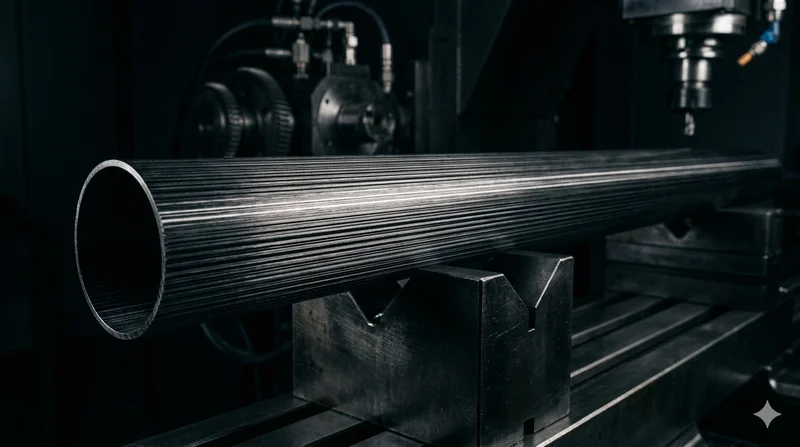
Round Carbon Fiber Tube — UD Unidirectional T700
Unidirectional (UD) round tube with all fibers aligned axially for maximum longitudinal stiffness. Ideal for applications requiring high bending rigidity with minimal weight, such as shafts, struts, and structural reinforcements.
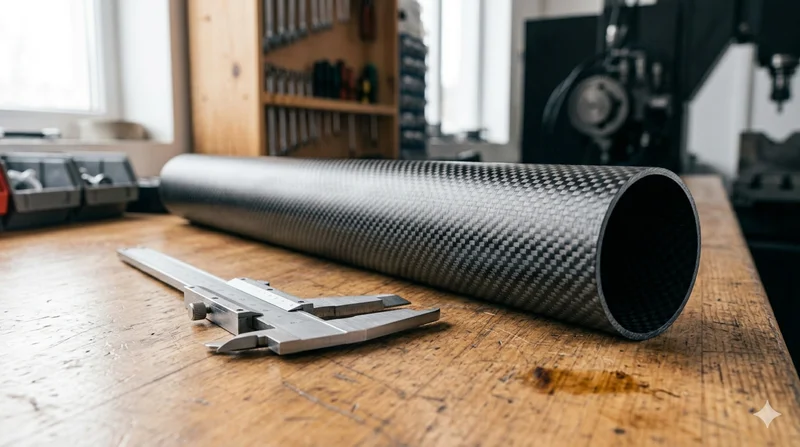
Round Carbon Fiber Tube — 3K Plain Weave T700
Standard round carbon fiber tube manufactured from Toray T700 grade fiber with 3K plain weave. Offers balanced strength and stiffness for general industrial applications including robotics, automation, sports equipment, and aerospace structures.