
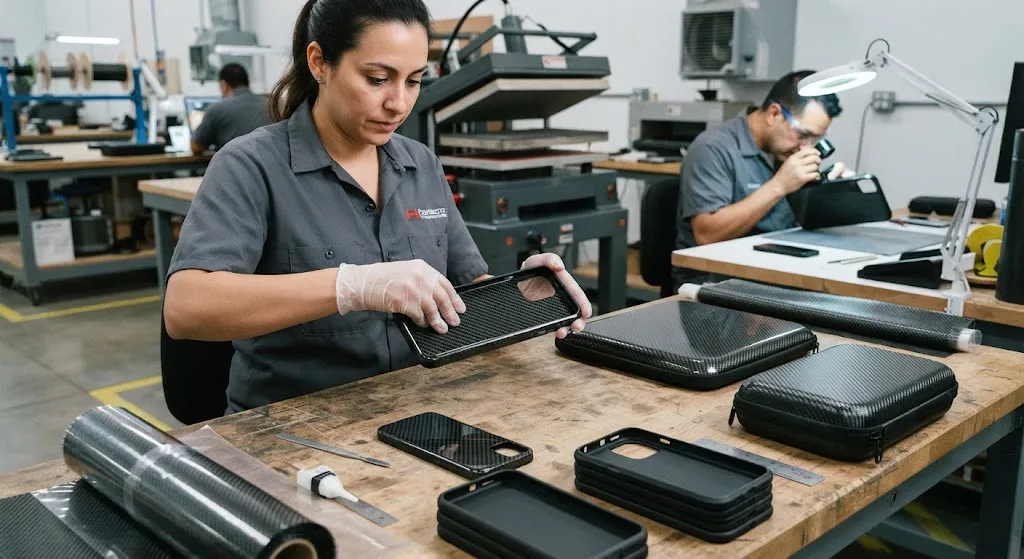
Carbon fiber and PU case products combine two materials with very different jobs: a carbon fiber layer supplies the woven, premium appearance and high stiffness, while a polyurethane (PU) shell underneath provides impact absorption, flexibility and a durable protective structure. This hybrid constru
Introduction
Carbon fiber and PU case products combine two materials with very different jobs: a carbon fiber layer supplies the woven, premium appearance and high stiffness, while a polyurethane (PU) shell underneath provides impact absorption, flexibility and a durable protective structure. This hybrid construction gives consumers the visual identity of carbon fiber — the deep black weave that signals performance and quality — at a price that full carbon fiber construction cannot reach, because the PU substrate costs a fraction of the carbon fiber prepreg. For buyers evaluating carbon fiber and PU case products, the important questions are how the layers are bonded, how durable the construction really is, and how the product compares with both full carbon fiber and plain PU alternatives.
This guide explains how carbon fiber and PU case materials are combined, how they perform in drop and scratch tests, and which quality factors matter when choosing a supplier.
How Carbon Fiber And PU Case Materials Are Combined
The manufacturing of a carbon fiber and PU case product starts with a carbon fiber layer — either a real woven fabric or a printed carbon-effect film — which is bonded to a PU substrate that is molded into the case shape. The three common constructions are:
- Carbon fiber fabric over molded PU: a thin real carbon fiber skin is laminated over a PU shell. Genuine weave texture, moderate cost, best visual authenticity.
- Carbon-effect film over PU: a printed or cast film reproduces the carbon weave pattern on the PU surface. Lowest cost, uniform pattern, commonly used for phone cases and laptop sleeves.
- Co-molded carbon fiber in PU: carbon fiber fabric is placed inside the PU mold and the PU is injected or cast around it, embedding the fiber in the structure. Highest strength of the three, used for protective cases and equipment.
All three are marketed as carbon fiber and PU case products, but the first and third contain real carbon fiber while the second is a visual treatment. Buyers should confirm which construction they are purchasing, because the difference affects both price and protection level.
Carbon Fiber And PU Case vs. Full Carbon Fiber vs. Plain PU
The three material options occupy different positions on the price-performance map. The table below compares them for a typical protective case application.
| Property | Carbon Fiber + PU Hybrid | Full Carbon Fiber | Plain PU |
|---|---|---|---|
| Typical price index | 2-4x plain PU | 8-15x plain PU | 1x (baseline) |
| Impact resistance | Good to excellent | Excellent but brittle under sharp impacts | Good |
| Flexibility | Good (PU core) | Rigid | Excellent |
| Weight | Moderate | Lightest | Light |
| Aesthetic appeal | Carbon look at moderate cost | Genuine carbon weave | Plain or printed |
| Durability of finish | Good with proper coating | Requires UV protection | Good |
Full carbon fiber is the lightest and stiffest, but it is expensive and can crack or shatter on sharp point impacts, which is why even premium cases rarely use it as the sole material. The carbon fiber and PU case hybrid captures the look and most of the stiffness while relying on the PU core to absorb impacts — a combination that usually offers the best balance of protection, weight and price for everyday protective products.
Performance in Real-World Use
Independent drop tests of carbon fiber and PU case phone cases typically show protection from drops of 1.5 to 3 meters onto hard surfaces, with the PU core absorbing the majority of the impact energy and the carbon layer resisting scratches and surface abrasion. The PU layer also gives the case the flexibility to grip the device firmly and to absorb torsion when the case is twisted or dropped at an angle. The weak point in hybrid construction is the bonding between the two layers: if the carbon skin delaminates from the PU shell, the case loses its structural benefit and can peel visibly. Quality suppliers control this with surface treatment of the PU before lamination and with edge wrapping, where the carbon layer folds around the rim of the case so it cannot lift at the corners.
Common Applications of Carbon Fiber And PU Case Products
Carbon fiber and PU case materials appear in products where protection and appearance both matter:
- Phone and tablet cases: the largest market, combining drop protection with a premium carbon look.
- Laptop sleeves and bags: thin PU foam cores with carbon-effect surfaces protect devices in transit.
- Camera and drone cases: semi-rigid shells with padded PU interiors and carbon exteriors.
- Protective equipment: cases for tools, instruments and medical devices where rigidity and impact resistance are required.
- Luggage and travel accessories: carbon-look hard shells that resist scuffs and scratches better than plain polycarbonate.
In each application the ratio of carbon to PU shifts: device cases use a thin carbon skin for aesthetics, while equipment cases use co-molded fiber for structural strength.
Quality Factors to Check When Buying
Not all carbon fiber and PU case products are equal. The quality differences hide in the details:
| Factor | What to Look For | Red Flag |
|---|---|---|
| Carbon layer type | Real carbon fabric stated in the spec | "Carbon look" or "carbon style" wording |
| Layer bonding | Edge-wrapped carbon, no visible peeling | Carbon film lifting at corners |
| PU density | Medium to high density, firm feel | Soft, spongy shell that deforms easily |
| Surface coating | UV-stable clear coat on the carbon layer | Yellowing or cloudy surface |
| Drop rating | Stated drop height with test method | No drop claim or vague "shockproof" |
Buyers ordering in volume should request samples and test drop performance themselves, because marketing claims vary widely between suppliers of carbon fiber and PU case products.
Cost Expectations and Supplier Selection
The price of carbon fiber and PU case products depends on construction type, case size and order volume. A phone case with a printed carbon-effect film may cost $5-15 at retail, a real carbon fiber skin phone case $20-60, and a co-molded equipment case $40-150 depending on size. For volume buyers, the unit price drops substantially at 500-1,000 unit orders, and mold costs for custom case shapes typically range from $2,000-8,000 depending on complexity. When evaluating suppliers, ask for the construction type, the carbon layer specification, and the drop test data — these three answers separate genuine hybrid products from printed imitations.
Frequently Asked Questions
Is a carbon fiber and PU case real carbon fiber?
It depends on the product. Some carbon fiber and PU case products use a genuine woven carbon fiber skin laminated over a PU shell, which is real carbon fiber. Others use a printed carbon-effect film that only looks like carbon fiber. Check the product specification: genuine carbon fiber will be described as carbon fiber fabric or weave, while printed versions use wording such as "carbon look" or "carbon style." If the spec is unclear, ask the supplier directly before purchasing.
How well do carbon fiber and PU cases protect against drops?
Quality carbon fiber and PU case products are typically rated for drops of 1.5 to 3 meters onto hard surfaces. The PU core absorbs most of the impact energy while the carbon layer protects against scratches and abrasion. The protection level depends on PU density and thickness, and the stated drop rating should always come with a test method. For comparison, plain PU cases usually rate 1 to 2 meters, so the hybrid construction offers a genuine improvement when built properly.
Will the carbon fiber layer peel off over time?
A well-made carbon fiber and PU case product will not peel in normal use. Quality suppliers treat the PU surface before lamination and wrap the carbon layer around the case edges, so it cannot lift at the corners. Products where the carbon layer is simply glued flat onto the surface can peel after months of use, especially at the edges and around cutouts. Inspect the edges and corners of a sample before ordering in volume.
Conclusion
Carbon fiber and PU case products deliver the premium carbon fiber appearance with the impact resistance and flexibility of polyurethane at a price that full carbon fiber cannot match. Confirm the construction type — real carbon fabric or printed film — check the layer bonding and drop rating, and request samples before committing to volume orders. The right supplier will be specific about the materials and testing behind the product.
YongXian manufactures carbon fiber materials and protective products with quality control and export documentation. View our carbon fiber product range or request a quote with your case size, material and quantity requirements.
Related Articles
- Carbon Fiber Plate Amazon: Complete Guide
- Carbon Fiber Parts For Cars: Complete Guide
- Carbon Fiber Manufacturing Companies: Complete Guide
- Carbon Fiber Parts Manufacturing: Complete Guide
- Carbon Fiber Sheets for Sale: A Buyer Checklist for Thickness, Weave and Finish
- Carbon Fiber Plate Running Shoes: Manufacturing Process and Material Specifications
Interested in Our Products?
Contact our team for competitive pricing and technical specifications.
Get a QuoteRelated Products

Carbon Fiber Plate — 3K Twill T700 3.0mm
Medium-thickness 3.0mm carbon fiber plate offering significantly higher load capacity while maintaining attractive 3K twill finish. Suitable for structural brackets, reinforcement plates, and load-bearing panels.

Carbon Fiber Plate — 3K Twill T700 1.5mm
Thin 1.5mm carbon fiber plate with 3K twill weave surface. Lightweight and stiff, commonly used for covers, panels, drone bodies, and applications requiring a premium aesthetic appearance.

Square Carbon Fiber Tube — 3K Twill T700
Square cross-section carbon fiber tube manufactured with 3K twill weave for torsional strength. Preferred for structural frames, trusses, and support columns where rectangular geometry offers design flexibility.
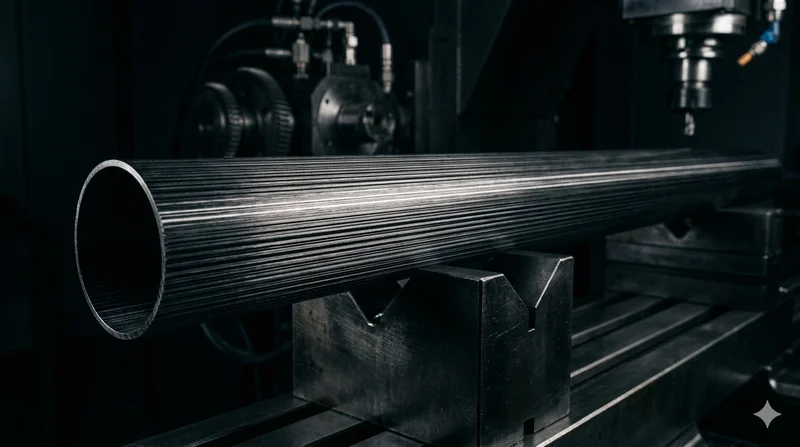
Round Carbon Fiber Tube — UD Unidirectional T700
Unidirectional (UD) round tube with all fibers aligned axially for maximum longitudinal stiffness. Ideal for applications requiring high bending rigidity with minimal weight, such as shafts, struts, and structural reinforcements.
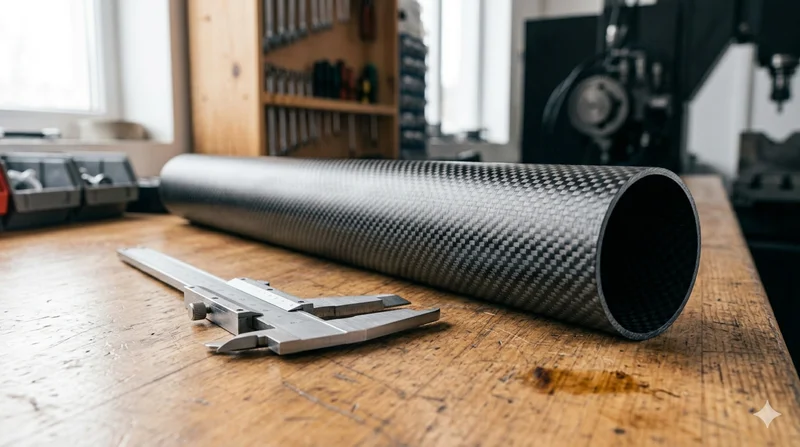
Round Carbon Fiber Tube — 3K Plain Weave T700
Standard round carbon fiber tube manufactured from Toray T700 grade fiber with 3K plain weave. Offers balanced strength and stiffness for general industrial applications including robotics, automation, sports equipment, and aerospace structures.