
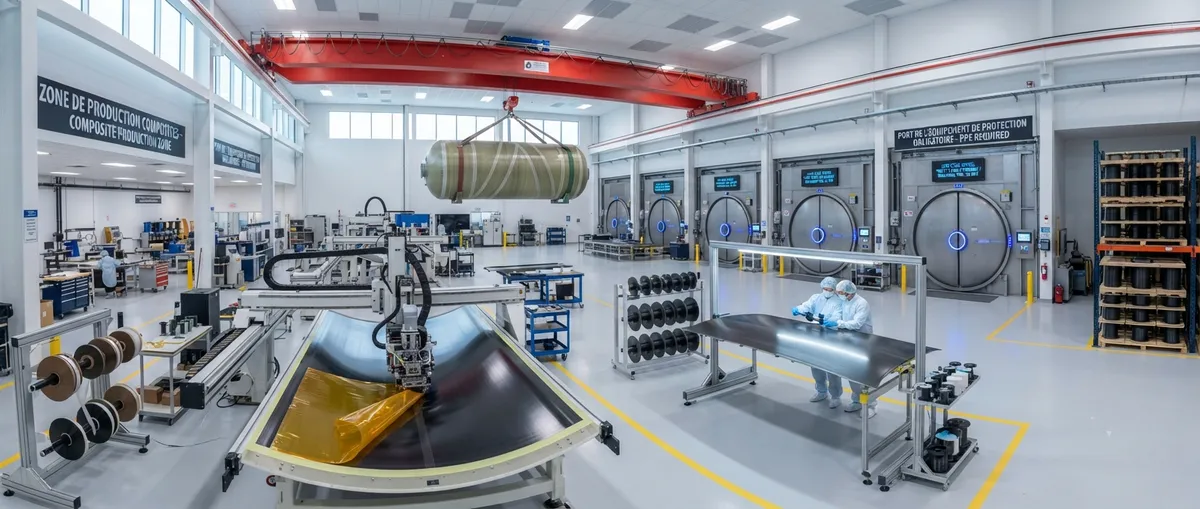
B2B analysis of the Canadian carbon fiber market in 2026: Québec aerospace corridor CFRP consumption, Type IV hydrogen pressure vessel manufacturing with 42-48 kg carbon fiber per unit, mining equipment applications including CFRP drill rods and slurry pipes, supply chain dynamics, certifications, and HS code trade data.
Canada's Carbon Fiber Market in 2026: Aerospace, Hydrogen Storage, and Mining Innovation
Canada occupies a pivotal position in the global carbon fiber supply chain. While not a top-tier PAN precursor producer (global leaders include Toray/Japan, Teijin/Germany-Japan, Hexcel/USA, and Zhongfu Shenying/China), Canada has built a vertically integrated CFRP ecosystem anchored by three strategic sectors: aerospace manufacturing concentrated in Qu�bec's Mirabel�Montr�al corridor, hydrogen storage and transport infrastructure driven by the emerging clean-hydrogen economy, and mining equipment innovation serving Canada's own resource extraction industry. In 2025, Canadian imports of carbon fiber and carbon fiber articles (HS 6815.11, 3921.90) reached approximately CAD 215 million, a 14.5% year-over-year increase, fueled primarily by aerospace OEM procurement and hydrogen pressure vessel contracts.
Market projections for 2026 estimate total Canadian CFRP consumption at 950�1,100 metric tons, with an estimated market value of CAD 280�330 million including value-added processing and distribution. Canada ranks among the fastest-growing carbon fiber markets in the OECD, driven by federal and provincial clean-technology incentives, the Strategic Innovation Fund (SIF) allocation of CAD 2.5 billion for advanced manufacturing over five years, and the growing interconnectedness of the USMCA aerospace supply chain.
Aerospace: The Qu�bec Composite Corridor
Canada's aerospace sector contributes CAD 24 billion annually to the national GDP and directly employs over 65,000 workers. The province of Qu�bec alone accounts for 58% of Canada's aerospace output, anchored by Bombardier, Pratt & Whitney Canada, CAE, and a dense network of Tier 1�3 suppliers in the Mont�r�al�Mirabel region. Carbon fiber composite usage in Canadian aerospace platforms has increased steadily:
| Program / Platform | CFRP Content (% structural weight) | Key CFRP Components | Prepreg System | Annual CFRP Volume (est.) |
|---|---|---|---|---|
| Bombardier Global 7500/8000 | 42% | Wing, fuselage panels, empennage | HexPly M21E/IMA | 48,000 kg |
| De Havilland Dash 8-400 (composites) | 18% | Engine nacelles, fairings, floor panels | Cycom 5276-1 | 6,500 kg |
| Bell 429/525 helicopters | 35% | Tail boom, doors, cabin shell | Torayca P7052S-3 | 12,000 kg |
| Pratt & Whitney GTF engine components | 22% | Fan blades, nacelle components | HexPly 8552/AS4 | 28,000 kg |
| Viking Air (de Havilland Canada) CL-515 | 15% | Wing-to-body fairings, radome | Cycom 970/T300 | 3,200 kg |
The National Research Council Canada (NRC) Industrial Research Assistance Program (IRAP) has funded over CAD 40 million in composite-process R&D since 2022, including automated fiber placement (AFP) cell development at the Canadian Composites Manufacturing R&D Centre in St�-J�r�me, Qu�bec. Key manufacturing challenges specific to the Canadian aerospace context include:
- Cold-weather prepreg handling: Extended winter transport exposure requires cold-chain logistics validated to �20�C for prepreg shelf-life preservation.
- NDT certification for Canadian military platforms: Transport Canada and DND specifications for phased-array ultrasonic testing (PAUT) of CFRP primary structures impose minimum 95% defect detection probability at 1.5 mm flat-bottom hole sensitivity.
- Supply chain resiliency: The 2024 carbon fiber shortage triggered by global auto OEM demand led to 14�18 week lead times for Toray T700 grade, prompting Canadian Tier-1 suppliers to dual-source with HexTow IM7 and Zhongfu Shenying SYT55.
- Automated fiber placement qualification: AFP heads for complex-curvature fuselage panels require CNC programming tolerances of �0.05�, with in-situ consolidation verified by infrared thermography at a rate of 2 m�/min.
Hydrogen Storage: Type IV Carbon Fiber Composite Pressure Vessels
Canada's hydrogen strategy, backed by over CAD 5 billion in federal and provincial investment through 2030, has created a rapidly growing demand for Type IV carbon fiber composite pressure vessels (CPVs) rated at 350 bar (trailer transport) and 700 bar (vehicle onboard storage). The CFRP CPV market in Canada is projected to grow from CAD 62 million in 2024 to CAD 185 million by 2028, at a CAGR of 31.2%.
Type IV vessels consist of a polymer liner (typically high-density polyethylene or polyamide) fully overwrapped with continuous carbon fiber filament winding impregnated with an epoxy resin system. For a 700-bar, 180-liter Type IV CPV (the standard used in heavy-duty fuel-cell truck applications), the carbon fiber reinforcement accounts for 65�70% of the vessel material cost, consuming approximately 42�48 kg of high-tensile carbon fiber (Toray T700SC, Tenax STS40, or equivalent) per unit. Major hydrogen infrastructure corrider projects driving demand include:
- Hydrogen Highway BC: A network of 10 hydrogen refueling stations along the Vancouver�Prince George corridor, requiring an estimated 3,500 Type IV CPVs for tube-trailer storage.
- Qu�bec�Germany Transatlantic Hydrogen Supply Chain: A partnership between Hydro-Qu�bec, the Port of Rotterdam, and H2Global to ship liquid hydrogen (HDLH 4 cryogenic + composite conversion) starting 2028, requiring storage buffers of 1,200 m� of compressed H2 in CFRP-bundled containers.
- Alberta Carbon Fibre and Hydrogen Hub: A CAD 1.3 billion project integrating coal-to-hydrogen with carbon fiber precursor production using pitch-based precursors (direct coal-extraction route) developed by the Alberta Innovates Carbon Fibre Grand Challenge.
| Application | Pressure Rating | CFRP Mass per Vessel | Tensile Strength Required | Projected Annual Volume (Canada, 2026) |
|---|---|---|---|---|
| Heavy-duty fuel cell truck (onboard) | 700 bar | 44 kg | 4,900 MPa minimum | 6,200 vessels |
| Tube-trailer hydrogen transport | 350 bar | 28 kg | 4,200 MPa minimum | 3,800 vessels |
| Stationary hydrogen refueling buffer | 500 bar | 36 kg | 4,550 MPa minimum | 2,100 vessels |
| Marine hydrogen fuel storage (ferry) | 350 bar | 52 kg | 4,200 MPa minimum | 950 vessels |
Canadian filament-winding specialists including 3D Composites (Calgary), Cevotec (St-Bruno), and the University of British Columbia's Clean Energy Research Centre have developed automated tow-preg deposition heads capable of winding pressure vessels at 120 kg/hour with winding-pattern accuracies of �0.15�, significantly improving production economics. The economics of Type IV CPV manufacturing in Canada benefit from the recent Canada�USMCA Advanced Manufacturing Hub designation for the Qu�bec�Vermont hydrogen corridor, which reduces cross-border tariffs on Toray and Hexcel carbon fiber imports from 3.7% to 0% under USMCA rule-of-origin provisions.
Mining Equipment: CFRP in Canadian Mineral Extraction
Canada's resource extraction industry, accounting for 4.3% of national GDP (CAD 97 billion in 2025), has adopted carbon fiber composites at an accelerating pace for three critical applications: drill rod assemblies, slurry handling components, and heavy equipment structural retrofits. Canada operates 137 active metal mines (gold, copper, nickel, iron ore, zinc) and 59 non-metallic mineral mines, concentrated in Ontario, British Columbia, Qu�bec, and the Northwest Territories.
- Carbon fiber drill rods for deep exploration: Conventional steel drill rods for diamond-core exploration drilling weigh 8�12 kg per 3-meter section, limiting the depth achievable from helicopter-portable rigs. CFRP drill rods (pultruded unidirectional carbon fiber with a polyamide or PEEK matrix) provide a 60�75% weight reduction while maintaining equivalent torsional stiffness. Canadian drill-rod manufacturer CFF Drilling Equipment (Sudbury, Ontario) reports that DeepEx 4500 CFRP rods have enabled drill depths of 2,100 meters in the Ring of Fire chromite deposit, compared to a practical maximum of 1,200 meters with steel rods on the same heli-portable platform.
- Slurry piping and pump components: Mining slurry (crushed ore mixed with water and process chemicals) is highly abrasive, with typical erosive wear rates of 3�6 mm/year on carbon-steel piping. Carbon fiber epoxy composite pipe (filament-wound or hand layup with a ceramic-filled wear liner) reduces erosion wear rates to 0.2�0.5 mm/year, extending service intervals from 8�12 months to 3�5 years. The Syncrude Oil Sands operation (Fort McMurray, Alberta) has converted 2,100 m of hydrotransport slurry line to CFRP construction since 2023, reporting a 73% reduction in maintenance downtime and a projected 12-year service life versus 4�5 years for steel.
- Heavy equipment lightweighting: CFRP replacement of steel boom arms, bucket components, and counterweights on underground load-haul-dump (LHD) vehicles, with a 30�45% mass reduction, improves fuel efficiency by 18�25% and reduces tire wear. The Norcat Mine (Sudbury) has deployed four Tamrock EJC 180 LHD units with CFRP bucket assemblies and reported a 22% increase in payload capacity in development drifts.
| Application | Material Replaced | Weight Reduction | Wear Life Improvement | ROI Payback Period |
|---|---|---|---|---|
| CFRP drill rods (1,500 m depth) | Steel | 65% | 2.5x longer fatigue life | 14 months |
| Slurry pipe (DN300, 1 km length) | Carbon steel | 75% | 6x service life extension | 28 months |
| LHD bucket assembly | Hardox 400 steel | 42% | 3x wear-surface endurance | 18 months |
| Conveyor roller covers | Steel / polyurethane | 55% | 2x corrosion resistance | 22 months |
Frequently Asked Questions
Which Canadian industries are the largest consumers of carbon fiber composites?
Aerospace is currently the largest consumer, accounting for approximately 42% of Canadian CFRP consumption by volume, followed by hydrogen storage infrastructure (24%), mining equipment (15%), automotive (10%), and construction/wind energy (9%). The Qu�bec aerospace corridor alone processes an estimated 120,000 kg of carbon fiber prepreg annually for OEM programs including Bombardier Global series and Pratt & Whitney engine nacelles.
What are the lead times for carbon fiber shipments to Canadian buyers in 2026?
Lead times for standard-grade carbon fiber (Toray T700SC, HexTow IM7, Zoltek PX35) to Canadian ports range from 8�12 weeks for standard orders (5�10 mt) to 16�20 weeks for aerospace-grade intermediates (M21E prepreg, 8552 film adhesive). The Canada Border Services Agency (CBSA) customs processing for USMCA-qualified carbon fiber enters at 0% duty; non-qualified material from Asia attracts 3.7% MFN tariff. Canadian distributors such as Composites Canada (Mississauga) and FibreGlast (Qu�bec) maintain warehoused stock of Toray T700SC 12K at CAD 42�48/kg for standard 24K tow.
What are the key regulatory certifications required for CFRP products sold in Canada?
Certifications vary by sector: aerospace CFRP must comply to Transport Canada Civil Aviation (TCCA) Part 25/27/29 via the NTA 1001 (Notice of Technical Achievement) or DAO (Design Approval Organization) delegation. Hydrogen CPVs require CSA B51:23 (Boiler, Pressure Vessel, and Pressure Piping Code) plus Transport Canada TDG (Transportation of Dangerous Goods) classification for 700-bar vessels. Mining equipment CFRP falls under CSA S16 (steel structures, adapted for composites) and provincial mine safety regulations (MSHA-equivalent Part 13 of Ontario Reg. 854 for underground use). Fire-resistance ratings per CAN/ULC-S102 apply for CFRP used in underground mine escapeways.
Part of topic
Related Articles
- Recycled Carbon Fiber Market Forecast 2030: Technology Maturity and Commercialization Path
- South Korea Carbon Fiber Market 2026: Hydrogen Economy and Shipbuilding Innovation
- Wind Turbine Blade Leading Edge Protection 2026: Polyurethane, Tape, and Metallic Shield Solutions
- China Carbon Fiber Overcapacity 2026: Price War Impact and Industry Consolidation
- India Carbon Fiber Market 2026: Wind Energy, Aerospace, and Defense Expansion
- PAN Precursor Market 2026: Acrylonitrile Supply and Carbon Fiber Cost Structure
Interested in Our Products?
Contact our team for competitive pricing and technical specifications.
Get a QuoteRelated Products
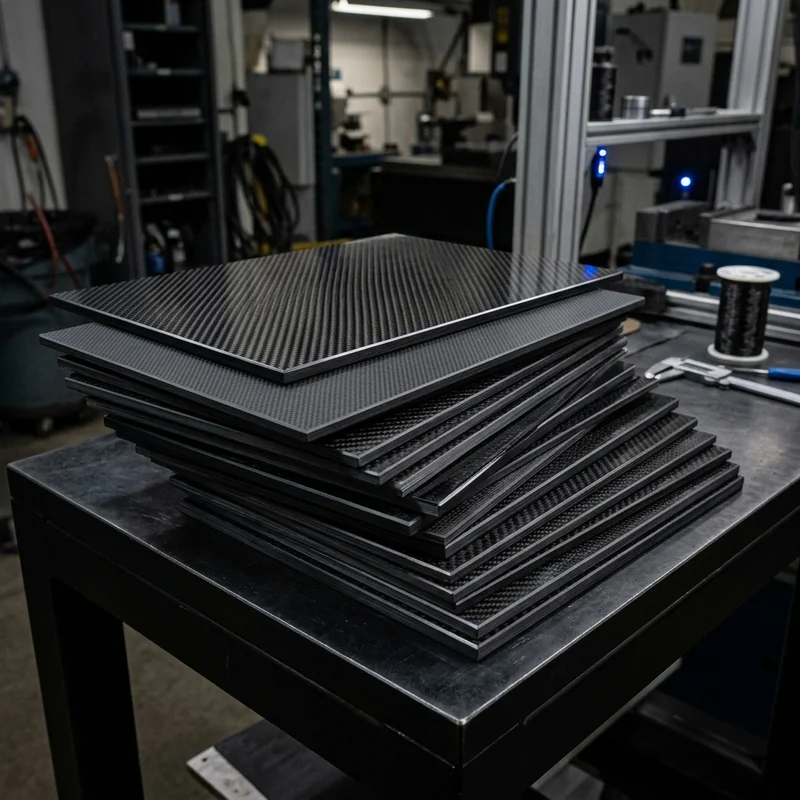
Carbon fiber standard plate-3k stripe
Lightweight, ultra-rigid standard sheets for drone fuselages, robot housings, facades and structural applications.

Carbon Fiber Plate — 3K Twill T700 3.0mm
Medium-thickness 3.0mm carbon fiber plate offering significantly higher load capacity while maintaining attractive 3K twill finish. Suitable for structural brackets, reinforcement plates, and load-bearing panels.

Carbon Fiber Plate — 3K Twill T700 1.5mm
Thin 1.5mm carbon fiber plate with 3K twill weave surface. Lightweight and stiff, commonly used for covers, panels, drone bodies, and applications requiring a premium aesthetic appearance.
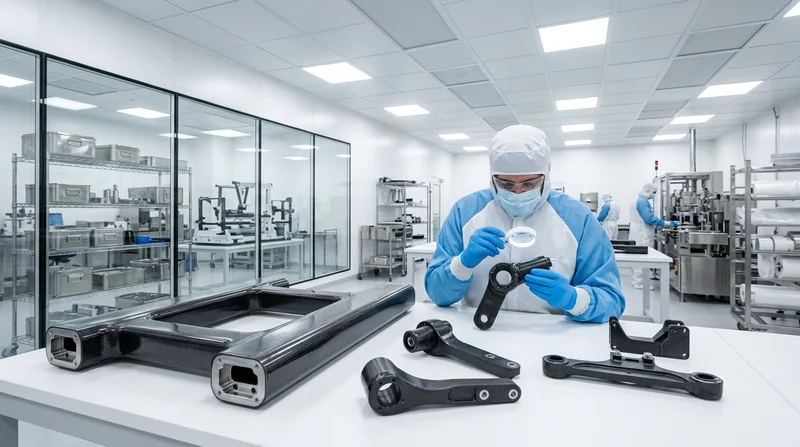
Custom Carbon Fiber Medical Device Components
Medical-grade carbon fiber components manufactured for imaging equipment, surgical instruments, and patient support systems. Carbon fiber's radiolucency (X-ray transparency) and high strength-to-weight ratio make it ideal for CT scanner beds, wheelchair frames, surgical robot arms, and MRI-compatible accessories. Biocompatible resin systems available.

Square Carbon Fiber Tube — 3K Twill T700
Square cross-section carbon fiber tube manufactured with 3K twill weave for torsional strength. Preferred for structural frames, trusses, and support columns where rectangular geometry offers design flexibility.