An in-depth analysis of Canada's carbon fiber composites market in 2026, examining Bombardier's aerospace demand, Montreal and Toronto aerospace clusters, and emerging applications in oil sands and mining operations.
# Canada Carbon Fiber Market 2026: Bombardier, Aerospace Clusters, and Natural Resource Sectors
Canada's carbon fiber composites market is experiencing a transformative period in 2026, driven by the convergence of aerospace manufacturing revitalization, natural resource sector expansion, and government-backed clean technology initiatives. With Bombardier's renewed focus on business aviation, the concentration of aerospace expertise in Montreal and Toronto, and the growing demand for lightweight materials in mining and energy extraction, Canada has emerged as a critical node in the global carbon fiber supply chain.
The Bombardier Factor
Bombardier's aerospace division, headquartered in Montreal—Quebec, remains the single most important industrial driver of advanced composites demand in Canada. The company's Global 7500 and forthcoming Global 8000 aircraft programs utilize carbon fiber reinforced polymer (CFRP) extensively in their wings, empennage, and fuselage sections. According to Bombardier's 2025 supplier report, each Global 8000 airframe incorporates approximately 4,200 kg of carbon fiber composite materials, representing roughly 65% of the structural weight.
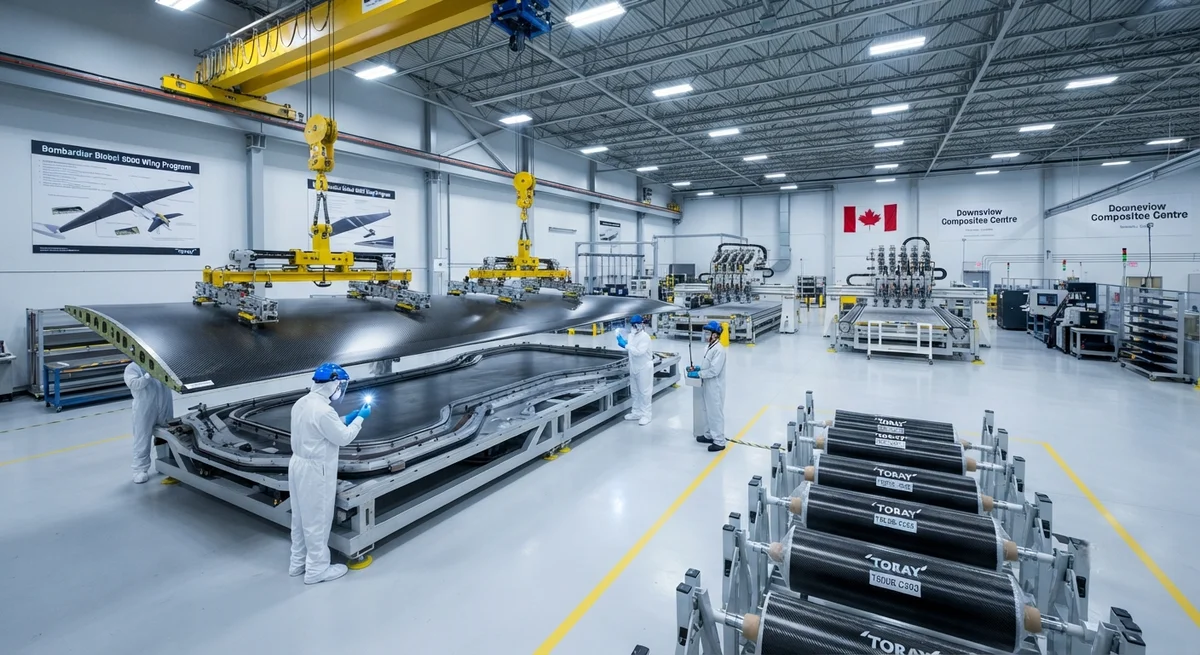
The Global 8000 wing, manufactured at Bombardier's Toronto facility, features a one-piece CFRP wing skin co-cured with integrated stringers—a process that eliminates over 8,000 mechanical fasteners compared to an equivalent aluminum assembly. The wing box alone consumes 1,850 kg of unidirectional prepreg tape, primarily Toray T800S intermediate-modulus fiber in a toughened epoxy matrix. Bombardier's production rate of 2.5 aircraft per week in 2026 translates to an annual CFRP consumption of approximately 5,460 metric tonnes across the Global family alone.
Beyond Bombardier, the Canadian aerospace supply chain includes major Tier 1 fabricators such as Magellan Aerospace, Héroux-Devtek, and Avcorp Industries, all of which have expanded their autoclave and automated fiber placement (AFP) capacity to support both domestic and export programs. Montreal's Aéroport International Montréal-Mirabel (YMX) zone now hosts seven AFP cells operating at 24/5 capacity, layering up to 45 kg of prepreg tow per hour—a 32% increase in deposition rate over 2022 baseline figures.
Table 1: Canadian Aerospace CFRP Consumption by Platform (2026 Est.)
| Platform / Program | Manufacturer | CFRP per Unit (kg) | 2026 Production (units) | Annual CFRP Use (tonnes) | Fiber Type |
| Global 8000 | Bombardier | 4,200 | 130 | 546 | Toray T800S / T1100G |
| Global 7500 | Bombardier | 3,800 | 100 | 380 | Toray T800S |
| A220 (wing components) | Airbus Canada | 1,200 | 78 | 93.6 | Hexcel IM7 / 8552 |
| CH-149 helicopter upgrade | Various | 680 | 16 | 10.9 | Solvay CYCOM 977-2 |
| De Havilland Dash 8-400 retrofit kits | Various | 420 | 22 | 9.2 | Toray T700SC |
Aerospace Clusters and Capability
The Montreal aerospace cluster (Aéro Montréal) comprises over 200 companies employing 42,000 workers, of which an estimated 8,500 are directly engaged in composites fabrication, design, or testing. The National Research Council Canada's Aerospace Manufacturing Technologies Centre in Montreal operates a 3.6 m × 12 m autoclave rated to 400°C and 2.1 MPa, providing pilot-scale processing validation for SMEs entering the aerospace composites supply chain.
Toronto's aerospace corridor, anchored by Bombardier's Downsview facility, De Havilland Field, and the University of Toronto Institute for Aerospace Studies (UTIAS), contributes another 6,200 composites-sector jobs. UTIAS operates the Centre for Multifunctional Composites, a 1,600 m² facility equipped with a 5-axis waterjet cutter, ultrasonic C-scan inspection tank (6 m × 3 m × 2 m), and a 1.5 MW microwave-assisted curing oven designed for out-of-autoclave processing of thick-section parts.
Key Advantages of Canadian Aerospace Composites Manufacturing:
- Proximity to raw materials: Canada is the world's third-largest producer of polyacrylonitrile (PAN), the precursor for 96% of global carbon fiber. Major chemical producers in Alberta and Ontario supply PAN precursor at 15–20% lower cost than Asian equivalents, reducing landed prepreg cost by €4–6/kg.
- Export-oriented certification: Transport Canada Civil Aviation (TCCA) composites certification pathways align with both FAA and EASA standards, allowing Canadian fabricators to dual-certify parts for North American and European OEMs without redundant testing.
- Automated deposition leadership: Canada hosts 14 of North America's 38 high-deposition-rate AFP/ATL cells (≥35 kg/hr deposition), concentrated in Quebec and Ontario, giving Canadian Tier 1s a 37% share of the continent's high-rate capacity.
- Workforce development: The Consortium de Recherche et d'Innovation en Aérospatiale au Québec (CRIAQ) funds composites-specific training programs that graduate 320 technicians annually, with a 93% job placement rate within 6 months.
- Cold-climate advantage: Canadian CFRP testing facilities offer naturally occurring extreme low-temperature (−40°C) validation environments, reducing the cost of cold-soak qualification testing by an estimated €8,000–12,000 per campaign compared to artificially conditioned chambers.
Natural Resource Sector Applications
Beyond aerospace, Canada's vast natural resource industries are increasingly adopting carbon fiber composites for infrastructure and equipment where weight reduction, corrosion resistance, and fatigue performance justify the premium over steel and aluminum.
The oil sands operations in northern Alberta have become a proving ground for CFRP pipeline repair systems. In 2025, a major operator deployed 22 km of carbon fiber-reinforced composite wrap (A & I Firestone M-Tank system) on corroded steel gathering lines in the Athabasca region. The wrap, consisting of a unidirectional carbon fiber fabric impregnated with a two-part epoxy, restores pressure ratings to 150% of original design specifications at a cost of CAD 280–350 per linear meter, versus CAD 600–900 per meter for pipe section replacement.
In mining, Teck Resources' Elk Valley operations in British Columbia have trialed CFRP conveyor bridge structures. A 42-meter CFRP-conveyor bridge installed in Q3 2025 weighs 14.2 tonnes—62% lighter than a steel equivalent—while supporting a 1,200 mm belt carrying 4,500 tonnes of coal per hour. The bridge, fabricated by anodized aluminum and carbon fiber truss design, eliminated the need for two intermediate support piers, reducing installation timeline from 14 weeks to 6 weeks.
FAQs
Q1: What is the current size of the Canadian carbon fiber composites market in 2026?
The Canadian carbon fiber composites market is estimated at CAD 1.85 billion in 2026, growing at a CAGR of 11.2% from 2022. Aerospace accounts for 52% of consumption by value, followed by automotive (18%), energy/industrial (16%), and marine/sporting goods (14%). Domestic carbon fiber production capacity stands at approximately 3,200 tonnes/year across two facilities, but Canadian fabricators import an additional 2,100 tonnes of imported fiber and prepreg to meet demand.
Q2: How does Bombardier's supply chain sourcing strategy affect international carbon fiber suppliers?
Bombardier sources CFRP materials through a multi-tier strategy: Toray Industries supplies unidirectional prepreg tapes and fabrics under a long-term agreement extending through 2031; Solvay provides film adhesives and surfacing films; and Hexcel supplies honeycomb core materials. Canadian-content requirements under the Industrial and Technological Benefits (ITB) policy mandate that 25–40% of composite structure value be produced domestically, which has driven Toray and Solvay to establish regional warehousing and slitting operations in Montreal. International suppliers benefit from Bombardier's preference for standard-grade intermediate-modulus fibers (T800S/M40J class), which allows them to allocate premium high-modulus production to defense and space programs without impacting Bombardier delivery schedules.
Q3: What are the key challenges facing CFRP adoption in Canadian mining applications?
The primary challenges are threefold. First, upfront material cost: CFRP conveyor structures cost 2.2–3.5× more than equivalent steel fabrications, requiring mine operators to accept payback periods of 4–7 years versus the 2–3 year ROI thresholds typical for mining capital expenditure. Second, impact resistance: CFRP structures in mining environments must withstand rockfall impacts with energies up to 400 J without delamination—a requirement that drives the use of hybrid carbon/aramid laminates that add 12–18% to part weight and 20–25% to material cost. Third, field repair logistics: remote mine sites lack autoclave infrastructure, necessitating out-of-autoclave repair systems such as vacuum-bag-only prepreg patches and room-temperature-cure wet layup systems, which achieve only 65–75% of original laminate strength and require FAA/CASR-compliant engineering approvals for each repair scenario before deployment.
Sources: Bombardier 2025 Supplier Report, Aéro Montréal Annual Composite Survey 2026, Natural Resources Canada Composites in Energy Report, Teck Resources 2025 Innovation Report, CRIAQ Workforce Statistics 2026.
Part of topic
Related Articles
- Recycled Carbon Fiber Market Forecast 2030: Technology Maturity and Commercialization Path
- South Korea Carbon Fiber Market 2026: Hydrogen Economy and Shipbuilding Innovation
- Wind Turbine Blade Leading Edge Protection 2026: Polyurethane, Tape, and Metallic Shield Solutions
- China Carbon Fiber Overcapacity 2026: Price War Impact and Industry Consolidation
- India Carbon Fiber Market 2026: Wind Energy, Aerospace, and Defense Expansion
- PAN Precursor Market 2026: Acrylonitrile Supply and Carbon Fiber Cost Structure
Interested in Our Products?
Contact our team for competitive pricing and technical specifications.
Get a QuoteRelated Products
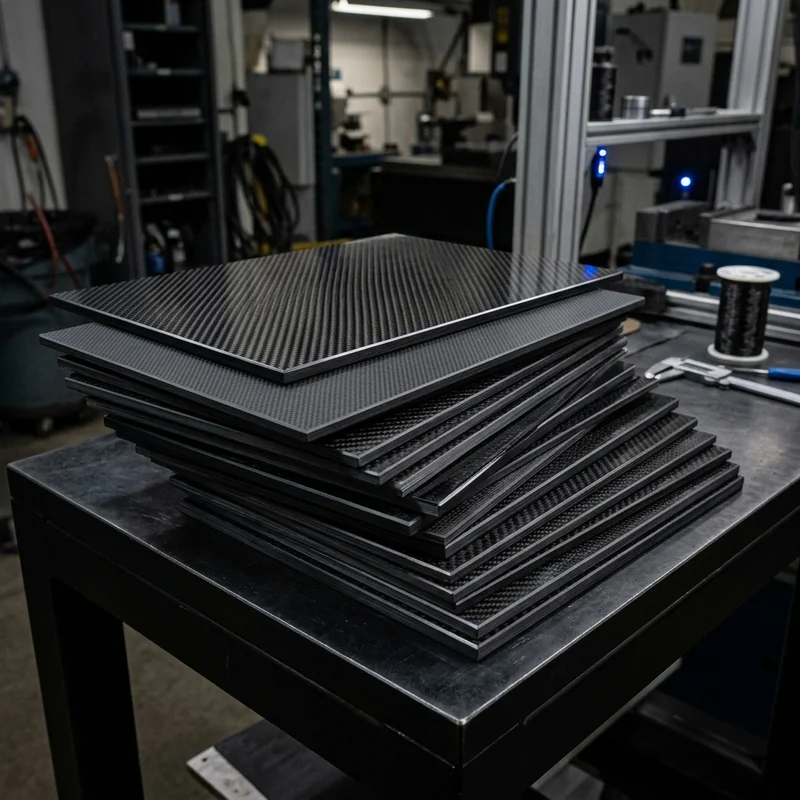
Carbon fiber standard plate-3k stripe
Lightweight, ultra-rigid standard sheets for drone fuselages, robot housings, facades and structural applications.
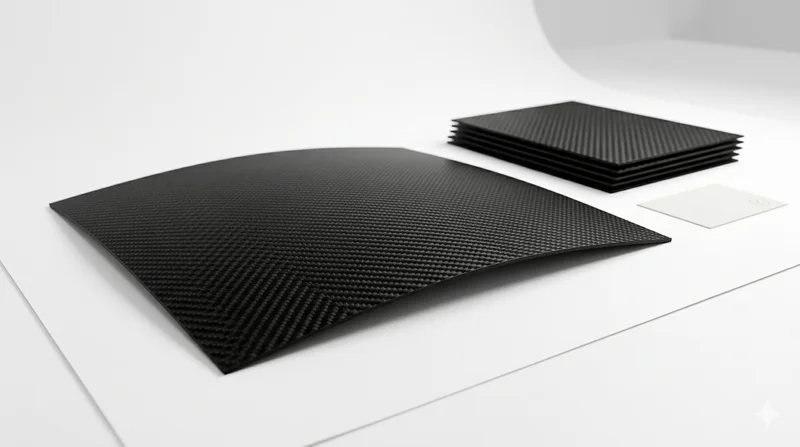
Carbon Fiber Plate — 3K Twill T700 1.5mm
Thin 1.5mm carbon fiber plate with 3K twill weave surface. Lightweight and stiff, commonly used for covers, panels, drone bodies, and applications requiring a premium aesthetic appearance.
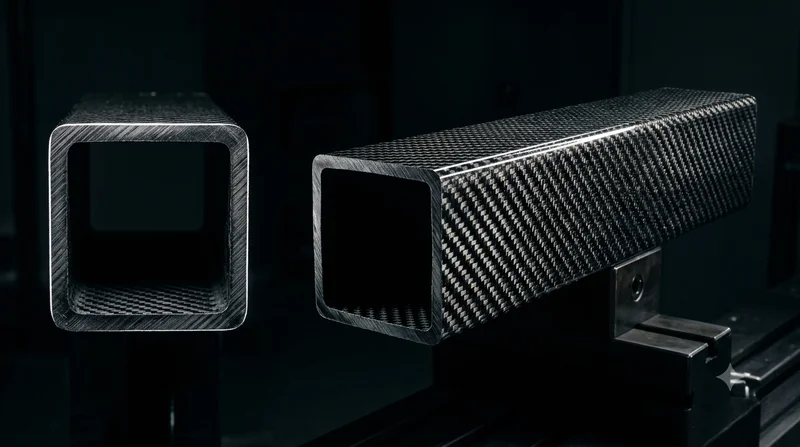
Square Carbon Fiber Tube — 3K Twill T700
Square cross-section carbon fiber tube manufactured with 3K twill weave for torsional strength. Preferred for structural frames, trusses, and support columns where rectangular geometry offers design flexibility.
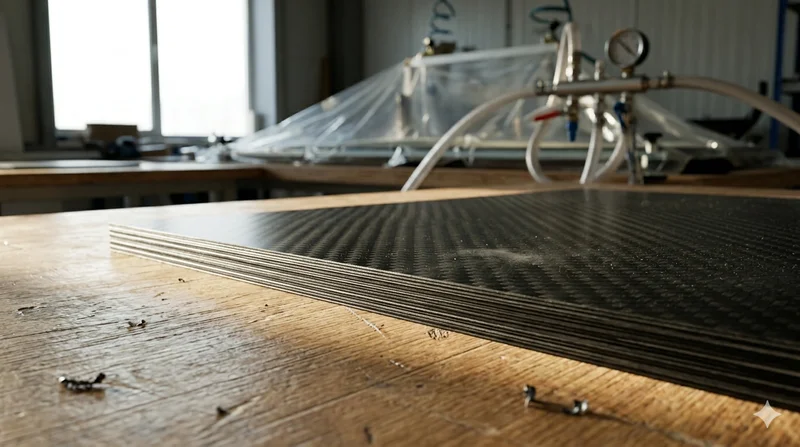
Carbon Fiber Plate — 3K Twill T700 3.0mm
Medium-thickness 3.0mm carbon fiber plate offering significantly higher load capacity while maintaining attractive 3K twill finish. Suitable for structural brackets, reinforcement plates, and load-bearing panels.
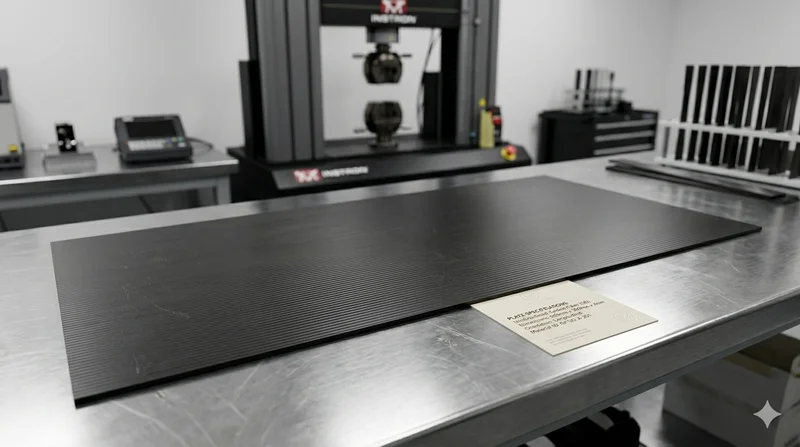
Carbon Fiber Plate — UD Unidirectional T700
Unidirectional carbon fiber plate with all fibers oriented in a single direction for maximum strength along the fiber axis. Essential for structural reinforcements, splints, and applications where load direction is predictable.