
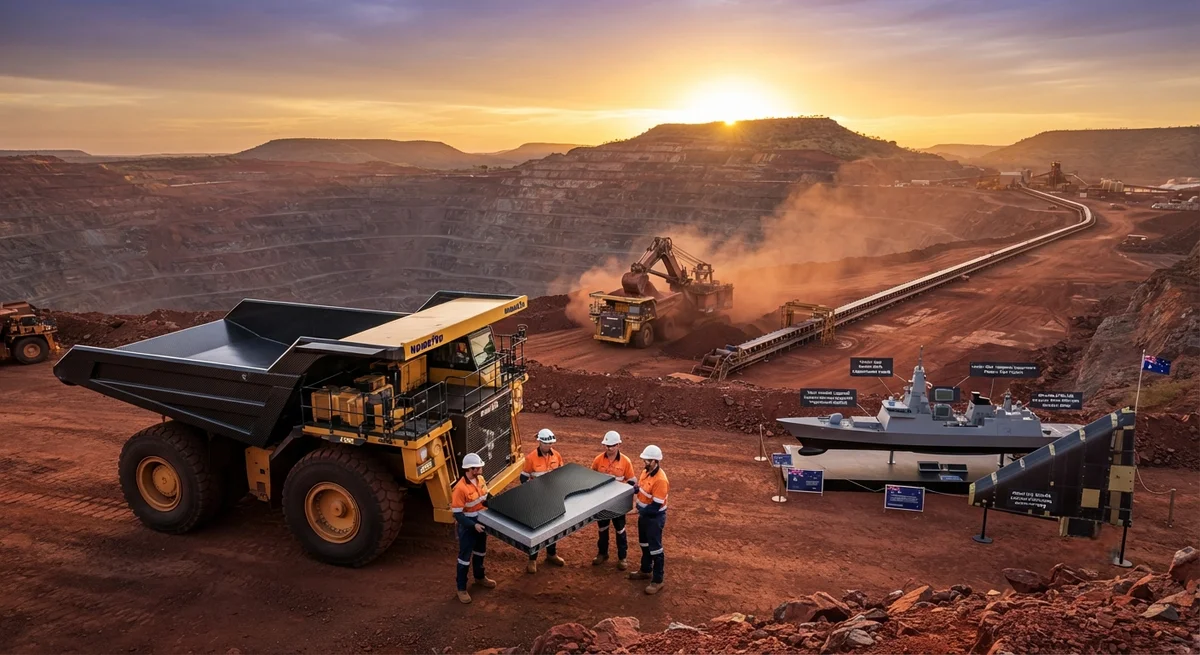
A market analysis of Australia's growing carbon fiber demand across mining, defense, and space sectors — with procurement volumes, key programs, and supply chain opportunities for international B2B suppliers.
Introduction: Australia's Emerging Carbon Fiber Market
Australia represents one of the fastest-growing carbon fiber markets in the Asia-Pacific region, with 2026 demand estimated at 2,400–2,800 metric tons — a compound annual growth rate of 15–18% since 2022. Unlike the mature composite markets of Japan, South Korea, and China, Australia's demand is driven by three distinctive industrial clusters: mining equipment and mineral processing, defense procurement under the AUKUS pact and $270 billion Defence Integrated Investment Program, and an emerging space launch sector. Each cluster imposes unique material requirements and quality standards that differentiate the Australian market from its Asian neighbors.
For international B2B carbon fiber suppliers, Australia presents both opportunities and challenges: high import dependence (over 80% of carbon fiber is imported), a strong premium on certification and traceability, and growing government preference for domestic processing. This article provides a detailed market breakdown by sector, examines key procurement programs, and identifies supply chain gaps for strategic entry.
Mining Equipment: The Largest Volume Driver
The Australian mining sector — the world's largest exporter of iron ore, metallurgical coal, and lithium — consumed an estimated 900–1,100 tonnes of carbon fiber composites in 2026, representing 38–42% of total national demand. Carbon fiber is increasingly replacing steel in mining equipment where weight reduction directly improves fuel efficiency, reduces structural loading on haul trucks, and extends component service life in corrosive and abrasive environments.
| Mining Application | 2026 Est. Demand (tonnes) | Primary Material Replaced | Weight Saving | Lifecycle Cost Reduction |
|---|---|---|---|---|
| Haul truck tray liners (CFRP sandwich panels) | 320–380 | Hardox 450 steel | 55–65% | 30–40% |
| Drill rod sections & boom arms | 180–220 | 4140 alloy steel | 60–70% | 25–35% |
| Conveyor roller covers & chute liners | 140–170 | Rubber/ceramic | 40–50% | 45–60% |
| Underground roof bolting systems | 100–130 | Steel rebar | 60–75% | 20–30% |
| Pipework for slurry transport | 80–100 | Steel / HDPE | 65–75% | 35–50% |
| Structural components (cable trays, platforms) | 80–100 | Galvanized steel | 50–60% | 25–35% |
| Total Mining | 900–1,100 | 55–68% avg | 30–45% avg |
Key Mining Procurement Programs
- BHP Iron Bridge project: CFRP slurry pipes and pump components specified for the new magnetite concentrator. 80+ km of CFRP-lined piping (50–300 mm diameter) installed since 2024, with a total project CFRP spend estimated at AUD 45–60 million through 2028.
- Rio Tinto autonomous haulage fleet: Conversion of 200+ haul trucks at Pilbara operations includes CFRP tray liners (reducing tray weight by 5–7 tonnes per truck, improving payload capacity by 8–12%) and CFRP access platforms.
- Fortescue Future Industries green hydrogen equipment: Electrolyzer frames, hydrogen storage vessels, and transport piping increasingly specify CFRP for corrosion resistance and weight reduction in the Pilbara green hydrogen hub.
- OEM dragline and shovel upgrades: Bucyrus and Komatsu have introduced CFRP boom arm sections for draglines and rope shovels, reducing boom weight by 8–12 tonnes and enabling larger bucket capacities without increasing structural load on the base machine.
Defense Procurement: AUKUS-Driven Growth
Australia's defense composite procurement is undergoing its most significant expansion since World War II, driven by the AUKUS nuclear submarine program, the $270 billion Defence Integrated Investment Program (2024–2034), and the acquisition of Virginia-class submarines, Hunter-class frigates, and Ghost Bat unmanned combat aircraft. Defense carbon fiber demand is projected to grow from 450–550 tonnes in 2026 to 1,000–1,300 tonnes by 2030.
| Defense Program | CFRP Application | Timeline | Est. CFRP Volume | Material Grade |
|---|---|---|---|---|
| Hunter-class frigate (9 vessels) | Superstructure panels, mast enclosures, sonar domes | 2024–2040 | 80–120 tonnes/vessel | IM7/M21, T700/MTM45-1 |
| Ghost Bat (MQ-28A) Loyal Wingman | Wing skins, fuselage, control surfaces | 2023–2030 | 180–230 kg/UAV | T800/3900-2, IM7/977-3 |
| Boxer CRV (211 vehicles) | Composite armor panels, turret structures | 2022–2030 | 2.5–3.5 tonnes/vehicle | S-2 Glass/CF hybrid, T700 |
| Submarine sonar arrays (Virginia + SSN-AUKUS) | Sonar window panels, acoustic baffles | 2026–2050 | 15–25 tonnes/sub | Specialty acoustic-grade CFRP |
Defense Certification Requirements
- Australian Defence Standard DEF(AUST)8140: Governing composite material qualification for defense applications. Requires material pedigree traceability to individual fiber batch, resin lot, and ply orientation verification via ultrasound C-scan.
- NADCAP (National Aerospace and Defense Contractors Accreditation Program): Mandatory for all composite processing facilities supplying AUKUS and Australian defense programs. Certification covers material receiving, layup, cure, NDT, and bonding processes.
- ITAR/EAR compliance: Carbon fiber intermediates (particularly IM and HM grades) destined for AUKUS programs face dual-use export controls under ITAR Category VIII as well as Australian Defence Export Controls. Suppliers must maintain documented compliance programs.
- Local content requirements: The Australian government has mandated 60% local content for Hunter-class frigate superstructure composite components, requiring international suppliers to establish in-country layup, machining, and assembly capabilities or partner with AQF-registered Australian composite manufacturers.
Space Launch: Emerging High-Performance Demand
Australia's space launch sector, centered at the Arnhem Space Centre (Equatorial Launch Australia) and the newly operational Southern Launch facility in South Australia, is creating demand for high-modulus carbon fiber for launch vehicle structures, satellite bus frames, and ground support equipment. Annual space-grade carbon fiber demand is modest — 50–80 tonnes in 2026 — but growing at 25–30% CAGR as Australian launch cadence increases from 4–6 launches in 2026 to a projected 20–30 by 2030.
- Gilmour Space Technologies: Developing the Eris orbital launch vehicle with CFRP propellant tanks, interstage structures, and payload fairings. The company uses a proprietary out-of-autoclave CFRP process for rapid production. Total CFRP consumption per vehicle estimated at 1,200–1,800 kg.
- Equatorial Launch Australia: Operating the Arnhem Space Centre with planned expansion to 40+ launches annually. Ground support equipment — transporter-erectors, umbilical towers, and launch pad structures — increasingly specify CFRP for corrosive tropical environment resistance.
- Hypersonics research (DART program): The Australian Defence Force's hypersonic vehicle development (joint with the US DOD) requires carbon-carbon composites and ultra-high-temperature CFRP for leading edges and nose cones capable of withstanding 2,000°C+ during Mach 5+ flight.
Supply Chain Opportunities for B2B Suppliers
Australia's 80%+ import dependence for carbon fiber creates multiple entry points for international B2B suppliers. Key gaps identified in the Australian market include:
- PAN precursor supply: No domestic PAN precursor production exists in Australia. All acrylic fiber precursor is imported from Japan (Mitsubishi Rayon, Toray) or China. A domestic PAN plant has been proposed but faces capital cost hurdles — estimated AUD 300–500 million for a 15,000-ton facility.
- Intermediate modulus fibers (IM7/IM10 class): Australian defense and space programs require IM-grade fibers that are currently entirely imported. East coast distribution hubs in Brisbane and Sydney would reduce lead times from 12–18 weeks (current) to 4–6 weeks.
- Prepreg manufacturing: Only two commercial prepreg lines operate in Australia (Adelaide and Melbourne), with combined capacity insufficient for projected 2028 defense demand. A new prepreg line investment (AUD 15–25 million) would fill a clearly identified gap.
- Recycling and waste processing: With 800+ tonnes of end-of-life mining CFRP expected annually by 2028, there are zero commercial CFRP recycling facilities in Australia, presenting a first-mover opportunity for pyrolysis or solvolysis operations.
Frequently Asked Questions
What carbon fiber grades are most in demand for Australian mining equipment?
The Australian mining sector predominantly uses standard-modulus T700S-class (230 GPa) carbon fiber in woven fabric form (200–600 gsm) for structural panels and trays, and unidirectional tape for drill rods and boom arms. Abrasion resistance is the critical differentiator — mining CFRP often requires wear-resistant surface treatments including tungsten carbide-infused epoxy topcoats, ceramic particle-filled matrix resins, or replaceable polyurethane wear pads bonded to carbon fiber substrates. The wet tropical conditions in Pilbara and Queensland operations demand resin systems with moisture resistance verified per ASTM D570 (≤0.5% water absorption after 24-hour immersion). For high-temperature mining applications (conveyor brake systems, dragline motor housings), bismaleimide (BMI) resin systems rated to 230°C continuous service are occasionally specified.
How does the AUKUS pact affect carbon fiber procurement lead times?
The AUKUS agreement has significantly impacted CFRP procurement lead times for Australian defense programs. Nuclear submarine composite components face combined US ITAR and Australian Defence Export Control requirements, adding 8–16 weeks to supplier qualification and material sourcing. Current lead times for IM-grade carbon fiber to Australian defense contractors are 16–24 weeks (up from 8–12 weeks pre-AUKUS). The US Department of State has designated certain high-modulus fiber grades (M60J, K13D) as Missile Technology Control Regime (MTCR) Category II items, requiring end-user certificates and documented traceability to final application. Australian defense primes are actively pursuing ITAR-free supply agreements with Japanese and European producers who maintain non-US supply chains, though qualification of alternative fibers under DEF(AUST)8140 adds 6–12 months to the certification timeline.
What are the minimum import volumes for cost-effective CFRP supply to Australia?
Supply economics to Australia are dominated by geographic isolation. Sea freight from major Asian ports (Shanghai, Busan, Yokohama) to Australian east coast ports (Brisbane, Sydney, Melbourne) typically costs USD 1,200–2,800 per 20-foot container (depending on volume and contract terms), with transit times of 14–25 days. Air freight is rarely economical for carbon fiber (USD 4–8/kg) except for small-volume defense orders. For competitive landed cost, minimum container-load volumes are: 10–15 tonnes (LCL consolidation) for standard-modulus fiber, 5–8 tonnes for IM-grade fiber, and 3–5 tonnes for HM-grade fiber. Prepeg requires refrigerated container shipping (USD 2,000–3,500 per 20-foot reefer), raising minimum economical shipment to 8–12 tonnes. Establishing a regional warehouse in Brisbane or Singapore with 3–6 month inventory can reduce per-kg logistics costs by 30–45% compared to direct mill-to-customer shipments.
Part of topic
Related Articles
- Recycled Carbon Fiber Market Forecast 2030: Technology Maturity and Commercialization Path
- South Korea Carbon Fiber Market 2026: Hydrogen Economy and Shipbuilding Innovation
- Wind Turbine Blade Leading Edge Protection 2026: Polyurethane, Tape, and Metallic Shield Solutions
- China Carbon Fiber Overcapacity 2026: Price War Impact and Industry Consolidation
- India Carbon Fiber Market 2026: Wind Energy, Aerospace, and Defense Expansion
- PAN Precursor Market 2026: Acrylonitrile Supply and Carbon Fiber Cost Structure
Interested in Our Products?
Contact our team for competitive pricing and technical specifications.
Get a QuoteRelated Products
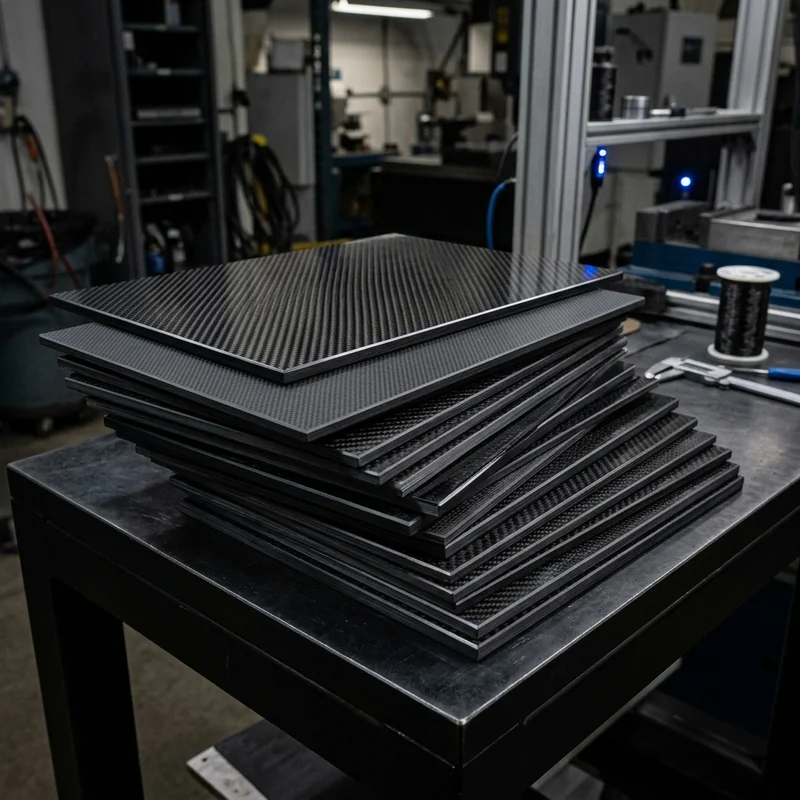
Carbon fiber standard plate-3k stripe
Lightweight, ultra-rigid standard sheets for drone fuselages, robot housings, facades and structural applications.

Carbon Fiber Plate — 3K Twill T700 1.5mm
Thin 1.5mm carbon fiber plate with 3K twill weave surface. Lightweight and stiff, commonly used for covers, panels, drone bodies, and applications requiring a premium aesthetic appearance.

Square Carbon Fiber Tube — 3K Twill T700
Square cross-section carbon fiber tube manufactured with 3K twill weave for torsional strength. Preferred for structural frames, trusses, and support columns where rectangular geometry offers design flexibility.

Carbon Fiber Plate — 3K Twill T700 3.0mm
Medium-thickness 3.0mm carbon fiber plate offering significantly higher load capacity while maintaining attractive 3K twill finish. Suitable for structural brackets, reinforcement plates, and load-bearing panels.
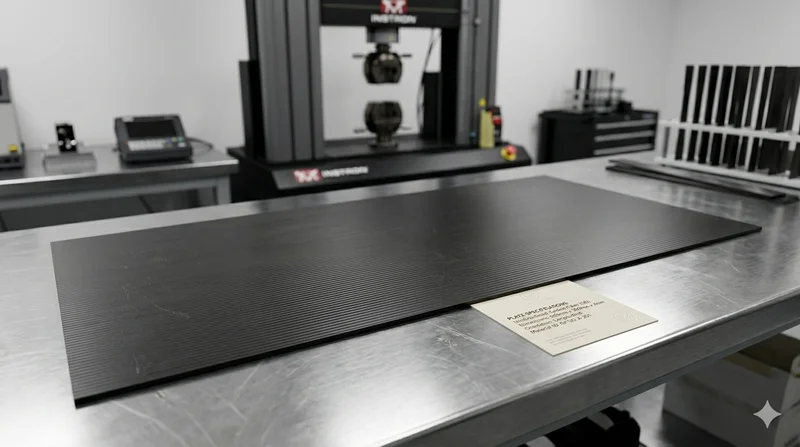
Carbon Fiber Plate — UD Unidirectional T700
Unidirectional carbon fiber plate with all fibers oriented in a single direction for maximum strength along the fiber axis. Essential for structural reinforcements, splints, and applications where load direction is predictable.