
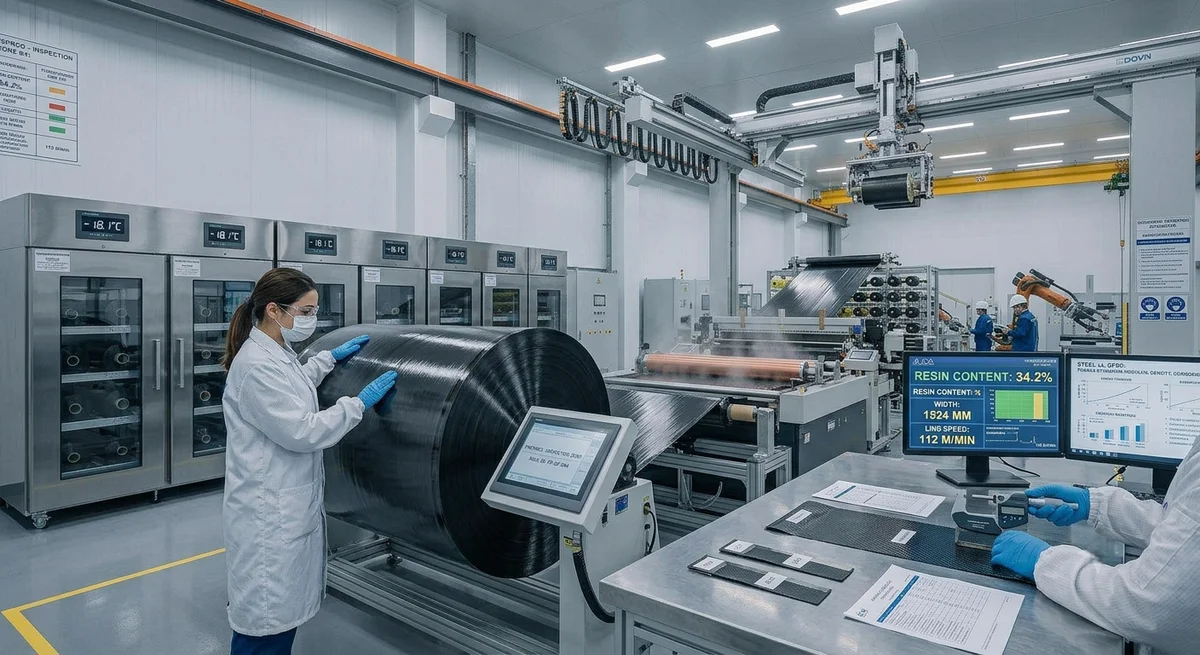
A comprehensive technical guide to advanced prepreg resin systems for B2B buyers — comparing epoxy, BMI, PEEK, PEKK, and next-gen thermoplastics across mechanical properties, processing parameters, cost, and application suitability.
Advanced Prepreg Resin Systems: A B2B Buyer's Guide for 2026
The prepreg resin system is the single most consequential material selection decision in composite part design. While carbon fiber provides strength and stiffness, the resin matrix determines the operating temperature range, toughness, chemical resistance, processing cycle time, and ultimately the cost structure of the finished component. In 2026, the landscape of prepreg resin systems is more diverse than ever — from established epoxy and BMI chemistries to next-generation thermoplastic systems including PEEK, PEKK, and novel polyaryletherketone (PAEK) blends. This guide provides B2B procurement and engineering teams with the technical data needed to make informed sourcing decisions.
Resin System Classification: Thermoset vs. Thermoplastic
Prepreg resin systems fall into two fundamental categories, each with distinct advantages and trade-offs:
- Thermoset prepregs — Resin undergoes an irreversible chemical crosslinking reaction during cure. Benefits include excellent fiber wet-out, long room-temperature shelf life (21–45 days for standard epoxies), and well-established processing infrastructure. Primary disadvantage: limited reprocessability and recycling.
- Thermoplastic prepregs — Semi-crystalline polymer matrix that melts above Tm and solidifies upon cooling without chemical reaction. Benefits include unlimited shelf life, weldability, repair capability, impact resistance 2–5× higher than thermosets, and full recyclability. Primary disadvantage: requires processing temperatures of 340–400°C and high consolidation pressure.
Comparative Analysis of Major Prepreg Resin Systems (2026)
| Property | Standard Epoxy (120–180°C cure) | High-Temp Epoxy (200°C cure) | BMI (Bismaleimide) | Cyanate Ester | PEEK (Thermoplastic) | PEKK (Thermoplastic) |
|---|---|---|---|---|---|---|
| Tg dry (°C) | 120–180 | 200–230 | 250–300 | 250–350 | 143 | 156–165 |
| Tg wet (°C) | 100–150 | 170–200 | 200–250 | 200–300 | 143 (dry only) | 156 (dry only) |
| Max service temp (°C) | 120–150 | 180–200 | 220–260 | 250–320 | 250 | 260 |
| Process temp (°C) | 120–180 | 180–200 | 180–250 | 180–250 | 370–400 | 340–380 |
| Process pressure (bar) | 3–7 | 3–7 | 3–7 | 3–7 | 10–20 | 10–20 |
| Cure time (minutes) | 60–120 | 90–180 | 120–240 | 120–300 | 3–10 (cooling) | 3–10 (cooling) |
| Fracture toughness GIc (J/m²) | 200–400 | 150–300 | 120–250 | 80–200 | 1,000–2,500 | 800–2,000 |
| H2O absorption (%, 24h immersion) | 1.0–2.5 | 0.8–1.8 | 2.0–4.0 | 0.6–2.0 | 0.1–0.3 | 0.1–0.4 |
| Shelf life @ 25°C (days) | 21–45 | 14–30 | 21–60 | 14–45 | Unlimited | Unlimited |
| Relative material cost index | 1.0× (baseline) | 1.3–1.8× | 2.5–4.0× | 3.0–5.0× | 3.5–6.0× | 3.0–5.5× |
| Recyclability | Poor | Poor | Poor | Poor | Excellent (full) | Excellent (full) |
| Primary applications | Automotive, sporting goods, industrial | Primary aerospace structures | Engine nacelles, bleed ducts | Radomes, satellite structures | Landing gear, high-temp structural | Wing leading edges, oil/gas |
Next-Generation Thermoplastic Resin Systems
PEEK (Polyether Ether Ketone)
PEEK-based prepregs represent the gold standard for high-performance thermoplastic composites in 2026. Key characteristics include: continuous service temperature of 250°C, exceptional chemical resistance (unaffected by virtually all organic solvents, hydraulic fluids, and aviation fuels), fracture toughness 3–8× higher than aerospace epoxies, and full recyclability via melt reprocessing. The primary barrier to wider adoption remains the high processing temperature window of 370–400°C, requiring specialized tooling steel (P20 or H13) and matched-metal forming equipment. In 2026, PEEK prepreg pricing ranges from $120–220/kg for carbon fiber/PEEK tapes, compared to $35–80/kg for aerospace-grade epoxy prepreg. However, when lifecycle cost is considered — including unlimited shelf life, weldable assembly (eliminating fasteners and adhesive bonds), and end-of-life material value — total cost of ownership for PEEK can be competitive at high production volumes above 5,000 units per year.
PEKK (Polyether Ketone Ketone)
PEKK has emerged as a strong competitor to PEEK, offering a slightly lower processing temperature window (340–380°C) while maintaining comparable mechanical properties and chemical resistance. The key differentiator is PEKK's crystallization kinetics — it crystallizes more slowly than PEEK, which provides a wider processing window and makes it more forgiving in automated fiber placement (AFP) and press forming operations. PEKK also exhibits higher compressive strength after impact (CSAI) values — typically 10–15% higher than PEEK — making it particularly attractive for wing and fuselage structures where damage tolerance is critical. Current PEKK prepreg pricing sits at $100–190/kg, slightly below PEEK due to a more diverse supplier base.
LM-PAEK (Low-Melt Polyaryletherketone)
One of the most significant developments in 2025–2026, LM-PAEK resin systems process at 280–320°C — a full 60–80°C lower than PEEK — while retaining >95% of PEEK's mechanical properties. This temperature reduction enables the use of aluminum tooling instead of steel, cutting tooling costs by 40–60% and reducing energy consumption. LM-PAEK prepregs are being qualified by multiple Tier-1 aerospace suppliers for cabin interior components and secondary structures, with full qualification for primary structures expected by Q4 2026. Current pricing is $95–155/kg, with volume discounts anticipated as production scales.
Advanced Thermoset Developments
BMI (Bismaleimide) with Toughening Agents
Traditional BMI has long been the workhorse for 220–260°C service environments (engine nacelles, bleed air ducts, missile structures). The Achilles' heel of BMI has always been brittleness — unmodified BMI fracture toughness of 80–120 J/m² compared to 200–400 J/m² for standard epoxies. In 2025–2026, third-generation toughened BMI systems using diallyl bisphenol A (DABA) modifiers and thermoplastic interleaf technologies have closed this gap significantly, achieving fracture toughness values of 200–350 J/m² while maintaining wet Tg above 220°C. These systems command a 2.5–4.0× cost premium over standard epoxy but remain the most cost-effective solution for sustained 220–260°C operation.
High-Tg Epoxy — The Value Champion
Recent advances in epoxy chemistry have pushed the wet Tg ceiling to 200°C (e.g., Hexcel HexPly® M77, Solvay CYCOM® 5320-1). These improved formulations offer 80–85% of BMI's thermal performance at 50–60% of the material cost, with the added benefit of compatibility with existing autoclave and out-of-autoclave (OOA) infrastructure. For applications with maximum service temperatures below 200°C and moderate toughness requirements, high-Tg epoxy remains the most cost-effective prepreg resin system available.
Resin Selection Decision Framework
| Service Temperature | Recommended System | Rationale |
|---|---|---|
| Up to 120°C | Standard epoxy (120°C cure) | Lowest cost; adequate for most industrial and automotive applications; 21–45 day out-life |
| 120–180°C | High-performance epoxy | Best balance of cost, toughness, and processability for primary structures |
| 180–220°C | High-Tg epoxy or LM-PAEK | Epoxy if cost-driven; LM-PAEK if recyclability and impact resistance needed |
| 220–260°C | Toughened BMI or PEEK/PEKK | BMI for autoclave-based production; PEEK/PEKK for high-rate forming processes |
| 260°C+ | Cyanate ester or PEKK | CE for dielectric/electronic applications; PEKK for structural with impact requirements |
Supply Chain Considerations (2026)
- Global supplier landscape: The prepreg market is dominated by Toray (Japan), Hexcel (US/France), Solvay (Belgium), Teijin (Japan), and Gurit (Switzerland). In 2026, Chinese suppliers (Zhongfu Shenying, Guangwei Composites) are aggressively entering the aerospace-grade prepreg space, offering 15–30% cost advantages for standard-modulus epoxy systems.
- Minimum order quantities: Aerospace-grade epoxy prepregs typically require MOQs of 100–500 m² per lot. PEEK/PEKK prepreg MOQs are higher at 200–1,000 kg due to the capital intensity of the melt-impregnation process. Custom resin formulations may carry MOQs of 500–2,000 m².
- Lead times: Standard epoxy prepreg: 4–8 weeks. BMI and CE: 8–16 weeks. PEEK/PEKK: 10–20 weeks. LM-PAEK: 8–14 weeks (tight supply in 2026).
- Storage and logistics: Epoxy and BMI prepregs require cold-chain transport (−18°C for epoxies; −18°C to −24°C for BMI) and freezer storage. Thermoplastic prepregs dramatically simplify logistics — ambient-temperature transport and storage, no out-life expiration. For international B2B buyers, thermoplastic prepregs can reduce logistics costs by $2,000–5,000 per container shipment.
Frequently Asked Questions
Q: What is the actual total cost difference between epoxy and PEEK prepreg for a typical aerospace component?
A: Using a representative structural bracket (0.5 kg finished weight, 10,000 units/year) as a model: raw material cost per part is $12–25 for epoxy vs $60–110 for PEEK (3–5× premium). However, PEEK's unlimited shelf life eliminates cold-chain logistics ($0.50–1.00/part saved) and out-life scrap loss (typically 2–5% for epoxy, saved entirely). PEEK's weldability eliminates 8–12 mechanical fasteners and their associated drilling operations ($4–8/part saved). When full lifecycle assessment is applied including end-of-life material value (PEEK retains $15–25/kg recycling credit), the total cost of ownership gap narrows from a 4.0× material premium to approximately a 1.8–2.5× premium. For production volumes exceeding 20,000 units/year, automated tape laying and induction welding can reduce PEEK part cost by an additional 25–35%, bringing the lifecycle gap to 1.3–1.7× — competitive for applications where 250°C service temperature or chemical exposure is required.
Q: Which resin system offers the best fatigue performance for long-life structural applications?
A: For high-cycle fatigue (>10⁷ cycles), PEEK and PEKK thermoplastic systems outperform all thermoset systems by a significant margin. The semi-crystalline microstructure provides inherent crack-blunting mechanisms that thermosets lack. Published data shows PEEK/carbon fiber laminates retaining 85–92% of static strength after 10⁷ fatigue cycles at R=0.1, compared to 65–78% for aerospace-grade epoxy and 55–70% for BMI. For applications with both fatigue and thermal cycling (such as aircraft wing structures), PEKK's lower moisture absorption (0.1% vs 1.0–1.5% for epoxy) eliminates the Tg suppression that accelerates fatigue degradation in thermosets over time. The trade-off is processing complexity — thermoplastic consolidation requires precise temperature control within ±5°C of the melt window, demanding higher capital equipment investment.
Q: Can thermoset and thermoplastic prepregs be combined in a single component?
A: Yes — hybrid thermoset-thermoplastic co-cured structures are an emerging technology entering production in 2026. The most common approach is thermoplastic surface films or interlayers co-cured with an epoxy or BMI prepreg stack. This provides: (1) dramatically improved surface damage tolerance (2–5× improvement in CAI), (2) weldable attachment points for subsequent assembly, (3) galvanic corrosion isolation without additional glass scrim layers. The key technical constraint is matching the cure cycle — the thermoplastic must melt and flow before the thermoset gels. Systems with compatible processing windows (e.g., LM-PAEK with 180°C-cure epoxy) are now commercially available from Toray and Solvay. Material cost increase is 15–30% over all-thermoset, with the largest benefits in applications requiring post-cure assembly (aerospace, automotive body-in-white).
Q: What are the regulatory and environmental compliance considerations for prepreg resin systems in 2026?
A: Three regulatory trends directly impact resin system selection: (1) EU REACH — bisphenol A (BPA)-based epoxy formulations face increasing restrictions; several suppliers now offer BPA-free epoxy prepregs meeting the same performance specs with a 10–20% cost premium. (2) PFAS regulations — PEEK and PEKK contain no perfluoroalkyl substances, giving them an advantage over PTFE-based interleaf materials in European markets. (3) End-of-life regulations — France's AGEC law and EU Waste Framework Directive are driving mandates for composite recyclability. Thermoplastic prepregs (PEEK, PEKK, LM-PAEK) satisfy emerging recyclability requirements out of the box, while thermoset recyclers require dedicated take-back programs. For B2B exporters to the EU, choosing thermoplastic prepregs may eliminate future regulatory compliance costs estimated at $3–8/kg of composite waste.
Q: What are the minimum volume commitments and qualification timelines for switching from epoxy to PEEK prepreg?
A: Switching from an established epoxy prepreg to PEEK requires a typical qualification and validation timeline of 12–18 months for aerospace applications (following DO-254/AS9100 protocols), or 6–12 months for industrial applications. Minimum volume commitments from suppliers range from 1,000–5,000 kg per year for PEEK/PEKK prepregs, compared to 300–1,000 kg for epoxy. The capital equipment investment for thermoplastic processing (high-temperature press, infrared oven, or induction welding system) adds $500,000–2,000,000 depending on part size and throughput requirements. However, for manufacturers targeting production volumes above 10,000 units per year, the amortized per-part tooling cost for thermoplastic processing is often 30–50% lower than autoclave-based thermoset processing, owing to cycle times of 5–15 minutes vs 60–240 minutes.
Part of topic
Related Articles
- Bio-Based Carbon Fiber Precursors: Lignin and Polyethylene for Low-Cost Production
- Large-Tow Carbon Fiber Cost Analysis: 48K vs 60K Price-Performance Comparison
- Carbon Fiber-Resin Interface Bonding: Surface Treatment and Coupling Agent Optimization
- Digital Twin for Carbon Fiber Manufacturing: Real-Time Process Monitoring and Defect Prevention
- Thermoplastic Carbon Fiber Welding for Automotive: Ultrasonic and Induction Welding Process Windows
- Large-Tow Carbon Fiber Wet Spinning: Process Optimization for 48K/60K Production Efficiency
Interested in Custom Carbon Fiber Products?
Contact our team for competitive pricing and technical specifications.
Get a QuoteRelated Products
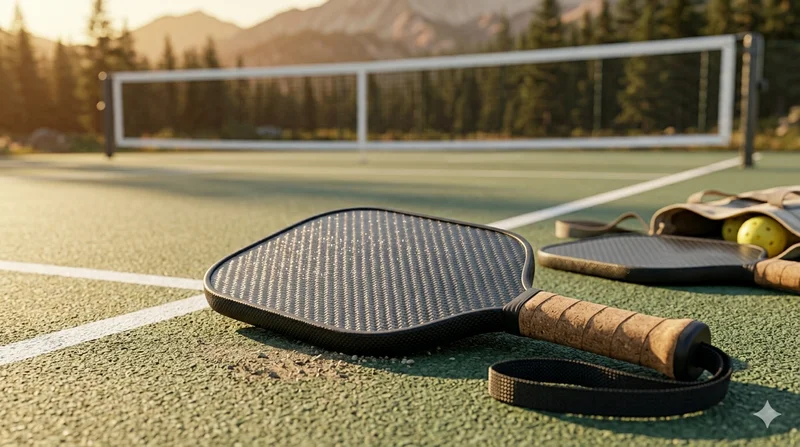
Carbon Fiber Pickleball Paddle
High-performance pickleball paddle with Toray T700 carbon fiber face and polypropylene honeycomb core. Delivers excellent power-to-weight ratio, spin generation, and vibration dampening for competitive play.
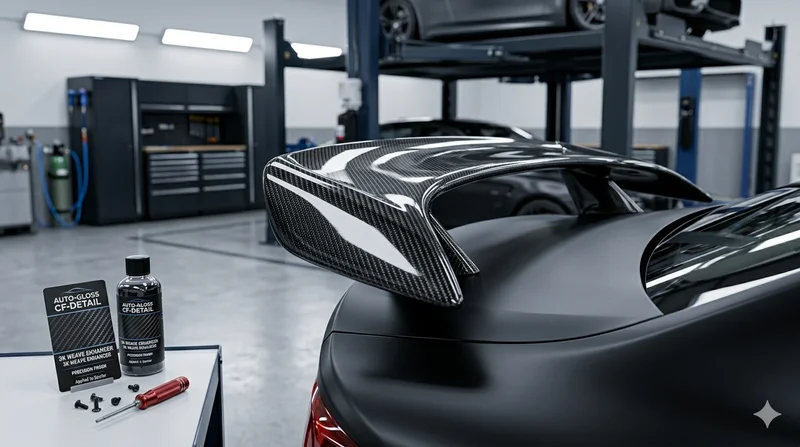
Carbon Fiber Automotive Spoiler
Automotive-grade carbon fiber spoiler manufactured using autoclave-cured pre-preg technology. Each spoiler is vacuum-bagged and oven-cured for optimal fiber-to-resin ratio, strength, and a flawless cosmetic finish.

Custom Carbon Fiber Musical Instrument Parts
Carbon fiber components for musical instrument manufacturing offering superior dimensional stability, low weight, and consistent acoustic properties. We produce carbon fiber bows, guitar necks, violin chin rests, drum shells, and wind instrument bodies. Carbon fiber instruments are immune to humidity changes and temperature fluctuations that affect wooden instruments.
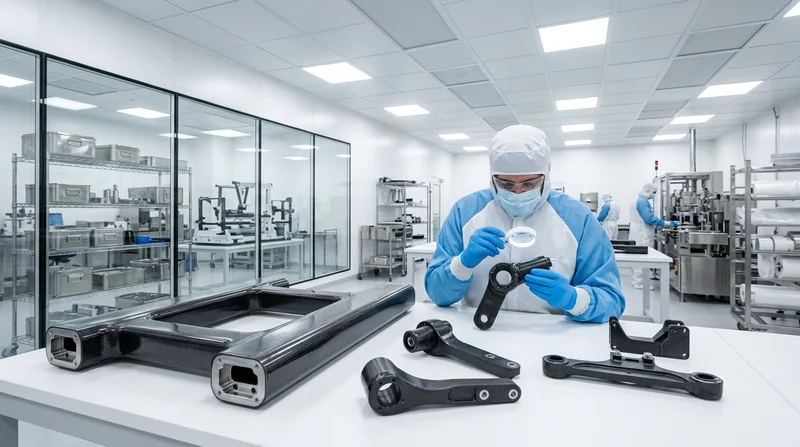
Custom Carbon Fiber Medical Device Components
Medical-grade carbon fiber components manufactured for imaging equipment, surgical instruments, and patient support systems. Carbon fiber's radiolucency (X-ray transparency) and high strength-to-weight ratio make it ideal for CT scanner beds, wheelchair frames, surgical robot arms, and MRI-compatible accessories. Biocompatible resin systems available.
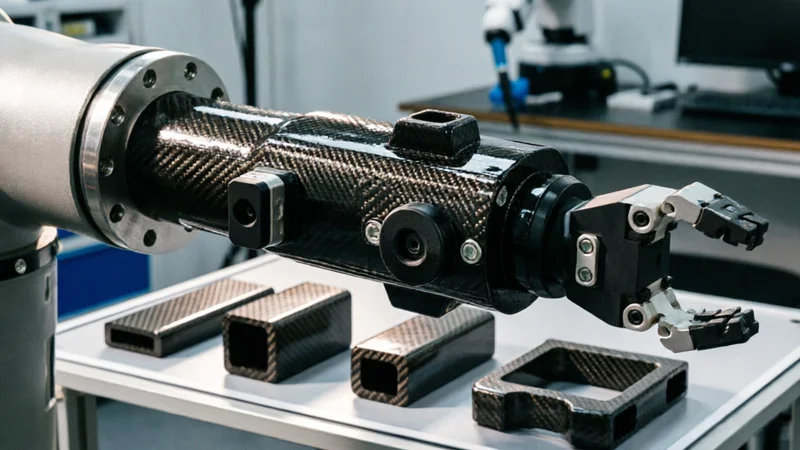
Carbon Fiber Robot End Effector Link — Custom Shape & Sensor Integration
Custom-shaped carbon fiber end effector links for robotic arms. Designed for automation integrators and research labs requiring lightweight, rigid connections between the robot wrist and gripper/tool. Can incorporate sensor mounting bosses, cable routing channels, and quick-change interfaces.