
The global carbon fiber industry produces approximately 150,000 tonnes of material annually, and end-of-life composite waste is growing at 8-12% per year as products manufactured in the 2000s reach retirement. Landfilling carbon fiber composites is both economically wasteful and increasingly restric
Introduction
The global carbon fiber industry produces approximately 150,000 tonnes of material annually, and end-of-life composite waste is growing at 8-12% per year as products manufactured in the 2000s reach retirement. Landfilling carbon fiber composites is both economically wasteful and increasingly restricted by environmental regulations. Pyrolysis — the thermal decomposition of the resin matrix in an oxygen-limited atmosphere — has emerged as the leading industrial method for recovering carbon fiber from thermoset composites because it preserves the fiber surface chemistry and mechanical properties far better than mechanical grinding or chemical solvolysis.
For engineers evaluating recycled carbon fiber as a material source, the critical question is not whether fiber can be recovered, but how much of the original mechanical performance survives the recycling process. This article explains the pyrolysis process parameters that govern fiber quality, quantifies the tensile strength and modulus retention achievable with modern pyrolysis systems, and identifies the structural and semi-structural applications where pyrolysis recycled carbon fiber has been validated as a viable replacement for virgin material.
How Pyrolysis Recovers Carbon Fiber
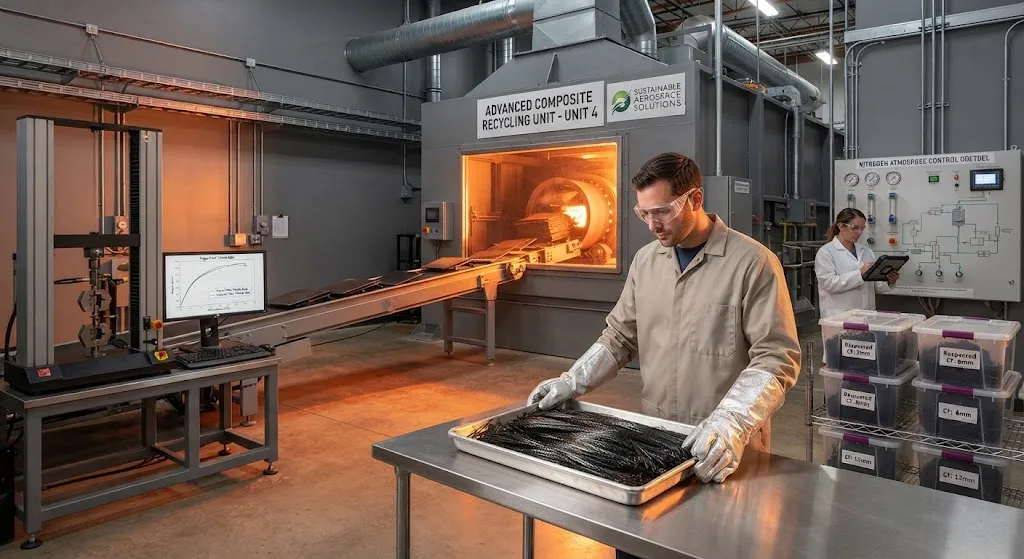
Pyrolysis decomposes the polymer matrix into volatile gases and a thin char residue while leaving the carbon fiber reinforcement largely intact. The process occurs in a sealed reactor at 450-700 degrees Celsius under nitrogen or argon atmosphere with residence times of 30-90 minutes. Three phases govern the thermal decomposition:
- Initial heating (200-400 degrees Celsius): Low-molecular-weight volatiles evaporate and the resin begins to cross-link before decomposition. Moisture and absorbed gases are driven off. Careful ramp rates of 5-10 degrees per minute prevent thermal shock to the fibers.
- Active decomposition (400-600 degrees Celsius): The resin matrix undergoes chain scission and depolymerization, producing combustible gases (CO, H2, CH4) and a carbonaceous char layer on the fiber surface. This char layer is critical — it affects fiber-matrix adhesion in the recycled product and must be controlled through atmosphere composition and temperature precision.
- Stabilization (600-700 degrees Celsius): Residual char is minimized and the fiber surface is stabilized. Exceeding 700 degrees Celsius risks oxidizing the carbon fiber itself, particularly in areas where the protective char has been thin, leading to pitting and strength loss.
Modern pyrolysis furnaces use continuous belt or rotary kiln designs with real-time atmosphere monitoring, achieving batch-to-batch consistency within plus or minus 2% on tensile strength. The recovered fibers are collected as loose tow, chopped fiber, or milled powder depending on the downstream application.
Mechanical Property Retention Data
The amount of mechanical performance retained depends primarily on three process parameters: peak temperature, residence time, and atmosphere control. The following table summarizes property retention for T300-grade and T700-grade carbon fiber processed under optimized industrial pyrolysis conditions:
| Property | Virgin T300 | Pyrolysis Recycled T300 | Retention | Virgin T700 | Pyrolysis Recycled T700 | Retention |
|---|---|---|---|---|---|---|
| Tensile strength (MPa) | 3,530 | 3,200-3,350 | 90-95% | 4,900 | 4,400-4,650 | 90-95% |
| Tensile modulus (GPa) | 230 | 225-230 | 98-100% | 230 | 228-230 | 99-100% |
| Elongation at break (%) | 1.5 | 1.4-1.5 | 93-100% | 2.1 | 1.9-2.0 | 90-95% |
| Fiber diameter (micrometers) | 7.0 | 7.0-7.2 | Nominal | 7.0 | 7.0-7.1 | Nominal |
| Surface oxygen content (at%) | 2-4 | 5-10 | Elevated | 2-4 | 5-10 | Elevated |
| Interfacial shear strength (MPa) | 65-80 | 55-70 | 85-90% | 65-80 | 55-70 | 85-90% |
Two trends are notable. First, tensile modulus is almost perfectly preserved because modulus is an intrinsic property of the graphite crystal structure, which pyrolysis temperatures do not significantly alter. Second, the surface oxygen content increases because the char residue and thermal oxidation leave functional groups on the fiber surface. This elevated oxygen content can actually improve fiber-matrix adhesion in some resin systems, partially compensating for the slight reduction in interfacial shear strength.
Factors Affecting Property Retention
Process optimization is not one-size-fits-all. The ideal pyrolysis parameters vary with the incoming composite type:
- Resin chemistry: Epoxy resins decompose cleanly at 500-600 degrees Celsius with minimal char. Phenolic resins leave heavier char deposits requiring higher temperatures or post-treatment. Polyester resins produce more volatile organic compounds, requiring robust gas scrubbing.
- Fiber architecture: Woven and braided reinforcements retain more mechanical integrity than unidirectional tapes because the interlaced structure physically protects individual filaments during resin outgassing. Pultruded parts with highly aligned fibers can suffer localized filament breakage if volatiles cannot escape through the dense fiber bundle.
- Part thickness: Thick-section laminates (greater than 10 millimeters) require slower ramp rates and longer residence times to ensure complete resin decomposition through the full thickness. Incomplete pyrolysis leaves resin pockets that reduce fiber quality in subsequent processing.
- Post-treatment: Mild oxidation treatments at 300-400 degrees Celsius in air for 10-30 minutes can clean residual char from the fiber surface and improve wettability, but must be carefully controlled to avoid strength degradation.
Reuse Applications for Pyrolysis Recycled Fiber
The 90-95% tensile strength retention makes pyrolysis recycled carbon fiber suitable for a wide range of structural and semi-structural applications where the absolute highest fiber performance is not required:
- Short fiber injection molding: Chopped recycled fiber at 20-40% loading in nylon, polypropylene, or PEEK replaces virgin chopped carbon fiber in automotive brackets, electronic housings, and industrial fixtures with equivalent mechanical performance at 30-50% lower material cost.
- Sheet molding compound (SMC): Recycled carbon fiber mats combined with thermoset resin pastes produce SMC for automotive body panels, fascias, and underbody shields where Class-A surface finish requirements are secondary to structural stiffness.
- Nonwoven mats and pressed preforms: Recycled fiber is needle-punched or thermally bonded into nonwoven mats for acoustic insulation, electromagnetic shielding, and impact energy absorption in packaging and transport applications.
- Hybrid laminates: Recycled carbon fiber plies interspersed with virgin plies in secondary structures reduce material cost by 20-35% while maintaining the design allowables for stiffness-driven applications such as floor panels, bulkheads, and interior partitions.
- 3D printing feedstock: Recycled carbon fiber chopped to 3-12 millimeter lengths is blended with thermoplastic filaments for fused deposition modeling, enabling carbon fiber reinforced 3D printed prototypes and small-batch production parts at a fraction of the cost of virgin continuous fiber systems.
Economic and Environmental Case
The business case for pyrolysis recycled carbon fiber rests on three pillars. First, the material cost advantage: recycled carbon fiber trades at 30-60% of virgin carbon fiber pricing depending on grade and supply volume, with current market rates of 15-30 dollars per kilogram for T300-equivalent recycled material versus 25-80 dollars per kilogram for virgin depending on tow size and modulus. Second, the carbon footprint reduction: pyrolysis recycling uses approximately 1.5-3.0 kilograms of CO2 equivalent per kilogram of recovered fiber, compared to 20-30 kilograms of CO2 equivalent for virgin carbon fiber production from PAN precursor through carbonization. Third, regulatory pressure: the European Union's End-of-Life Vehicle Directive and proposed Composite Waste Framework Directive are establishing recycled content targets that will create mandatory demand for recycled carbon fiber in automotive and aerospace supply chains by 2030.
Frequently Asked Questions
Can pyrolysis recycled carbon fiber be used in primary aerospace structures?
Pyrolysis recycled carbon fiber is not currently qualified for primary load-bearing aerospace structures because the slight variability in interfacial shear strength and the elevated surface oxygen content create uncertainty in long-term fatigue and environmental durability data. However, it is being evaluated for secondary aerospace structures such as interior floor panels, cable trays, and non-structural brackets where the 90-95% tensile strength retention exceeds design requirements by a comfortable margin. Aerospace qualification programs typically require 3-5 years of durability data, so widespread adoption in secondary structures is expected by 2028-2030.
How does pyrolysis compare with solvolysis and mechanical recycling for carbon fiber recovery?
Pyrolysis, solvolysis, and mechanical recycling each have distinct trade-offs. Pyrolysis achieves 90-95% tensile strength retention and handles mixed resin systems, but produces loose chopped fiber rather than continuous reinforcement. Solvolysis uses chemical solvents to dissolve the resin at lower temperatures (150-250 degrees Celsius), preserving continuous fiber form and achieving slightly higher strength retention (93-97%), but is limited to specific resin chemistries and generates liquid chemical waste requiring treatment. Mechanical grinding produces the lowest quality recovered fiber (50-70% strength retention) because the high-energy milling physically damages filaments, but is the lowest-cost method and produces directly usable powder for injection molding. For most engineering applications, pyrolysis offers the best balance of fiber quality, throughput, and economic viability.
What is the maximum percentage of recycled carbon fiber that can replace virgin fiber in a composite laminate?
In nonwoven mat and short fiber applications, recycled carbon fiber can constitute 100% of the reinforcement. In continuous fiber laminates, the practical limit for full replacement of virgin plies with recycled plies is typically 50-70% of the layup in secondary structures, with the remainder being virgin plies to maintain consistent interfacial properties and design allowables. Hybridization strategies — placing recycled plies in mid-plane positions where interlaminar shear stresses are lower and virgin plies at surfaces where environmental exposure and impact threats are highest — have been validated in automotive and sporting goods programs at up to 60% recycled content without measurable performance degradation.
Conclusion
Pyrolysis recycled carbon fiber delivers 90-95% tensile strength retention, near-perfect modulus preservation, and a 30-60% cost advantage over virgin material, making it the most industrially mature pathway for circular carbon fiber composites. The technology is proven at commercial scale, with multiple recyclers operating continuous furnaces processing thousands of tonnes annually. Applications in injection molding, SMC, nonwoven mats, hybrid laminates, and 3D printing feedstock are already in production, with secondary aerospace structures approaching qualification. For engineers evaluating recycled carbon fiber for their next program, the performance data supports adoption in any application where the absolute highest fiber strength is not the governing design driver.
To discuss how pyrolysis recycled carbon fiber can reduce material costs in your composite program, explore our carbon fiber material range including recycled fiber grades, or contact our engineering team for application-specific guidance and material samples.
Part of topic
Related Articles
- Microwave-Assisted Carbonization for Carbon Fiber: Energy Savings and Quality Improvement
- Carbon Fiber Laser Cutting and Trimming: Automation for High-Volume Production
- Carbon Fiber Bio-Composites: Natural Fiber Hybrid Reinforcement for Sustainable Applications
- RFID Tracking for Carbon Fiber Supply Chain: Traceability and Quality Assurance
- Infrared Heating for Carbon Fiber Cure: Energy Efficiency and Cycle Time Reduction
- Out-of-Autoclave Carbon Fiber Processing: OoA Certification and Aerospace Qualification
Interested in Our Products?
Contact our team for competitive pricing and technical specifications.
Get a QuoteRelated Products
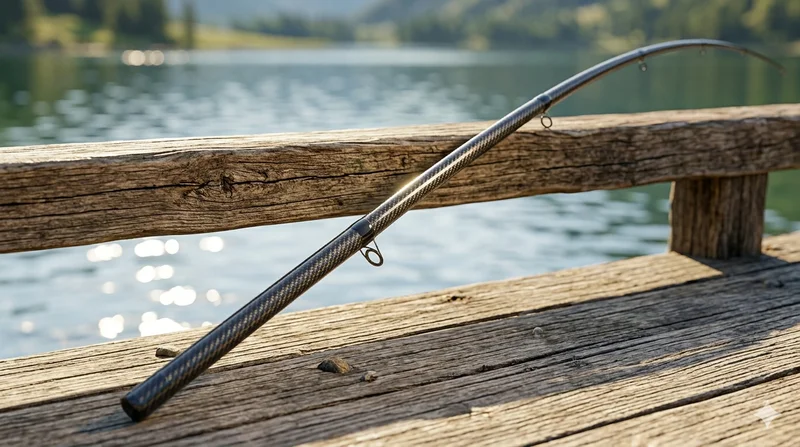
Carbon Fiber Fishing Rod Blank
High-quality carbon fiber fishing rod blank manufactured from multiple grades of Toray carbon fiber cloth. Available in a wide range of lengths, powers, and actions for freshwater and saltwater applications. Suitable for OEM rod building.
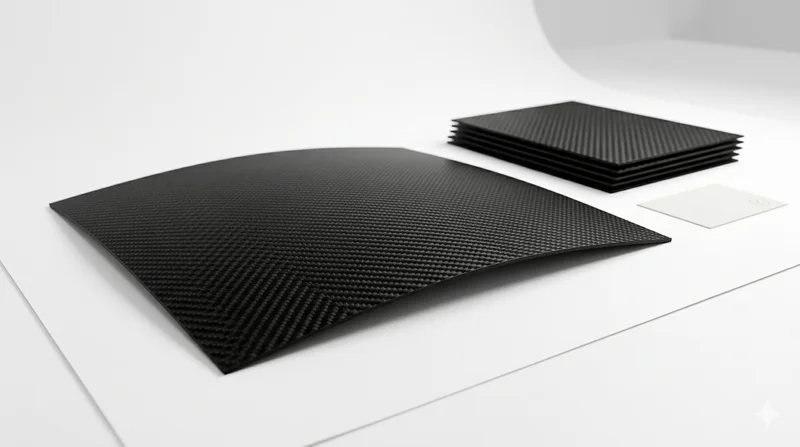
Carbon Fiber Plate — 3K Twill T700 1.5mm
Thin 1.5mm carbon fiber plate with 3K twill weave surface. Lightweight and stiff, commonly used for covers, panels, drone bodies, and applications requiring a premium aesthetic appearance.
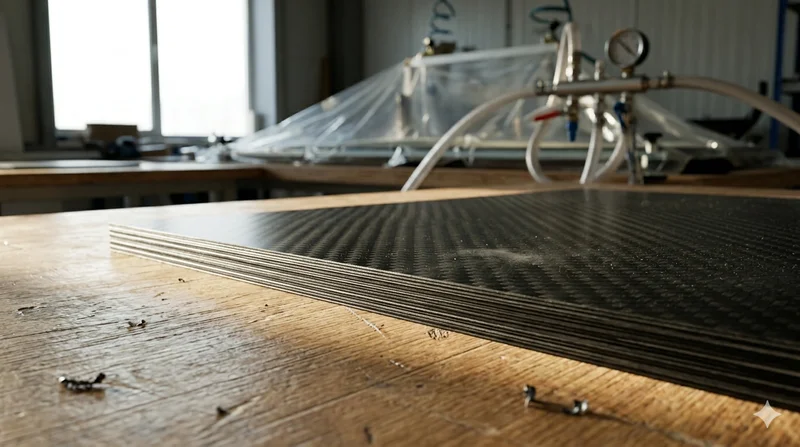
Carbon Fiber Plate — 3K Twill T700 3.0mm
Medium-thickness 3.0mm carbon fiber plate offering significantly higher load capacity while maintaining attractive 3K twill finish. Suitable for structural brackets, reinforcement plates, and load-bearing panels.
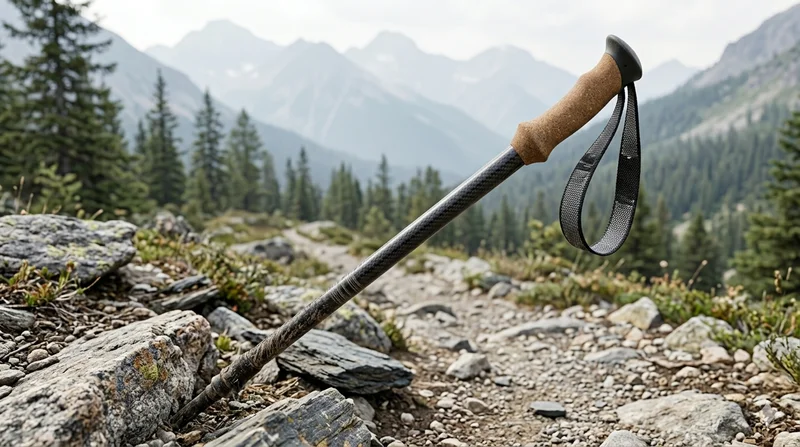
Carbon Fiber Trekking Pole
Lightweight carbon fiber trekking pole manufactured from high-grade carbon fiber tube. Weighs only 160g per pole while providing superior shock absorption and durability for hiking, trail running, and backpacking.
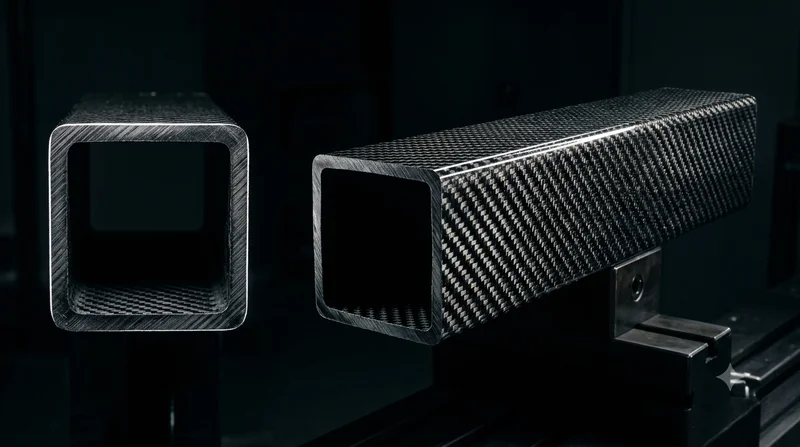
Square Carbon Fiber Tube — 3K Twill T700
Square cross-section carbon fiber tube manufactured with 3K twill weave for torsional strength. Preferred for structural frames, trusses, and support columns where rectangular geometry offers design flexibility.