

Sweden does not have a large carbon fiber demand in the traditional sense — its aerospace and motorsport consumption is modest compared with France, Italy, or the United Kingdom. What it does have is a structural transformation that is quietly creating new, high-potential demand channel
Introduction
Sweden does not have a large carbon fiber demand in the traditional sense — its aerospace and motorsport consumption is modest compared with France, Italy, or the United Kingdom. What it does have is a structural transformation that is quietly creating new, high-potential demand channels. Sweden's industrial policy of the 2020s is built around electrification and decarbonization: a gigafactory-driven battery ecosystem in the north, the HYBRIT hydrogen-based steel program in the mining and steel regions, and an offshore wind pipeline that was unthinkable in Swedish energy planning a decade ago. Each of these programs has a lightweighting component, and carbon fiber is one of the materials positioned to benefit.
Total Swedish carbon fiber demand is estimated at 2,000-3,000 tonnes per year in 2026, with the largest established share in industrial and construction applications, followed by growing demand from transport lightweighting and from the battery and hydrogen storage systems that the new energy economy requires. This article examines each of the three transformational drivers, quantifies what they mean for carbon fiber, and outlines how suppliers can position themselves in the Swedish market.
Market Size and Demand Structure
Swedish carbon fiber demand is spread across a wider set of segments than its Nordic neighbors, reflecting the country's heavy industry base. The table below summarizes the 2026 outlook:
| Segment | 2026 Demand Share | Growth Outlook | Primary Drivers |
|---|---|---|---|
| Industrial & construction | 25-30% | 4-6% per year | Pultruded profiles, structural repair systems |
| Transport & automotive | 20-25% | 8-12% per year | EV lightweighting, premium vehicles, commercial trucks |
| Energy storage & hydrogen | 10-15% | 15-20% per year | Battery packs, Type IV hydrogen tanks |
| Defense & aerospace | 10-15% | 5-8% per year | Combat aircraft, UAV, naval structures |
| Wind energy | 5-10% | 10-15% per year | Blade spar caps for Baltic offshore projects |
| Marine & other | 5-10% | 3-5% per year | Ferry structures, sports equipment |
The fastest-growing segments are small today but strategically decisive: energy storage and hydrogen account for only 10-15 percent of demand yet are projected to grow at 15-20 percent annually, ahead of every other category. Suppliers that can service the battery and hydrogen infrastructure boom with qualified composite materials are positioned for the strongest long-term growth in the Swedish market.
Battery Gigafactories: The Northvolt Ecosystem
The most visible symbol of Sweden's electrification drive is Northvolt's battery ecosystem in Skellefteå, where Europe's first home-grown gigafactory began producing lithium-ion cells in 2021. The facility — known as Northvolt Ett — was planned at up to 60 GWh of annual capacity, and the surrounding region has attracted a cluster of suppliers in recycling, cell-component manufacturing, and energy storage. While battery packs are not traditionally large carbon fiber consumers, the battery ecosystem creates several direct and indirect demand channels:
- Pack and module lightweighting: Every kilogram saved in pack structures extends vehicle range or carries additional cells, pushing pack designers toward composite enclosures and structural battery casings for premium platforms.
- Thermal management and protection: Composite materials offer design freedom for cooling channels, compression plates, and fire barriers within the pack, combining electrical insulation with structural duty.
- Production infrastructure: Gigafactory construction itself consumes composite materials in handling equipment, busbars supports, and corrosion-resistant structures.
- Structural batteries: Swedish research institutions, notably Chalmers University of Technology, lead Europe's structural battery research — carbon fiber that stores energy while carrying load. Prototype cells have demonstrated the concept; commercial scale remains a longer-term prospect but keeps Sweden at the frontier of the field.
For carbon fiber suppliers, the battery channel is still emerging but structurally promising: it is a design-in market where early engineering collaboration with pack integrators decides multi-year material specifications, and where qualification requirements resemble aerospace more than industrial distribution.
Green Steel: HYBRIT and the Material Race
Sweden's steel transition is arguably its most consequential industrial program. The HYBRIT initiative — a partnership of SSAB, LKAB, and Vattenfall — aims to replace coal-based reduction with hydrogen-based direct reduction at plants in Luleå and Gällivare, with the world's first fossil-free steel delivered to customers in 2021 and commercial-scale production planned to scale through the late 2020s. Carbon fiber enters this picture through two parallel routes. First, the hydrogen economy itself: fossil-free steel production on the proposed scale requires large volumes of green hydrogen, which in turn requires storage and transport infrastructure where Type IV composite pressure vessels are the leading technology. Second, lightweighting as a complementary strategy: steel's decarbonization is partly a weight problem — lighter vehicles and structures need less steel and less energy to move, and carbon fiber composites are one of the few materials that can cut structural weight by 40-60 percent versus conventional steel assemblies.
The two programs interact at the product level. A truck that uses carbon fiber components is a truck that carries more payload per tonne of material and consumes less energy per kilometer — metrics that matter when the vehicle must be powered by green fuels that are still expensive. Swedish OEMs in heavy trucks and mining vehicles are therefore evaluating composite structures not as premium options but as operating-cost levers, a shift that opens volume demand for high-strength fabrics, pultruded profiles, and structural sandwich panels.
Offshore Wind and the Baltic Pipeline
Sweden's offshore wind ambitions, long delayed by permitting and political uncertainty, began moving decisively in the mid-2020s. A series of project approvals across the Baltic and around the southern coastline has created a credible multi-gigawatt pipeline, with developers targeting project starts through 2030. Offshore wind affects carbon fiber demand in two ways. Turbine blades for large offshore machines increasingly use carbon fiber spar caps — pultruded plates that prevent gravity-driven fatigue in blades exceeding 100 meters. And offshore substations, cable protection, and maintenance infrastructure introduce structural composite applications in one of the harshest operating environments in construction. For the Swedish supply chain, this means both direct material demand and the same spar-cap dynamics driving the rest of the North Sea and Baltic wind economy.
Defense, Aerospace, and Transport Lightweighting
Sweden maintains a compact but capable defense-aerospace sector centered on Saab, whose Gripen fighter program and broader defense portfolio use composite structures extensively. The country's premium automotive and commercial transport segments — including one of Europe's strongest truck and bus OEM bases — are adopting carbon fiber selectively: lightweight cab structures, battery enclosures, springs, and driveshaft components for high-performance and heavy-duty applications. These segments share a common feature: they demand qualified materials, consistent batches, and documentation, with volumes ranging from prototype-scale aerospace work to serial production in transport. Serving them well requires a supplier with both material breadth and engineering credibility, often through a local or Nordic distribution partner.
Entry Points for Carbon Fiber Suppliers
Sweden's market structure rewards suppliers who connect to its transformation agenda rather than selling commodity fiber at spot prices. Practical entry paths:
- Hydrogen infrastructure: Position toward Type IV tank manufacturers and system integrators serving the fossil-free steel and transport hydrogen economy — the fastest-growing offshore channel.
- Transport OEMs: Qualify fabrics, preforms, and pultruded profiles for truck, bus, and premium automotive lightweighting programs with multi-year engineering cycles.
- Industrial distribution: Partner with established Nordic composites distributors to serve the repair, construction, and machinery segments with reliable standard-product supply.
- Construction and infrastructure: Supply carbon fiber reinforcement systems and rehab products for Sweden's aging bridge and building stock, where strength and corrosion resistance justify premium materials.
Frequently Asked Questions
How large is Sweden's carbon fiber market in 2026?
Estimates place Swedish carbon fiber demand at roughly 2,000-3,000 tonnes per year in 2026. The market is distinguished not by size but by its transformation-led growth: energy storage and hydrogen applications are projected to grow 15-20 percent per year, making Sweden one of the fastest-growing Nordic markets for emerging composite applications.
How does Northvolt's battery ecosystem affect carbon fiber demand?
Northvolt's gigafactory in Skellefteå anchors a battery cluster that drives composite demand indirectly — through pack and module lightweighting, thermal management and protection components, and production infrastructure. Swedish research in structural batteries (carbon fiber that stores energy while bearing load) also keeps the country at the frontier of long-term composite innovation.
What is the connection between HYBRIT green steel and carbon fiber?
The HYBRIT program produces fossil-free steel using hydrogen-based direct reduction. It connects to carbon fiber through two channels: the green hydrogen economy needs Type IV composite pressure vessels for storage and transport, and lightweighting complements decarbonization — lighter vehicles and structures consume less energy, making them cheaper to operate with green fuels.
What are the main opportunities for carbon fiber suppliers in Sweden?
The most attractive channels are hydrogen storage infrastructure, transport OEM lightweighting programs, industrial distribution, and construction reinforcement systems. Suppliers should partner with Nordic distributors and seek design-in roles with system integrators rather than competing on commodity pricing.
Conclusion
Sweden's carbon fiber market is defined by its industrial transformation rather than its current tonnage. The gigafactory-driven battery ecosystem, HYBRIT green steel, and a long-delayed offshore wind pipeline are each creating composite demand channels that barely existed a few years ago — and the transport, hydrogen, and construction sectors that connect them are adopting carbon fiber as an operating-cost lever, not a luxury. For suppliers, Sweden offers a market where technological credibility and engineering partnerships matter more than price alone, and where the designing-in of composite materials into some of Europe's most ambitious industrial programs creates long-cycle, defensible demand. China-based suppliers with strong certification standards are well positioned to serve this market through qualified tow, fabric, and profile supply.
YongXian supplies carbon fiber tow, fabrics, and reinforcement materials to transport, energy, and industrial customers worldwide. Explore our carbon fiber product range or contact our team to discuss materials and supply agreements for the Swedish market.
Part of topic
Related Articles
- Carbon Fibre for Sale: Reading Listings, Grades and Lead Times
- Carbon Fiber Near Me: Why Local Sourcing Beats Cross-Border for Prototyping
- Carbon Fiber Rod Blanks: Supply Chain and Custom Cutting Services
- Carbon Fiber Tube Shop: Selecting the Right Supplier for Custom and Standard Tubes
- Carbon Fiber Sheet Price: Factors Affecting Cost per Square Meter
- Carbon Fibre Sheet Supplier UK: Sourcing Options and Specification Checklist
Interested in Our Products?
Contact our team for competitive pricing and technical specifications.
Get a QuoteRelated Products

Carbon Fiber Fishing Rod Blank
High-quality carbon fiber fishing rod blank manufactured from multiple grades of Toray carbon fiber cloth. Available in a wide range of lengths, powers, and actions for freshwater and saltwater applications. Suitable for OEM rod building.

Carbon Fiber Plate — 3K Twill T700 1.5mm
Thin 1.5mm carbon fiber plate with 3K twill weave surface. Lightweight and stiff, commonly used for covers, panels, drone bodies, and applications requiring a premium aesthetic appearance.

Carbon Fiber Plate — 3K Twill T700 3.0mm
Medium-thickness 3.0mm carbon fiber plate offering significantly higher load capacity while maintaining attractive 3K twill finish. Suitable for structural brackets, reinforcement plates, and load-bearing panels.
Custom Carbon Fiber Medical Device Components
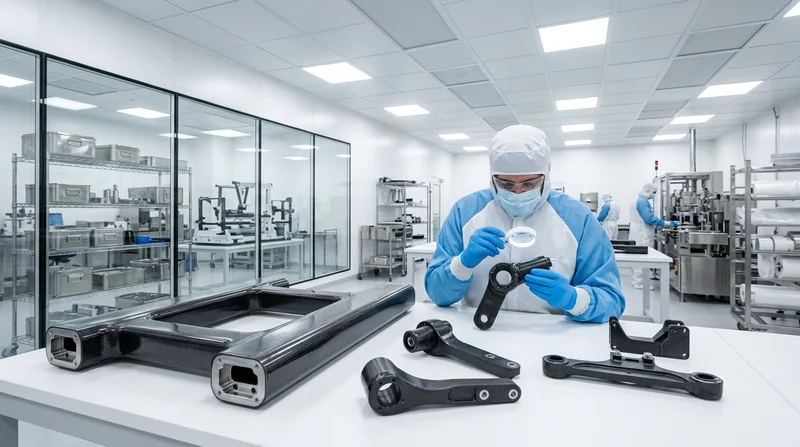
Medical-grade carbon fiber components manufactured for imaging equipment, surgical instruments, and patient support systems. Carbon fiber's radiolucency (X-ray transparency) and high strength-to-weight ratio make it ideal for CT scanner beds, wheelchair frames, surgical robot arms, and MRI-compatible accessories. Biocompatible resin systems available.

Square Carbon Fiber Tube — 3K Twill T700
Square cross-section carbon fiber tube manufactured with 3K twill weave for torsional strength. Preferred for structural frames, trusses, and support columns where rectangular geometry offers design flexibility.