
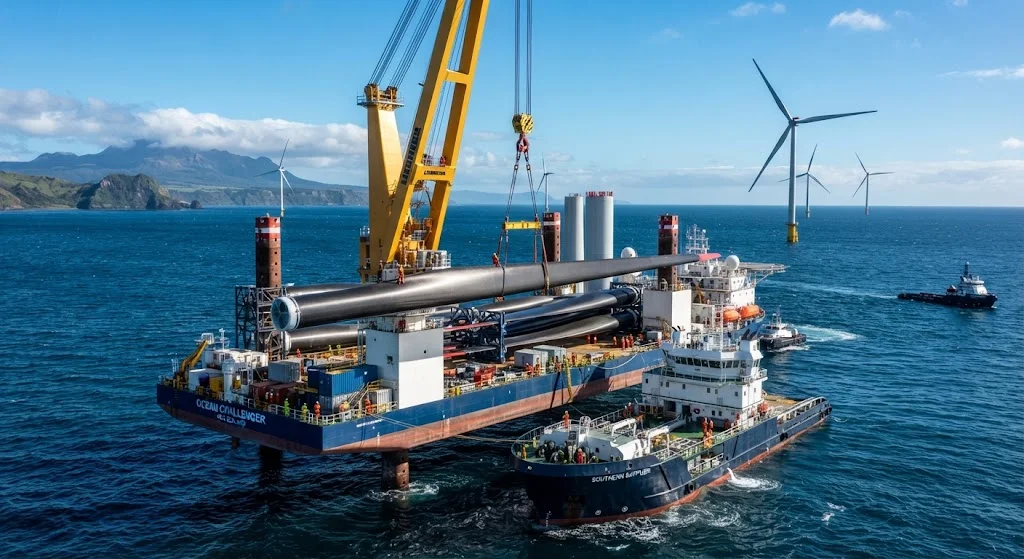
New Zealand's carbon fiber market is driven by two sectors: offshore wind energy and marine technology. The country's ambitious renewable energy targets and long-established marine engineering heritage create focused demand for advanced composite materials in turbine blades, subsea structures, and high-performance vessels.
Introduction
New Zealand occupies a strategic position in the South Pacific with over 15,000 kilometers of coastline and a maritime economy that contributes approximately 1.5% of GDP. The country's carbon fiber market, while small in absolute volume compared to major industrial economies, presents concentrated opportunities in two high-growth sectors: offshore wind energy development and advanced marine technology. For carbon fiber suppliers and composite manufacturers, understanding New Zealand's market structure — driven by government renewable energy mandates, marine engineering traditions, and proximity to Pacific Rim supply chains — is essential for identifying B2B opportunities in 2026 and beyond.
New Zealand's offshore wind potential is estimated at 800 GW in deep-water zones around the North Island, though commercial-scale development remains in early stages. The marine sector, by contrast, is mature and sophisticated, with New Zealand shipyards producing some of the world's fastest racing yachts, commercial fishing vessels, and subsea inspection platforms. Both sectors demand carbon fiber composites for weight reduction, corrosion resistance, and structural performance in harsh marine environments. This article examines the market structure, key demand drivers, and specific applications creating opportunities for carbon fiber suppliers in New Zealand.
Offshore Wind Energy Development
New Zealand's offshore wind energy sector is transitioning from feasibility studies to early-stage development, driven by the government's target of 100% renewable electricity generation by 2030. Several factors shape the carbon fiber opportunity in this emerging market:
- Turbine size requirements: Deep-water sites around the North Island (particularly Taranaki and Hawke's Bay) require turbines in the 15-20 MW class with blade lengths exceeding 100 meters. At these dimensions, glass fiber composites cannot provide sufficient stiffness-to-weight ratios, creating demand for carbon fiber spar caps and hybrid carbon-glass blade structures.
- Foundation design: Floating wind platforms for New Zealand's deep continental shelf (water depths 60-200 meters) require lightweight composite components for buoyancy modules, fairings, and cable protection systems. Carbon fiber-reinforced polymer (CFRP) tubes and panels reduce platform weight, improving stability and reducing mooring costs.
- Supply chain timing: New Zealand currently imports all wind turbine components. As domestic assembly and maintenance capabilities develop, local fabrication of composite components using imported carbon fiber materials will create demand for technical support, material supply, and manufacturing partnerships.
| Application | Carbon Fiber Grade | Estimated Volume (2026-2030) | Key Requirements |
|---|---|---|---|
| Blade spar caps | T700-T800 UD tape | 50-100 tonnes/year | Fatigue resistance, modulus 130-180 GPa |
| Floating platform structures | T300-T700 fabric | 20-40 tonnes/year | Impact resistance, marine durability |
| Cable protection systems | E-glass/carbon hybrid | 10-20 tonnes/year | Abrasion resistance, flexibility |
| Maintenance components | Various grades | 5-10 tonnes/year | Fast turnaround, custom specifications |
Marine Technology Applications
New Zealand's marine technology sector is globally recognized for innovation in high-performance vessels, aquaculture equipment, and subsea inspection systems. Carbon fiber composites are integral to several key applications:
- Racing and performance yachts: New Zealand's America's Cup program and professional ocean racing teams drive demand for ultra-light, high-stiffness carbon fiber structures. Hull panels, masts, keel fins, and rigging components use aerospace-grade carbon fiber prepreg systems with strict quality requirements. The Team New Zealand program alone consumes an estimated 5-8 tonnes of carbon fiber annually for boat construction and component manufacturing.
- Commercial fishing vessels: New Zealand's fishing industry operates over 1,000 commercial vessels, many requiring lightweight composite components for weight-sensitive applications. Carbon fiber reinforcement in hull sections, superstructure components, and fishing gear (longline holders, trawl doors) reduces fuel consumption by 8-15% compared to equivalent glass fiber structures.
- Aquaculture infrastructure: New Zealand is the world's largest aquaculture producer ofgreenshell mussels and a major salmon farmer. Carbon fiber reinforcement in net pen structures, mooring systems, and monitoring equipment improves durability in harsh marine environments while reducing maintenance costs.
- Subsea inspection equipment: Remotely operated vehicles (ROVs) and autonomous underwater vehicles (AUVs) used for underwater inspection in offshore wind and oil/gas applications require lightweight, corrosion-resistant housings and structural components. New Zealand manufacturers supply these systems to Pacific Rim markets.
Market Structure and Supply Chain
New Zealand's carbon fiber supply chain is import-dependent, with no domestic carbon fiber production. The market structure includes several key segments:
- Direct importers: Large marine engineering firms and wind energy developers import carbon fiber materials directly from Asian manufacturers (Japan, China, Taiwan) under annual supply agreements. These buyers typically require 10-50 tonnes/year and have established quality acceptance procedures.
- Distribution through Australia: Some New Zealand buyers source carbon fiber through Australian distributors who maintain regional inventory. This channel adds 10-15% to material costs but provides shorter lead times and local technical support.
- Local fabricators: Approximately 15-20 composite fabrication workshops in Auckland, Wellington, and Christchurch serve marine and industrial customers. These shops range from 2-person operations to 50-person facilities with autoclave and out-of-autoclave capabilities.
The import duty structure favors raw carbon fiber materials (0-5% duty) over finished composite components (10-15% duty), creating an incentive for local fabrication using imported materials rather than importing finished parts.
Regulatory and Certification Requirements
New Zealand's marine and wind energy sectors operate under specific regulatory frameworks that affect carbon fiber material specifications and component certification:
- Marine vessel certification: Commercial vessels must comply with Maritime New Zealand (MNZ) standards, which reference ISO 12215 for hull structure design and ISO 14692 for FRP pipe systems. Carbon fiber components in structural applications require material qualification testing per ISO 527 (tensile) and ISO 14126 (compression).
- Wind energy standards: While New Zealand lacks specific offshore wind certification standards, the government has indicated alignment with IEC 61400 series standards. Carbon fiber blade components will require fatigue testing per IEC 61400-23 and material qualification per ASTM D3039/D3410.
- Environmental regulations: New Zealand's strict environmental regulations require lifecycle assessment for major infrastructure projects. Carbon fiber composite components must demonstrate end-of-life recyclability or recovery pathways, favoring thermoplastic matrix systems and recyclable thermoset formulations.
Competitive Landscape
Carbon fiber suppliers targeting New Zealand face competition from several sources:
- Japanese manufacturers: Toray, Mitsubishi, and Mitsui have established relationships with New Zealand marine customers through decades of supply to the yacht racing industry. These suppliers compete on quality and technical support but face higher logistics costs.
- Chinese suppliers: Chinese carbon fiber manufacturers (Zhongfu Shenying, Jilin Carbon Valley) compete aggressively on price, particularly for standard-modulus grades. Price advantages of 20-35% over Japanese suppliers are driving adoption in cost-sensitive applications.
- Australian distributors: Australian-based composite material distributors serve New Zealand customers with regional inventory and technical sales support. These distributors add margin but provide value through local presence and fast delivery.
Conclusion
New Zealand's carbon fiber market presents focused opportunities in offshore wind energy development and marine technology applications. While the market volume is modest compared to major industrial economies, the high-value, specification-driven nature of marine and wind energy applications creates opportunities for suppliers who can provide technical support, material qualification assistance, and reliable supply chain logistics. As New Zealand's offshore wind sector matures and marine technology continues to innovate, demand for carbon fiber composites will grow steadily through 2030 and beyond.
YongXian CarbonFiber
YongXian manufactures carbon fiber tubes, sheets, and custom composite parts from our Dezhou, China factory. With over 15 years of composite manufacturing experience, we supply carbon fiber components to aerospace, automotive, energy, and industrial customers worldwide.
Contact us for custom carbon fiber solutions.
Part of topic
Related Articles
- Recycled Carbon Fiber Market Forecast 2030: Technology Maturity and Commercialization Path
- South Korea Carbon Fiber Market 2026: Hydrogen Economy and Shipbuilding Innovation
- Wind Turbine Blade Leading Edge Protection 2026: Polyurethane, Tape, and Metallic Shield Solutions
- China Carbon Fiber Overcapacity 2026: Price War Impact and Industry Consolidation
- India Carbon Fiber Market 2026: Wind Energy, Aerospace, and Defense Expansion
- PAN Precursor Market 2026: Acrylonitrile Supply and Carbon Fiber Cost Structure