
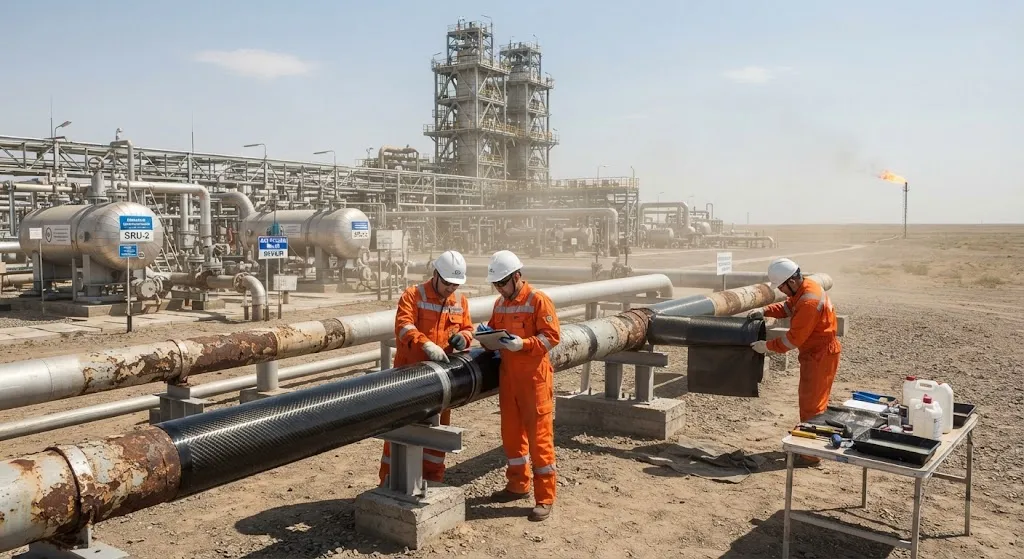
Kazakhstan's carbon fiber market in 2026 is a study in contrasts. The world's largest landlocked country is powered by a hydrocarbon economy — the Tengiz and Kashagan fields rank among the biggest oil developments on Earth — yet it also operates one of the most unusual aerospace assets
Introduction
Kazakhstan's carbon fiber market in 2026 is a study in contrasts. The world's largest landlocked country is powered by a hydrocarbon economy — the Tengiz and Kashagan fields rank among the biggest oil developments on Earth — yet it also operates one of the most unusual aerospace assets in the industry: the Baikonur Cosmodrome, leased from Russia, from which crewed Soyuz missions and commercial launches still depart. Between these two poles, a third driver is rising: a transport modernization program that aims to make Kazakhstan the rail and road corridor between China, Russia, and Europe.
Kazakhstan's economy grew 4.8% in 2025, and the government's transport and logistics development program targets $30 billion of investment by 2030. Oil production of approximately 1.9 million barrels per day funds the country's industrial ambitions. This article examines the oil and gas, space, and transport segments, and lays out a practical sourcing strategy for carbon fiber buyers.
Oil and Gas Infrastructure: The Sour-Gas Challenge
Kazakhstan's two giant fields define its hydrocarbon profile. Tengiz, operated by Chevron-led Tengizchevroil, produces over 800,000 barrels per day from a reservoir rich in hydrogen sulfide — one of the world's highest-sulfur crude streams. Kashagan, in the northern Caspian Sea, is the largest offshore field in the region and operates in extreme conditions: shallow ice-covered waters, high pressure, and a gas cap with significant sulfur content. Both fields have driven a construction boom in pipelines, gas processing, and injection facilities that must resist aggressive corrosive attack.
Carbon fiber is finding roles in this infrastructure in four application groups:
- Corrosion-resistant piping: Filament-wound CFRP pipe for produced-water, injection, and chemical-transfer lines where sour service destroys carbon steel within years.
- Composite repair systems: Wrapped CFRP repair sleeves for corroded pipeline segments, enabling in-service reinforcement without shutdown of processing lines.
- Access and maintenance structures: Lightweight composite platforms, grating, and ladders for processing facilities, where weight reduction on offshore platforms lowers structural costs.
- Gas processing components: Composite separator internals and demister blades in sulfur recovery units, resisting both acid attack and thermal cycling.
The sour-gas environment is the key differentiator: hydrogen sulfide and carbon dioxide attack steel rapidly, while carbon fiber is chemically inert to both. As Tengiz's expansion completes and Kashagan's full-field development continues, the inventory of composite-repaired and composite-built infrastructure grows each year.
The export dimension adds another layer. Most of Kazakhstan's crude leaves through the Caspian Pipeline Consortium line to the Black Sea port of Novorossiysk, while new export routes through the Caucasus and toward China are being expanded. This pipeline network — including inspection access structures, valve stations, and leak-detection sensor mounts — follows the same corrosion logic as the producing fields. As the network ages, the addressable market for composite repair sleeves, lightweight access structures, and corrosion-resistant fittings broadens steadily beyond the two anchor fields, giving suppliers a growing base of installed infrastructure to service.
Baikonur and the Space Sector: A Legacy Launch Complex
The Baikonur Cosmodrome, leased from Russia under a $115 million annual agreement, remains one of the world's most active launch sites. From its pads, Soyuz rockets carry crewed missions to the International Space Station, and commercial satellites ride Proton and Soyuz vehicles. Russia's 2026 launch manifest still includes multiple Baikonur flights, and the site supports the development of the new Russian orbital station. For carbon fiber suppliers, the space sector offers low volume but very high value and specification stickiness.
| Segment | Scale (2026-2030) | Carbon Fiber Applications | Est. Value (US$ M/yr) |
|---|---|---|---|
| Launch vehicles | 8-12 launches/yr | Interstage structures, payload fairings, nozzle extensions | 5-15 |
| Satellite structures | 5-8 satellites/yr | Bus panels, antenna reflectors, solar array substrates | 3-8 |
| Ground support equipment | Ongoing | Transport frames, lifting fixtures, composite tooling | 1-3 |
| Kazakhstan's own program | Emerging | Small-satellite structures, ground infrastructure | 0.5-2 |
Kazakhstan's own space ambitions are growing: the government operates a national space agency and has launched remote-sensing satellites with international partners, and Astana International Financial Centre programs support small-satellite development. While local payload integration remains limited, the country's geographic position and the cosmodrome's activity make it a credible niche for composite satellite structures and launch support equipment.
Transport Modernization: The Transit Corridor
Kazakhstan is positioning itself as the land bridge of Eurasia. The Middle Corridor — the Trans-Caspian International Transport Route connecting China to Europe through Kazakhstan, the Caspian Sea, and the Caucasus — carried record volumes in 2025, and the government is investing heavily in rail electrification, new rolling stock, and upgraded highways. The national railway operator Kazakhstan Temir Zholy manages over 16,000 kilometers of track and is modernizing its freight fleet, while Almaty and Astana expand light rail and airport capacity.
Transport applications create a different kind of carbon fiber demand — one tied to lightweighting and durability:
- Rail rolling stock: Composite interior panels, bogie components, and cab structures for new and refurbished passenger and freight cars.
- Overhead line and electrification: Composite insulators and lightweight mast components for the rail electrification program.
- Heavy truck and bus lightweighting: Composite body panels and structural inserts for locally assembled commercial vehicles, cutting fuel consumption on long steppe routes.
- Intermodal and logistics: Lightweight composite cargo containers and pallets for Middle Corridor freight, where tare weight directly affects rail and road economics.
The Middle Corridor's growth is the strategic prize: as volumes rise, the economics of lightweight intermodal equipment improve proportionally, creating a compounding demand for composite logistics products.
Supply Chain Structure and Import Dynamics
Kazakhstan has no carbon fiber production and only limited domestic composite processing, concentrated in a few companies serving oil-field services and construction. Virtually all carbon fiber and composite components are imported — from Russia (for space and defense applications), China, and Europe. The Eurasian Economic Union customs framework, of which Kazakhstan is a member, applies low or zero duties on many industrial inputs, but logistics across the country's vast territory adds cost. The key ports of entry are Aktau on the Caspian Sea, Almaty's air cargo hub, and the rail connections through Dostyk and Khorgos on the Chinese border.
Oil and gas companies and the space sector both impose strict supplier qualification and material certification requirements, which favors suppliers with established quality systems and documentation in Russian or English. Buyers typically require full traceability and local technical support, making partnerships with service-capable suppliers essential.
Frequently Asked Questions
Why is carbon fiber valuable in Kazakhstan's oil and gas industry specifically?
Because of sour gas. Tengiz and Kashagan crude contains high levels of hydrogen sulfide and carbon dioxide, which cause rapid sulfide stress cracking in carbon steel piping. Carbon fiber composites are chemically inert to both gases, and composite repair sleeves can reinforce corroded pipelines in service without shutdown. In this environment, the lifecycle cost advantage of composites is unusually large — often 2-4 times the service life of protected steel at comparable installed cost.
Is there real commercial opportunity in Kazakhstan's space sector?
Yes, in niche areas. The launch cadence at Baikonur creates recurring demand for ground support equipment, transport frames, and composite tooling that can be supplied commercially. Kazakhstan's own remote-sensing and small-satellite program adds demand for composite satellite structures. The volumes are modest — tens of millions of dollars per year rather than hundreds — but the specification barriers create strong pricing power and long-term relationships for suppliers who qualify.
How does the Eurasian Economic Union affect carbon fiber imports into Kazakhstan?
The EAEU applies a common external tariff, and many industrial inputs including certain composite raw materials benefit from low or zero duties. However, customs documentation and certification requirements — including EAEU conformity certification — add administrative overhead. Imports from EAEU member Russia face no duties, which is why Russian-sourced carbon fiber dominates the space and defense segments, while Chinese and European suppliers serve oil, gas, and transport applications where certification flexibility and quality documentation matter more.
Conclusion
Kazakhstan's carbon fiber market in 2026 is driven by three distinctive pillars. The sour-gas environment of Tengiz and Kashagan creates unusually strong economics for corrosion-resistant composite piping and repair systems; Baikonur maintains a low-volume, high-value space niche for launch support and satellite structures; and the Middle Corridor transport buildout adds lightweighting demand across rail, trucking, and intermodal equipment. With no domestic production, every kilogram is imported, and buyers value certification, traceability, and local support above price.
For suppliers evaluating Kazakhstan, the practical path pairs high-performance imported components with local technical service and EAEU-compliant documentation. Browse our carbon fiber product range to identify components suited to oil, gas, space, and transport applications, or contact our engineering team for a market-entry assessment with pricing and lead-time projections for Kazakhstan.
Part of topic
Related Articles
- Carbon Fiber Rods for Sale: Bulk Pricing and Wholesale Distribution
- Carbon Fiber Sheet Amazon: What to Buy Online vs Direct from Manufacturer
- Carbon Fiber Rod for Sale: In-Stock Sizes and Custom Cutting Services
- Carbon Fiber Manufacturing Near Me: Finding Local Production Partners
- Carbon Fiber Tube Suppliers: Global Directory and Comparison
- Carbon Fiber Sheet for Sale: In-Stock Inventory and Custom Order Lead Times
Interested in Our Products?
Contact our team for competitive pricing and technical specifications.
Get a QuoteRelated Products
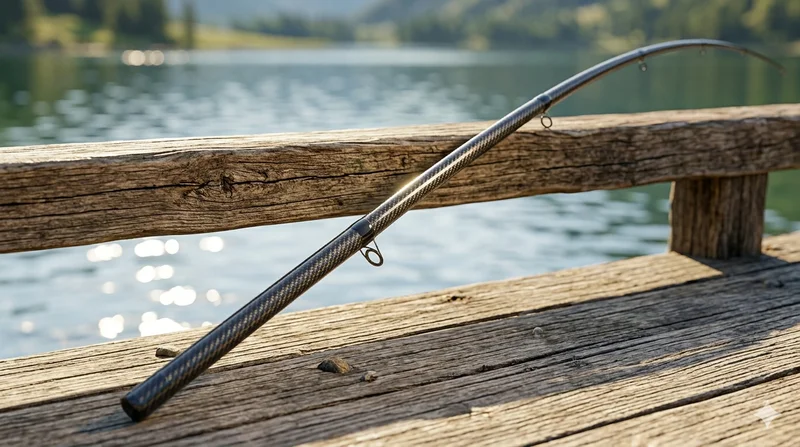
Carbon Fiber Fishing Rod Blank
High-quality carbon fiber fishing rod blank manufactured from multiple grades of Toray carbon fiber cloth. Available in a wide range of lengths, powers, and actions for freshwater and saltwater applications. Suitable for OEM rod building.

Carbon Fiber Plate — 3K Twill T700 1.5mm
Thin 1.5mm carbon fiber plate with 3K twill weave surface. Lightweight and stiff, commonly used for covers, panels, drone bodies, and applications requiring a premium aesthetic appearance.

Carbon Fiber Plate — 3K Twill T700 3.0mm
Medium-thickness 3.0mm carbon fiber plate offering significantly higher load capacity while maintaining attractive 3K twill finish. Suitable for structural brackets, reinforcement plates, and load-bearing panels.
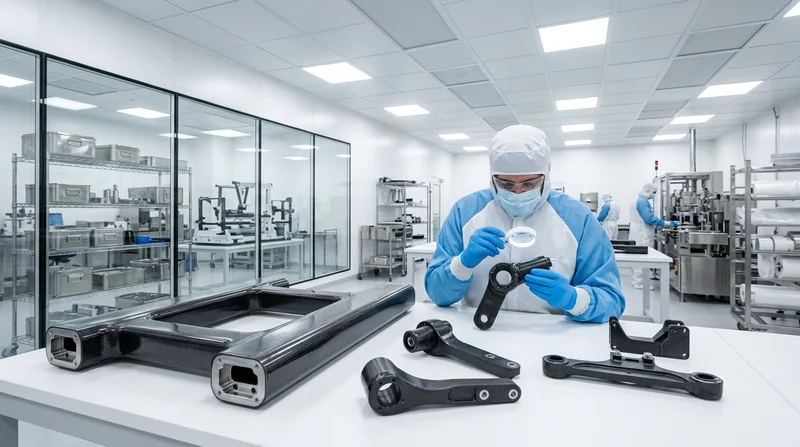
Custom Carbon Fiber Medical Device Components
Medical-grade carbon fiber components manufactured for imaging equipment, surgical instruments, and patient support systems. Carbon fiber's radiolucency (X-ray transparency) and high strength-to-weight ratio make it ideal for CT scanner beds, wheelchair frames, surgical robot arms, and MRI-compatible accessories. Biocompatible resin systems available.

Square Carbon Fiber Tube — 3K Twill T700
Square cross-section carbon fiber tube manufactured with 3K twill weave for torsional strength. Preferred for structural frames, trusses, and support columns where rectangular geometry offers design flexibility.