
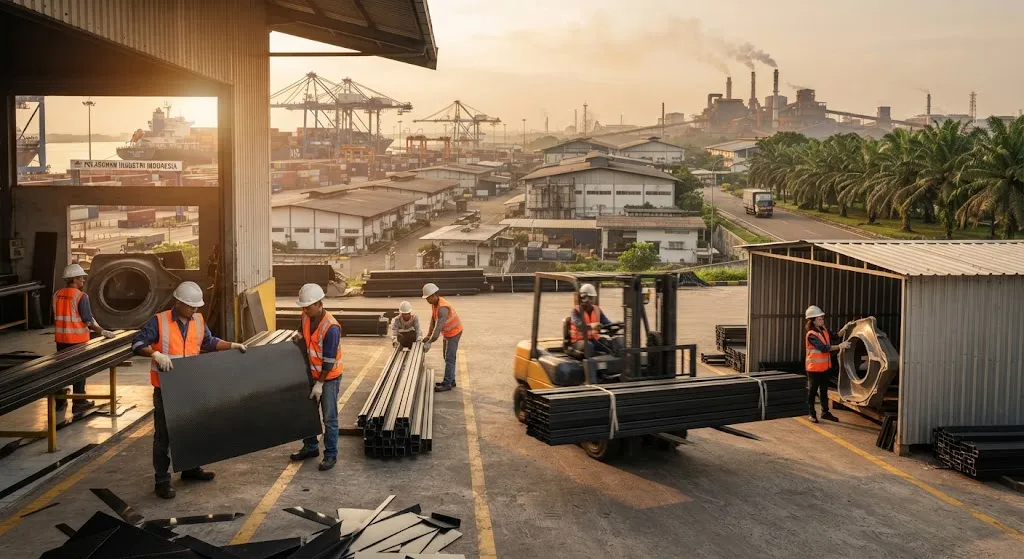
Indonesia rarely appears in the global top ten of carbon fiber market reports, but the country is assembling the conditions for sustained composite consumption. The economy continues to grow at roughly 5 percent annually, the government has invested heavily in downstream processing of i
Introduction
Indonesia rarely appears in the global top ten of carbon fiber market reports, but the country is assembling the conditions for sustained composite consumption. The economy continues to grow at roughly 5 percent annually, the government has invested heavily in downstream processing of its nickel reserves, and a manufacturing corridor around Jakarta and West Java has absorbed both domestic and foreign industrial investment. For composite suppliers, the useful question is not whether Indonesia is a large market today — it is not — but where the early demand is forming and how it will scale.
The Indonesian story differs from other Southeast Asian markets in one important respect. Vietnam and the Philippines grew consumption through electronics assembly and infrastructure; Indonesia adds a resource-driven industrial layer on top, because nickel mining and refining for electric vehicle batteries have created a distinct engineering economy. That combination — electronics manufacturing, mining and energy infrastructure, and export-linked industry — produces three separate demand streams for carbon fiber instead of one, which is why the market deserves attention even at its current size.
Electronics Manufacturing: The Java Corridor
The electronics and component manufacturing cluster around Jakarta, Bekasi and Karawang is the visible face of Indonesian industry. The corridor hosts smart device assembly, printed circuit board fabrication, data center construction and a growing electric vehicle supply chain, and each of these segments uses composite materials in specific places:
- Automation and handling equipment: Composite component trays, rail systems and robotic arms in factories see regular replacement demand, favoring durable carbon fiber-reinforced parts over metal where wear and weight matter.
- Data center and network infrastructure: Cooling system components, cable management structures and lightweight enclosures increasingly specify fiber-reinforced plastics for dimensional stability in humid tropical conditions.
- Electric vehicle supply chain: As the EV ecosystem expands around battery production and assembly, lightweight structural and protective components follow the same pattern seen in every other EV manufacturing region.
These demands are individually small but structurally durable. Unlike aerospace procurement, which arrives in large discrete orders, electronics-linked composite demand in Indonesia comes as steady, recurring supply of components — which suits composite fabricators who can qualify early and hold the relationship.
The Nickel Economy: Energy, Mining and Process Infrastructure
Indonesia controls a large share of the world's nickel supply, and the government's downstreaming policy has transformed the country from ore exporter to processor. The consequence for composites is a second, larger demand stream built around energy and industrial process infrastructure:
- Renewable energy build-out: The nickel and EV boom is paired with accelerated solar, hydro and geothermal development; composite components for these installations — structural profiles, brackets, corrosion-resistant housings — follow.
- Mining and processing plant equipment: Corrosive smelting environments reward corrosion-resistant composite components in air handling, piping supports and plant walkways, an established composite application in every mining economy.
- Energy storage and battery facilities: New battery plants and their supporting energy infrastructure demand lightweight, electrically insulating structural components that composite materials provide.
This stream matters to suppliers because it is capital-linked: it grows with investment cycles rather than consumer demand, it is dominated by large projects, and it rewards suppliers who can provide engineered composite components with certification support rather than commodity sheet goods.
Export-Linked Industry and the Infrastructure Baseline
The third demand stream is the least visible but the broadest. Indonesian manufacturers are increasingly integrated into global export supply chains, and the infrastructure that supports them — ports, industrial estates, transport links — is itself a composite consumer. The baseline table below summarizes where the 2026 demand sits:
| Demand Segment | Primary Location | Main Composite Uses | Growth Character | Relative Size |
|---|---|---|---|---|
| Electronics & components | Jakarta, Bekasi, Karawang | Handling equipment, enclosures | Steady, recurring | Small, growing |
| Energy & mining infrastructure | Sulawesi, Kalimantan, remote sites | Plant equipment, corrosion-resistant parts | Capital-linked, project-driven | Moderate, rising |
| Export manufacturing & logistics | Port and industrial zones | Structural profiles, transport and logistics equipment | Broad, export-linked | Emerging |
What the table makes clear is that Indonesian composite demand is fragmented but multi-layered. Any single segment is too small to justify specialized local production today, which is why the practical entry point is import supply plus local fabrication partnerships rather than greenfield manufacturing.
Imports, Local Fabrication and the Supply Chain Reality
Indonesia does not yet produce carbon fiber feedstock domestically at scale, and the current supply chain reflects that. Raw material — carbon fiber tows, fabrics and prepreg — is imported, while local capabilities are strongest in fabrication: molding, profile pultrusion and assembly of finished components. The implications for a supplier entering the market:
- Material import dominates: Demand for imported carbon fiber is real and growing, but it flows through fabricators and traders rather than direct to large OEMs, so channel structure matters as much as price.
- Fabrication is local, feedstock is not: The right market position pairs imported material with local fabrication partners who hold the end-customer relationships in plant, infrastructure and industrial projects.
- Certification and specification support win deals: Indonesian industrial buyers weigh technical support, documentation and certification evidence heavily, often more than marginal price differences, because project owners must justify material choices to financing and regulators.
For Indonesian fabricators and end users, the practical consequence is that material quality, consistency and engineering support are the deciding factors between a project that performs and one that fails specification review. The market is small enough that reputation travels quickly and technical credibility is the decisive currency.
Frequently Asked Questions
Is carbon fiber used in Indonesia today, and where?
Yes, in modest but growing volumes. The main uses are in industrial equipment: handling and automation components in the electronics corridor around Jakarta and Bekasi, corrosion-resistant parts in nickel smelting and processing plants, renewable energy installations and export-oriented manufacturing equipment. Indonesian demand is industrial and infrastructure-driven rather than aerospace-driven, so it appears in component supply and local fabrication rather than in large airframe programs.
Does Indonesia produce carbon fiber domestically?
Not at meaningful scale. Feedstock such as carbon fiber tows, fabrics and prepreg is imported, while Indonesian companies have developed fabrication capabilities — molding, pultrusion and assembly of finished composite components. This split means the market is served by imported material flowing through local fabricators and distributors, and that is the channel structure new suppliers should plan for when entering.
What drives future carbon fiber demand growth in Indonesia?
Three drivers: continued growth of the electronics and EV manufacturing corridor, the capital-intensive nickel and renewable energy build-out, and deeper integration into export supply chains that brings global specification requirements to local manufacturers. All three are investment-linked rather than consumer-linked, which makes growth lumpier than in mature markets but structurally sustainable over the long term.
Conclusion
Indonesia's carbon fiber market in 2026 is small in absolute terms but unusually well positioned to grow. It combines a steady electronics manufacturing corridor, a capital-heavy nickel and energy build-out, and an export-linked industrial base — three separate demand streams that together create a more resilient market than any single segment could. For suppliers, the winning pattern is imported feedstock paired with local fabrication partners, technical support and certification evidence that industrial buyers can use with their own financiers and regulators.
For fabricators and industrial buyers building composite supply chains in Indonesia, the practical starting point is a material partner who can deliver consistent quality with the documentation local projects require. Explore our carbon fiber products for industrial and energy applications, or contact our export team to discuss supply options for Indonesian projects.
Part of topic
Related Articles
- Carbon Fibre Rods Near Me: Complete Guide
- Carbon Fiber Rods Near Me: Complete Guide
- Carbon Fiber Rod Manufacturer: Complete Guide
- Carbon Fiber Tube Price: Complete Guide
- Carbon Fiber Manufacturers in the World: Capacity, Technology, and Market Leaders
- Carbon Fiber Cloth Supplier Philippines: Sourcing Fabric for Marine, Automotive, and Construction
Interested in Our Products?
Contact our team for competitive pricing and technical specifications.
Get a QuoteRelated Products

Carbon Fiber Fishing Rod Blank
High-quality carbon fiber fishing rod blank manufactured from multiple grades of Toray carbon fiber cloth. Available in a wide range of lengths, powers, and actions for freshwater and saltwater applications. Suitable for OEM rod building.
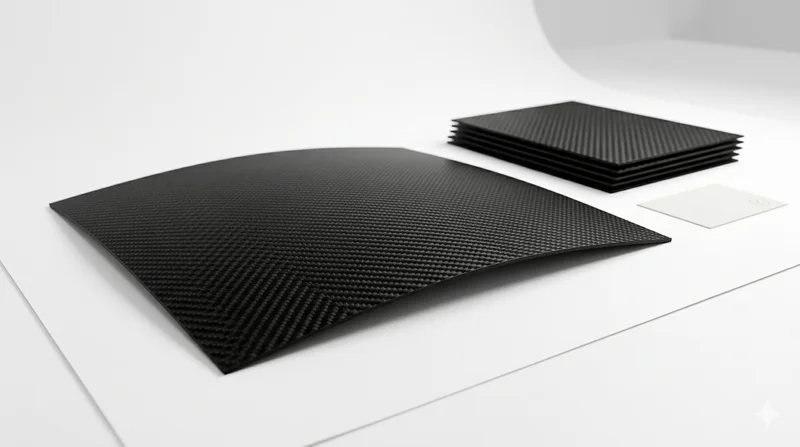
Carbon Fiber Plate — 3K Twill T700 1.5mm
Thin 1.5mm carbon fiber plate with 3K twill weave surface. Lightweight and stiff, commonly used for covers, panels, drone bodies, and applications requiring a premium aesthetic appearance.
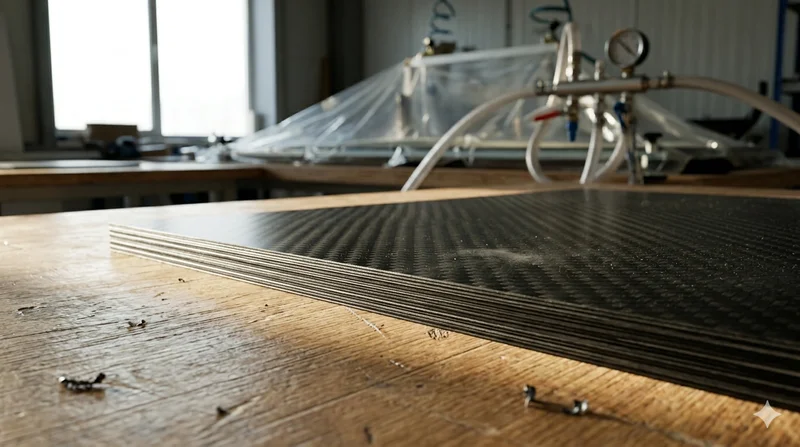
Carbon Fiber Plate — 3K Twill T700 3.0mm
Medium-thickness 3.0mm carbon fiber plate offering significantly higher load capacity while maintaining attractive 3K twill finish. Suitable for structural brackets, reinforcement plates, and load-bearing panels.
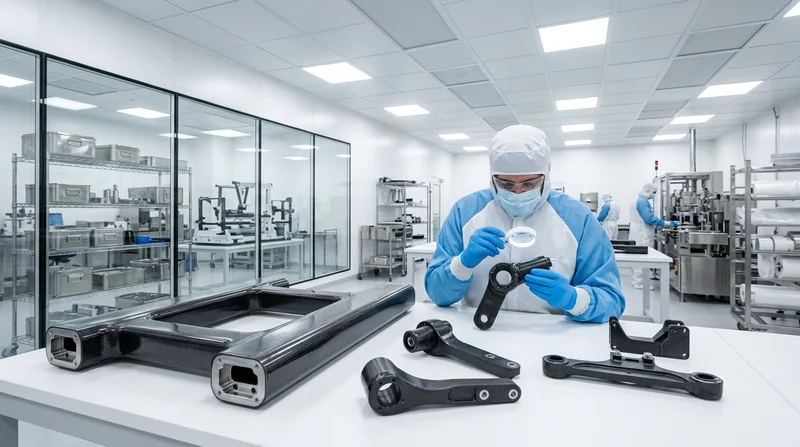
Custom Carbon Fiber Medical Device Components
Medical-grade carbon fiber components manufactured for imaging equipment, surgical instruments, and patient support systems. Carbon fiber's radiolucency (X-ray transparency) and high strength-to-weight ratio make it ideal for CT scanner beds, wheelchair frames, surgical robot arms, and MRI-compatible accessories. Biocompatible resin systems available.
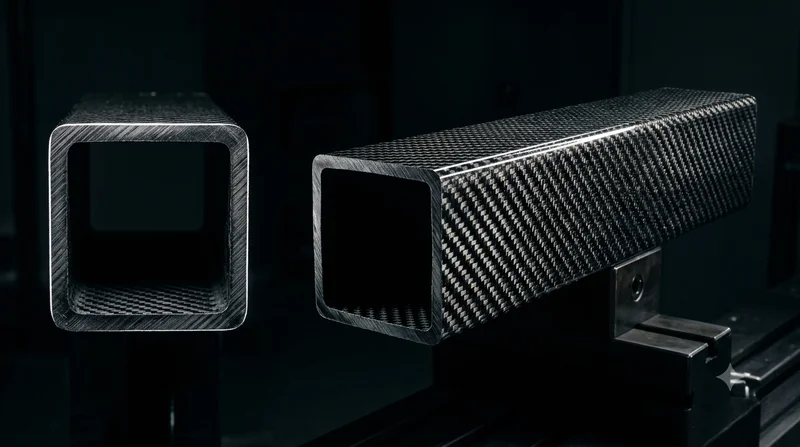
Square Carbon Fiber Tube — 3K Twill T700
Square cross-section carbon fiber tube manufactured with 3K twill weave for torsional strength. Preferred for structural frames, trusses, and support columns where rectangular geometry offers design flexibility.