
Carbon fiber manufacturers in the world are concentrated in a handful of countries, yet the competitive balance among them has shifted dramatically in the past decade. Japan's Toray, Teijin, and Mitsubishi Chemical built the industry and still dominate the premium aerospace segment. Chinese producer
Introduction
Carbon fiber manufacturers in the world are concentrated in a handful of countries, yet the competitive balance among them has shifted dramatically in the past decade. Japan's Toray, Teijin, and Mitsubishi Chemical built the industry and still dominate the premium aerospace segment. Chinese producers led by Zhongfu Shenying, Jilin Chemical Fiber, and Guangwei have since expanded capacity at an extraordinary pace and now account for more than half of global installed capacity. Understanding who makes what, at what cost, and with which quality system is the foundation of any serious carbon fiber buying decision.
This guide maps the global capacity landscape, profiles the leading carbon fiber manufacturers in the world, explains the small-tow and large-tow market split, and gives buyers a practical framework for choosing a supply source.
The Global Carbon Fiber Capacity Map
Global installed capacity for carbon fiber is estimated at roughly 180,000 tonnes per year and rising, with the geographic balance shifting toward Asia. China has become the largest producing country, having built its capacity with large-tow lines and a deliberate industrial policy of self-sufficiency in aerospace-grade fiber. Japan remains the technology leader, setting the reference grades — T300, T700, T800, T1100, and most recently T1200 — that every other producer benchmarks against. The United States and Europe contribute premium aerospace capacity, while Turkey and South Korea add wind-energy and industrial volume.
The strategic driver behind the shift is cost. Chinese producers operate newer, larger lines and benefit from a complete domestic supply chain, from polyacrylonitrile precursor to finished tow. That has pushed standard-grade prices down globally while Japanese and Western producers defend the premium segment through aerospace qualification, consistency, and brand reputation.
Capacity announcements continue to reshape the map. Chinese producers have commissioned several new plants since 2024, adding tens of thousands of tonnes, while Japanese and Western producers have focused on higher-margin aerospace grades rather than volume. The practical consequence for buyers is a widening price gap: standard industrial fiber keeps getting cheaper, while qualified aerospace fiber remains scarce and allocated. Lead times tell the same story — large-tow industrial fiber is usually available from stock, while small-tow aerospace grades often require allocation through a distributor and long planning horizons. Buyers who lock in standard grades with reliable distributors avoid the worst of both problems: the cost of premium fiber they do not need, and the wait for capacity they cannot secure.
The Leading Carbon Fiber Manufacturers in the World
The table below profiles the producers that define the market today. Capacity figures are approximate and change with expansion announcements, but the relative positions are stable.
| Manufacturer | HQ | Flagship grades | Approx. capacity (t/yr) | Strength |
|---|---|---|---|---|
| Toray (incl. Zoltek) | Japan | T700, T800, T1100, T1200 | 60,000+ | Aerospace + large-tow industrial |
| Teijin | Japan | Tenax T700, T800 | 12,000+ | Aerospace, automotive |
| Mitsubishi Chemical | Japan | Pyrofil TR, MR series | 10,000+ | Aerospace, industrial |
| Zhongfu Shenying | China | SYT55-SYT80 (T700-T1200) | 25,000+ | Largest Chinese producer |
| Jilin Chemical Fiber | China | 48K large tow | 15,000+ | Cost-efficient large tow |
| Guangwei Composites | China | T700, T800 equivalents | 15,000+ | Aerospace + wind |
| Hexcel | USA | AS4, IM7, IM8 | 10,000+ | Western aerospace premium |
| SGL Carbon | Germany | Industrial tow | 10,000+ | Automotive, industrial |
| DowAksa | Turkey | Aksaca grades | 3,000+ | Wind energy, industrial |
Note the pattern: Japanese producers lead on premium grades, Chinese producers lead on volume and cost, and Western producers hold a qualified aerospace niche. Most other countries rely on imports.
Small Tow vs Large Tow: Two Separate Markets
Carbon fiber manufacturers in the world sell two structurally different products. Small-tow fiber — 1K to 12K, meaning 1,000 to 12,000 filaments per strand — is used in aerospace, high-end automotive, and medical applications where consistency and performance justify higher prices. Large-tow fiber — 24K, 48K, and 60K — is used in wind energy, construction, automotive mass production, and industrial parts where cost per kilogram dominates.
The split shapes pricing. Standard large-tow has fallen toward USD 10-15 per kilogram at scale, while qualified aerospace small-tow remains several times higher. For a buyer, the practical implication is straightforward: specify small tow only when your application genuinely needs it, and take advantage of large-tow pricing for structural components where the fiber architecture permits it.
Technology Tiers: From T300 to T1200
Grade names follow a rough ladder of tensile strength and modulus. T300-class fiber is the entry industrial grade; T700 is the workhorse for most structural composites; T800 and T1100 serve aerospace and high-performance applications; and T1200-class fiber — announced by Toray in 2023 with a tensile strength of 8,000 MPa and by Zhongfu Shenying's SYT80 in 2026 with claimed 100-tonne-scale production — represents the current frontier. Few applications actually need the top tier, and specifying it raises cost without benefit if the design load does not demand it.
Grade selection should follow the load case, not the marketing material. For most tube, cloth, and structural applications, T700-class fiber balances performance and cost. T800 and above earns its premium in aerospace structures, pressure vessels, and high-performance sporting goods. In practical terms, the tiers translate into clear guidance:
- T300-class: the entry point for cost-sensitive industrial parts where ultimate strength is not critical.
- T700-class: the workhorse for structural tubes, cloth, and general composite parts — the best performance-to-cost balance.
- T800 and above: for aerospace structures, pressure vessels, and high-performance sporting goods that justify the premium.
Sourcing From Carbon Fiber Manufacturers in the World
For most buyers, sourcing from the leading carbon fiber manufacturers in the world means working through distributors and converters rather than directly with mills. Japanese mills allocate aerospace capacity years in advance; Chinese mills typically sell through trading companies with minimum order quantities in the tens of tonnes. A fabricator or a distributor near you can break these volumes down, hold stock, and supply batch documentation — which is why most small and medium composite businesses buy converted fabric, cloth, and tube rather than raw tow.
Whatever route you choose, demand three things from your supply chain: a stated fiber grade with a technical data sheet, batch traceability back to the mill, and consistent mechanical properties verified by testing. These hold true whether you buy from a Japanese mill, a Chinese producer, or a distributor in between. A documented supply chain also protects against counterfeits, which have appeared in carbon fiber trading as grades and certificates are copied. Verify the mill's name on the data sheet and cross-check batch numbers with the distributor's records before accepting a premium-grade shipment.
Frequently Asked Questions
Who is the largest carbon fiber manufacturer in the world?
Toray is the largest by capacity and revenue, with production through its Japanese plants, Zoltek in the United States, and joint ventures in Europe and Asia. Chinese producer Zhongfu Shenying is the largest single domestic player in China and has been expanding toward Toray's scale, while the country as a whole now holds more than half of global capacity.
Which country produces the most carbon fiber?
China is currently the largest producing country, having built its capacity rapidly over the past decade with large-tow lines and a complete domestic precursor supply chain. Japan remains the technology leader and the reference for premium aerospace-grade fiber, while the United States and Europe hold significant qualified aerospace capacity.
What is the difference between 3K, 12K, and 48K carbon fiber?
The number is the filament count per strand: 3K and 12K are small-tow grades used for aerospace, high-end automotive, and cosmetic parts; 24K, 48K, and 60K are large-tow grades for wind energy, construction, and industrial applications. Large tow costs less per kilogram; small tow offers finer handling and higher consistency for premium parts.
Should I buy directly from a carbon fiber mill or through a distributor?
For most buyers, a distributor or converter is the practical route: mills sell in large volumes with long allocation cycles, while distributors break down quantities, hold stock, and supply batch documentation. Buy direct only when you have the volume, the specifications, and the supply chain management to justify it.
Conclusion
Carbon fiber manufacturers in the world divide into Japanese and Western premium producers, Chinese volume producers, and a qualified aerospace niche — and the choice among them comes down to grade, cost, and quality evidence. Small tow serves premium structural applications, large tow serves industrial volume, and T700-class fiber covers most practical needs.
YongXian sources from qualified mills and offers carbon fiber cloth, tube, and sheet with stated grades, batch data sheets, and worldwide shipping. Browse our carbon fiber product range or contact us to discuss your material specification and sourcing requirements.
Part of topic
Related Articles
- Carbon Fibre Rods Near Me: Complete Guide
- Carbon Fiber Rods Near Me: Complete Guide
- Carbon Fiber Rod Manufacturer: Complete Guide
- Carbon Fiber Tube Price: Complete Guide
- Carbon Fiber Cloth Supplier Philippines: Sourcing Fabric for Marine, Automotive, and Construction
- Carbon Fiber Tube Manufacturers in India: Pultrusion and Filament Winding Guide
Interested in Our Products?
Contact our team for competitive pricing and technical specifications.
Get a QuoteRelated Products
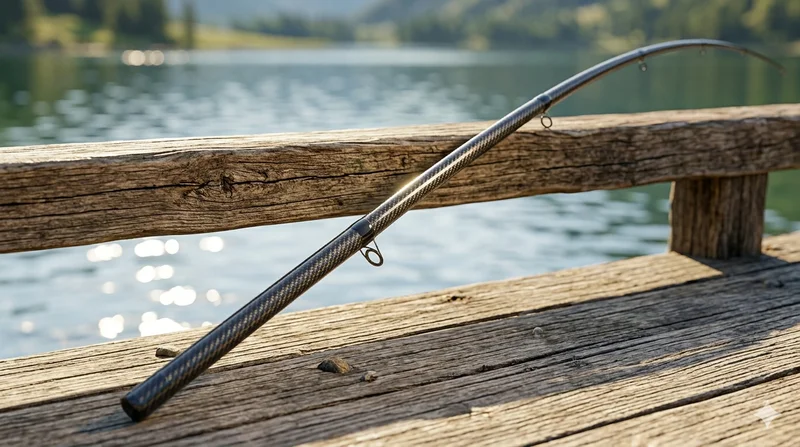
Carbon Fiber Fishing Rod Blank
High-quality carbon fiber fishing rod blank manufactured from multiple grades of Toray carbon fiber cloth. Available in a wide range of lengths, powers, and actions for freshwater and saltwater applications. Suitable for OEM rod building.

Carbon Fiber Plate — 3K Twill T700 3.0mm
Medium-thickness 3.0mm carbon fiber plate offering significantly higher load capacity while maintaining attractive 3K twill finish. Suitable for structural brackets, reinforcement plates, and load-bearing panels.

Carbon Fiber Plate — 3K Twill T700 1.5mm
Thin 1.5mm carbon fiber plate with 3K twill weave surface. Lightweight and stiff, commonly used for covers, panels, drone bodies, and applications requiring a premium aesthetic appearance.
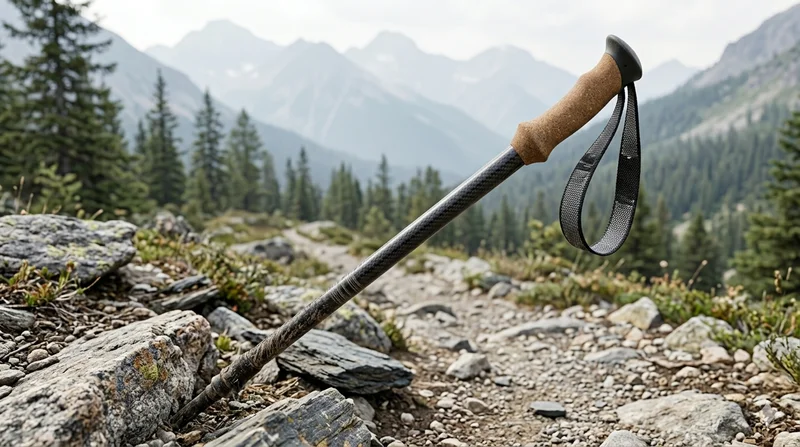
Carbon Fiber Trekking Pole
Lightweight carbon fiber trekking pole manufactured from high-grade carbon fiber tube. Weighs only 160g per pole while providing superior shock absorption and durability for hiking, trail running, and backpacking.

Square Carbon Fiber Tube — 3K Twill T700
Square cross-section carbon fiber tube manufactured with 3K twill weave for torsional strength. Preferred for structural frames, trusses, and support columns where rectangular geometry offers design flexibility.