
Ask five suppliers for a carbon fiber tube price and you may get five numbers that differ by a factor of two for what looks like the same product. The gap is rarely random: the price of carbon fiber tube is set by a small set of variables — the manufacturing process, the fibre grade, the diameter an
Introduction
Ask five suppliers for a carbon fiber tube price and you may get five numbers that differ by a factor of two for what looks like the same product. The gap is rarely random: the price of carbon fiber tube is set by a small set of variables — the manufacturing process, the fibre grade, the diameter and wall thickness, the surface finish, and the order volume — and each one shifts the number in a predictable direction. Buyers who understand which variable dominates can hold the price down without sacrificing performance, while buyers who compare only the final number often pay for a process or grade they do not need.
This guide breaks the carbon fiber tube price into its components, gives realistic price bands for the sizes and processes you will actually quote, and explains how to compare carbon fiber tube price suppliers on cost rather than sticker price alone.
What Determines a Carbon Fiber Tube Price
Five factors drive the carbon fiber tube price, and their influence is not equal. The manufacturing process is the largest single driver, because it decides the machinery, the labour hours and the achievable fibre volume fraction. The fibre grade comes next: a T300-based tube costs meaningfully less than a T700-based tube with the same geometry. Diameter and wall thickness set the material weight and therefore the raw material share of the cost. Surface finish and secondary machining add labour. And volume determines how much of the fixed cost — die design, set-up, inspection — can be spread across the order.
A useful way to think about it: for a given process and grade, the carbon fiber tube price scales roughly with the weight of the tube. A 25 mm tube weighing twice as much as a 10 mm tube will usually cost roughly twice as much per meter before volume discounts, because the dominant cost is the fibre itself. That relationship makes it easy to sanity-check any quote before you send it to three competitors.
Carbon Fiber Tube Price by Process and Size
The table below shows realistic carbon fiber tube price bands for the three main processes at small-to-medium quantities. These are indicative ranges, not fixed prices — regional logistics, certification requirements and surface finish move them up or down.
| Process | Typical OD range | Typical price per meter | Main cost driver | Best suited for |
|---|---|---|---|---|
| Pultruded | 3-100 mm | USD 3-15 | Raw fibre, die wear | Drone arms, struts, frames |
| Roll-wrapped | 5-150 mm | USD 12-45 | Lay-up labour, prepreg cost | Aerospace, robotics, high-strength parts |
| Filament wound | 20-600 mm | USD 25-90 | Machine time, mandrel cost | Drive shafts, masts, pressure parts |
Within a process, diameter and wall thickness dominate. As a rule of thumb, a 6 mm pultruded tube is typically USD 3-5 per meter, a 20 mm pultruded tube USD 8-14 per meter, and a 50 mm roll-wrapped tube USD 25-45 per meter. Wall thickness matters because it multiplies the material weight: doubling the wall of a 20 mm tube increases its price by roughly half as the fibre content rises.
Volume Pricing: What Bulk Buyers Actually Pay
Volume is where the carbon fiber tube price changes most visibly. Pultrusion is a continuous process, so once the line is set up the marginal cost of an extra meter is low — the discount curve is steep in the first few hundred meters and flattens after that. The table below shows typical band pricing for a 20 mm pultruded tube as an example.
| Order volume | Price per meter (20 mm pultruded) | Savings vs. retail |
|---|---|---|
| 1-10 m (retail) | USD 10-14 | Baseline |
| 50-200 m | USD 7-10 | 20-30 percent |
| 500-1,000 m | USD 5.5-8 | 30-45 percent |
| 2,000+ m (contract) | USD 4.5-6.5 | 45-55 percent |
Two practical notes on volume pricing. First, the discount is usually tied to a single size and single grade — a mixed pallet of ten different diameters does not earn the same rate as ten pallets of one diameter. Second, the largest savings come from committing to a forecast, because the supplier can plan die time and raw material purchases. A quarterly commitment of a few thousand meters typically earns a better rate than a one-off order of the same size. Geography changes the comparison too: a carbon fiber tube price near me quote from a local stockist includes handling and delivery, while a carbon fiber tube price usa comparison across online suppliers is typically ex-works plus freight. Request delivered pricing from every candidate so the comparison is honest.
How to Compare Carbon Fiber Tube Price Quotes
Comparing quotes on price per meter alone is a mistake, because the cheapest number often hides a different specification. A disciplined comparison keeps five items in view:
- Process and grade: confirm the tube is pultruded, roll-wrapped or filament-wound, and the exact fibre grade (T300, T700 or equivalent). A low quote may simply be a cheaper process.
- Wall thickness and tolerances: check the nominal wall and the ID/OD tolerance. Tight tolerances cost more, and a quote without them cannot be compared to one with them.
- Surface finish: matte or glossy, sanded or as-cured. Cosmetic-grade finish adds labour that structural buyers do not need.
- Length and cutting: confirm whether the price is per meter of full length or cut-to-size, and what cutting costs. Some suppliers charge per cut.
- Included services: data sheets, test certificates, packaging and shipping. A slightly higher per-meter price with certificates and a known delivery term can be cheaper overall.
When you send the same specification to three suppliers, share the exact drawing or a written spec with process, grade, wall, tolerance and finish. Ambiguous requests produce ambiguous quotes, and ambiguous quotes cannot be compared — the whole point of a price comparison is a like-for-like specification.
Frequently Asked Questions
Why is a carbon fiber tube price so different between suppliers?
Because the quote may describe a different product. Process, fibre grade, wall thickness, tolerance, surface finish and volume all shift the price, often by a factor of two. Ask each supplier to confirm those six items in writing, and compare like-for-like — the cheapest quote usually differs in specification, not just in margin.
What is the cheapest carbon fiber tube process?
Pultrusion is the lowest-cost process for continuous tube in standard diameters, typically USD 3-15 per meter depending on size. Roll-wrapped tube costs more because lay-up is labour intensive, and filament wound tube is the most expensive at large diameters because of machine time and mandrel cost. For non-structural or lightly loaded parts, pultruded tube is almost always the most economical choice.
How much does fibre grade affect the price?
Moving from a T300-class fibre to a T700-class fibre typically adds 30-60 percent to the material cost of the tube, and that difference carries through to the final price. If your application does not need the higher strength and stiffness, the cheaper grade is the rational choice — but confirm the mechanical requirement first, because re-specifying after production starts is expensive.
When do carbon fiber tube price suppliers give the best discounts?
At committed volume. The steepest discount steps come between retail (1-10 m) and small lots (50-200 m), typically 20-30 percent, with contract volumes of 2,000+ meters reaching 45-55 percent off retail. Discounts apply per size and grade, and are usually better with a quarterly forecast than with a single large order.
Conclusion
A carbon fiber tube price is not a single number but the sum of process, grade, geometry, finish and volume. Pultruded tube is the economical default for standard sizes; roll-wrapped tube buys higher strength and tighter tolerances; filament-wound tube covers large diameters and hoop-loaded parts. Match the specification to the application, buy the largest volume you can commit to, and compare quotes on a written like-for-like spec rather than on the final number alone.
YongXian supplies pultruded, roll-wrapped and filament-wound carbon fiber tube with full data sheets, cut-to-size service and volume pricing. Browse our carbon fiber tube range or send us your specification for a documented quote on process, grade and tolerance.
Part of topic
Related Articles
- Carbon Fibre Rods Near Me: Complete Guide
- Carbon Fiber Rods Near Me: Complete Guide
- Carbon Fiber Rod Manufacturer: Complete Guide
- Carbon Fiber Manufacturers in the World: Capacity, Technology, and Market Leaders
- Carbon Fiber Cloth Supplier Philippines: Sourcing Fabric for Marine, Automotive, and Construction
- Carbon Fiber Tube Manufacturers in India: Pultrusion and Filament Winding Guide
Interested in Our Products?
Contact our team for competitive pricing and technical specifications.
Get a QuoteRelated Products
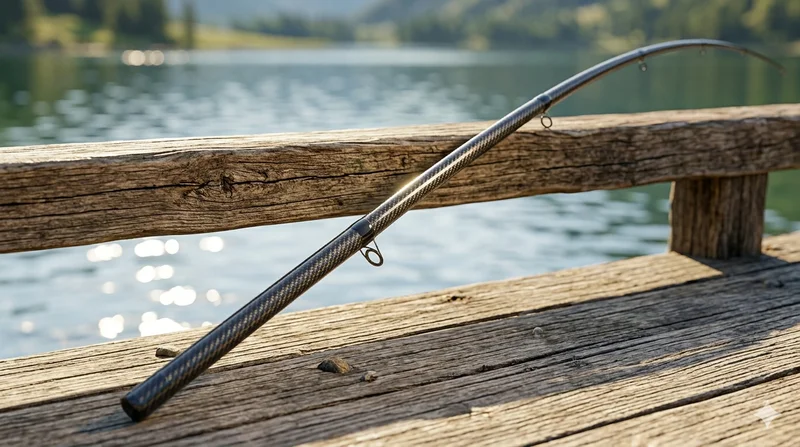
Carbon Fiber Fishing Rod Blank
High-quality carbon fiber fishing rod blank manufactured from multiple grades of Toray carbon fiber cloth. Available in a wide range of lengths, powers, and actions for freshwater and saltwater applications. Suitable for OEM rod building.

Carbon Fiber Plate — 3K Twill T700 3.0mm
Medium-thickness 3.0mm carbon fiber plate offering significantly higher load capacity while maintaining attractive 3K twill finish. Suitable for structural brackets, reinforcement plates, and load-bearing panels.

Carbon Fiber Plate — 3K Twill T700 1.5mm
Thin 1.5mm carbon fiber plate with 3K twill weave surface. Lightweight and stiff, commonly used for covers, panels, drone bodies, and applications requiring a premium aesthetic appearance.
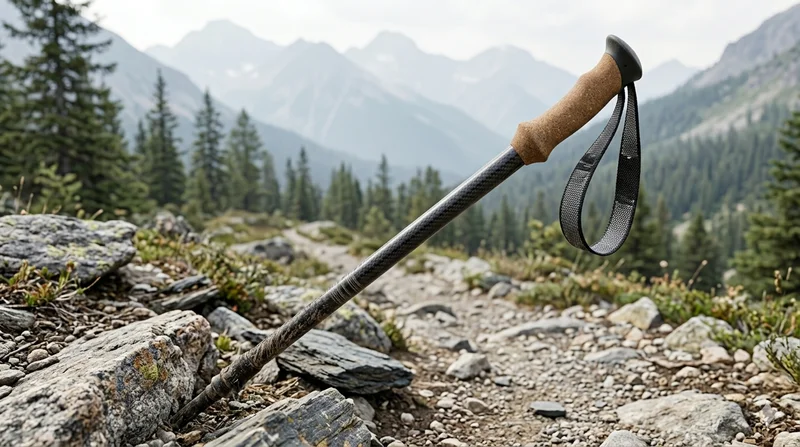
Carbon Fiber Trekking Pole
Lightweight carbon fiber trekking pole manufactured from high-grade carbon fiber tube. Weighs only 160g per pole while providing superior shock absorption and durability for hiking, trail running, and backpacking.

Square Carbon Fiber Tube — 3K Twill T700
Square cross-section carbon fiber tube manufactured with 3K twill weave for torsional strength. Preferred for structural frames, trusses, and support columns where rectangular geometry offers design flexibility.