
Hungary is the quiet heavyweight of Central European vehicle manufacturing. For years its role in the European supply chain was defined by engine plants and conventional vehicle assembly; today the country is repositioning itself around electric vehicles, battery cells, and the electron
Introduction
Hungary is the quiet heavyweight of Central European vehicle manufacturing. For years its role in the European supply chain was defined by engine plants and conventional vehicle assembly; today the country is repositioning itself around electric vehicles, battery cells, and the electronics that run them. The Hungary carbon fiber market in 2026 sits at the intersection of these shifts, growing from a small industrial base into a supplier opportunity driven by three engines: the BMW Debrecen factory, the battery gigafactories of CATL and Samsung SDI, and the automotive EMS sector that clusters around them.
Carbon fiber's role in this market is narrower than in aerospace-led economies, but it is expanding fast. Where carbon fiber is used today in Hungary — electric vehicle structural parts, battery housing components, lightweight interior and electronics enclosures, and tooling for composite-intensive automotive processes — it is used because EV range and payload targets leave no room for the weight penalties of earlier designs. This article maps the demand structure, profiles the key demand drivers, and identifies where a carbon fiber supplier can realistically enter the Hungarian market.
Market Size and Demand Structure
Total carbon fiber demand in Hungary remains modest by European standards — estimated at roughly 800-1,200 tonnes per year in 2026 — but the growth trajectory is steeper than the EU average, with compound growth in the 8-12% range expected through 2030 as EV and battery programmes ramp. The table below summarizes the demand structure across the principal end-use segments:
| Segment | 2026 Demand Share | Growth Outlook | Primary Drivers |
|---|---|---|---|
| Automotive & EV structural | 45-55% | 10-15% per year | BMW Debrecen ramp-up, EV platforms, lightweight parts |
| Battery & energy storage | 15-20% | 12-18% per year | Gigafactory expansion, thermal management, housing parts |
| Industrial & tooling | 15-20% | 5-8% per year | Composite tooling, machinery parts, infrastructure |
| Electronics & EMS | 8-12% | 6-10% per year | Lightweight enclosures, automation components |
| Other (aerospace, marine, wind) | 5-10% | 4-7% per year | Niche aerospace, wind maintenance, marine refit |
Two structural features stand out. First, demand is highly concentrated geographically around three industrial corridors: the Budapest region, the northwest around Győr, and the northeast around Debrecen. Second, much of the demand arrives indirectly — through German OEM purchasing organizations and EMS contract manufacturers — which means suppliers often qualify against German automotive standards (such as IATF 16949) rather than Hungarian national requirements.
BMW Debrecen and the Automotive Core
The BMW plant in Debrecen, which began series production of the fully electric iX3 in late 2025, is the single most important new driver of the Hungary carbon fiber market. The factory is BMW's first site built from the ground up to produce exclusively electric vehicles, and it anchors the iX3 platform that shares lightweighting concepts with the broader Neue Klasse architecture.
Where does carbon fiber enter the Debrecen value chain? The main channels are:
- Body-in-white and structural components: EV platforms increasingly specify carbon fiber reinforced plastic (CFRP) for selected load paths, roof structures, and stiffening elements where stiffness-to-weight ratio matters most.
- Interior and comfort systems: Carbon fiber trim, seat structures, and center consoles supplied by tier suppliers in the Budapest and Győr corridors.
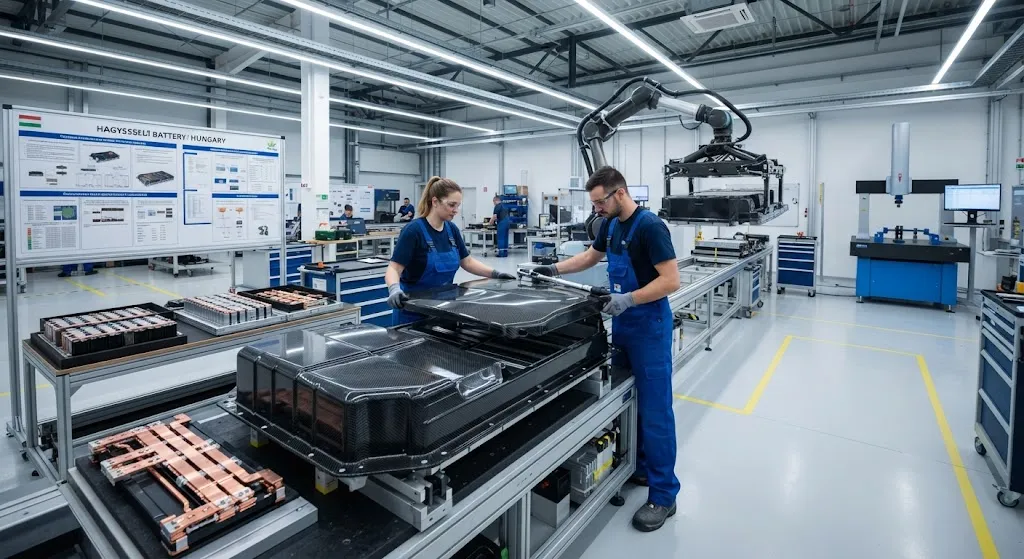
- Battery-related vehicle structures: Battery tray covers, protective underbody shields, and thermal barriers where composites provide a combination of mechanical protection and thermal management that metal alone does not.
- Production tooling: Fixtures, handling aids, and low-volume tooling at Debrecen and its tier suppliers, creating steady demand for composite tooling board and carbon tooling prepreg.
The wider automotive ecosystem reinforces the trend. Audi's Győr plant remains Hungary's largest vehicle factory, and its continued electrification programmes add demand for lightweight components in the northwest corridor. For suppliers, the strategic entry point is clear: standard-modulus carbon fabric and prepreg that can be qualified into tier-two and tier-three automotive parts within 12-18 months.
Battery Gigafactories: CATL and Samsung SDI
Hungary hosts two of Europe's largest battery cell investments. CATL's Debrecen gigafactory — initially planned with around 100 GWh of annual capacity — targets European OEM supply, and Samsung SDI's existing Hungarian plants in Göd supply cells to BMW and other customers, with further capacity expansion underway. Together these plants make Hungary the largest battery cell producer in the EU by planned capacity.
Carbon fiber's role in the battery ecosystem is growing through several routes:
- Module and pack housing: CFRP pack enclosures and covers reduce mass while offering stiffness, crash resistance, and electrical insulation, a combination increasingly attractive as cell energy density pushes pack weight higher.
- Thermal runaway containment: Composite layers with fire-retardant resin systems are used in escape channels and insulating shields, where carbon fiber's high-temperature behavior and low thermal conductivity earn it a place alongside ceramic and mica systems.
- Handling and automation equipment: Gigafactory material-handling systems, grippers, and robot arms increasingly use carbon fiber tubes and profiles for their rigidity and low inertia.
- Busbar and structural electronics: Lightweight support structures for busbars and battery electronics use thin CFRP laminates where stiffness must be combined with tight tolerances.
The practical implication for suppliers is a growing, diversifying industrial channel. Battery projects move on shorter qualification cycles than automotive exterior parts, and they consume materials — carbon tubes, pultruded profiles, and thin laminates — that overlap closely with the standard product ranges of most carbon fiber distributors.
Automotive EMS and the Electronics Layer
The third demand engine is Hungary's dense network of automotive electronics manufacturers. Hungary is one of Europe's largest producers of electric motors, inverters, and automotive electronics, with major EMS players operating around Budapest, Győr, and Székesfehérvár. These facilities supply battery management systems, power electronics, and vehicle control units to the same OEMs whose vehicles increasingly use carbon fiber elsewhere.
For the Hungary carbon fiber market, the EMS sector contributes both direct and indirect demand. Direct demand appears in lightweight housings, heat sinks with composite carriers, and automation equipment inside the plants themselves. Indirect demand is more significant: EMS suppliers are natural intermediaries for lightweight subassemblies that combine electronics, wiring, and composite structures into a single qualified package for automotive customers. Suppliers who can work with EMS partners on small-series CFRP-electronics integration gain access to OEM programmes without carrying the full qualification burden themselves.
This pattern matters because it lowers the barrier to entry. A carbon fiber fabricator serving Hungarian EMS customers typically faces shorter approval cycles and smaller minimum order quantities than those serving a direct OEM programme, making the market accessible to mid-size composite processors.
Frequently Asked Questions
How large is the Hungary carbon fiber market in 2026?
Estimated at roughly 800-1,200 tonnes per year in 2026, with automotive and battery applications representing about 60-75% of demand. Volumes are small relative to Germany or France, but growth of 8-12% per year through 2030 makes Hungary one of the faster-growing carbon fiber markets in Central Europe.
What is driving carbon fiber demand in Hungary?
Three engines: the BMW Debrecen EV plant and its lightweighting programmes; the battery gigafactories of CATL and Samsung SDI, which create demand for CFRP pack structures and automation equipment; and the automotive EMS sector, which integrates composite subassemblies into qualified OEM components. German OEM purchasing standards govern most qualification requirements.
Which carbon fiber applications have the shortest path to market in Hungary?
Industrial tooling, carbon tubes and pultruded profiles for automation equipment, and thin CFRP laminates for electronics and battery components carry the shortest qualification cycles. Automotive exterior structural parts require IATF 16949-aligned quality systems and OEM approval, which typically takes 12-24 months for a new supplier.
How do suppliers qualify for Hungarian automotive customers?
Qualification follows German automotive practice: IATF 16949 certification, material data sheets aligned with OEM specifications, production part approval (PPAP-style) documentation, and traceability through the supply chain. Many suppliers enter through tier-two and tier-three positions or through EMS partners before pursuing direct OEM contracts.
Conclusion
The Hungary carbon fiber market in 2026 is a growth story built on the country's strategic bet on electric mobility. BMW Debrecen is ramping EV production; CATL and Samsung SDI are building Europe's largest battery capacity; and the automotive EMS sector provides a practical channel for composite integration. Volumes remain moderate, but the demand structure is diversifying, qualification barriers are manageable at the tier-two and tier-three level, and the geographic concentration around three industrial corridors makes market coverage efficient for a supplier with Central European logistics.
YongXian supplies carbon fiber fabrics, unidirectional laminates, tubes, and reinforcement materials to automotive, battery, and industrial customers across Europe. Explore our carbon fiber product range or contact our team to discuss material specifications and qualification support for Hungarian market entry.
Part of topic
Related Articles
- Carbon Fiber Rods for Sale: Bulk Pricing and Wholesale Distribution
- Carbon Fiber Sheet Amazon: What to Buy Online vs Direct from Manufacturer
- Carbon Fiber Rod for Sale: In-Stock Sizes and Custom Cutting Services
- Carbon Fiber Manufacturing Near Me: Finding Local Production Partners
- Carbon Fiber Tube Suppliers: Global Directory and Comparison
- Carbon Fiber Sheet for Sale: In-Stock Inventory and Custom Order Lead Times
Interested in Our Products?
Contact our team for competitive pricing and technical specifications.
Get a QuoteRelated Products

Carbon Fiber Fishing Rod Blank
High-quality carbon fiber fishing rod blank manufactured from multiple grades of Toray carbon fiber cloth. Available in a wide range of lengths, powers, and actions for freshwater and saltwater applications. Suitable for OEM rod building.
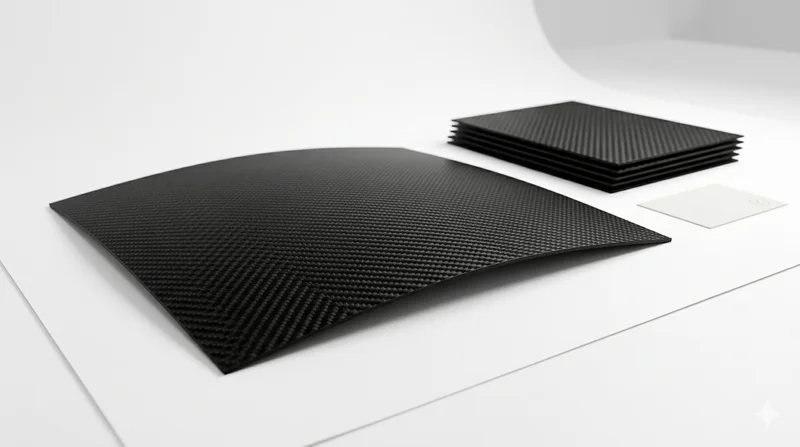
Carbon Fiber Plate — 3K Twill T700 1.5mm
Thin 1.5mm carbon fiber plate with 3K twill weave surface. Lightweight and stiff, commonly used for covers, panels, drone bodies, and applications requiring a premium aesthetic appearance.
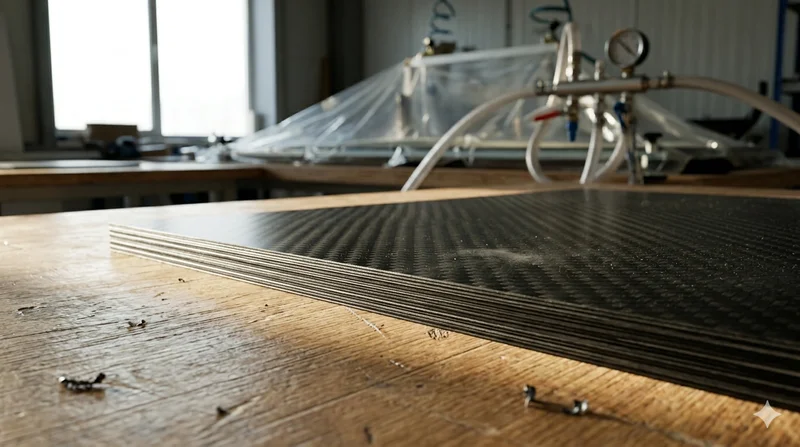
Carbon Fiber Plate — 3K Twill T700 3.0mm
Medium-thickness 3.0mm carbon fiber plate offering significantly higher load capacity while maintaining attractive 3K twill finish. Suitable for structural brackets, reinforcement plates, and load-bearing panels.
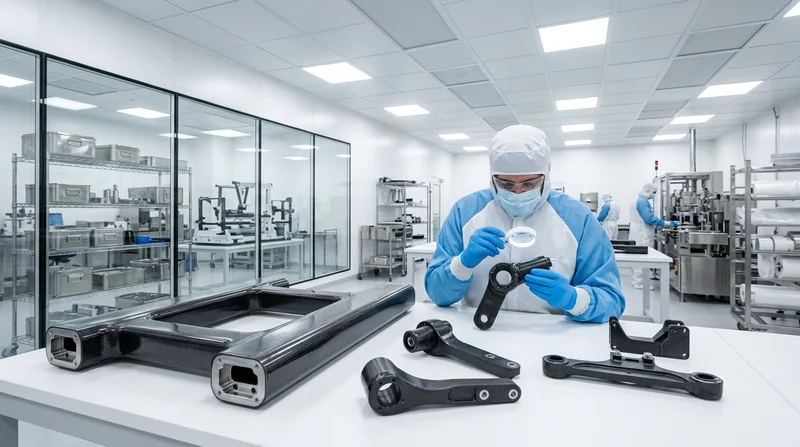
Custom Carbon Fiber Medical Device Components
Medical-grade carbon fiber components manufactured for imaging equipment, surgical instruments, and patient support systems. Carbon fiber's radiolucency (X-ray transparency) and high strength-to-weight ratio make it ideal for CT scanner beds, wheelchair frames, surgical robot arms, and MRI-compatible accessories. Biocompatible resin systems available.
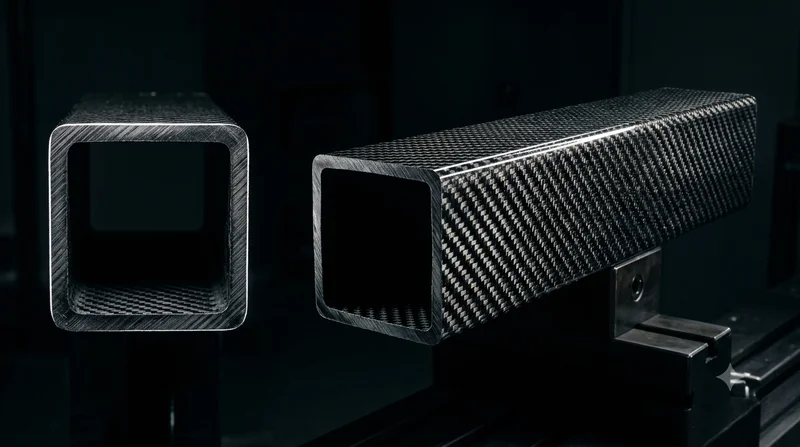
Square Carbon Fiber Tube — 3K Twill T700
Square cross-section carbon fiber tube manufactured with 3K twill weave for torsional strength. Preferred for structural frames, trusses, and support columns where rectangular geometry offers design flexibility.