
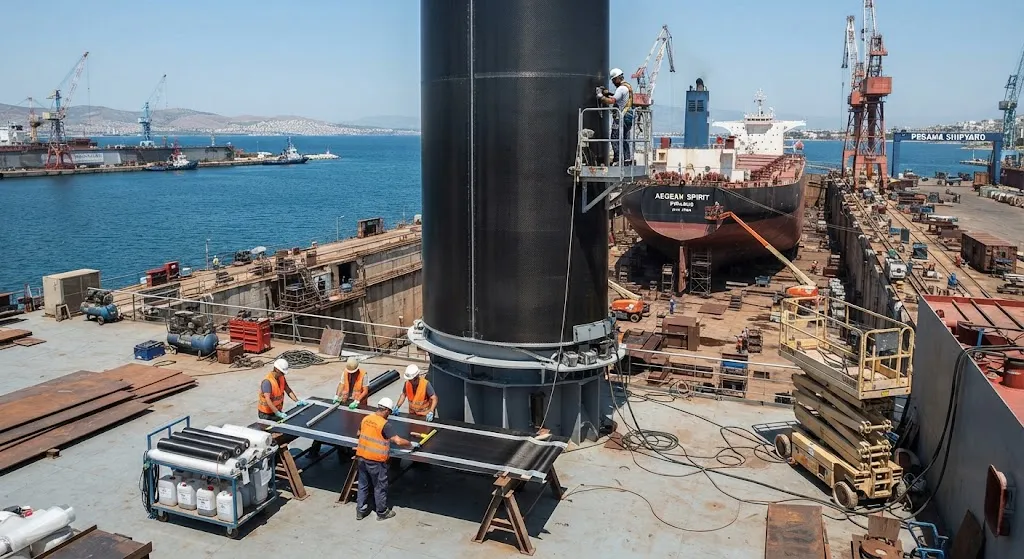
Greece does not build most of the ships its shipowners operate — over 90% of the Greek-controlled fleet is built in foreign yards — but it is the world's largest ship-owning nation, controlling a merchant fleet estimated at more than 5,000 vessels that carries roughly 20% of global seab
Introduction
Greece does not build most of the ships its shipowners operate — over 90% of the Greek-controlled fleet is built in foreign yards — but it is the world's largest ship-owning nation, controlling a merchant fleet estimated at more than 5,000 vessels that carries roughly 20% of global seaborne trade by volume. That combination defines the Greece carbon fiber market in 2026: modest domestic manufacturing, but outsized demand for marine composites routed through the country's ship management, refit, and supply network.
Three forces drive carbon fiber demand in this market. First, the green retrofit wave: environmental regulations, the EU Emissions Trading System extension to shipping, and cargo-owner pressure are pushing Greek owners to cut fuel burn, and composite materials feature in retrofit programmes ranging from wind-assisted propulsion to lightweight accommodation. Second, a still-active niche of domestic shipbuilding and repair, concentrated around Piraeus and the Perama repair zone, consumes composites for repair, refit, and outfitting work. Third, Greece's accelerating renewables build-out — solar on the mainland, offshore wind ambitions in the Aegean and Ionian seas, and island energy transition projects — creates a growing industrial channel. This article examines each force and what it means for carbon fiber suppliers.
Market Size and Demand Structure
The Greece carbon fiber market is estimated at roughly 600-1,000 tonnes per year in 2026, with the marine sector accounting for the largest share and renewables the fastest-growing. The table below summarizes the demand structure:
| Segment | 2026 Demand Share | Growth Outlook | Primary Drivers |
|---|---|---|---|
| Marine refit & repair | 40-50% | 8-12% per year | Green retrofits, Perama repair zone, lightweighting |
| New-build interiors & outfitting | 15-20% | 5-8% per year | Luxury yachts, ferry interiors, superyacht refits |
| Renewables & energy | 10-15% | 12-18% per year | Offshore wind plans, island transition, solar infrastructure |
| Industrial & construction | 10-15% | 5-8% per year | Repair systems, corrosion-resistant structures |
| Sports, automotive & other | 10-15% | 4-7% per year | Marine sports, niche automotive, defense |
Two structural features matter for suppliers. First, demand is channeled through a small number of large ship-management and refit players concentrated in the Athens-Piraeus area, which keeps qualification paths concentrated even though end-customers are global. Second, the market's growth depends on regulatory timelines — particularly EU ETS shipping rules and the FuelEU Maritime regulation — making demand for fuel-saving composite retrofits closely tied to policy enforcement dates.
Marine Refit: The Green Retrofit Wave
The green retrofit wave is the strongest channel in the Greece carbon fiber market. Greek shipowners face a converging set of pressures: the EU Emissions Trading System extended to shipping from 2024, the FuelEU Maritime regulation phasing in from 2025, and charterers and cargo owners increasingly willing to pay premiums for lower-emission tonnage. Because most of the fleet is older than the world average, retrofit is the practical route to compliance — and composites are central to several retrofit technologies.
The principal composite retrofit applications are:
- Wind-assisted propulsion: Rotor sails and suction sails, many of them built from carbon fiber or glass-carbon hybrids, cut fuel consumption by 5-15% on suitable routes. Several Greek owners have ordered or trialed wind-assist systems on bulk carriers and tankers, and the payback math improves as fuel prices and carbon costs rise.
- Air lubrication systems: Composite ducts and structures that channel compressed air beneath the hull to reduce friction are increasingly specified in retrofit packages, with carbon fiber used where stiffness and low weight matter.
- Lightweight accommodation and outfitting: Replacing steel superstructure elements and interiors with composite panels reduces weight and therefore fuel burn; composite fire-rated panels are now standard in modern ferry and cruise refits.
- Structural repair and reinforcement: Carbon fiber repair systems are used to reinforce hull areas affected by corrosion and fatigue, extending the life of steel ships at a fraction of replacement cost.
The Perama repair zone near Piraeus — Europe's largest ship repair cluster, with hundreds of yards and workshops — is the physical center of this activity, and it functions as a regional market for marine-grade fabric, prepreg, resin, and repair consumables.
Shipbuilding Heritage: Yachts, Ferries, and New Builds
Alongside retrofit, a niche of domestic building and outfitting keeps the maritime tradition alive. Greek shipyards remain active in superyacht refits and new-builds, ferry construction and refurbishment, and specialized marine craft, and the Athens-Piraeus area hosts a cluster of composite workshops serving both domestic and export marine customers.
Key demand routes in this segment include:
- Superyacht refits: Greek yards and their subcontractors complete a steady stream of superyacht refits, where carbon fiber is used for lightweight hardtops, flybridge structures, custom furniture, and structural stiffening.
- Ferry modernization: The island ferry fleet, critical to Greek domestic transport, is being modernized for efficiency and passenger comfort, with composite interiors and lightweight structures specified in refit programmes.
- Marine sports and leisure: Greece's sailing and watersports culture supports demand for masts, hulls, and components made from marine-grade carbon fiber, distributed through the same composite supply channels.
- Defense and specialized craft: Hellenic Navy and Coast Guard vessels, including fast patrol boats, use composite structures for weight-critical applications, providing a stable sovereign demand niche.
For suppliers, this segment offers shorter qualification cycles than the retrofit of large merchant ships and opens the door to marine-grade material specifications that translate directly to other Mediterranean markets.
Renewables Integration: Wind, Solar, and Island Transition
The third channel is Greece's accelerating energy transition. Greece has become one of Europe's fastest-growing solar markets, is advancing offshore wind plans in the Aegean and Ionian seas with an initial target of about 2 GW by 2030, and is driving island energy transition projects that combine renewables with storage. Each of these generates composite demand.
Specific routes include:
- Offshore wind foundations and components: Planned Greek offshore wind farms will require composite components, protective materials, and repair consumables, with installation and O&M bases expected in northern Greek ports.
- Solar infrastructure: Utility-scale solar parks use composite cable trays, insulators, and corrosion-resistant structures in coastal and island installations where salt exposure shortens metal lifetimes.
- Energy storage and grid equipment: Battery and hydrogen storage pilots linked to island transition projects use composite enclosures and lightweight support structures.
- Electrolysis and hydrogen pilots: Greece's hydrogen strategy, tied to the EU agenda, is advancing small pilot projects that consume composite materials in balance-of-plant components.
For carbon fiber suppliers, the renewables channel is smaller than marine today but growing fastest, and it aligns with the same corrosion-resistance and lightweighting arguments that drive marine demand.
Frequently Asked Questions
How large is the Greece carbon fiber market in 2026?
Estimated at roughly 600-1,000 tonnes per year in 2026, with marine refit and repair representing 40-50% of demand. Growth is driven by the green retrofit wave and renewables build-out, with the marine segment growing 8-12% per year and renewables 12-18% per year through 2030.
Why does the Greek merchant fleet drive carbon fiber demand?
Greece controls a fleet of more than 5,000 vessels carrying roughly 20% of global seaborne trade. EU Emissions Trading System rules, FuelEU Maritime regulation, and cargo-owner pressure are pushing owners toward fuel-saving retrofits — wind-assisted propulsion, air lubrication, lightweight outfitting — that rely on composite materials.
What role does the Perama repair zone play?
The Perama zone near Piraeus is Europe's largest ship repair cluster, with hundreds of yards and workshops. It is the physical center of the green retrofit wave and functions as a regional market for marine-grade carbon fiber fabric, prepreg, resin, and repair consumables, making it the most direct entry point for suppliers.
How should carbon fiber suppliers enter the Greek market?
Focus on marine-grade materials and repair consumables distributed through the Athens-Piraeus and Perama cluster; align with green retrofit programmes where payback is policy-driven; and use the superyacht and ferry niche for shorter qualification cycles. Partnering with a local marine composites distributor is the fastest route to the retrofit and refit demand base.
Conclusion
The Greece carbon fiber market in 2026 offers a distinctive combination: a global shipping giant with a domestic refit and repair ecosystem, and an accelerating renewables build-out that adds a second growth channel. The green retrofit wave — powered by EU carbon regulation and wind-assisted propulsion — is the strongest demand driver, the Perama repair cluster provides a concentrated entry point, and the marine composites niche carries qualification practices directly transferable to the wider Mediterranean market. For suppliers of marine-grade and industrial carbon fiber, Greece rewards a focused entry built around the maritime supply network.
YongXian supplies marine-grade carbon fiber fabrics, unidirectional laminates, repair systems, and reinforcement materials to shipyards, refit workshops, and industrial customers worldwide. Explore our carbon fiber product range or contact our team to discuss specifications for Greek and Mediterranean marine applications.
Part of topic
Related Articles
- Carbon Fiber Sheet for Sale: In-Stock Inventory and Custom Order Lead Times
- Carbon Fiber Sheet Supplier: Direct Factory Pricing and Custom Cut-to-Size Services
- Carbon Fiber Sheet Roll: Continuous Roll Supply for High-Volume Production
- Carbon Fiber Parts Houston: Texas Manufacturing Hub and Energy Sector Demand
- Carbon Fibre for Sale: Reading Listings, Grades and Lead Times
- Carbon Fiber Near Me: Why Local Sourcing Beats Cross-Border for Prototyping
Interested in Our Products?
Contact our team for competitive pricing and technical specifications.
Get a QuoteRelated Products
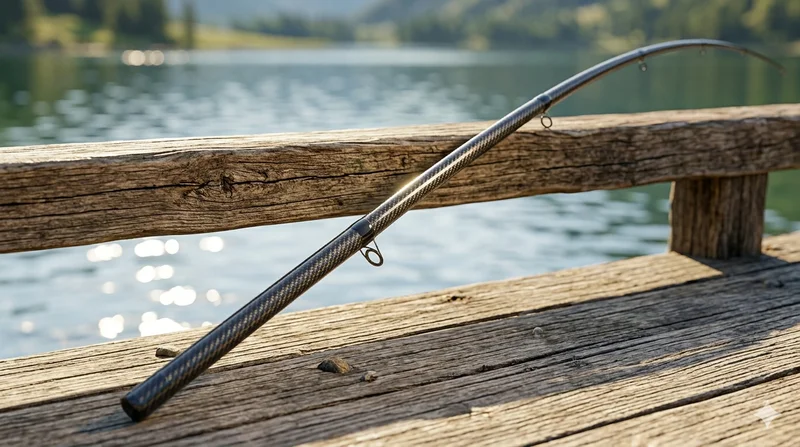
Carbon Fiber Fishing Rod Blank
High-quality carbon fiber fishing rod blank manufactured from multiple grades of Toray carbon fiber cloth. Available in a wide range of lengths, powers, and actions for freshwater and saltwater applications. Suitable for OEM rod building.

Carbon Fiber Plate — 3K Twill T700 1.5mm
Thin 1.5mm carbon fiber plate with 3K twill weave surface. Lightweight and stiff, commonly used for covers, panels, drone bodies, and applications requiring a premium aesthetic appearance.

Carbon Fiber Plate — 3K Twill T700 3.0mm
Medium-thickness 3.0mm carbon fiber plate offering significantly higher load capacity while maintaining attractive 3K twill finish. Suitable for structural brackets, reinforcement plates, and load-bearing panels.
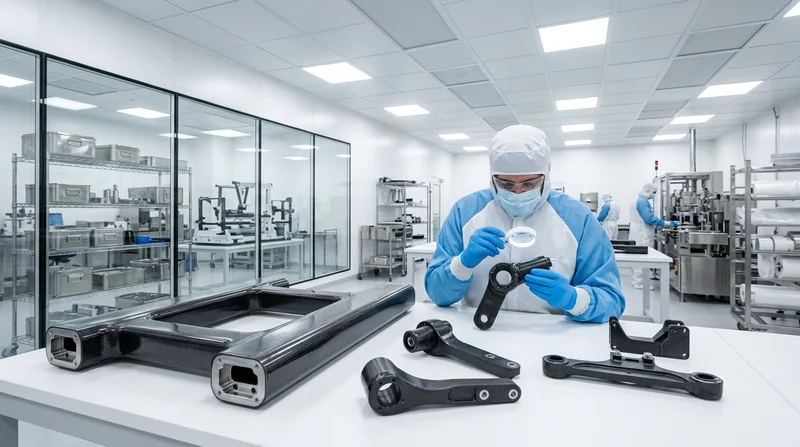
Custom Carbon Fiber Medical Device Components
Medical-grade carbon fiber components manufactured for imaging equipment, surgical instruments, and patient support systems. Carbon fiber's radiolucency (X-ray transparency) and high strength-to-weight ratio make it ideal for CT scanner beds, wheelchair frames, surgical robot arms, and MRI-compatible accessories. Biocompatible resin systems available.

Square Carbon Fiber Tube — 3K Twill T700
Square cross-section carbon fiber tube manufactured with 3K twill weave for torsional strength. Preferred for structural frames, trusses, and support columns where rectangular geometry offers design flexibility.