
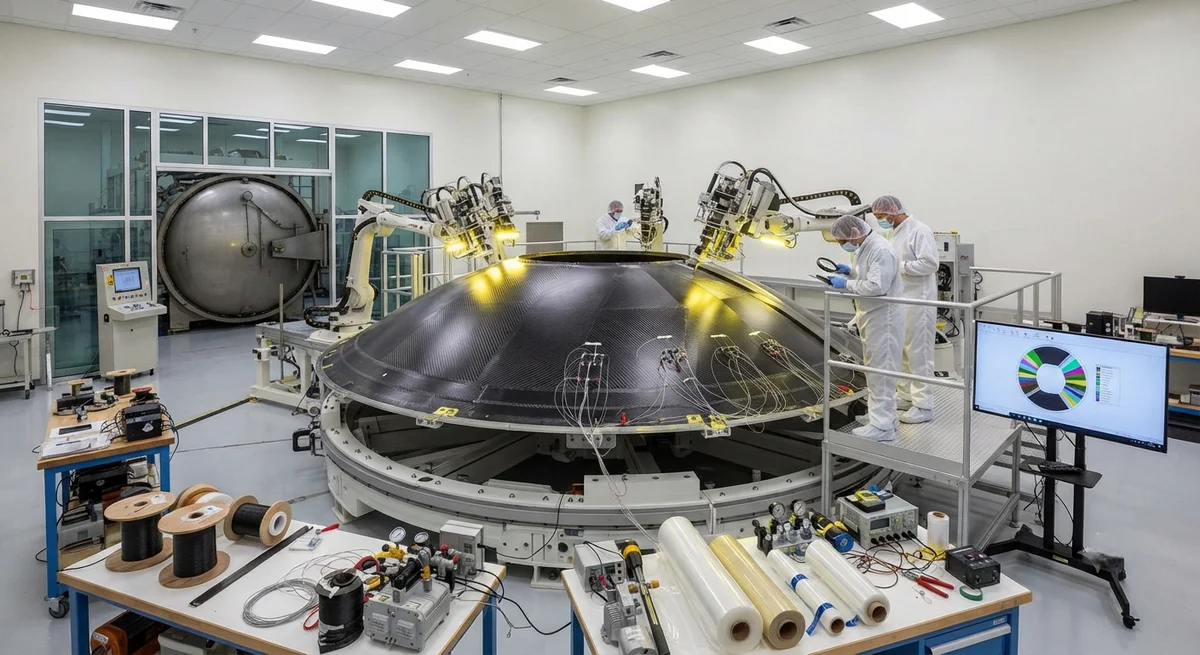
A technical analysis of carbon fiber composite aeroshell technology for Mars entry vehicles — covering Firefly Aerospace's SkyFall mission, thermal protection systems, structural design, and the evolving supply chain for space-grade carbon fiber materials.
Introduction
Firefly Aerospace's recently announced SkyFall Mars mission represents a significant milestone in the application of carbon fiber composites for planetary entry vehicles. The mission, slated for launch in 2028, will deliver a technology demonstration payload to the Martian surface using a carbon fiber composite aeroshell — the largest of its kind ever built for a Mars entry vehicle. At 4.5 meters in diameter, the SkyFall aeroshell incorporates a carbon fiber reinforced polymer (CFRP) primary structure overlaid with a phenolic impregnated carbon ablator (PICA) thermal protection system. This hybrid approach leverages the specific stiffness and strength of carbon fiber while protecting the composite substrate from entry temperatures exceeding 2,100°C.
The use of carbon fiber composites in aeroshell construction addresses one of the most persistent challenges in planetary entry vehicle design: mass efficiency. Every kilogram of aeroshell mass saved translates directly to additional scientific payload or reduced launch costs. Traditional aluminum alloy aeroshells for Mars-class entry vehicles typically weigh 180–220 kg for a 4.5-meter diameter design. The CFRP equivalent, as demonstrated by Firefly's SkyFall program, achieves a structural mass of approximately 95–120 kg — a 45–55% mass reduction. For a Mars mission where launch costs range from $10,000 to $50,000 per kilogram to low Earth orbit, this mass saving translates to $850,000 to $5.5 million in launch cost reduction per vehicle.
| Parameter | Aluminum Aeroshell | CFRP Aeroshell (SkyFall) | Improvement |
|---|---|---|---|
| Structural Mass (4.5m dia.) | 180–220 kg | 95–120 kg | −47% |
| Specific Stiffness (E/ρ) | 25.5 GPa·cm³/g | 71.4 GPa·cm³/g | +180% |
| Thermal Conductivity (in-plane) | 237 W/m·K | 5–15 W/m·K | −95% |
| CTE (ppm/°C) | 23.1 | −0.5 to 0.8 | Near-Zero |
| Max Operating Temperature (with TPS) | 175°C (structural) | 200°C (structural) | +14% |
| Manufacturing Lead Time | 14–18 months | 8–12 months | −35% |
| Dimensional Stability (cryo to entry) | ±2.5 mm | ±0.8 mm | −68% |
Thermal Protection System Integration
The marriage of CFRP structure with PICA thermal protection is a particularly elegant engineering solution. PICA — originally developed by NASA Ames Research Center for the Stardust and Mars Science Laboratory missions — is a lightweight carbon fiber preform impregnated with phenolic resin. On Firefly's SkyFall, the PICA tiles are bonded directly to the CFRP aeroshell structure using a high-temperature silicone adhesive rated to 350°C continuous service. The CFRP substrate provides mechanical support while also acting as a thermal barrier, keeping the backface temperature below 200°C during the 120-second entry heating pulse.
Key design considerations for the CFRP-PICA interface include:
- CTE mismatch management: The near-zero CTE of the CFRP substrate (0.3 ppm/°C in the fiber direction) closely matches PICA's CTE of 0.5 ppm/°C, minimizing thermal stress at the bond line during the 2,100°C to −90°C thermal cycle experienced during Martian entry and descent.
- Outgassing compatibility: The epoxy resin system selected for the SkyFall aeroshell — a cyanate ester blend with 1.2% total mass loss (TML) and 0.05% collected volatile condensable material (CVCM) — meets NASA outgassing specifications for vacuum service.
- Impact resistance: The CFRP structure demonstrates 35 J impact energy tolerance at the TPS bond interface, compared to 18 J for equivalent aluminum designs. This is critical for micrometeoroid and orbital debris (MMOD) protection during the 8-month transit to Mars.
Manufacturing Process and Quality Control
The SkyFall aeroshell is manufactured using advanced automated fiber placement (AFP) with a 16-tow robotic head capable of laying up to 45 kg of prepreg per hour. The 4.5-meter diameter aeroshell requires approximately 120 prepreg layers, with a total laminate thickness of 28 mm at the nose region tapering to 12 mm at the aft skirt. Each layer is placed with ±0.5 mm positional accuracy and ±1° fiber angle tolerance. The finished part is consolidated in a 6-meter diameter autoclave at 180°C and 7 bar pressure for 6 hours.
Quality assurance on space-grade CFRP components follows MIL-HDBK-17 criteria with additional NASA-STD-6016 requirements:
- Ultrasonic C-scan: 100% inspection with 1.5 mm minimum detectable flaw size; maximum allowable void content 0.5%
- Mechanical test coupons: Per-panel witness coupons tested for ILSS (≥55 MPa), 0° flexural strength (≥1,200 MPa), and short beam shear (≥65 MPa)
- Thermal cycling: 100 cycles from −150°C to +200°C with <1% mass loss
- Dimensional inspection: Laser scanning to ±0.25 mm against CAD master
Supply Chain Implications for B2B Buyers
The expanding demand for space-grade carbon fiber is creating new opportunities in the B2B supply chain. Firefly's SkyFall program alone will consume approximately 380 kg of IM7-grade carbon fiber prepreg per aeroshell. With multiple Mars launch windows (every 26 months) and competing programs from SpaceX, Blue Origin, and international space agencies, annual demand for space-grade CFRP is projected to reach 12–15 metric tons by 2030. Key specifications for B2B buyers include fiber tensile modulus ≥276 GPa (IM7 class), resin TML <1.0%, and fiber areal weight tolerance ±2%.
Frequently Asked Questions
What makes carbon fiber suitable for Mars entry vehicles compared to aluminum?
Carbon fiber composites offer 180% higher specific stiffness, 45–55% mass reduction, near-zero CTE that eliminates thermal expansion issues, and 95% lower thermal conductivity — all critical for the extreme thermal and mechanical loads experienced during Martian atmospheric entry at speeds exceeding 7.5 km/s. The material's dimensional stability (0.8 mm vs 2.5 mm for aluminum) ensures the aeroshell maintains its precise aerodynamic shape throughout the mission.
What certification standards apply to space-grade carbon fiber materials?
Space-grade CFRP must meet NASA-STD-6016 (Materials and Processes Requirements for Spacecraft), MIL-HDBK-17 (Composite Materials Handbook), and individual mission-specific requirements. Key parameters include total mass loss (TML <1.0%), collected volatile condensable materials (CVCM <0.1%), void content (<0.5%), and mechanical property allowables derived from B-basis statistical analysis per MIL-HDBK-17. ESA also maintains ECSS-Q-ST-70 standards applicable to European space programs.
What is the expected market growth for space-grade carbon fiber composites?
The space-grade carbon fiber composites market is projected to grow from approximately $280 million in 2026 to $650 million by 2032 (CAGR 15%). This growth is driven by commercial space programs (Starlink, Project Kuiper), deep space exploration (Artemis, Mars Sample Return, SkyFall), and national defense satellite programs. B2B suppliers who achieve AS9100D certification and can demonstrate lot-to-lot traceability will be best positioned to capture this growing demand.
Part of topic
Related Articles
- Bio-Based Carbon Fiber Precursors: Lignin and Polyethylene for Low-Cost Production
- Large-Tow Carbon Fiber Cost Analysis: 48K vs 60K Price-Performance Comparison
- Carbon Fiber-Resin Interface Bonding: Surface Treatment and Coupling Agent Optimization
- Digital Twin for Carbon Fiber Manufacturing: Real-Time Process Monitoring and Defect Prevention
- Thermoplastic Carbon Fiber Welding for Automotive: Ultrasonic and Induction Welding Process Windows
- Large-Tow Carbon Fiber Wet Spinning: Process Optimization for 48K/60K Production Efficiency
Interested in Our Products?
Contact our team for competitive pricing and technical specifications.
Get a QuoteRelated Products
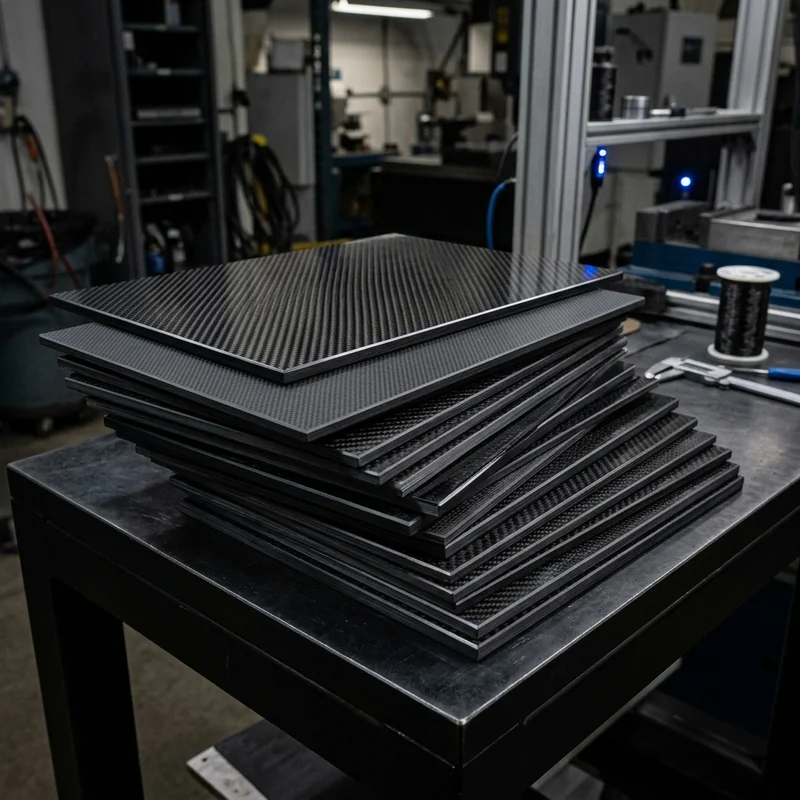
Carbon fiber standard plate-3k stripe
Lightweight, ultra-rigid standard sheets for drone fuselages, robot housings, facades and structural applications.

Carbon Fiber Plate — 3K Twill T700 1.5mm
Thin 1.5mm carbon fiber plate with 3K twill weave surface. Lightweight and stiff, commonly used for covers, panels, drone bodies, and applications requiring a premium aesthetic appearance.
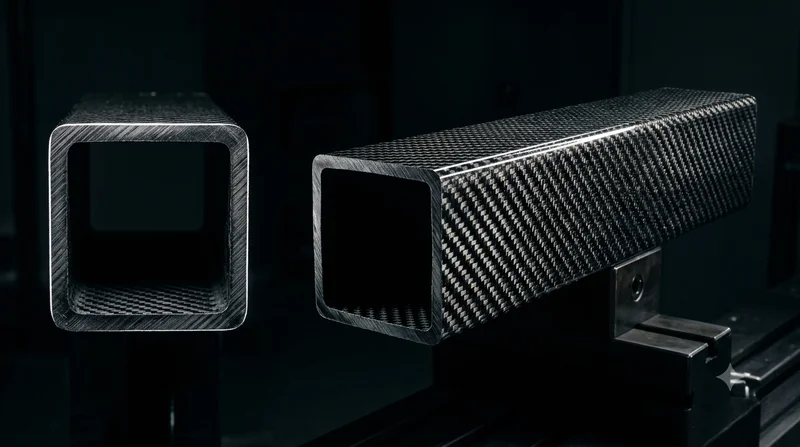
Square Carbon Fiber Tube — 3K Twill T700
Square cross-section carbon fiber tube manufactured with 3K twill weave for torsional strength. Preferred for structural frames, trusses, and support columns where rectangular geometry offers design flexibility.
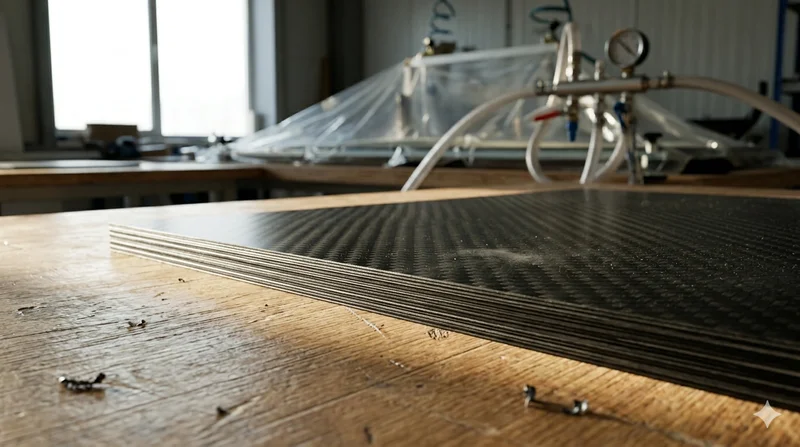
Carbon Fiber Plate — 3K Twill T700 3.0mm
Medium-thickness 3.0mm carbon fiber plate offering significantly higher load capacity while maintaining attractive 3K twill finish. Suitable for structural brackets, reinforcement plates, and load-bearing panels.
Carbon Fiber Plate — UD Unidirectional T700
Unidirectional carbon fiber plate with all fibers oriented in a single direction for maximum strength along the fiber axis. Essential for structural reinforcements, splints, and applications where load direction is predictable.