
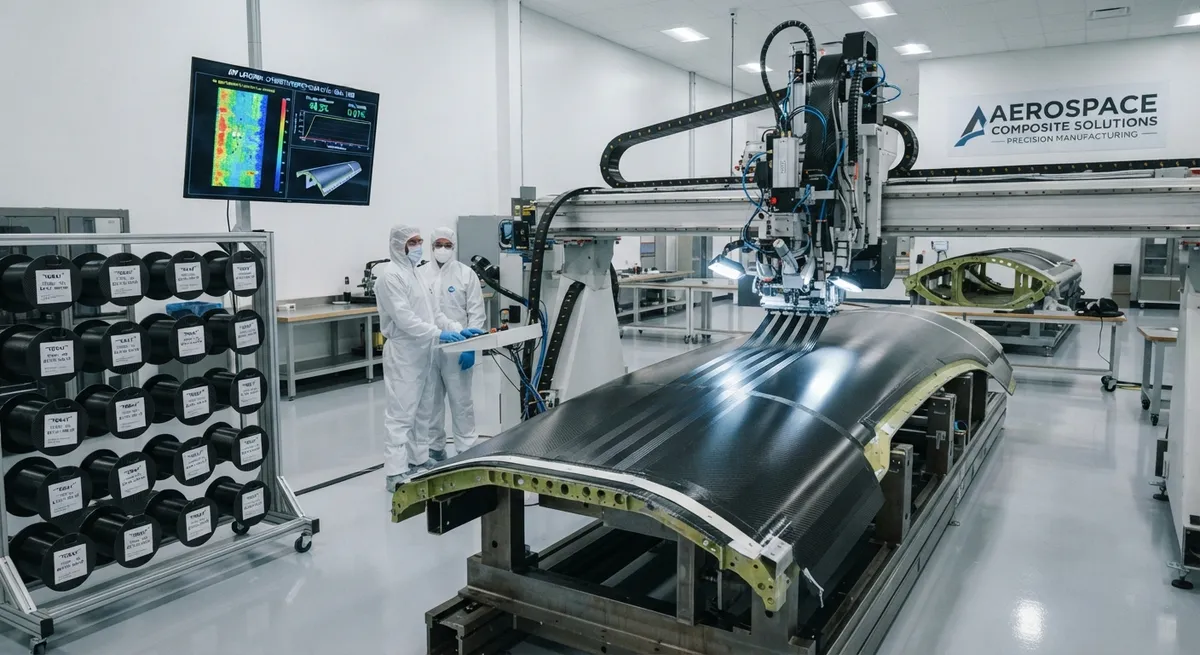
For two decades, the tensile-strength ceiling of commercial carbon fiber climbed in slow, deliberate steps: T300, T700, T800, and in 2019 T1100. Each new rung expanded the range of structures that could be built with polymer composites, and each was reached first by a small group of Jap
Introduction
For two decades, the tensile-strength ceiling of commercial carbon fiber climbed in slow, deliberate steps: T300, T700, T800, and in 2019 T1100. Each new rung expanded the range of structures that could be built with polymer composites, and each was reached first by a small group of Japanese producers. The T1200 barrier — 8,000 MPa of tensile strength — was crossed by Toray in late 2023, and now, in March 2026, by Zhongfu Shenying with its SYT80 grade.
The Zhongfu Shenying announcement is notable for two reasons beyond the headline number. First, the company presented SYT80 as a product of hundred-tonne-scale engineering production, claiming to be the first producer worldwide to mass-produce a T1200-grade fiber at that scale. Second, the release took place simultaneously in Beijing and at the JEC World composites fair in Paris — a signal that Chinese high-end fiber is now being marketed directly into the global premium segment. This article examines how the 8,000 MPa barrier was reached and what it changes for engineers and buyers.
The Strength Ladder: From T700 to T1200
Every commercial strength grade is defined by a tensile-strength band, and the climb up the ladder has followed a consistent pattern: process refinement first, scale-up second, qualification third. The table below places the new SYT80 grade in context:
| Grade | Producer | Strength (MPa) | Modulus (GPa) | Elongation (%) | Commercial milestone |
|---|---|---|---|---|---|
| T700S-class | Multiple | 4,900 | 230 | 2.1 | Established, volume grade |
| T800S | Toray | 5,880 | 294 | 2.0 | Established, aerospace workhorse |
| T1100G | Toray | 7,000 | 324 | 2.2 | Commercial since 2019 |
| T1200 | Toray | 8,000 | 315 | 2.5 | Developed 2023, Ehime plant |
| SYT80 (T1200-grade) | Zhongfu Shenying | 8,000 | 324 | 2.5 | Hundred-tonne production, 2026 |
Two details stand out. SYT80's 8,000 MPa matches Toray's T1200, but its modulus of 324 GPa is higher than T1200's 315 GPa, and its 2.5 percent elongation equals the Toray grade — a combination that matters for stiffness-critical, damage-tolerant structures. And while Toray developed T1200 first, Zhongfu presents hundred-tonne-class production as its distinguishing achievement.
The Toray T1200 Benchmark
Toray announced TORAYCA T1200 in late October 2023, developed at its Ehime plant in Japan. At 1,160 ksi (approximately 8,000 MPa), it was the highest-strength carbon fiber ever produced, more than 10 percent stronger than T1100. Toray positioned the grade for strength-driven applications — aerostructures, defense, alternative energy, and consumer products — and cited it as an enabler of lighter composite structures. Crucially, the 2023 announcement described development rather than volume production; T1200 entered the market as a leading-edge product with limited output, in line with how Toray has historically staged ultra-high-strength grades.
That staging is the opening Zhongfu exploited. By reaching hundred-tonne engineering scale, SYT80 moves T1200-class performance from a development product to an industrial one — changing the competitive math for any program that needs 8,000 MPa-class fiber in meaningful quantities.
How Zhongfu Reached 8,000 MPa
The SYT80 program is the latest rung of a twenty-year investment in PAN-based fiber technology at Zhongfu Shenying, which now spans a full spectrum from T300-class to T1200-class grades. According to the company, the breakthrough rests on several elements:
- Sub-nanometer defect control: A technique described as sub-nanometer-scale molecular structure defect control, aimed at eliminating the flaw population that triggers tensile failure at extreme strengths.
- Multi-scale process coupling: Precision coordination of spinning, oxidation, and carbonization parameters across length scales, from molecular alignment to filament surface.
- Inherited engineering base: SYT80 follows SYT70, the company's T1100-grade fiber, which had already reached hundred-tonne-scale engineering; the new grade is declared 14 percent stronger than SYT70.
- Industrial scale-up: Hundreds of tonnes of engineering output, backed by the company's large installed capacity base and more than 440 granted patents across its history.
None of these elements is a single invention; together they represent the cumulative refinement that separates a laboratory result from a reproducible production grade.
Why the 8,000 MPa Barrier Matters
Strength above 7,000 MPa changes what composites can do in weight-critical applications. In aerospace primary structures, where mass is bought at a premium and certified allowables dictate design stress, a fiber with 15 to 20 percent higher strength than T800-class allows thinner laminates, fewer plies, and lower part weight. In space structures, higher strength translates directly into launch mass savings. In defense, the combination of strength and modulus opens new design space for weapon systems. Beyond aerospace, the new grade strengthens pressure-vessel design margins and premium sports equipment performance.
The practical caveat is qualification. An 8,000 MPa fiber is useful only where its properties have been characterized, statistically validated, and accepted into design allowables — a process measured in years for aerospace programs. The industrial-grade availability that SYT80 represents shortens one leg of that path (supply certainty), but the qualification leg remains.
The Race and What Comes Next
Zhongfu's hundred-tonne production claim, if it holds, makes China the first country to mass-produce a T1200-grade fiber, while Japan holds the development lead through Toray. The competitive consequence is a familiar one: the price of the top strength class will fall as a second industrial source appears, and qualification cycles will determine how quickly that pricing reaches actual programs. Zhongfu has stated plans to take the product overseas, targeting European and South American markets through its parent group's global network — a direct challenge to the historical dominance of Japanese producers in premium fiber.
For buyers, the near-term practical impact is a third credible option in the top tier of the strength ladder, alongside Toray and the emerging Chinese T1100-class sources, with pricing pressure and supply security improving as the segment industrializes.
Applications Beyond the Aerospace Ladder
While 8,000 MPa fiber is most often discussed in aerospace terms, the announced application fields for SYT80 reach further. The company cited deep-sea, deep-space, and deep-earth exploration, commercial aerospace, new energy, and the emerging low-altitude economy, alongside longer-term medical and sports markets. The pattern is familiar from earlier strength classes: a new performance rung first serves the applications where weight and strength are priced highest, then migrates down to volume markets as production economics mature.
- Commercial aerospace and space: Launch mass savings and lighter primary structures, where high strength translates directly into mission economics.
- Defense and security: Weapon systems and protective structures that need maximum strength with minimum weight.
- New energy and pressure vessels: Higher design margins in hydrogen storage at extreme operating pressures.
- Low-altitude economy: eVTOL and drone airframes where structural mass is a direct range penalty.
- Sports and medical: Premium equipment and assistive devices that adopt new grades as prices decline.
The tonnage demand at the top of the ladder remains modest — aerospace consumes ultra-high-strength fiber in tonnes per program, not thousands of tonnes. But the industrial availability of T1200-class fiber changes the strategic calculus: programs no longer need to design around the assumption that 8,000 MPa material is unavailable or unaffordable at scale.
Frequently Asked Questions
Is Zhongfu's SYT80 identical in performance to Toray's T1200?
Both fibers are declared at 8,000 MPa tensile strength, but the properties differ in detail. SYT80 is specified with a modulus of 324 GPa versus T1200's 315 GPa, giving it an edge in stiffness-critical applications, while elongation is 2.5 percent for both. The larger differences are maturity and data: T1200 has been publicly documented since late 2023 and carries Toray's established process heritage, while SYT80 was released in March 2026 and will need independent characterization and qualification before it can be substituted into certified designs.
Why does modulus matter for an 8,000 MPa fiber?
Tensile strength determines how much load a fiber can carry before failure, while modulus determines how stiff a structure is at a given load. High strength alone is not enough for many aerospace structures, which fail in buckling or deflection before fiber fracture. A modulus of 324 GPa — higher than Toray's T1200 at 315 GPa and comparable to T1100G — means SYT80 can be used in stiffness-critical parts without sacrificing the strength advantage.
How long until 8,000 MPa fiber reaches commercial aerospace programs?
Qualification of a new fiber into a certified aerospace structure typically takes three to ten years, including material characterization, statistical allowables, coupon and element testing, and full-scale component validation. The availability of industrial-scale supply shortens the supply-risk part of that timeline but does not accelerate the certification process itself. Industrial, sports, and emerging low-altitude-economy applications will adopt the grade much sooner, on qualification horizons measured in months to a few years.
Conclusion
The release of SYT80 moves the T1200 frontier from development to industrial production: 8,000 MPa tensile strength, 324 GPa modulus, and hundred-tonne-class output, launched simultaneously to a global audience at JEC World. Toray remains the technical benchmark and development leader, but the strength ladder now has a Chinese rung at its top, and the industrial supply of ultra-high-strength fiber is no longer a single-region story.
For engineers specifying high-strength fiber, the new grade broadens the choice set at the top of the performance range. Review our carbon fiber and composite material range, or contact our engineering team to compare ultra-high-strength grades and plan qualification for your program.
Part of topic
Related Articles
- Carbon Fibre Sheet Supplier UK: Sourcing Options and Specification Checklist
- Carbon Fiber Sheets Near Me Suppliers: Local Stock vs Factory Direct
- Filament Wound Epoxy Tubes: Industry Standards and Compliance Requirements
- Carbon Fiber Dealers Near Me: What a Good Dealer Actually Adds
- Carbon Fiber Supplies Near Me: Local Sourcing Without Compromising Spec
- Carbon Fiber for Sale: Online Platforms and Direct Sales Channel Comparison
Interested in Our Products?
Contact our team for competitive pricing and technical specifications.
Get a QuoteRelated Products
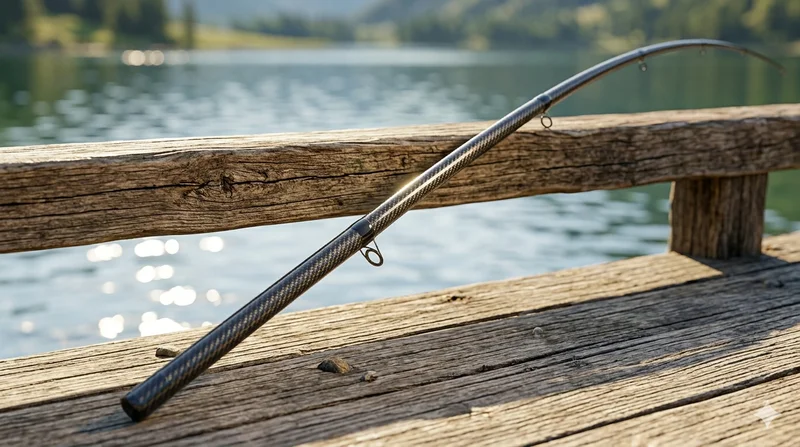
Carbon Fiber Fishing Rod Blank
High-quality carbon fiber fishing rod blank manufactured from multiple grades of Toray carbon fiber cloth. Available in a wide range of lengths, powers, and actions for freshwater and saltwater applications. Suitable for OEM rod building.

Carbon Fiber Plate — 3K Twill T700 1.5mm
Thin 1.5mm carbon fiber plate with 3K twill weave surface. Lightweight and stiff, commonly used for covers, panels, drone bodies, and applications requiring a premium aesthetic appearance.

Carbon Fiber Plate — 3K Twill T700 3.0mm
Medium-thickness 3.0mm carbon fiber plate offering significantly higher load capacity while maintaining attractive 3K twill finish. Suitable for structural brackets, reinforcement plates, and load-bearing panels.
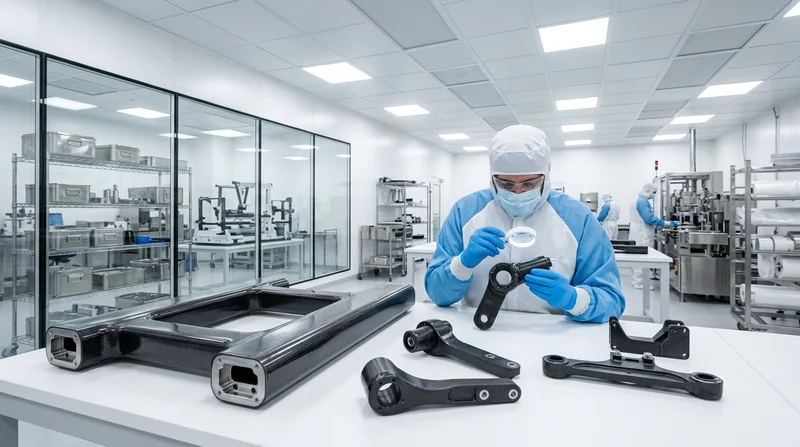
Custom Carbon Fiber Medical Device Components
Medical-grade carbon fiber components manufactured for imaging equipment, surgical instruments, and patient support systems. Carbon fiber's radiolucency (X-ray transparency) and high strength-to-weight ratio make it ideal for CT scanner beds, wheelchair frames, surgical robot arms, and MRI-compatible accessories. Biocompatible resin systems available.

Square Carbon Fiber Tube — 3K Twill T700
Square cross-section carbon fiber tube manufactured with 3K twill weave for torsional strength. Preferred for structural frames, trusses, and support columns where rectangular geometry offers design flexibility.