
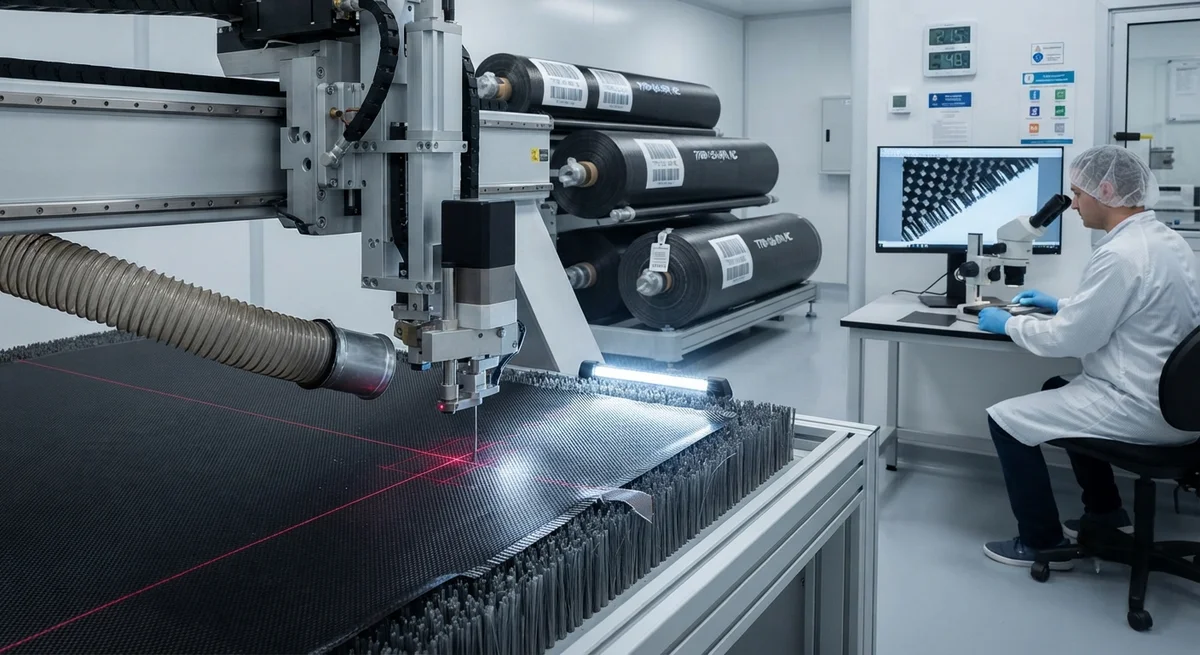
Ultrasonic cutting technology for carbon fiber prepregs offers superior edge quality with minimal fraying, delamination, and dust generation compared to laser or conventional knife cutting. This technical guide covers common defect types, a detailed comparison table of ultrasonic vs laser vs knife cutting across 10 parameters, parameter optimization for frequency/amplitude/speed/down-force, integration with automated ply cutting systems, and a systematic defect prevention program that reduced cutting defects from 3.2% to 0.4% at a Tier 1 aerospace supplier.
Ultrasonic Cutting Technology for Carbon Fiber Prepregs: A Defect Prevention Guide
Automated ply cutting systems for carbon fiber prepregs have become standard equipment in high-volume composites manufacturing, particularly in aerospace, automotive, and wind energy industries. These systems use computer-nested cutting patterns to optimize material utilization and reduce manual labor. However, the quality of the cut edge — whether it exhibits fraying, delamination, excessive dust generation, or resin smear — directly affects subsequent layup quality and ultimately the mechanical performance of the finished composite component. Ultrasonic cutting has emerged as the preferred technology for achieving defect-free prepreg cutting at production speeds.
Ultrasonic cutting uses a vibrating blade oscillating at 20–40 kHz (typically 20 kHz for composites applications) to separate prepreg materials. The high-frequency vibration — typically 20,000 cycles per second with an amplitude of 30–80 µm — reduces the instantaneous cutting force required by 60–80% compared to conventional knife cutting, enabling cleaner cuts through tough carbon fiber reinforcement while minimizing edge defects. This technology has been widely adopted by major prepreg cutting system manufacturers including Gerber Technology, Lectra, Eastman Machine, and Bullmer.
Common Defect Types in Prepreg Cutting
Understanding the defect mechanisms is the first step toward prevention. The following defects are most commonly encountered in carbon fiber prepreg cutting operations:
- Fiber fraying (loose fiber ends): Occurs when the cutting edge pushes fibers sideways instead of cleanly severing them. Frayed edges create handling difficulties during ply collation and can lead to fiber misalignment in the final part, reducing mechanical properties by 5–15% in the affected region. Fraying is most severe in woven prepregs where fiber bundles cross at the cut line.
- Delamination at the cut edge: The separation of prepreg plies at the cut edge, typically caused by excessive downward cutting force that compresses and separates the layers before the blade penetrates through. Delaminated edges are prone to further separation during handling and can create resin-rich or resin-starved zones at ply boundaries.
- Excessive dust generation: Carbon fiber dust is electrically conductive and can cause short circuits in nearby electronic equipment. More critically, respirable carbon fiber dust (particles < 5 µm) is classified as a potential respiratory hazard. Excessive dust also indicates inefficient cutting — energy that should sever fibers instead fractures them into dust particles.
- Resin smearing: The accumulation of tacky prepreg resin on the blade surface, which is then deposited on the cut edge. This creates contamination between plies that can inhibit proper consolidation and lead to porosity in the cured part. Resin smearing is temperature-dependent, worsening when the blade temperature exceeds 40–45°C.
- Tag marks / incomplete cuts: Small uncut fiber bridges at the cutting path intersection points, typically occurring when the blade lifts prematurely or when multiple plies are cut in a stack and the bottom ply is not fully severed. These tags cause ply pickup errors in automated layup systems.
Ultrasonic Cutting vs. Conventional Methods: A Comparative Analysis
The choice of cutting technology significantly impacts cut quality, productivity, and operating cost. Below is a comprehensive comparison of the three main prepreg cutting technologies:
| Parameter | Ultrasonic Cutting | Laser Cutting | Conventional Knife (reciprocating) |
|---|---|---|---|
| Cut speed (m/min) | 15–40 | 20–80 | 10–25 |
| Cut quality (edge finish) | Excellent — no fraying or delamination | Good — sealed edge but HAZ possible | Moderate — fraying common |
| Dust generation | Very low (< 0.5 mg per meter of cut) | None (vaporization) | Moderate (2–5 mg/m) |
| Heat-affected zone (HAZ) | Negligible (< 0.1 mm) | 0.5–2.0 mm (resin degradation risk) | None |
| Multi-ply cutting capability | Yes (up to 8 plies of 0.25 mm prepreg) | Limited (1–2 plies) | Yes (up to 15 plies) |
| Blade wear frequency | Low (20–40 hours between changes) | N/A (no consumable blade) | High (2–4 hours between changes) |
| Operating cost ($/hour) | $2.50–$5.00 | $8–$15 (gas + optics) | $1.50–$3.00 |
| Initial investment (automated system) | $120,000–$250,000 | $200,000–$500,000 | $80,000–$180,000 |
| Safety concerns | Low (guarded blade) | High (Class 4 laser, fume extraction required) | Low (blade contact hazard only) |
| Prepreg compatibility | All prepreg types (thermoset, thermoplastic) | Thermoset only (thermoplastic melts) | All prepreg types |
Parameter Optimization for Ultrasonic Prepreg Cutting
Achieving optimal cut quality with ultrasonic cutting requires careful tuning of several interdependent parameters. The following recommendations are based on production data from aerospace-grade prepreg cutting operations:
- Frequency selection: 20 kHz is standard for carbon fiber composites. Higher frequencies (30–40 kHz) offer finer cuts for thin prepregs (< 0.15 mm) but lack the amplitude needed for thick stacks (> 0.5 mm total thickness). For typical aerospace prepregs (0.125–0.25 mm per ply, 4–6 ply stacks), 20 kHz at 60–80 µm amplitude is optimal.
- Amplitude tuning: Higher amplitude (60–80 µm) cuts more aggressively through high-density woven prepregs but increases blade heating. Lower amplitude (30–50 µm) is preferred for unidirectional (UD) prepregs where the fibers are more easily separated in the transverse direction. A general guideline: amplitude should be 2–3× the fiber diameter (7 µm for carbon fiber, so 14–21 µm minimum effective amplitude at the cutting edge; practical values are higher due to system losses).
- Cutting speed: The relationship between cut speed and edge quality is non-linear. A 20 kHz ultrasonic blade cutting at 20 m/min creates 60,000 vibration cycles per meter of cut — sufficient to cleanly sever all fiber bundles. Reducing speed below 10 m/min can actually degrade quality due to excessive heat buildup in the cutting zone, which softens the resin and promotes smearing. Optimal speed range: 15–25 m/min for woven prepregs, 20–35 m/min for UD prepregs.
- Down-force control: Excessively high down-force (> 15 N for a single ply) compresses the prepreg and can cause the bottom plies to be pushed into the cutting table's bristle bed, creating uneven cut depths. Optimal down-force for a 4-ply stack of standard-modulus woven prepreg: 8–12 N, delivered through a spring-loaded or pneumatic pressure control system.
- Blade geometry: A 10–15° wedge angle with a 0.2–0.3 mm blade tip radius provides the best balance of cutting efficiency and blade longevity for carbon fiber prepregs. Acute angles cut more easily but dull faster; obtuse angles last longer but require higher cutting force, negating some of the ultrasonic advantage.
- Cutting table temperature control: Prepreg tack is highly temperature-dependent. Maintaining the cutting table at 18–22°C prevents the resin from becoming too soft (which causes smearing and fraying) or too brittle (which causes dust generation). For systems cutting multiple prepreg types, a temperature-controlled cutting table with ±1°C accuracy is recommended.
Integration with Automated Ply Cutting Systems
Modern automated ply cutting systems (APCS) integrate ultrasonic cutting heads with several complementary technologies to maximize productivity:
- Camera-based ply registration: High-resolution cameras scan each prepreg ply before cutting, detecting fiber orientation deviations as small as 0.1° and automatically rotating the cutting nest to match the actual fiber angle — critical for aerospace parts where fiber orientation tolerances are ±2°.
- Automated material handling: Roll-fed prepreg feeding systems with tension-controlled unwinders and edge-guide sensors maintain consistent material positioning. Wrinkles or creases introduced during feeding are detected by laser profilometers and flagged for manual inspection.
- Real-time quality monitoring: Acoustic emission sensors integrated into the ultrasonic cutting head detect changes in cutting sound that correlate with blade dullness or changes in prepreg properties. Machine learning algorithms trained on 10,000+ hours of production data can predict blade failure 30–60 minutes before visible quality degradation occurs.
- Nesting optimization: Advanced nesting algorithms for ultrasonic cutting account for the 2–5 mm minimum radius that ultrasonic blades can achieve at interior corners — tighter turns increase risk of edge fraying. Nesting software optimizes ply orientation for both material utilization and cut quality simultaneously.
- Pick-and-place integration: After cutting, an automated pick-and-place unit retrieves each ply using a vacuum gripper or electrostatic pickup tool and transfers it to the layup tool. The clean cut edge from ultrasonic cutting ensures reliable pickup without frayed fibers catching on adjacent plies.
Defect Prevention: A Systematic Approach
Implementing a systematic defect prevention program for ultrasonic prepreg cutting involves regular monitoring and adjustment of five key parameters. Production data from a major aerospace Tier 1 supplier showed that implementing this systematic approach reduced cutting-related defects from 3.2% to 0.4% of all cut plies, and reduced blade change frequency by 60% through better parameter selection:
- Daily checks: Blade amplitude verification using a laser vibrometer (±5% of setpoint), table surface cleanliness inspection, and dust extraction system flow rate confirmation (> 8 m/s at the cutting zone).
- Weekly checks: Blade edge inspection under 10× magnification for wear or chipping, cutting speed verification against a reference prepreg, and down-force calibration check.
- Monthly checks: Full system calibration including frequency generator output power, horn-to-blade coupler condition, and cutting table flatness verification.
- Per-batch validation: Cut a 300 mm × 300 mm test coupon from each new prepreg roll and inspect the cut edges under 20× magnification for fraying, delamination, and resin smearing before releasing the material to production.
Frequently Asked Questions
Can ultrasonic cutting be used for all carbon fiber prepreg types including thermoplastic prepregs?
Yes, ultrasonic cutting is effective across all prepreg types — thermoset (epoxy, phenolic, BMI) and thermoplastic (PEEK, PEKK, PAEK) — with proper parameter adjustments. Thermoplastic prepregs, which are becoming more common in aerospace for their improved toughness and recyclability, present unique cutting challenges because the thermoplastic matrix is more ductile than thermoset epoxy and can smear or re-weld behind the blade. For thermoplastic prepregs, recommended adjustments include: increasing amplitude by 20–30% (to 80–100 µm), reducing cutting speed by 30–40% (to 8–15 m/min), and preheating the prepreg to 40–60°C (above the glass transition temperature but below the melt temperature) to reduce the matrix viscosity and improve cutting efficiency. Some thermoplastic prepreg manufacturers, including Toray Cetex and Victrex, now offer grade-specific ultrasonic cutting parameter recommendations validated on Gerber and Lectra cutting systems. For high-melt-temperature thermoplastics like PEEK (Tg ≈ 143°C), ultrasonic cutting remains the preferred technology because laser cutting produces unacceptable melt-back and heat-affected zones, while conventional knife cutting suffers from rapid blade dulling.
How does prepreg shelf life and out-time affect ultrasonic cutting quality?
Prepreg out-time — the cumulative time at room temperature after removal from freezer storage — significantly affects cutting behavior. As prepreg ages at room temperature, the resin advances (crosslinks) gradually, increasing viscosity and reducing tack. Fresh prepreg (out-time < 5 days at 21°C) exhibits high tack, requiring anti-stick backing papers and careful down-force management to prevent plies from adhering to the cutting table or the blade. Intermediate prepreg (5–15 days out-time) has the best cutting characteristics: moderate tack allowing clean cuts with minimal smearing or fraying. Aged prepreg (15–30 days out-time, approaching the manufacturer's out-life limit) has low tack and increased resin brittleness, which increases dust generation by 2–3× and can cause microcracking at the cut edge. For aged prepreg, decreasing amplitude by 10–20% and increasing cutting speed by 15–25% helps reduce dust generation. It is essential to track prepreg out-time using a barcode or RFID system integrated with the cutting machine control software, so that cutting parameters can be automatically adjusted based on resin advancement state. Many modern ultrasonic cutting systems from Gerber and Lectra offer prepreg age-specific parameter presets that optimize cut quality throughout the material's usable life.
What is the total cost of ownership for an ultrasonic cutting system vs. conventional knife cutting?
A comprehensive total cost of ownership (TCO) comparison must account for capital investment, consumables, maintenance, energy, and quality-related costs. Based on a 5-year TCO analysis for a medium-volume composites facility cutting 200,000 m² of prepreg annually: an ultrasonic cutting system (initial investment $180,000) has annual operating costs of $22,000–$35,000 (blades: $3,000–$6,000/year, maintenance: $8,000–$12,000/year, energy: $1,500–$2,500/year, quality losses: $9,500–$14,500/year based on 0.4% defect rate). A conventional reciprocating knife system (initial investment $130,000) has annual operating costs of $38,000–$52,000 (blades: $15,000–$22,000/year at 2–4 hours blade life, maintenance: $5,000–$8,000/year, energy: $800–$1,200/year, quality losses: $17,200–$20,800/year based on 3.2% defect rate). The 5-year TCO for the ultrasonic system is $290,000–$355,000 versus $320,000–$390,000 for the conventional knife system — a 9–12% advantage for ultrasonic. When the cost of downstream rework caused by cutting defects is included (estimated at $15,000–$25,000/year for a typical Tier 1 aerospace facility), the ultrasonic TCO advantage increases to 15–20%. The breakeven point for the higher initial ultrasonic investment is typically 18–24 months, after which the operating cost savings generate ongoing returns.
Part of topic
Related Articles
- Bio-Based Carbon Fiber Precursors: Lignin and Polyethylene for Low-Cost Production
- Large-Tow Carbon Fiber Cost Analysis: 48K vs 60K Price-Performance Comparison
- Carbon Fiber-Resin Interface Bonding: Surface Treatment and Coupling Agent Optimization
- Digital Twin for Carbon Fiber Manufacturing: Real-Time Process Monitoring and Defect Prevention
- Thermoplastic Carbon Fiber Welding for Automotive: Ultrasonic and Induction Welding Process Windows
- Large-Tow Carbon Fiber Wet Spinning: Process Optimization for 48K/60K Production Efficiency
Interested in Our Products?
Contact our team for competitive pricing and technical specifications.
Get a QuoteRelated Products
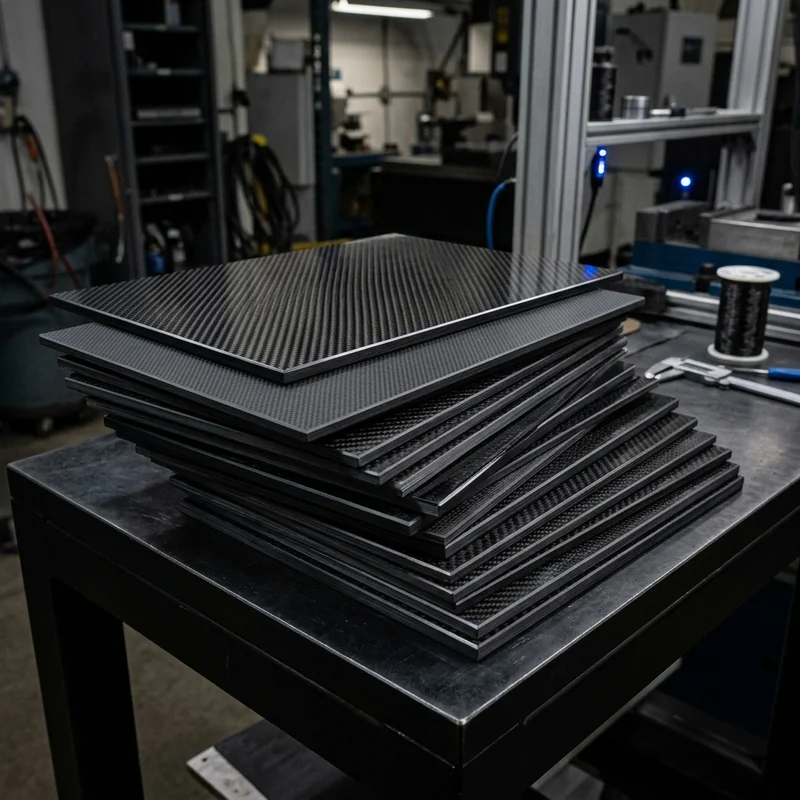
Carbon fiber standard plate-3k stripe
Lightweight, ultra-rigid standard sheets for drone fuselages, robot housings, facades and structural applications.
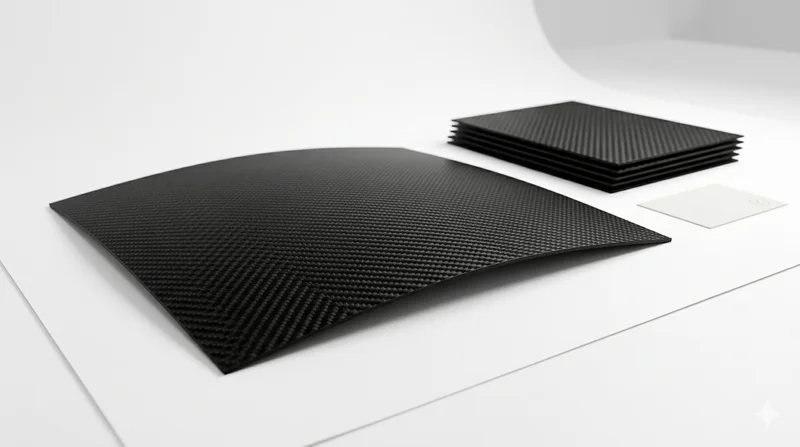
Carbon Fiber Plate — 3K Twill T700 1.5mm
Thin 1.5mm carbon fiber plate with 3K twill weave surface. Lightweight and stiff, commonly used for covers, panels, drone bodies, and applications requiring a premium aesthetic appearance.
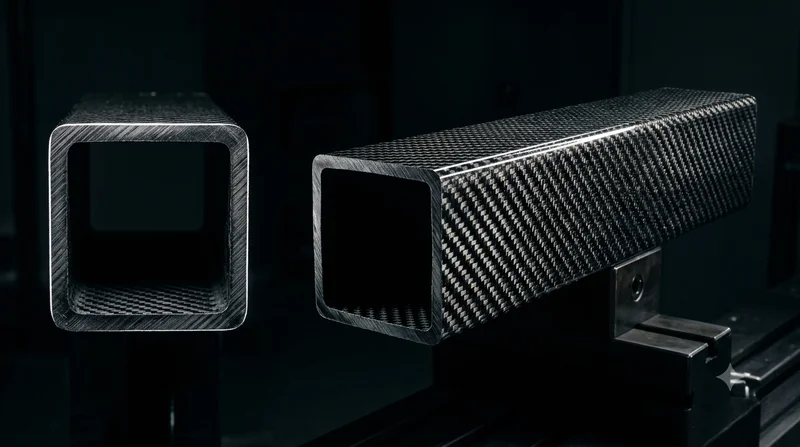
Square Carbon Fiber Tube — 3K Twill T700
Square cross-section carbon fiber tube manufactured with 3K twill weave for torsional strength. Preferred for structural frames, trusses, and support columns where rectangular geometry offers design flexibility.
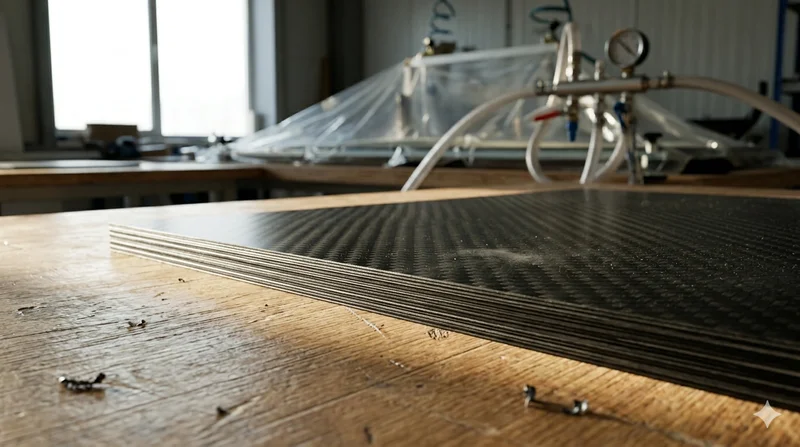
Carbon Fiber Plate — 3K Twill T700 3.0mm
Medium-thickness 3.0mm carbon fiber plate offering significantly higher load capacity while maintaining attractive 3K twill finish. Suitable for structural brackets, reinforcement plates, and load-bearing panels.
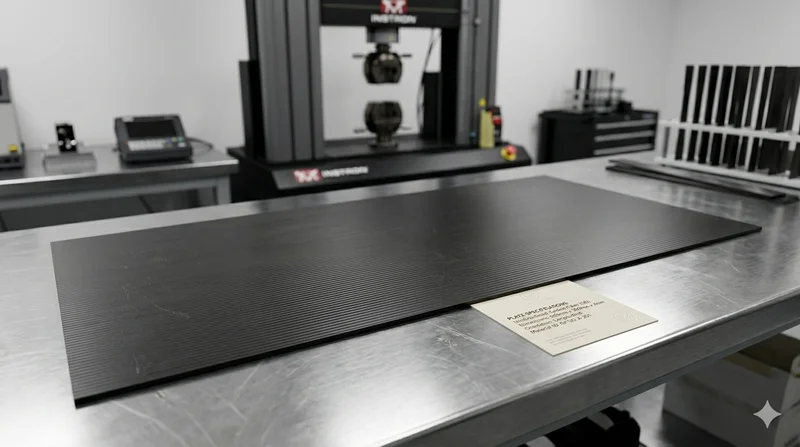
Carbon Fiber Plate — UD Unidirectional T700
Unidirectional carbon fiber plate with all fibers oriented in a single direction for maximum strength along the fiber axis. Essential for structural reinforcements, splints, and applications where load direction is predictable.