
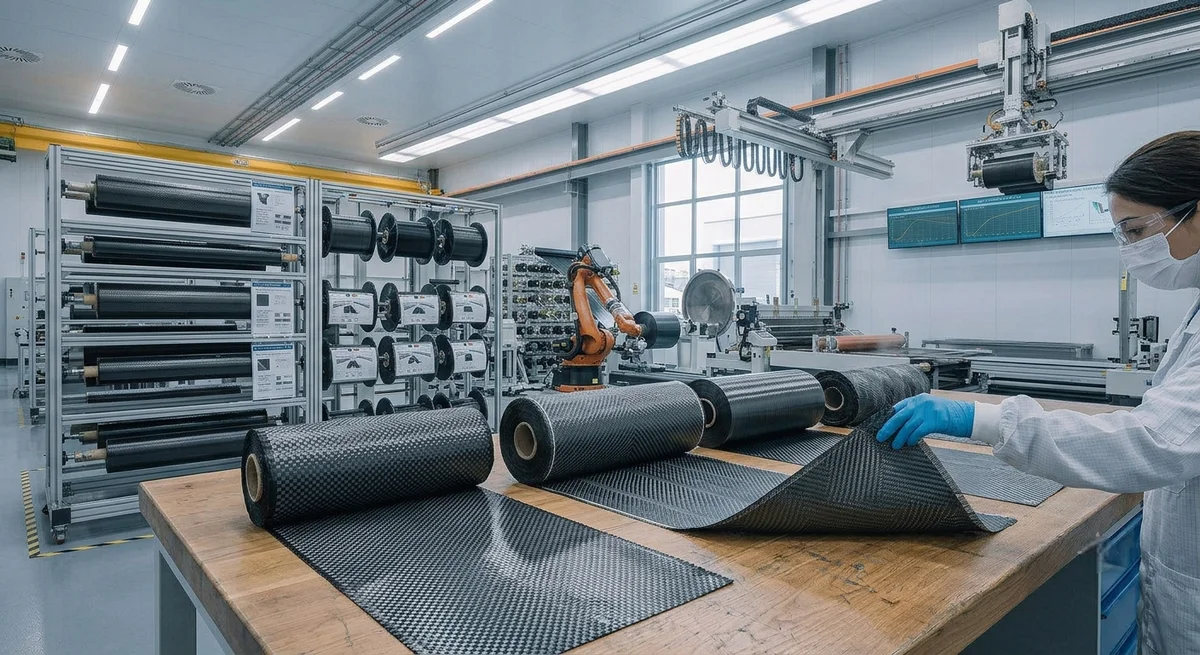
A comprehensive guide to the four major carbon fiber fabric architectures — plain weave, twill, unidirectional, and multiaxial — including mechanical properties, drapability, cost benchmarks, and application-specific selection criteria for B2B composite buyers.
Selecting the right carbon fiber fabric architecture is one of the most consequential decisions in composite part design and manufacturing. While fiber type and tow size (3K, 6K, 12K, 50K) are well understood, the weave pattern and fiber orientation architecture determine how the fabric handles during layup, how it conforms to complex tooling geometries, and ultimately how the finished laminate performs under load. For B2B buyers sourcing carbon fiber reinforcement for production — whether for aerospace, automotive, marine, or industrial components — understanding these differences is essential for cost optimization and quality assurance.
The global carbon fiber fabric market reached $4.8 billion in 2025, with woven fabrics accounting for approximately 62% of volume, unidirectional (UD) tapes for 28%, and multiaxial NCF (non-crimp fabric) for the remaining 10%, according to the CompositesWorld 2025 Market Report. Each architecture serves distinct manufacturing requirements, and selecting the wrong type can increase material costs by 30–50% or reduce laminate strength by 20–35%.
Four Major Fabric Architectures: At a Glance
| Property | Plain Weave | Twill Weave | Unidirectional (UD) | Multiaxial NCF |
|---|---|---|---|---|
| Weave description | 1×1 over/under | 2×2 or 4×4 float | Fibers all parallel | Stitched ±θ layers |
| Fiber crimp | High (6–10%) | Moderate (3–6%) | None (<0.5%) | Minimal (<1%) |
| Drapability | Low (stiff) | Excellent | Very low (stiff, non-conformable) | Moderate (depends on stitch pattern) |
| In-plane stiffness utilization | 70–80% | 75–85% | 95–99% | 90–97% |
| Typical areal weight | 100–600 gsm | 160–660 gsm | 150–900 gsm (tape) | 200–1200 gsm |
| Tow size range | 1K, 3K, 6K, 12K | 3K, 6K, 12K | 12K, 24K, 50K | 12K, 24K, 50K |
| Cost per m² (12K, 300 gsm) | $18–28 | $22–34 | $14–22 | $24–38 |
| Primary manufacturing process | Hand lay-up, infusion | Hand lay-up, infusion, prepreg | ATL, AFP, pultrusion, filament winding | Infusion, RTM, prepreg |
| Surface finish quality | Good (symmetric) | Excellent (aesthetic grade) | Fair (requires veil) | Fair (requires surfacing layer) |
| Typical applications | Sporting goods, marine, general industrial | Automotive, aerospace interiors, luxury goods | Structural beams, pressure vessels, drive shafts | Wind turbine blades, aerospace wing skins, marine hulls |
Plain Weave: The Workhorse of Carbon Fiber Fabrics
Plain weave is the most basic and widely used carbon fiber fabric architecture, characterized by a 1×1 alternating over/under weave pattern where each warp fiber crosses each fill fiber. This symmetric, tightly interlocked structure provides excellent fabric stability (the weave does not shift easily during handling), good in-plane shear resistance, and consistent mechanical properties across large fabric sheets.
However, the tight weave introduces significant fiber crimp — typically 6–10% of fiber length is spent undulating over and under perpendicular tows rather than carrying load in the intended direction. This crimp reduces in-plane stiffness utilization to approximately 70–80% compared to UD materials. For applications where isotropic in-plane properties are acceptable and handling stability is paramount — such as marine hull skins, general industrial panels, and recreational sporting goods — plain weave offers the best cost-to-performance balance.
- Typical tow sizes: 1K, 3K, 6K, 12K. 3K and 6K plain weave are the most common in marine and sporting goods.
- Areal weight range: 100–600 gsm. The most popular standard weights are 200 gsm and 400 gsm.
- Fabric width: Standard widths are 1000 mm and 1250 mm; custom widths up to 1600 mm available from major weavers.
- Cost benchmark (2026): 12K 400 gsm plain weave, $18–28/m². Prices drop to $14–18/m² at pallet-tonne volumes (500 kg+).
- Key suppliers: Toray (Code W-3101), Hexcel (Style 4533), Saertex, Chongqing BFG.
Twill Weave: Aesthetics and Drapability
The twill weave, most commonly in a 2×2 pattern (each warp tow passes over and under two fill tows at a time), offers significantly better drapability than plain weave because the longer float length reduces the number of weave intersections per area. This makes twill fabrics the preferred choice for complex 3D mold geometries — automotive body panels, aerospace interior fairings, and luxury consumer goods — where the fabric must conform tightly to double-curvature surfaces without bridging or wrinkling.
The lower crimp of twill (3–6%) yields slightly higher in-plane stiffness utilization (75–85%) compared to plain weave. Cosmetically, twill produces the distinctive diagonal "chevron" pattern that is widely recognized as the signature carbon fiber aesthetic, making it the default choice for visible carbon fiber parts in automotive aftermarket, luxury watches, and yacht interiors.
- Popular patterns: 2×2 twill (most common), 4×4 twill (larger weave, more drapable), and 8-harness satin (lowest crimp among woven fabrics at 1–3%).
- Areal weight range: 160–660 gsm. The 200 gsm 2×2 twill (3K or 6K) is the most widely specified aerospace-grade fabric globally.
- Drapability data: 2×2 twill can conform to radii as tight as 5 mm without wrinkling, compared to 12–15 mm for equivalent plain weave.
- Cost premium: Twill fabrics typically command a 20–30% premium over equivalent plain weave due to higher weaving complexity and demand for aesthetic consistency.
- Preferred finish: Twill parts often receive a high-gloss clear coat to showcase the weave pattern — this aesthetic adds 5–8% to finished part cost.
Unidirectional (UD): Maximum Load Transfer
Unidirectional carbon fiber fabrics contain all fibers aligned in a single direction (0°) with minimal transverse fibers (typically a lightweight glass or carbon weft, 5–15 gsm, to hold the tows in place). UD materials offer the highest stiffness and strength in the fiber direction because there is virtually no crimp (<0.5%). This translates to 95–99% utilization of fiber properties, making UD the material of choice for primary structural applications where load paths are well defined.
UD is typically supplied as prepreg tape (150–600 mm wide) for automated tape laying (ATL) or automated fiber placement (AFP), or as dry fabric for pultrusion and filament winding. The material is inherently anisotropic — it carries virtually no load off-axis — so UD layers are typically stacked in a defined orientation sequence (e.g., 0°/45°/90°/-45°) to achieve the required laminate stiffness matrix.
| Application | UD Form | Typical Fiber Volume | Modulus Utilization | Cost per kg of laid-up laminate |
|---|---|---|---|---|
| Pressure vessels (Type IV) | Towpreg, 24K | 62–68% | 96–99% | $45–75/kg |
| Wind turbine spar caps | UD fabric, 50K | 58–64% | 94–97% | $22–35/kg |
| Aerospace wing spars (AFP) | Prepreg tape, 12K | 60–65% | 97–99% | $85–150/kg |
| Automotive drive shafts | UD fabric, 24K | 55–62% | 93–96% | $38–60/kg |
| Construction reinforcement (CFRP plates) | Pultruded UD strip | 65–70% | 95–97% | $30–50/kg |
- Tow size preference: Large-tow (24K, 50K) UD reduces material cost by 25–40% compared to 3K/6K woven fabrics but requires careful spreading to ensure uniform fiber distribution.
- Handling consideration: Dry UD fabric is delicate — it can be easily distorted during handling. A lightweight scrim or tackifier is often applied to maintain fiber alignment during cut-and-kitting.
- Waste factor: UD layup waste averages 8–15% for complex shapes (vs 5–8% for woven fabrics), because UD cannot stretch or shear to conform to curvature.
Multiaxial NCF (Non-Crimp Fabric): Engineered for High-Performance
Multiaxial non-crimp fabrics (NCF) consist of one or more layers of unidirectional fibers oriented at defined angles (0°, +45°, 90°, −45°) that are stitched together with a polyester or nylon thread rather than woven. By eliminating crimp entirely, NCF achieves 90–97% fiber property utilization while providing tailored multi-directional reinforcement in a single fabric ply. This makes NCF the highest-performance dry reinforcement architecture available, though at a higher material cost.
NCF is the dominant reinforcement architecture in beam-level wind turbine blades (85% of structural laminates use NCF) and is growing rapidly in aerospace primary structures, automotive chassis components, and marine hulls where vacuum infusion is the manufacturing process. A single ±45° NCF ply can replace two ±45° woven fabric plies in a laminate schedule, reducing layup time by 40–50%.
- Standard orientations: Biaxial (±45°), triaxial (0°/+45°/−45°), and quadraxial (0°/+45°/90°/−45°). Quadraxial NCF in one 1200 gsm ply can replace four separate UD plies.
- Stitch type: Tricot (chain) stitch for good drapability; pillar stitch for maximum in-plane stability. Polyester 167 dtex is the standard stitch thread.
- Cost: $24–38/m² for biaxial NCF at 600 gsm (12K). Quadraxial at 1200 gsm runs $40–60/m².
- Permeability advantage: NCF laminates exhibit 2–3× higher through-thickness permeability than woven fabrics of equivalent areal weight — a critical advantage in thick-section infusion.
- Major global suppliers: Saertex (Germany), Vectorply (USA), Chongqing BFG (China), Owens Corning (multiaxial glass).
B2B Selection Decision Framework
For B2B procurement professionals, the following decision criteria should guide fabric architecture selection:
| Selection Criteria | Recommended Architecture | Rationale |
|---|---|---|
| Primary load direction known? | UD tape or NCF | Maximize fiber alignment with load path; avoid crimp penalty |
| Complex 3D geometry (>5 mm radius curvature)? | Twill weave | Superior drapability, lower bridging and wrinkling risk |
| Cosmetic surface required? | Twill weave (aesthetic grade) | Uniform weave pattern, consistent resin appearance |
| Vacuum infusion manufacturing? | NCF or plain weave (high permeability) | Faster resin flow, lower void content in thick sections |
| Minimum material cost? | Plain weave (12K, 400–600 gsm) | Most economical weave, lowest manufacturing waste |
| Maximum structural efficiency (strength/weight)? | UD prepreg tape | Near-theoretical fiber utilization, AFP/ATL minimal waste |
| Automated layup (AFP/ATL)? | UD prepreg tape (6.35–12.7 mm width) | Standard AFP tow format, widely qualified across machine OEMs |
| Marine environment (high Vf, low void)? | NCF or plain weave (infusion) | Low void content (0.5–1.5%), higher fiber volume fraction (55–62% Vf) |
FAQ: Carbon Fiber Fabric Types for B2B Procurement
Q: Can I mix different weave types in the same laminate?
Yes, mixing architectures within a single laminate stack is standard practice in high-performance composites and is known as a "hybrid laminate." A common example is a marine hull: NCF ±45° plies for shear-carrying core layers combined with UD or plain weave 0°/90° face skins for bending stiffness. However, mixing architectures introduces ply nesting effects and modulus mismatch — each hybrid stack should be validated through coupon testing. Allow a 10–15% knock-down factor on interlaminar shear strength at ply boundaries unless the layup has been previously qualified.
Q: How do dry fabric costs compare between plain weave, twill, UD, and NCF for equivalent mechanical performance?
Total system cost (material + labor + waste) varies significantly. For an equivalently-performing laminate (same stiffness and strength in 0°/±45°/90° directions): plain weave is generally the lowest material cost ($18–28/m²) but may require more plies to match performance (5–7 plies vs 3–4 plies of NCF). NCF is the highest material cost ($24–60/m²) but reduces ply count and layup labor by 40–50%. When factoring labor at $55–85/hr and waste at 5–10%, the total cost difference between NCF and woven solutions for a complex part narrows to within 10–15% of each other. For simple flat panels with high-volume production, plain weave is typically the total-cost winner.
Q: Are there regulatory or industry standards that specify fabric architecture for certified applications?
Yes. Aerospace applications typically reference material specifications that prescribe specific weave styles and tow sizes — for example, Hexcel 4533 (plain weave, 3K, 193 gsm) is widely qualified across Boeing and Airbus secondary structure specifications. For automotive (OEM), ISO 13918 and VDA 620 series standards identify preferred fabric architectures. For wind energy, DNV GL has certified specific NCF layup schedules for blade structural laminates. B2B buyers supplying to these industries must ensure the fabric type they select is listed on the OEM's qualified materials list (QML) or be prepared to conduct an equivalency qualification program (6–18 months, $50K–200K).
Part of topic
Related Articles
- Bio-Based Carbon Fiber Precursors: Lignin and Polyethylene for Low-Cost Production
- Large-Tow Carbon Fiber Cost Analysis: 48K vs 60K Price-Performance Comparison
- Carbon Fiber-Resin Interface Bonding: Surface Treatment and Coupling Agent Optimization
- Digital Twin for Carbon Fiber Manufacturing: Real-Time Process Monitoring and Defect Prevention
- Thermoplastic Carbon Fiber Welding for Automotive: Ultrasonic and Induction Welding Process Windows
- Large-Tow Carbon Fiber Wet Spinning: Process Optimization for 48K/60K Production Efficiency
Interested in Our Products?
Contact our team for competitive pricing and technical specifications.
Get a QuoteRelated Products
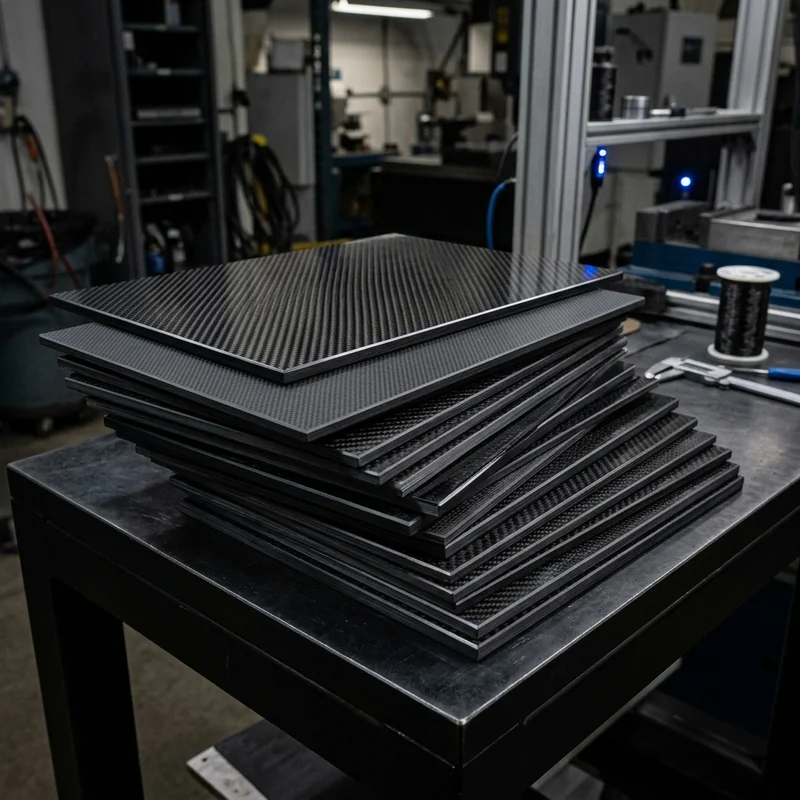
Carbon fiber standard plate-3k stripe
Lightweight, ultra-rigid standard sheets for drone fuselages, robot housings, facades and structural applications.

Carbon Fiber Plate — 3K Twill T700 1.5mm
Thin 1.5mm carbon fiber plate with 3K twill weave surface. Lightweight and stiff, commonly used for covers, panels, drone bodies, and applications requiring a premium aesthetic appearance.

Square Carbon Fiber Tube — 3K Twill T700
Square cross-section carbon fiber tube manufactured with 3K twill weave for torsional strength. Preferred for structural frames, trusses, and support columns where rectangular geometry offers design flexibility.

Carbon Fiber Plate — 3K Twill T700 3.0mm
Medium-thickness 3.0mm carbon fiber plate offering significantly higher load capacity while maintaining attractive 3K twill finish. Suitable for structural brackets, reinforcement plates, and load-bearing panels.
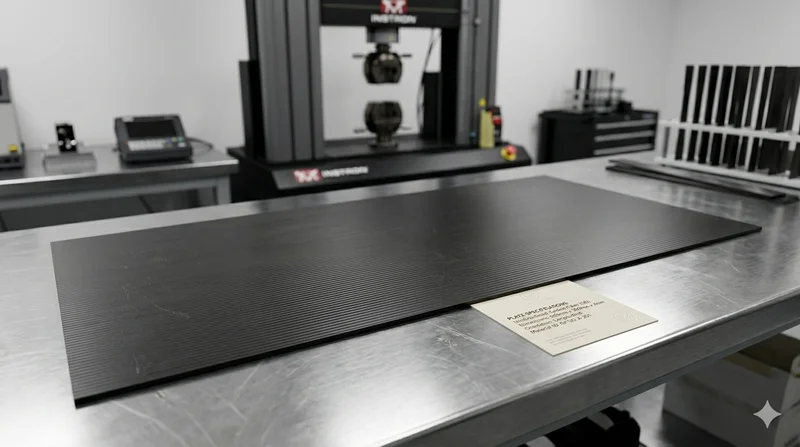
Carbon Fiber Plate — UD Unidirectional T700
Unidirectional carbon fiber plate with all fibers oriented in a single direction for maximum strength along the fiber axis. Essential for structural reinforcements, splints, and applications where load direction is predictable.