
| | Raw material price ($/kg) | $5.00–8.00 | $7.50–14.00 | $4.00–6.50 | $12.00–20.00 | $4.50–7.00 | | Price premium vs standard | — | +50–100% | −20% to +20% | +100–200% | −10% to +30% | | Processing temperature | 80–160°C | 80–150°C | 20–60°C | 120–200°C | 80–140°C | | Cycle time (compression mold,
| Tensile strength (MPa) | 70–85 | 65–80 | 50–65 | 75–85 | 40–55 |
|---|---|---|---|---|---|
| Tensile modulus (GPa) | 3.0–3.5 | 2.8–3.3 | 2.5–3.0 | 3.2–3.8 | 3.5–4.5 |
| Elongation at break (%) | 3–6 | 3–5 | 2–4 | 2–3 | 0.5–1.5 |
| Tg (°C) | 120–180 | 100–160 | 80–120 | 160–200 | 120–150 |
| Flexural strength (MPa) | 110–140 | 100–130 | 80–110 | 120–150 | 60–80 |
| Water absorption (24h, %) | 0.1–0.3 | 0.2–0.5 | 0.3–0.8 | 0.1–0.3 | 0.5–2.0 |
| Viscosity at 25°C (mPa·s) | 800–1500 | 900–2000 | 300–600 | 500–1000 | 200–800 |
| Bio-content (%) | 0 | 30–50 | 25–40 | 40–70 | 95–100 |
Key observations: Modern bio-epoxy systems achieve 90–95% of the tensile strength and modulus of standard bisphenol A epoxies. Bio-benzoxazine systems match or exceed conventional performance at elevated temperatures. The trade-offs are primarily in moisture resistance (bio-polyesters absorb more water) and elongation (furans are brittle). For most structural applications using carbon fiber reinforcement—where the fiber bears the majority of the load—these matrix-level differences are often negligible in the final composite part.
Cost Analysis: Bio-Based vs. Conventional Resins
| Cost Factor | Standard Epoxy | Bio-Epoxy (30–50%) | Bio-Polyester | Bio-Benzoxazine | Furan Resin |
|---|---|---|---|---|---|
| Raw material price ($/kg) | $5.00–8.00 | $7.50–14.00 | $4.00–6.50 | $12.00–20.00 | $4.50–7.00 |
| Price premium vs standard | — | +50–100% | −20% to +20% | +100–200% | −10% to +30% |
| Processing temperature | 80–160°C | 80–150°C | 20–60°C | 120–200°C | 80–140°C |
| Cycle time (compression mold, min) | 5–15 | 5–18 | 3–8 | 8–20 | 10–25 |
| Shelf life at 25°C (months) | 6–12 | 4–10 | 3–6 | 6–12 | 2–4 |
| VOC content (g/L) | 50–100 | 30–60 | 200–400 | 10–30 | 10–50 |
| Carbon footprint (kg CO₂/kg resin) | 5.5–7.0 | 2.0–3.5 | 2.5–4.0 | 3.0–5.0 | 0.5–1.5 |
While bio-epoxies carry a 50–100% raw material price premium, this represents only 5–15% of the total cost of a finished carbon fiber part (where carbon fiber is 60–70% of material cost). For a buyer procuring 10,000 kg of finished carbon fiber components annually, switching to a bio-epoxy system would increase total material costs by approximately 3–8%, a premium that is often offset by regulatory incentives, carbon tax savings, and enhanced market positioning.
Key Advantages for B2B Buyers
- Reduced carbon footprint: Bio-based resins can reduce cradle-to-gate CO₂ emissions by 40–70% compared to petroleum-based equivalents. A typical bio-epoxy-carbon fiber laminate emits 3.5–5.0 kg CO₂/kg versus 8.0–12.0 kg CO₂/kg for conventional systems.
- Regulatory alignment: The EU's Carbon Border Adjustment Mechanism (CBAM) and evolving REACH restrictions on bisphenol A are creating tangible cost penalties for petroleum-based resin systems. Early adopters gain a multi-year compliance advantage.
- Marketing differentiation: Products manufactured with bio-based resins qualify for eco-labeling (EU Ecolabel, Blue Angel, Cradle to Cradle) and command premium pricing in environmentally conscious market segments.
- Supply chain diversification: Bio-based feedstocks come from agricultural and forestry sources, reducing dependence on petrochemical supply chains subject to oil price volatility.
- Improved workplace safety: Many bio-resin systems have lower VOC emissions and reduced skin sensitization potential compared to standard epoxy formulations.
Processing Considerations
Adopting bio-based resins requires careful evaluation of processing parameters:
Infusion and RTM: Bio-epoxies generally have higher viscosity (900–2000 mPa·s) than standard epoxies (800–1500 mPa·s at 25°C). Preheating the resin to 35–45°C is recommended to achieve optimal flow. Some bio-polyesters and furan resins have lower viscosity, making them suitable for large-part infusion.
Prepreg manufacturing: Bio-based epoxy prepregs are commercially available from multiple suppliers (Gurit, Hexcel, Syensqo). Cure cycles are similar to conventional prepregs but may require extended hold times at lower temperatures (80–100°C) to achieve full crosslinking.
Compression molding: Cycle times are comparable to standard systems, though bio-benzoxazine resins may require 20–50% longer cure times. Mold temperatures should be precisely controlled as bio-resins are more sensitive to temperature gradients.
Surface finish: Bio-resin composites can achieve Class A surface finish with appropriate gel coat or in-mold coating systems. The lower shrinkage of bio-epoxies (1–2% vs 2–4% for polyesters) benefits dimensional accuracy.
Case Study: Automotive Interior Components
A European automotive Tier 1 supplier recently replaced a standard epoxy system with a 40% bio-content epoxy for carbon fiber interior trim panels. The results:
- 52% reduction in part carbon footprint (per ISO 14040)
- Equivalent mechanical performance (tensile: 780 MPa vs 795 MPa for CF composite)
- No tooling or process modifications required
- 8% increase in raw material cost, offset by 15% higher ASP for "eco" trim option
- Compliant with EU End-of-Life Vehicle Directive recyclability requirements
Frequently Asked Questions
Q: Can bio-based resins be used with existing carbon fiber prepreg production lines?
A: Yes, in most cases. Bio-based epoxy resins are formulated to be drop-in replacements for conventional epoxy systems. The same prepreg lines, temperature profiles, and dwell times apply, though some systems may require extended low-temperature hold cycles. We recommend conducting a qualification run of 50–100 meters of prepreg before full-scale production.
Q: Do bio-based resin composites have the same durability and service life?
A: Bio-epoxy systems with ≥30% bio-content have demonstrated 10,000+ hours of accelerated aging with less than 10% property retention loss in published studies. Field data from automotive under-hood components (5+ years in service) shows equivalent performance to conventional systems. The primary long-term concern is moisture absorption in bio-polyesters, which can be mitigated with proper surface sealing.
Q: How do bio-based resins affect recyclability and end-of-life options?
A: Bio-based thermoset resins face the same recyclability challenges as conventional thermosets—they cannot be remelted. However, several bio-resin systems are designed to be chemically recyclable through solvolysis or hydrolysis processes. Additionally, the lower carbon footprint of bio-resins makes pyrolysis-based fiber recovery more favorable from a net-emissions standpoint. Syensqo and other suppliers are actively developing circular bio-composite systems.
Q: What certifications should I look for when sourcing bio-based resin systems?
A: Key certifications include: ASTM D6866 (bio-based content percentage), DIN CERTCO or USDA BioPreferred label, ISO 14040/14044 (lifecycle assessment), and REACH compliance documentation. Some suppliers also provide Environmental Product Declarations (EPDs) verified by third-party auditors.
Q: What is the minimum order quantity for bio-based resin systems?
A: MOQs vary significantly by supplier. For standard bio-epoxy formulations, many suppliers offer 20 kg sample kits and 200 kg trial drums. Commercial production volumes typically start at 1,000 kg/month. Furan-based and specialty systems may have higher MOQs (500–1,000 kg minimum) due to shorter shelf life and batch variability.
Conclusion
Bio-based resin systems for carbon fiber composites have matured from laboratory curiosities to commercially viable alternatives. For B2B buyers, the decision framework is clear: if your application can tolerate a 3–8% increase in total part cost (with potential for regulatory offsets and market premiums equivalent to 10–15% higher pricing), and if your processing temperatures and viscosity requirements align with available bio-resin formulations, the environmental and market positioning benefits are compelling.
The technology trajectory is unmistakably positive. Bio-content percentages are rising, price premiums are narrowing, and new chemistries are closing the performance gap with conventional systems. For eco-conscious B2B buyers, the question is no longer "can we afford to switch?" but "can we afford not to?"
Part of topic
Related Articles
- Bio-Based Carbon Fiber Precursors: Lignin and Polyethylene for Low-Cost Production
- Large-Tow Carbon Fiber Cost Analysis: 48K vs 60K Price-Performance Comparison
- Carbon Fiber-Resin Interface Bonding: Surface Treatment and Coupling Agent Optimization
- Digital Twin for Carbon Fiber Manufacturing: Real-Time Process Monitoring and Defect Prevention
- Thermoplastic Carbon Fiber Welding for Automotive: Ultrasonic and Induction Welding Process Windows
- Large-Tow Carbon Fiber Wet Spinning: Process Optimization for 48K/60K Production Efficiency
Interested in Our Products?
Contact our team for competitive pricing and technical specifications.
Get a QuoteRelated Products
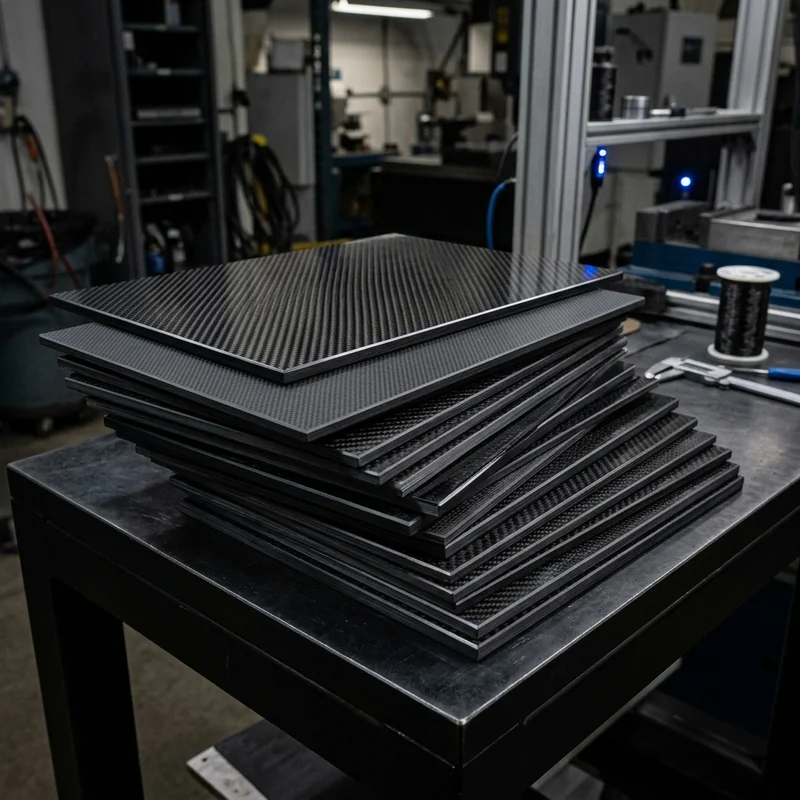
Carbon fiber standard plate-3k stripe
Lightweight, ultra-rigid standard sheets for drone fuselages, robot housings, facades and structural applications.

Carbon Fiber Plate — 3K Twill T700 1.5mm
Thin 1.5mm carbon fiber plate with 3K twill weave surface. Lightweight and stiff, commonly used for covers, panels, drone bodies, and applications requiring a premium aesthetic appearance.

Square Carbon Fiber Tube — 3K Twill T700
Square cross-section carbon fiber tube manufactured with 3K twill weave for torsional strength. Preferred for structural frames, trusses, and support columns where rectangular geometry offers design flexibility.

Carbon Fiber Plate — 3K Twill T700 3.0mm
Medium-thickness 3.0mm carbon fiber plate offering significantly higher load capacity while maintaining attractive 3K twill finish. Suitable for structural brackets, reinforcement plates, and load-bearing panels.
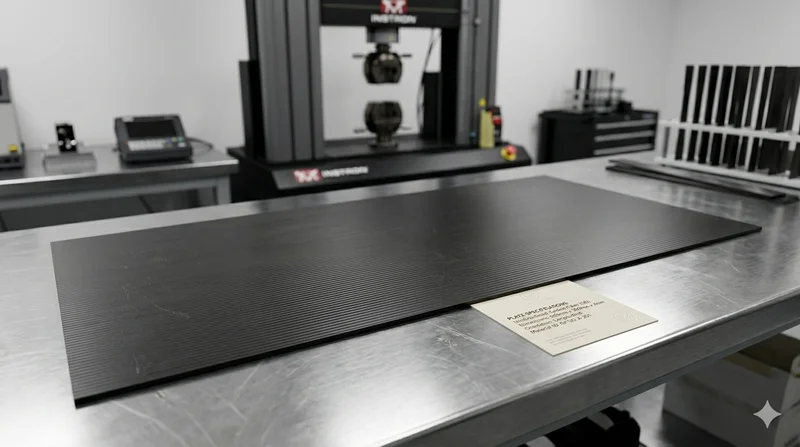
Carbon Fiber Plate — UD Unidirectional T700
Unidirectional carbon fiber plate with all fibers oriented in a single direction for maximum strength along the fiber axis. Essential for structural reinforcements, splints, and applications where load direction is predictable.